
Leave Your Message
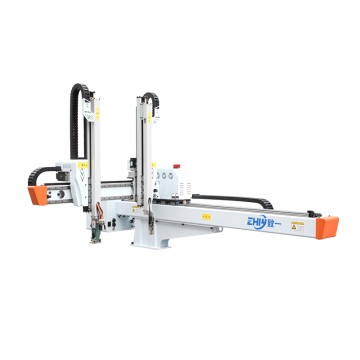
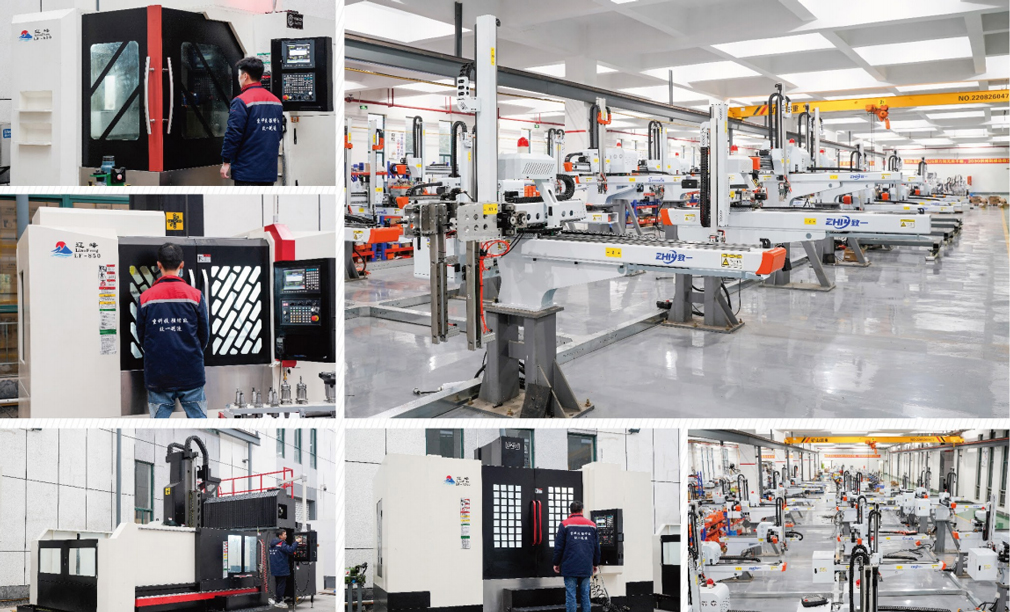
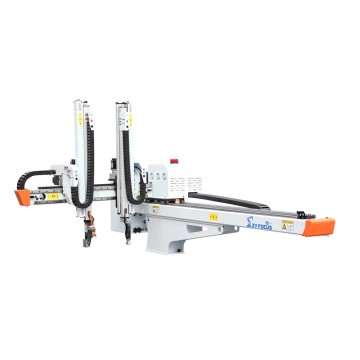
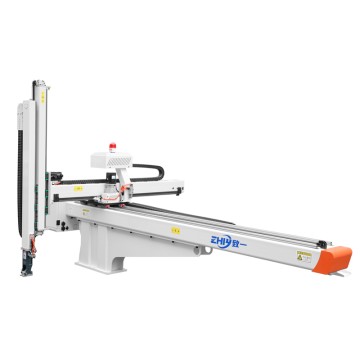
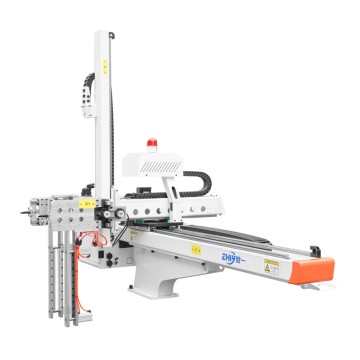
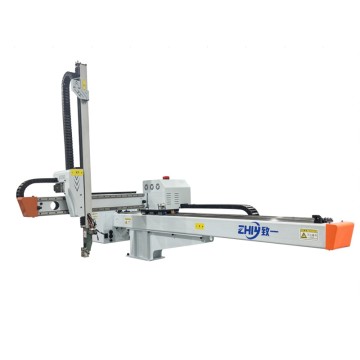
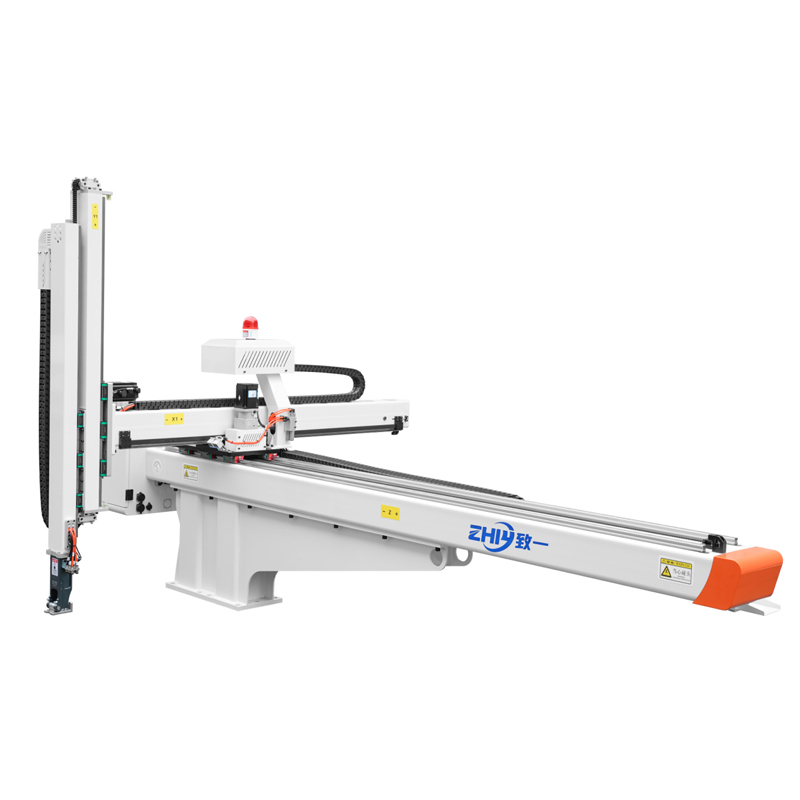
Application of five-axis injection molding machine robots in the automotive field
Five-Axis Injection Molding Robots: The Core Driving Force for Reshaping Automotive Manufacturing Precision and Efficiency
As the automotive manufacturing industry transforms toward intelligent, lightweight, and high-precision manufacturing, the injection molding process, a critical step in the production of automotive interiors, exteriors, and functional components, faces unprecedented demand for upgrades. Traditional injection molding, plagued by issues like manual part removal, insufficient positioning accuracy, and cumbersome multi-process integration, is no longer able to meet the stringent requirements of modern automobiles for component consistency, production cycle times, and cost control. The emergence of five-axis injection molding robots, with their multi-dimensional flexibility, millimeter-level positioning accuracy, and highly integrated automation capabilities, has become a key piece of equipment to address the pain points of automotive injection molding manufacturing, ushering automotive parts production into a new era of efficiency, stability, and intelligence.
First, Why Are Five-Axis Robots Essential for Automotive Manufacturing? — Examining Their Core Value from the Perspective of Industry Pain Points
Automotive manufacturing's requirements for injection molded parts have long surpassed the basic standard of "molding." Whether it's interior instrument panels and door panel trims, exterior bumpers and grilles, or seals and functional housings around the engine, they must all meet the three core requirements of **"high-precision matching, zero-defect surface, and batch consistency"**. The limitations of traditional injection molding production models have become bottlenecks hindering the implementation of these requirements:
Precision bottleneck: Manual part removal can easily lead to part deformation due to operational errors. Single-axis or three-axis robots are limited to simple up-and-down and forward-and-back movements, and are unable to accurately grasp and transfer complex curved parts to multiple stations. This leads to problems such as uneven gaps and misaligned fasteners during subsequent assembly.
Efficiency bottleneck: Automotive production often adopts a "rhythm" model. The traditional production process of "injection molding - manual part removal - quality inspection - transfer" is fragmented. A single injection molding machine requires one or two workers, and mold changeovers take as long as 30-60 minutes, making it difficult to adapt to the high-speed "one to two pieces per minute" production requirements.
Cost bottleneck: Labor costs are rising year by year, and the stability of manual operation is affected by factors such as fatigue and mood. The defect rate typically remains at 2%-5%, while the automotive industry's component defect rate requirement has been reduced to below 0.1%. The cost control pressure of the traditional model is becoming increasingly prominent.
Five-axis injection molding machine robots, through the coordinated control of linear motion along the X, Y, and Z axes and rotational motion along the A and B axes, transcend the limitations of traditional equipment, enabling 360° seamless gripping, positioning, assembly, and inspection. Their core value lies not only in replacing manual labor but also in the integration of automation and high precision. This technology improves the production accuracy of automotive injection molded parts to ±0.02mm, reduces defect rates to below 0.05%, and increases production efficiency per unit by 40%-60%, making it a standard feature for automotive manufacturers to reduce costs, increase efficiency, and enhance core competitiveness.
Second, Deep Penetration: Core Application Scenarios of Five-Axis Injection Molding Machine Robots in the Automotive Industry
From interior to exterior, from functional components to safety systems, five-axis injection molding machine robots have been deeply integrated into the entire automotive injection molding production chain. Its flexible motion capabilities and high degree of customization enable it to meet the production needs of diverse parts. The following is an analysis of five core application scenarios:
1. Automotive Interior Parts: "Guardians of Beauty" with Precision and Surface Quality
Automotive interior parts (such as instrument panel frames, door panel trims, and center console housings) must not only meet stringent dimensional requirements but also demand extremely high standards for surface finish, scratch-free, and sink-free. Traditional robots can easily scratch parts due to improper gripping angles when retrieving parts, or cause errors in subsequent welding and wrapping processes due to inaccurate positioning after demolding.
The five-axis injection molding machine robot uses precise rotational adjustment on the A and B axes to customize the gripping angle to the curved surface of interior parts. Combined with vacuum suction cups or flexible grippers, it achieves "gentle gripping and stable transfer" to avoid surface damage. Furthermore, the coordinated motion of its Z-axis and rotary axes allows for direct transfer of molded interior parts to subsequent laser engraving and leather wrapping stations, eliminating the need for secondary positioning and reducing process transition time by over 50%. For example, a joint venture automaker used a five-axis robot to produce instrument panel frames, not only maintaining dimensional tolerances within ±0.03mm but also reducing surface defect rates from 3% to 0.08%, saving over 2 million yuan in rework costs annually.
2. Automotive Exterior Parts: The "Precision Masters" of Complex Structures
Automotive exterior parts (such as bumpers, grilles, and mirror housings) are often large, complex structures that must seamlessly integrate with other body components. This requires extremely high precision in post-molding gripping, trimming, and assembly. For example, a bumper integrates multiple functional components, such as a radar mount and fog lamp bracket. Traditional production requires manual burr trimming and hole inspection, which is inefficient and prone to missed inspections. The five-axis injection molding machine robot can be equipped with a visual inspection system and pneumatic trimming tools. During the part removal process, it automatically locates burrs using visual recognition and adjusts the trimming angle using the A and B axis rotation, achieving an integrated "molding - part removal - trimming - inspection" operation. For the mounting holes between the bumper and the body, the robot can precisely lower via the Z axis and, using locating pins, align the holes, ensuring accurate alignment during subsequent assembly. After a new energy vehicle company introduced a five-axis robot to produce bumpers for new energy vehicles, the cycle time on a single production line was reduced from 3 minutes per part to 1.2 minutes per part, and the hole mismatch rate dropped from 1.5% to 0.05%, significantly improving body assembly efficiency.
3. Automotive Seals: Detail-Driven Safety
Despite their compact size, automotive seals (such as door seals, engine oil seals, and sunroof seals) are directly related to a vehicle's waterproofing, dustproofing, soundproofing, and safety performance. They demand stringent cross-sectional dimensional accuracy and interface flatness. In traditional production, seals require manual cutting and splicing of joints after molding, which can easily lead to sealing failure due to deviations in the cutting angle.
The five-axis injection molding machine robot, with its high-precision rotary axis and force control system, adjusts the cutting angle according to the cross-sectional shape of the seal, achieving "immediate cutting after molding" and preventing component deformation from cooling and affecting precision. Furthermore, its multi-axis coordinated motion allows the sheared seals to be directly transferred to the vulcanization and splicing station. The force control system controls the splicing pressure to ensure a tight fit. After adopting the five-axis robot, an automotive seal manufacturer improved the cutting accuracy of the sealing strip joint from ±0.1mm to ±0.02mm, and the pass rate of sealing performance tests increased from 92% to 99.8%, bringing its product qualification rate to the forefront of the industry.
4. Automotive Functional Housings: An "Efficiency Enhancer" by Integrating Multiple Processes
Automotive functional housings (such as battery pack housings, motor controller housings, and air conditioner housings) are often composite structures that combine injection molding and metal inserts. The production process requires multiple steps, including insert placement, injection molding, removal, and testing. Traditionally, insert placement relies on manual labor, which can easily lead to positioning errors and cause housing failure.
A five-axis injection molding machine robot can simultaneously grasp multiple metal inserts using a customized end effector (such as a multi-jaw gripper). Using precise positioning along the X, Y, and Z axes, it inserts into the mold's pre-set position, achieving an insertion accuracy of ±0.01mm. After injection molding, the robot directly removes the insert and transfers it to the airtightness testing station, automating the entire "insert-injection-testing" process. After introducing a five-axis robotic arm to a new energy battery company, the defective rate of battery pack housing inserts dropped from 5% to 0.1%, and the number of employees per production line was reduced from 8 to 2, resulting in annual labor cost savings of over 3 million yuan.
5. Small Precision Automotive Parts: A "Micromanipulator" Pushing the Limits of Micromanipulation
Small precision automotive parts (such as sensor housings, connector pins, and relay housings) typically range in size from 5 to 20 mm. They possess complex structures and demand extremely high dimensional accuracy and surface quality, making them difficult for traditional robotic arms to precisely grasp and transport.
A five-axis robotic arm for injection molding machines combines a micro end effector with a high-resolution vision system to achieve "precise identification, stable grasping, and precise transport" for small precision parts. For example, in sensor housing production, the robot uses a vision system to locate the housing's tiny positioning holes, adjusts the housing's angle using A-axis rotation, and precisely inserts it into an inspection jig. After inspection, the part is then transported to the packaging station, requiring no human intervention. After adopting a five-axis robot to produce sensor housings, an automotive electronics company increased its production efficiency per unit from 800 to 1,500 pieces per day, keeping the dimensional defect rate below 0.03%. This meets the automotive electronics production requirements of "high precision, small batches, and a wide variety of products."
Third, Technical Upgrade: Three Core Advantages of Five-Axis Injection Molding Robots for Automotive Manufacturing
The widespread use of five-axis injection molding robots in the automotive sector stems from their technical design's close alignment with automotive manufacturing requirements. Compared to traditional robots, they offer significant breakthroughs in three key areas: motion flexibility, precision control, and intelligent integration.
1. Motion Flexibility: Multi-dimensional Coverage, Adaptable to Complex Processes
Traditional single- and three-axis robots only offer linear motion, making them difficult to handle for complex curved surfaces and multi-station transfers. Five-axis robots, on the other hand, utilize a combination of "three-axis linear motion and two-axis rotational motion" to achieve arbitrary spatial adjustment. This allows for flexible adaptation to diverse tasks, from flipping and transporting large bumpers to delicate shearing of small seals. Furthermore, its end effectors can be quickly replaced depending on part type (e.g., vacuum cups, mechanical grippers, pneumatic tools, etc.), with a changeover time of just 5-10 minutes, meeting the flexible production needs of "high-mix, low-volume" automotive manufacturing.
2. Precision Control: Millimeter-level Positioning Ensures Batch-to-Batch Consistency
Automotive manufacturing places extremely high demands on batch-to-batch consistency of parts. The five-axis injection molding machine robot utilizes a servo motor and precision ball screw drive, coupled with a closed-loop feedback system with a grating scale. This achieves positioning accuracy of ±0.02mm and repeatability of ±0.01mm, ensuring that every part is identical in size and shape. Furthermore, its force control system adjusts gripping force based on part material (with a minimum gripping force of 0.1N), preventing part deformation caused by excessive force and further ensuring product quality consistency.
3. Intelligent Integration: Linking Multiple Systems for Full-Process Automation
Modern automotive manufacturing has entered the "smart factory" era. The five-axis injection molding machine robot can seamlessly integrate with MES systems, PLC control systems, and visual inspection systems via Industrial Ethernet. For example, the MES system can issue production tasks to a robot, which automatically adjusts its motion parameters accordingly. A visual inspection system provides real-time feedback on component quality data, allowing the robot to automatically sort defective parts into a defective area. The PLC system coordinates the robot's movements with the injection molding machine and subsequent processing equipment, enabling coordinated operation across the entire production line. This intelligent integration capability makes the five-axis robot a key node in the interconnectedness of smart automotive factories.
Fourth, Future Trends: The Development Direction of Five-Axis Injection Molding Robots in Automotive Manufacturing
As the automotive manufacturing industry continues to advance toward electrification, intelligence, and lightweighting, five-axis injection molding robots will also usher in a new round of technological upgrades, with three major development trends expected:
1. More Precise "AI + Vision" Integration
By combining artificial intelligence algorithms with 3D vision inspection technology, five-axis robots will possess "autonomous learning" capabilities—analyzing large amounts of production data to automatically optimize gripping angles, motion paths, and force control parameters. 3D vision systems can identify minute defects in components (such as sink marks as small as 0.01mm) in real time, enabling "online inspection + real-time adjustment" to further improve product quality.
2. More Efficient Multi-Machine Collaboration
To meet the modular production needs of automotive parts, multiple five-axis robots will collaborate through master-slave control. For example, one robot can perform insert placement, another for part removal and trimming, and another for inspection and packaging. This multi-machine collaboration enables parallel production, further improving production line efficiency by 30%-50%.
3. More Environmentally Friendly Energy-Saving Design
In response to the automotive industry's carbon neutrality goals, the five-axis robot will utilize energy-saving servo motors, a lightweight aluminum alloy body, and an energy recovery system. This reduces energy consumption by 20%-30% compared to traditional robots, while also minimizing noise and vibration during operation, creating a green and intelligent production environment.
Conclusion: Five-Axis Robots - The Core Engine of Automotive Manufacturing Upgrades
From manual operation to automated production, from single-axis motion to five-axis collaboration, the use of five-axis robots for injection molding machines is not only an upgrade in automotive manufacturing processes but also an inevitable choice for the industry's transition to high-precision, high-efficiency, and high-intelligence manufacturing. With its flexible motion, precise control accuracy, and powerful integration capabilities, it solves many pain points in the production of automotive injection molded parts, becoming a core piece of equipment for automakers to reduce costs, increase efficiency, and enhance product competitiveness.
In the future, as technology continues to evolve, five-axis injection molding robot arms will be deeply integrated with artificial intelligence, the Internet of Things, big data, and other technologies, further enabling the "intelligent, flexible, and green" development of automotive manufacturing and injecting even stronger momentum into the upgrading of the global automotive industry. For automakers, early deployment of five-axis injection molding robot technology will be a crucial step in seizing the commanding heights of industry competition.