
Leave Your Message
A Practical Case Study of Five-Axis Servo Robots Reducing Labor Costs in a Malaysian Home Appliance Injection Molding Factory
A Practical Case Study of Five-Axis Servo Robots Reducing Labor Costs in a Malaysian Home Appliance Injection Molding Factory
In the wave of automation transformation in the Malaysian home appliance injection molding industry, five-axis servo robots are becoming a core solution to overcome labor shortages. This article, through a real-world case study, breaks down how ZHIYI five-Axis Robotshelp Malaysian home appliance injection molding factories reduce labor costs and improve production stability, providing a practical automation reference for European and American buyers.
I. Labor Pain Points in Malaysian Home Appliance Injection Molding Factories: A Dual Challenge of Cost and Efficiency
The labor shortage in the Malaysian home appliance injection molding industry has become a key bottleneck restricting development. With the national minimum wage in Malaysia increasing to RM1700 in 2025, coupled with 12%-13% EPF (Employees Provident Fund) and 1.75% SOCSO (Social Security Organisation for Industrial and Commercial Funds), the overall labor cost in the manufacturing sector is only 5%-10% lower than in first-tier cities in China. Even more severe is the shortage of skilled workers. There are over 190,000 vacant formal manufacturing positions nationwide, with skilled technicians needed for home appliance injection molding being fiercely contested by both local and multinational companies, often resulting in recruitment cycles exceeding three months.
Religious and labor regulations further exacerbate the challenges of human resource management: Muslim employees pray five times a day, and work efficiency drops by 30% during Ramadan. Strict regulations in the Labor Act regarding overtime (no more than 104 hours per month) and severance pay make it difficult for companies to compensate for production capacity shortfalls by extending working hours. A home appliance injection molding factory in Johor, Malaysia, faced a typical predicament: 8 Injection Molding Machines required 12 workers, night shift productivity was only 73% of day shift productivity, the annual turnover rate of skilled technicians reached 28%, and labor costs accounted for 35% of production costs.
II. Practical Solution: Customized Implementation of ZHIYI Five-Axis Servo Robot
For the production scenario of the Malaysian home appliance injection molding factory, the ZHIYI team provided a customized five-axis servo Robot Solution, achieving a seamless transition from manual operation to automated production.
1. Equipment Selection: Adapting to the Core Needs of Home Appliance Injection Molding
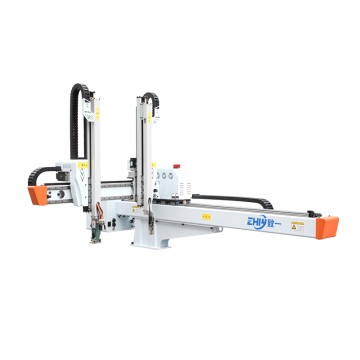
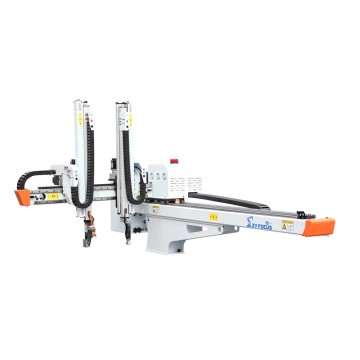
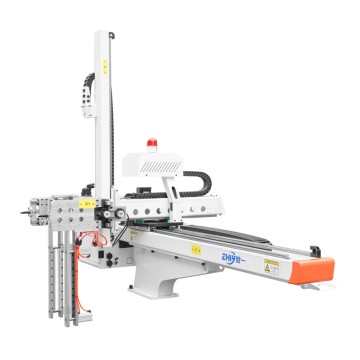
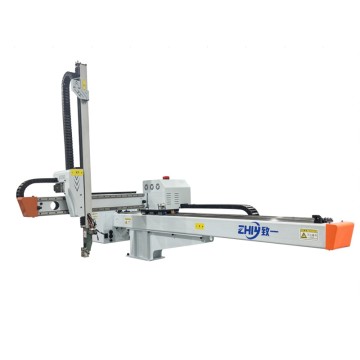
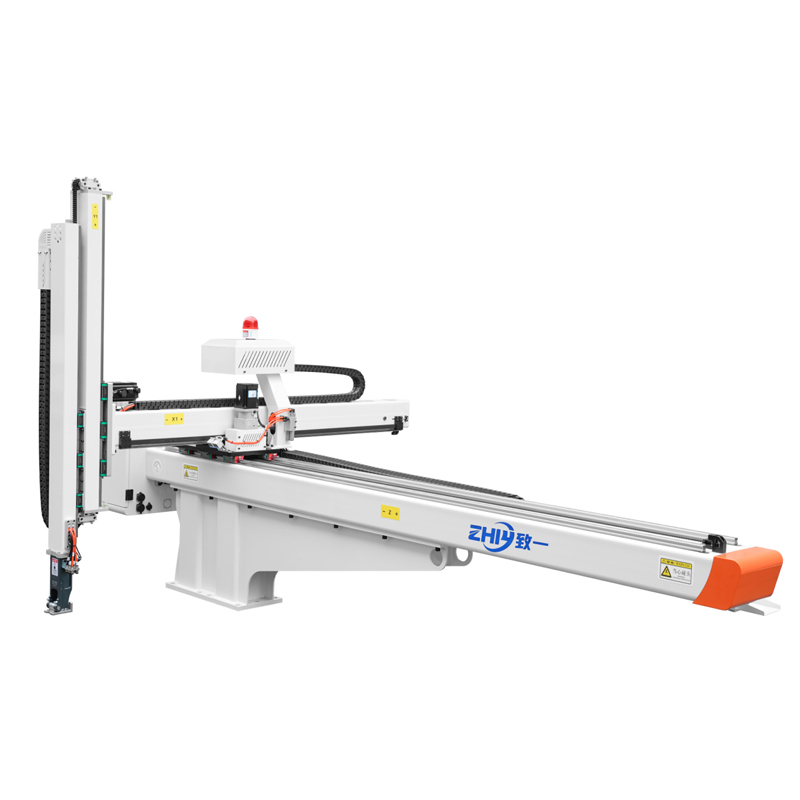
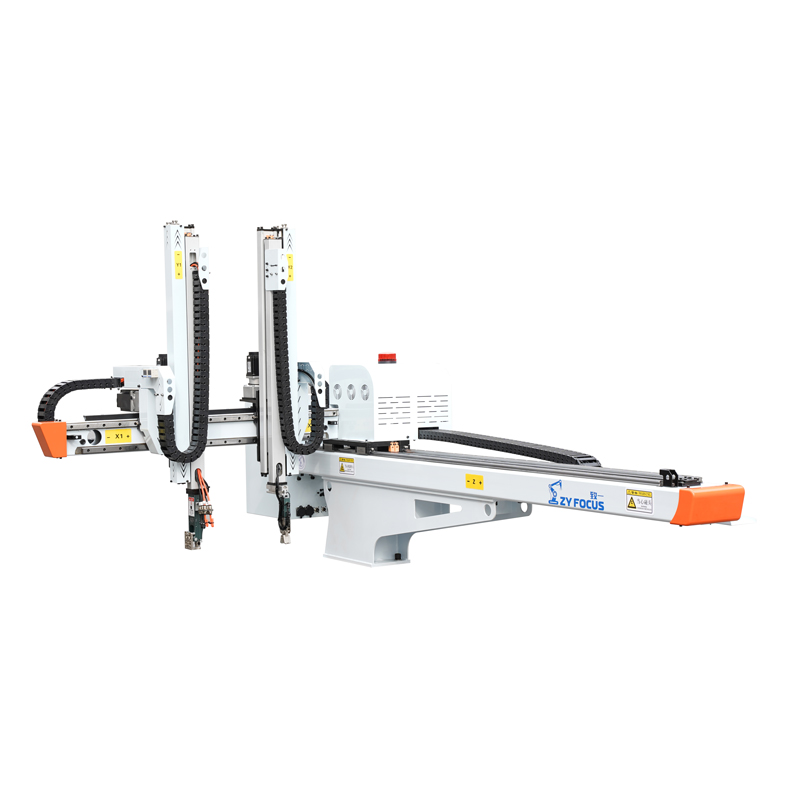
The ZHIYI RQ1500WD (S5) five-axis servo robot was selected. This model is compatible with 80T-3200T injection molding machines and can cover the production needs of core injection molded parts for home appliances such as air conditioner housings, washing machine parts, and refrigerator liners. The equipment features a multi-functional configuration with 2 suction cups and 2 clamps on the main arm and 1 clamp on the auxiliary arm. It supports complex processes such as metal embedding, sprue cutting, mold release agent spraying, and multi-directional stacking, perfectly matching the complex process requirements of home appliance injection molding.
2. Implementation: Full-process deployment completed within 30 days
Preliminary Assessment: Precise calculations were performed on the factory's existing injection molding machine models, mold specifications, and production cycle time to develop a robot installation and production line adaptation plan.
Installation and Commissioning: The local Malaysian technical team was coordinated to complete the simultaneous installation and commissioning of 8 robots without affecting existing production, with each robot's commissioning time controlled within 4 hours.
Personnel Training: Operation training was conducted for local employees, focusing on touchscreen parameter settings, daily maintenance, and troubleshooting, ensuring that one technician could manage 4 injection molding machines simultaneously.
3. Compliance and Adaptation: Meets both European/American and Local Standards
The equipment is certified by the EU CE-MD (Machinery Safety Directive) and CE-RED (Radio Equipment Directive), complies with ISO 13849 machinery safety standards, and its safety control system reaches PL=d level. It also adapts to Malaysian industrial electrical standards. For scenarios where the overhead crane height is less than 2 meters, a customized double-arm design ensures installation compatibility; it supports multilingual operating interfaces to meet the usage habits of local employees.
III. Core Achievements: Quantitative Benefits of a 67% Reduction in Labor Costs
After introducing the ZHIYI five-axis servo robot, this appliance injection molding plant achieved a dual breakthrough in production efficiency and cost control. Key data is as follows:
Optimized Staffing: The operating team for 8 injection molding machines was reduced from 12 people to 4, directly reducing labor costs by 67%, saving over RM180,000 annually in labor costs;
Improved Production Stability: The robot's idle cycle time stabilized at 15 seconds, 3 seconds shorter than manual operation, increasing night shift productivity to 95% of day shift productivity, and increasing average monthly productivity by 25%;
Improved Quality and Safety: Repeatability reached ±0.02mm, reducing the product defect rate from 1.8% to 0.3%; eliminating the risk of workplace injuries during in-mold part removal, achieving 12 consecutive months of zero accidents in safe production;
Investment Return Period: The total investment in the equipment was fully recovered within 14 months through labor cost savings and increased production capacity.
Furthermore, the robotic arm supports rapid switching between 300+ mold sets, meeting the production needs of home appliances in multiple batches and small quantities. Combined with conveyor belt control and piece counting functions, it further improves production line management efficiency.
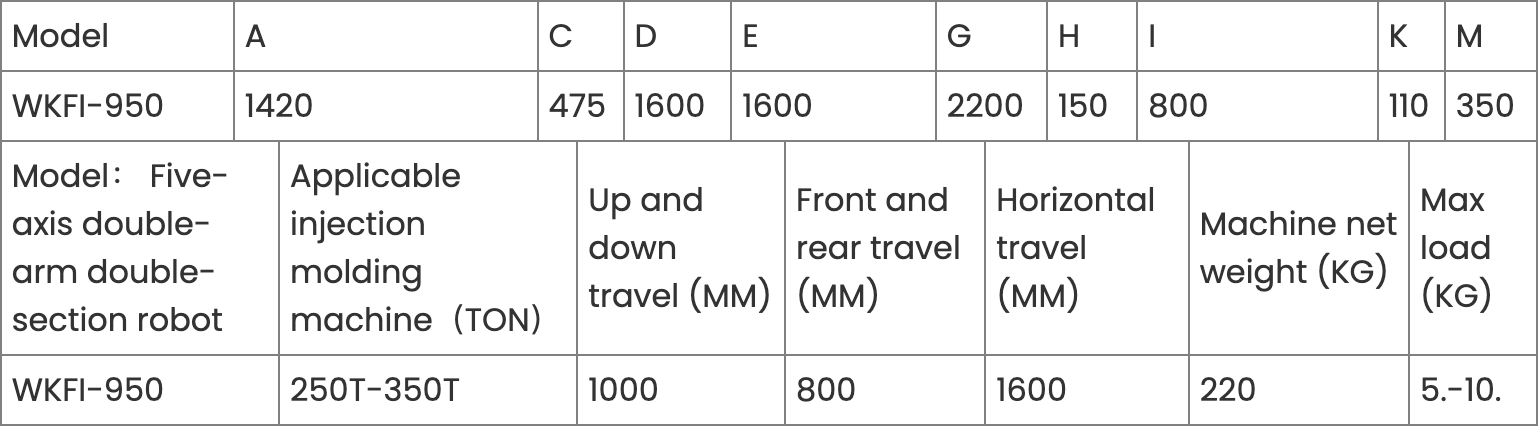
IV. Core Advantages of the Five-Axis Robotic Arm: Why is it suitable for the Malaysian home appliance injection molding scenario?
The ZHIYI five-axis servo robotic arm effectively solves Malaysia's labor shortage problem due to its targeted functional design:
Full Servo Drive Advantage: Both the main arm and auxiliary arm are driven by servo motors, resulting in motion accuracy and response speed far exceeding that of three-axis or single-axis robotic arms. It can complete complex insert embedding and multi-directional stacking processes;
Cost Reduction and Adaptability: The one-person-multiple-machine operation mode directly addresses local labor shortages and high costs. The equipment's energy consumption is only 75% of traditional automation solutions, aligning with Malaysia's sustainable manufacturing policy;
Maintenance Convenience: Multiple output motions and input detection functions are reserved. Fault diagnosis is presented visually through a touchscreen. Combined with ZHIYI's 48-hour response mechanism in Southeast Asia, it minimizes downtime losses.
V. Conclusion: A Replicable Path to Automation Transformation
The labor shortage in Malaysia's home appliance injection molding industry is not an isolated case. The practical application of ZHIYI's five-axis servo robotic arms demonstrates that through precise selection, compliant adaptation, and efficient implementation, automation equipment can bring significant cost advantages and production stability to enterprises. For European and American buyers targeting the Southeast Asian market, choosing five-axis robotic arms that meet international certification standards and are adapted to local production scenarios is a key measure to enhance supply chain competitiveness.
#Five-Axis Servo Driven Robot#5 Axis Servo Driven Robot#Single Axis Robot Arm#Double Axis Robot Arm#Robot Arm