
Leave Your Message
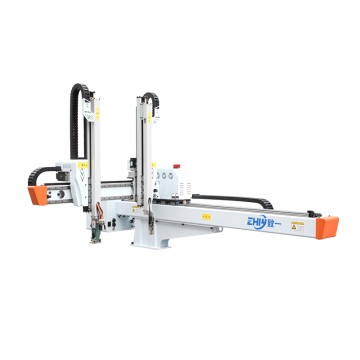
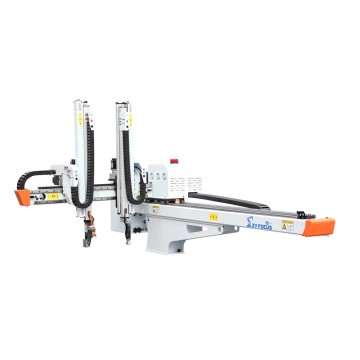
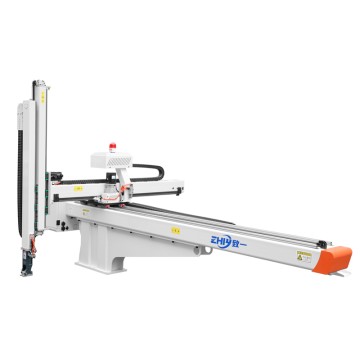
0102030405
5-Axis Robot Factory Evaluation Guide
2026-04-02
5-Axis Robot Factory Evaluation Guide: Essential Selection & Factory Audit Standards for Professional Buyers
Table of Contents
- Core Significance of 5-Axis Robot Factory Evaluation
- Key Evaluation Dimensions for 5-Axis Robot Manufacturers
- Core Technology & Product Performance Assessment
- Production, Manufacturing & Quality Control System Evaluation
- Delivery Capacity & Supply Chain Stability Assessment
- Customization & Solution Service Capability Evaluation
- After-Sales & Technical Support System Evaluation
- On-Site Factory Inspection Checklist
- Common Mistakes in 5-Axis Robot Factory Evaluation
- Conclusion
Core Significance of 5-Axis Robot Factory Evaluation
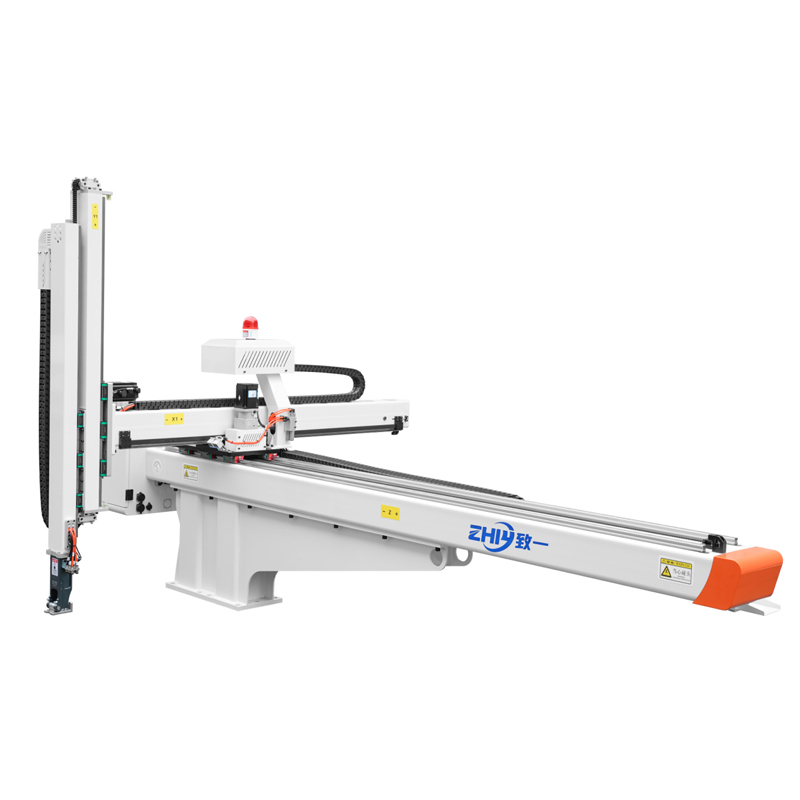
In scenarios such as injection molding automation, precision part picking & placing, and insert embedding, the 5-axis servo robot serves as core equipment to boost production capacity, ensure accuracy, and reduce labor dependence. For wholesale international buyers, partnering with a reliable 5-axis robot factory directly determines the consistency of bulk product quality, delivery lead time, and long-term operating costs. Conducting standardized factory evaluations effectively avoids procurement risks, optimizes budget allocation, and adapts to injection molding production line upgrading demands across global regions.
Key Evaluation Dimensions for 5-Axis Robot Manufacturers
When assessing a 5-axis Robot Supplier, professional buyers shall focus on five core areas:technical strength, production quality control, delivery capability, after-sales service system, and customization support, forming a complete standardized audit process to verify stable long-term cooperation potential.
Core Technology & Product Performance Assessment
- Motion Control Technology Prioritize manufacturers with independently developed servo control systems. Focus on 5-axis linkage control algorithms, response speed, and repetitive positioning accuracy. Premium factories achieve positioning accuracy within ±0.05mm, fully meeting high-speed picking requirements for precision injection molded parts.
- Core Component Configuration Check the brand and warranty terms of key parts including servo motors, reducers, and linear guide rails. Reliable manufacturers adopt globally renowned core components to support 24-hour continuous operation and lower failure rates.
- Load & Stroke Adaptability Verify whether the product portfolio covers different injection molding machine tonnages, ranging from small-medium models to heavy-duty 5-Axis Robots. Factories with full-spec product coverage are more suitable for bulk wholesale and diversified distribution businesses.
- Safety & Certification Compliance Confirm CE, ISO9001 and other international certifications, together with safety features such as safety door interlocks, anti-collision protection, and emergency stop functions, to comply with global market access standards and industrial safety regulations.
Production, Manufacturing & Quality Control System Evaluation
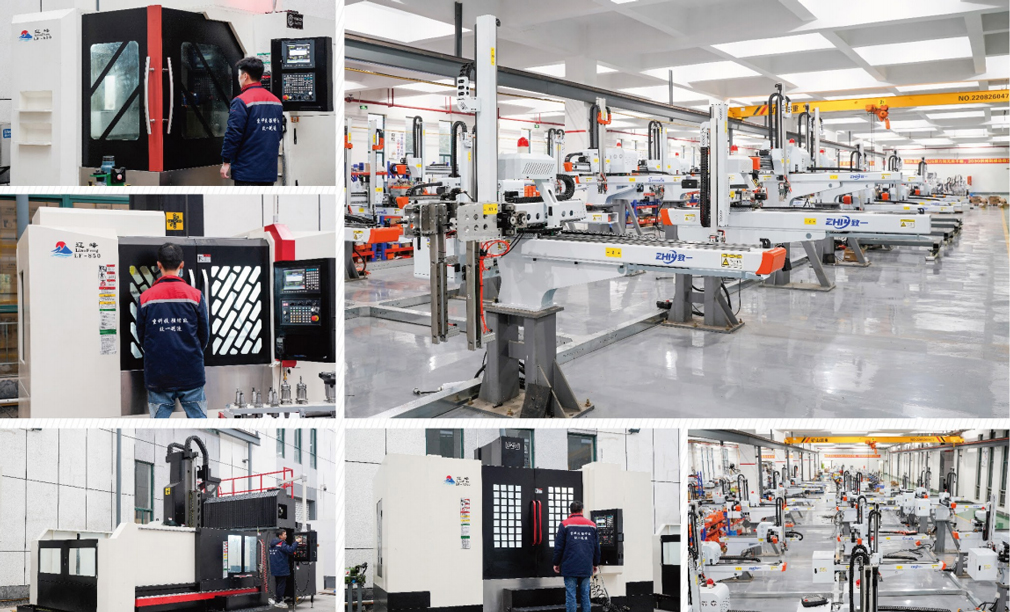
- Standardized Production Workflow Check if the factory integrates in-house machining, assembly, and testing processes. Integrated production ensures consistent performance across every finished 5-axis robot in bulk orders.
- Precision Testing Equipment Qualified factories are equipped with laser interferometers and professional precision detectors to inspect overall movement accuracy, structural rigidity, and load capacity, providing standardized official test reports.
- Complete Quality Management System Review incoming material inspection, in-process monitoring, and final factory inspection procedures. A traceable quality management system guarantees stable bulk quality and reduces after-sales maintenance issues.
- Mass Production Capacity Evaluate annual output, production line scale, and standardized operation levels. Manufacturers with large-scale production capability can fulfill big orders efficiently and shorten delivery cycles.
Delivery Capacity & Supply Chain Stability Assessment
- Order Response & Production Lead Time Trustworthy suppliers provide clear order scheduling, fast prototyping, small-batch trial production, and large-volume delivery to match various order sizes from international buyers.
- Core Component Inventory Stable manufacturers maintain safety stock for commonly used spare parts to prevent delivery delays caused by component shortages and ensure timely shipment for global orders.
- Export-Focused Packaging & Logistics Professional factories apply moisture-proof, shockproof, and rust-proof export packaging suitable for sea freight and air freight, minimizing product damage during international transportation.
- Flexible Order Adaptation Support mixed orders of standard and customized models, adjusting configurations, interfaces and appearances to enhance market adaptability for global distribution.
Customization & Solution Service Capability Evaluation
- Non-Standard Customization Ability For special injection molding processes, insert embedding, and multi-station picking tasks, qualified factories provide custom non-standard 5-axis robot solutions, covering structural design, electrical control development, and on-site debugging support.
- Industry Application Experience Check successful project cases in automotive parts, electronic appliances, and packaging injection molding industries. Experienced manufacturers with hundreds of practical cases can quickly provide tailored automation solutions.
- Technical Consultation & Solution Design Offer pre-sales technical evaluation, on-site working condition analysis, 3D layout simulation, and installation planning to help buyers select the most suitable models and reduce on-site renovation difficulties.
After-Sales & Technical Support System Evaluation
- Global Technical Assistance Provide remote debugging, fault diagnosis, and operational training. Premium suppliers offer on-site after-sales support in key regions to ensure fast equipment commissioning.
- Global Spare Parts Supply Network Maintain a worldwide spare parts distribution system for fast part delivery, minimizing production line downtime and ensuring continuous factory operation.
- Operation & Maintenance Training Supply detailed user manuals, video tutorials, and professional training to help buyers and end users master daily operation, maintenance, and basic troubleshooting skills.
- Long-Term Upgrade Support Support system software updates and functional expansions to adapt to future automation upgrades and extend equipment service life.
On-Site Factory Inspection Checklist
R&D team scale, patent quantity, and independent core technology level
- Workshop cleanliness, production equipment advancement, and process standardization
- Actual assembly workshops and live precision testing demonstrations
- Quality inspection laboratories, testing reports, and official certification documents
- Inventory management and supply chain stability assessment
- Real customer project cases and practical application results
Common Mistakes in 5-Axis Robot Factory Evaluation
- Focusing only on low prices while ignoring core component quality, leading to high failure rates and expensive long-term maintenance
- Overlooking positioning accuracy and operational stability, affecting picking efficiency and finished product yield
- Skipping international certification verification, causing customs clearance and market sales obstacles overseas
- Underestimating after-sales support capacity, resulting in prolonged production downtime during equipment failures
- Choosing over-configured unnecessary functions, increasing procurement costs without matching actual production demands
Conclusion
For wholesale buyers in the injection molding automation industry, the overall strength of a 5-axis robot manufacturer directly determines product competitiveness and end-customer satisfaction. By systematically evaluating technical performance, quality control, delivery capability, after-sales support, and customization strength, buyers can select reliable long-term partners, supplying high-performance and durable 5-axis servo robots for global markets, achieving win-win cooperation for both suppliers and buyers.
#5 axis servo robot #5 axis robot factory #injection molding 5 axis robot #5 axis robot procurement #5 axis linkage robot #servo robot manufacturer #precision 5 axis robot #export 5 axis robot #non standard 5 axis robot #injection molding automation robot