
Leave Your Message
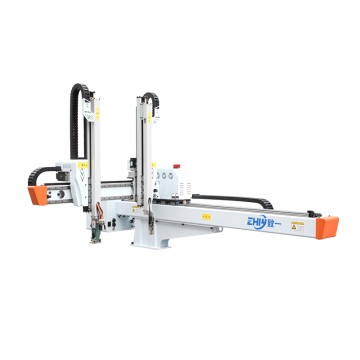
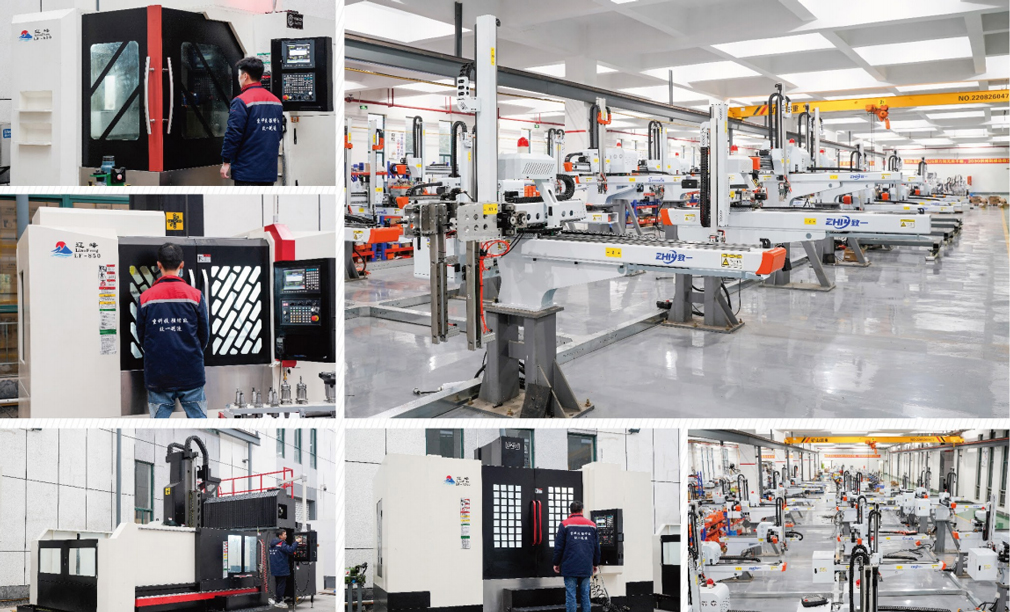
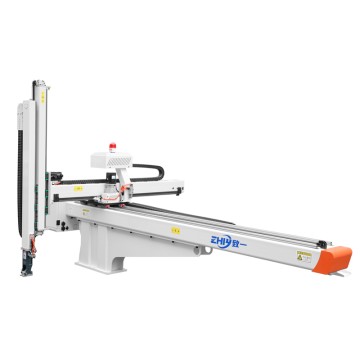
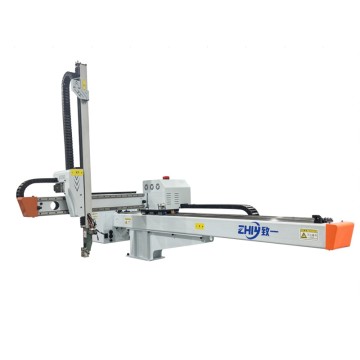
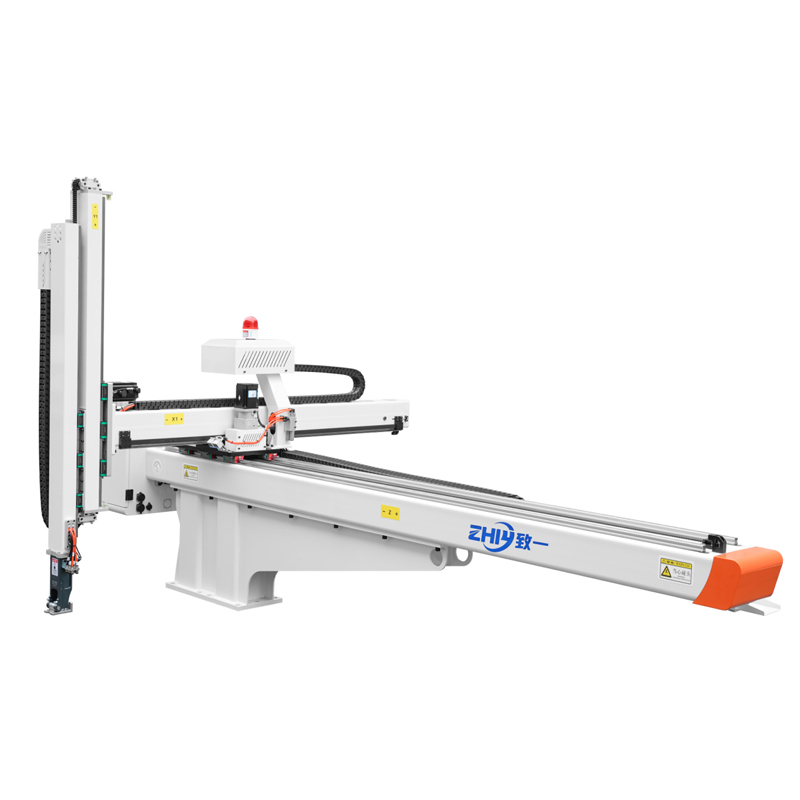
3D Printing Technology Enhances Injection Molding Robotics
3D Printing Technology Empowers Innovation in the Manufacturing of Servo Robot Parts for Injection Molding Machines
Amidst the global wave of industry upgrades, servo robots, as core equipment for automated production, directly determine the competitiveness of the entire production line through the precision, performance, and delivery efficiency of their components. However, traditional component manufacturing methods (such as CNC precision machining and mold injection) have long faced three major pain points: difficulty in achieving complex structures, high costs for small-batch production, and long customization cycles. These factors make it difficult to meet the dual demands of international wholesale customers for personalized needs, rapid market response, and cost optimization. Against this backdrop, 3D printing technology, with its unique advantages of layered manufacturing, mold-free operation, and high customization, is becoming a key driver of innovation in the manufacturing of servo robot parts for injection molding machines, transforming the industry from design to supply chain.
I. Breaking Design Constraints: 3D Printing Unlocks Component Structural Freedom
Core components of servo Robot Arms for injection molding machines (such as grippers, transmission joints, guide slides, and sensor brackets) often require a balance between lightweight and high strength. Furthermore, due to space constraints, some components require complex internal cavities, hollow structures, or special-shaped designs. These requirements are nearly impossible to achieve using traditional manufacturing methods, or they incur extremely high mold development costs. 3D printing technology, using the principle of additive manufacturing, can directly deposit materials layer by layer based on digital models, completely breaking the limitations of traditional machining's "subtractive" approach and making "structure follows function" possible.
Take the gripper arm of a servo robot arm as an example. Traditional CNC-machined grippers often use a solid structure to ensure strength. This not only results in increased weight (increasing the load on the servo motor and reducing operating accuracy), but also requires separate mold development for different sizes of injection molded products. Using SLM (Selective Laser Melting) 3D printing technology, titanium alloy or high-strength nylon materials can be used to create a lightweight structure featuring a "hollow grid + localized reinforcement ribs." This reduces weight by over 40% compared to traditional solid parts, reduces servo motor load by 25%, and improves operational response speed by 15%. Furthermore, without the need for mold development, simply modifying the digital model allows for customized gripper designs of varying specifications within 24 hours, perfectly meeting the diverse, small-batch purchasing needs of international wholesale customers.
Furthermore, 3D printing supports "integrated design" by combining structures that traditionally require multiple components (such as a joint bearing seat and sensor mount) into a single printed part. This reduces assembly errors (assembly accuracy can be improved from the traditional 0.1mm to within 0.05mm), reduces the risk of failures caused by loose connections, and increases the mean time between failures (MTBF) of the servo robot arm by 30%.
II. Restructuring Production Logic: From "Mass Production" to "On-Demand Manufacturing," Achieving Dual Breakthroughs in Cost Reduction and Efficiency Improvement
For wholesale customers, component cost control and delivery cycle are key considerations in purchasing decisions. Under the traditional manufacturing model, customizing non-standard components (such as guide rails with special travels or connecting flanges adapted to specific injection molding machine models) requires a 4-8 week process of mold design, mold manufacturing, trial production, and mass production. Mold costs can reach tens of thousands of yuan, resulting in high unit costs for small-batch customization. 3D printing technology, by eliminating molds, has completely restructured component production logic, achieving dual breakthroughs in optimizing costs for small-batch customization and shortening delivery cycles.
1. Cost Optimization: A "Cost-Effectiveness Revolution" in Small-Batch Production
Take the transmission gears of a servo robot (material: engineering plastic POM) as an example. If a customer requires 50 gears with a non-standard module:
Traditional model: Mold development costs approximately 30,000 yuan, and machining costs per piece are approximately 200 yuan. Total cost = 30,000 yuan + 50 × 200 = 40,000 yuan.
3D printing (FDM) technology: No mold is required. Digital model design costs approximately 500 yuan, and printing costs per piece are approximately 180 yuan. Total cost = 500 + 50 × 180 = 9,500 yuan.
This directly reduces costs by 76%. The cost advantage of 3D printing becomes more pronounced with smaller batch sizes (e.g., 10-20 pieces). (Traditional modeling involves a higher mold cost allocation.) For metal parts (such as servo motor connecting shafts), SLM 3D printing technology is used. While the cost per part is slightly higher than traditional CNC machining (approximately 10%-15%), it eliminates the mold development step and increases material utilization from 60% in traditional machining to over 95% (3D printing uses only the material required for molding, eliminating waste). This overall cost advantage remains competitive for small batches (under 100 pieces), making it particularly suitable for trial production orders or urgent replenishment orders from international customers.
2. Faster Delivery: Response Time from Weeks to Days
Traditional component manufacturing lead times are primarily limited by mold development (2-4 weeks) and machining schedules (1-2 weeks). Even standard parts can experience delivery delays due to insufficient supply chain inventory. 3D printing technology simplifies the component manufacturing process into three steps: digital modeling - printing production - post-processing. Eliminating the need for molds and complex processing equipment, delivery cycles can be reduced to one-fifth to one-third of traditional methods.
For example, a European wholesale customer urgently needed to replace the "guide slide" (non-standard specifications) for the servo robot arm of an injection molding machine it represented. The traditional supplier quoted a delivery time of four weeks. However, using 3D printing technology, the following were achieved:
Digital model confirmation: 1 day (customer provided drawings, and engineers completed model optimization within 24 hours);
Printing production: 2 days (using SLA light-curing technology, printing 10 parts at a time);
Post-processing (polishing, precision calibration): 1 day;
Final delivery time: 4 days, an 87.5% reduction compared to traditional methods. This helped the customer avoid production line downtime and significantly improved customer satisfaction.
III. Strengthening Supply Chain Resilience: 3D Printing Promotes the Implementation of "Distributed Manufacturing"
The supply chains of international wholesale customers often face challenges such as long cross-border logistics cycles, high tariffs, and geopolitical risks. Traditional parts must be shipped in bulk from production bases to customer countries, which not only accounts for 15%-20% of logistics costs but is also susceptible to factors such as port congestion and trade policy fluctuations, leading to unstable delivery. 3D printing technology, which supports a distributed manufacturing model combining "digital file transfer + localized printing," offers a novel solution to addressing these pain points.
Specifically, customers no longer need to purchase physical parts. Instead, they simply obtain optimized 3D printable digital model files from us and have them directly produced at our partner 3D printing facility in their country (or our authorized localized printing center). This allows for "just-in-time manufacturing and local delivery":
Logistics costs: Reduced from the traditional 15%-20% to virtually zero (requiring only digital file transfer);
Delivery time: Reduced from 2-4 weeks for cross-border shipping to 1-3 days for localized production;
Inventory pressure: Customers no longer need to stockpile large quantities of parts; they can "print on demand" based on actual needs, reducing capital tied up (inventory costs can be reduced by over 60%). For example, after we provided a Southeast Asian wholesale customer with a 3D printing digital solution for a "servo robot arm sensor bracket," the customer, through a local partner 3D printing factory, achieved production and delivery within two days of order confirmation. This improved delivery efficiency by 80% compared to traditional multinational supply chain models. This also avoided high tariffs in Southeast Asia (traditional import tariffs on components are approximately 10%-15%) and the risk of port congestion, significantly enhancing supply chain stability.
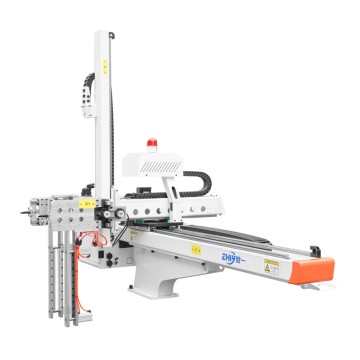
IV. Practical Case Study: How 3D Printed Parts Enhance the Market Competitiveness of Servo Robots
An international injection molding equipment wholesaler (primarily serving the European and South American markets) faced two major challenges: First, traditional suppliers struggled to respond quickly to the numerous customer demands for customized servo robots (e.g., dust-free grippers for medical injection molding products and high-temperature-resistant transmission joints for automotive parts); second, the high unit cost of small-batch orders made their pricing uncompetitive in the regional market.
After collaborating with us to introduce a 3D printed parts solution, the specific improvements achieved were as follows:
Customization Response Speed: For medical customers requiring dust-free grippers, delivery time was reduced from the traditional four weeks to three days, increasing customer order conversion rates by 40%;
Cost Control: The average unit cost of customized parts for small batches (up to 50 pieces) was reduced by 65%, enabling them to offer 15%-20% less than competitors in the South American market and expand their market share by 25%;
Product Performance: Utilizing 3D printing, The printed high-temperature-resistant transmission joint (material: PEKK) has a temperature resistance range increased from the traditional 120°C to 260°C, making it suitable for high-temperature injection molding applications (such as the molding of engineering plastics ABS and PC), expanding the product's application range by 50%.
This case demonstrates that 3D printing technology is not only a technological innovation in component manufacturing but also a strategic tool for international wholesale customers to enhance their market competitiveness and optimize their supply chains.
V. Deep Integration of 3D Printing and Injection Molding Machine Servo Robot Parts Manufacturing
With the continuous advancement of 3D printing material technology (such as high-strength metal powders and wear-resistant engineering plastics) and equipment precision, the application of 3D printing in the manufacturing of injection molding machine servo robot parts will further deepen in the future:
Material Breakthrough: New ceramic-based composite 3D printing technology will enable the production of parts with "ultra-high temperature resistance and high hardness," suitable for higher-precision injection molding scenarios (such as injection molding of microelectronic components);
Intelligent Production: 3D printing systems integrated with AI technology can automatically optimize component structural design (such as adjusting rib distribution based on stress analysis), further improving product performance and material utilization;
Full-Chain Digitalization: Digital management of the entire process from "customer needs - digital modeling - 3D printing - quality inspection - delivery" will achieve "traceability, optimization, and replicability" in component manufacturing, providing international wholesale customers with more stable and efficient supply chain services.
Conclusion: Seizing the Opportunities of 3D Printing for Winning in the Global Injection Molding Automation Market
As the injection molding machine servo robot industry upgrades toward high precision, high flexibility, and high cost-effectiveness, 3D printing technology is no longer just an optional innovation but a necessary competitive weapon. For wholesale customers, choosing a partner with 3D printed parts manufacturing capabilities means shorter lead times, lower customization costs, a more flexible supply chain, and more competitive product solutions.
With over a decade of experience in the injection molding machine servo robot field, ZHIYI has established a 3D printing parts production center covering multiple technology routes, including FDM/SLA/SLM. This center provides comprehensive services, from digital model optimization and material selection to mass production. It supports the customization and wholesale of parts in a variety of materials, including metals (titanium alloys, stainless steel, and aluminum alloys) and engineering plastics (PA12, PEKK, and POM). Whether you need small batches of customized non-standard parts or want to optimize the delivery efficiency of your existing supply chain, we can provide you with the right 3D printing solutions and work together to open up new blue oceans in the global injection molding automation market.
#Robot Arm#Mechanical Arm#Robot Industrial#Cnc Robot Arm#Robots For Injection Molding Machines#Cnc Robot#Robot Machine Robot#Robotic Arm Automation