
Leave Your Message
0102030405
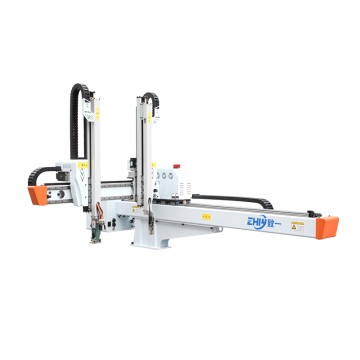
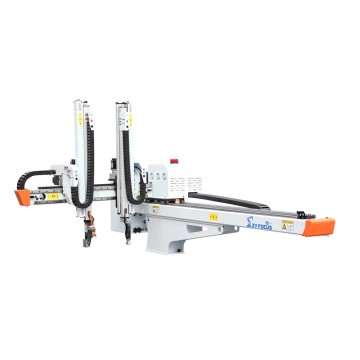
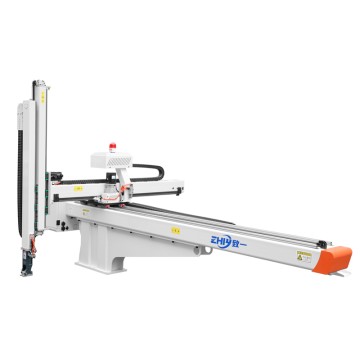
300T Injection Molding Machine: Compatibility Requirements for 5-Axis Manipulators
2026-04-09
300T Injection Molding Machine: Compatibility Requirements for 5-Axis Manipulators
Table of Contents
1 Core Principles for Compatibility of 5-Axis Manipulators with 300T Injection Molding Machines 2 Hardware Compatibility Requirements of 300T Injection Molding Machines for 5-Axis Manipulators 3 Motion Control and Precision Compatibility Standards 4 Compatibility and Linkage Requirements for Control Systems 5 Compatibility Specifications for Safety Protection Systems 6 Key Points for Installation and Commissioning Compatibility 7 Compatibility Adjustment Techniques for Different Application Scenarios 8 Common Problems and Solutions for 5-Axis Manipulators Compatible with 300T Injection Molding Machines 9 Frequently Asked Questions 10 Conclusion
In the field of injection molding processing, the 300T injection molding machine, as a main equipment of medium tonnage, is widely used in the production of home appliance accessories, small auto parts, daily necessities and other categories. The 5-axis manipulator, with its multi-dimensional flexible movement and high-precision positioning capability, has become the core supporting equipment to improve its automated production efficiency. The precise compatibility of the two can not only realize the efficient grasping, demolding and placement of injection molded parts, but also avoid equipment loss and improve production stability, which is the key to realizing the automated upgrading of the production line. To make the 5-axis manipulator form an efficient production linkage with the 300T injection molding machine is not a simple equipment splicing, but needs to follow strict compatibility requirements from hardware parameters, motion control, system compatibility and other aspects. A deviation in every detail may affect the overall production efficiency.
1 Core Principles for Compatibility of 5-Axis Manipulators with 300T Injection Molding Machines
The compatibility of 5-axis manipulators with 300T injection molding machines revolves around the three core principles of matching, stability and efficiency, which is the basis for ensuring the smooth progress of subsequent production operations. Matching requires that all parameters of the manipulator are fully consistent with the mold opening stroke, mold clamping force and production cycle of the injection molding machine, avoiding the situation of "large machine with small manipulator" or "small manipulator undertaking heavy work", and ensuring that the equipment capacity is fully exerted; stability focuses on the mechanical coordination and non-delayed signal transmission during the linkage operation of the two, reducing the phenomenon of jamming and fault shutdown in production; efficiency is the ultimate goal of compatibility. Through precise parameter matching and motion optimization, the operation cycle of the manipulator is seamlessly connected with the molding cycle of the injection molding machine to achieve maximum production capacity.
At the same time, compatibility and scalability should be taken into account in the compatibility process. The control system of the manipulator should be able to realize barrier-free communication with the operating system of the injection molding machine, and the equipment reserves a certain compatibility space to meet the needs of subsequent production process adjustment and product specification change.
2 Hardware Compatibility Requirements of 300T Injection Molding Machines for 5-Axis Manipulators
The precise matching of hardware parameters is the core basis for the compatibility of 5-axis manipulators with 300T injection molding machines, mainly covering three core dimensions: load capacity, stroke range and installation size. Each parameter must be consistent with the production characteristics of the 300T injection molding machine.
2.1 Load Capacity
The weight of a single mold of products molded by a 300T injection molding machine is usually between 5kg and 15kg. Together with the weight of the sprue and fixtures attached to the mold, the rated load of the 5-axis manipulator should not be less than 20kg, and the maximum load should reserve a 20% safety margin to avoid jamming and positioning deviation of the manipulator due to insufficient load. At the same time, the load capacity of the manipulator should be considered in combination with the working radius, and the load capacity should still meet the actual production requirements at the maximum working radius.
2.2 Stroke Range
The stroke range must match the mold opening stroke, mold thickness and part taking height of the 300T injection molding machine. The X-axis (transverse) stroke should cover the distance from the mold cavity area of the injection molding machine to the blanking table/conveyor belt, usually not less than 1500mm; the Z-axis (vertical) stroke should be adapted to the mold opening height of the injection molding machine to ensure that the manipulator can smoothly go deep into the mold cavity to grasp products, generally requiring not less than 800mm; the rotation angle of the rotating axes (A, B axes) should not be less than 360° to meet the turning and placement needs of products after demolding, and the wrist rotation axis (C axis) should realize ±180° rotation to adapt to part taking and placing operations at different angles.
2.3 Installation Size
The installation base size of the 5-axis manipulator should match the top mounting surface and side mounting position of the 300T injection molding machine, and the spacing and aperture of the installation holes should be accurately corresponding to avoid vibration of the manipulator during operation due to installation deviation. If the side-mounted type is adopted, the installation bracket of the manipulator should have sufficient rigidity to bear the inertial force during the operation of the manipulator; if the top-mounted type is adopted, it is necessary to ensure that the top load-bearing capacity of the injection molding machine meets the total weight of the manipulator.
2.4 Mechanical Structure Rigidity
The production cycle of a 300T injection molding machine is usually between 10s and 30s, and the 5-axis manipulator needs to cooperate with it to achieve high-speed operation. Therefore, the core structures such as the arm and beam of the manipulator should have high rigidity, made of high-strength aluminum alloy or steel materials, to avoid arm shaking and deformation during high-speed operation, which affects the positioning accuracy.
3 Motion Control and Precision Compatibility Standards
The automated production of 300T injection molding machines has strict requirements on the motion control accuracy and cycle synchronization of 5-axis manipulators, which directly determine the success rate of product taking, the neatness of placement, and the cycle connection efficiency with the injection molding machine.
3.1 Positioning Accuracy
The repeat positioning accuracy of the 5-axis manipulator should reach within ±0.05mm, and the absolute positioning accuracy should not be lower than ±0.1mm, ensuring that it can accurately go deep into the mold cavity of the 300T injection molding machine every time to avoid scratching the mold and damaging the product. Especially when grasping small and precise injection molded parts, high-precision positioning can effectively improve the success rate of part taking.
3.2 Motion Speed and Cycle
The no-load speed and part taking speed of the manipulator should match the molding cycle of the 300T injection molding machine. The no-load speed should not be lower than 800mm/s, and the part taking speed should be controlled at 300mm/s-500mm/s, which not only ensures the operation efficiency, but also avoids product falling and manipulator vibration caused by high-speed movement. The overall operation cycle should be 2s-3s shorter than the molding cycle of the injection molding machine, reserving time for signal transmission and action connection to achieve seamless linkage.
3.3 Motion Smoothness
The 5-axis linkage of the manipulator should be smooth without sudden stop and rush. Through the optimization of the acceleration and deceleration curve, the inertial force during the movement process is reduced, and the mold loosening of the injection molding machine and the wear of the Manipulator Parts caused by mechanical impact are avoided. At the same time, in the key stage of product demolding, the movement of the manipulator should be synchronized with the mold opening action of the injection molding machine. At the moment when the mold opening is in place, the manipulator can immediately execute the part taking action to improve production efficiency.
4 Compatibility and Linkage Requirements for Control Systems
The efficient operation of the 5-axis manipulator and the 300T injection molding machine is inseparable from the barrier-free communication and precise linkage of their control systems, which is the core link to realize automated production and also a key link in the compatibility process.
4.1 Communication Protocol Compatibility
The control system of the manipulator should support general communication protocols in the injection molding machine industry, such as IO signal communication, Modbus, Profinet, etc., and can realize two-way signal transmission with the control system of the 300T injection molding machine, including mold opening in place, mold clamping signal, ejector pin action signal of the injection molding machine, as well as part taking completion, reset signal, fault alarm signal of the manipulator, etc., to ensure that the signal transmission is without delay and error.
4.2 Operation Interface Linkage
In an ideal compatibility state, the operation interface of the manipulator can be linked with the operation panel of the 300T injection molding machine. The start, stop and parameter adjustment of the manipulator can be directly realized on the injection molding machine panel without operating the manipulator console separately, simplifying the operation process and reducing the difficulty of manual operation.
4.3 Fault Linkage Processing
When a fault occurs in the manipulator or the injection molding machine, their control systems should realize fault linkage. After one party sends a fault signal, the other party can stop running immediately to avoid the expansion of the fault. For example, when the manipulator has a part jamming fault, it will send a signal to the injection molding machine, and the injection molding machine will immediately stop mold opening, ejector pin and other actions; when the injection molding machine has a mold clamping fault, the manipulator will stop the part taking action and keep in place.
4.4 Program Compatibility
The control system of the manipulator should have a flexible program editing function, which can quickly adjust the motion program according to the production process and product specifications of the 300T injection molding machine, support the storage of multiple groups of programs, and meet the production needs of small batches and multiple varieties. At the same time, the program should have a self-optimization function, which can automatically adjust the motion parameters according to the actual production cycle to improve the operation efficiency.
5 Compatibility Specifications for Safety Protection Systems
In the automated production scenario, safety protection is the top priority. The compatibility of the 5-axis manipulator with the 300T injection molding machine needs to build a coordinated safety protection system, taking into account equipment safety and operator safety, and complying with the safety standards of industrial automated production.
5.1 Safety Sensing Devices
The manipulator should be equipped with safety sensing devices such as light curtains, proximity switches and emergency stop buttons, and the sensing range of these devices should cover the operation area of the 300T injection molding machine. When the operator enters the operation area, the manipulator stops running immediately to avoid personal injury; the proximity switch should accurately detect the position of the mold and product to avoid collision between the manipulator and the injection molding machine mold.
5.2 Overload Protection
Each axis of the manipulator should be equipped with an overload protection device. When resistance is encountered during operation (such as jamming when grasping products, slight collision with the mold), it can stop moving immediately and send an alarm signal to avoid motor burnout and mechanical structure damage; at the same time, the mold clamping system of the injection molding machine should be linked with the overload protection of the manipulator to prevent mold damage caused by the manipulator fault.
5.3 Protective Shell and Isolation
The moving parts of the manipulator should be equipped with a protective shell to prevent parts from falling and splashing during high-speed operation. At the same time, a safety isolation fence can be set in the operation area of the 300T injection molding machine and the manipulator to separate the automated operation area from the manual operation area, further improving production safety.
5.4 Compliance with Safety Standards
The safety protection system of the 5-axis manipulator should comply with the ISO 10218industrial Robot Safety standard and be consistent with the safety protection requirements of the 300T injection molding machine, ensuring that the safety protection of the entire set of automated equipment meets the general industry standards and passes the relevant safety certifications.
6 Key Points for Installation and Commissioning Compatibility
After completing the hardware selection and system matching, precise installation and commissioning is the final step to realize the perfect compatibility of the 5-axis manipulator with the 300T injection molding machine. Installation deviation and commissioning omissions will directly affect the subsequent production operation.
6.1 Installation Datum Calibration
During installation, the motion center of the 5-axis manipulator should be calibrated with the mold cavity center of the 300T injection molding machine as the datum to ensure that the motion trajectory of the X, Y and Z axes of the manipulator is parallel to the mold cavity center with a deviation of no more than 0.1mm. At the same time, adjust the installation height of the manipulator so that the part taking position of the manipulator is accurately corresponding to the demolding position of the mold.
6.2 Level and Verticality Adjustment
Use a level to calibrate the base and beam of the manipulator to ensure that the level deviation does not exceed 0.02mm/m; adjust the verticality of the manipulator arm to avoid part taking deviation and operation vibration caused by arm inclination. After the installation is completed, a no-load test run should be carried out to check whether the movement of each axis is smooth and whether there is jamming and abnormal noise.
6.3 Signal Commissioning
Test all signal transmissions between the manipulator and the injection molding machine one by one, including mold opening in place, part taking completion, fault alarm, etc., to ensure that the signal transmission is accurate and without delay. During the commissioning process, simulate various production scenarios, such as normal part taking, product falling, mold failure, etc., and check whether the linkage response of the two meets the expectations.
6.4 Load Test Run
After completing the no-load commissioning, carry out a load test run. Use a simulated product with the same weight as the actual production to test the positioning accuracy, motion speed and cycle matching degree of the manipulator under load. According to the test run results, fine-tune the motion parameters and acceleration and deceleration curves of the manipulator until the optimal operation state is achieved.
6.5 On-site Compatibility Optimization
Combine the layout of the production site, such as the position of the blanking table and conveyor belt, optimize the motion trajectory of the manipulator, shorten the operation path and improve production efficiency. At the same time, adjust the protection and lubrication system of the manipulator according to the on-site environmental factors, such as temperature, humidity, dust, etc., to ensure that the equipment adapts to the on-site production environment.
7 Compatibility Adjustment Techniques for Different Application Scenarios
The 300T injection molding machine has a variety of application scenarios. According to the different materials, shapes and production processes of injection molded products, the compatibility parameters of the 5-axis manipulator also need to be adjusted accordingly to meet the production needs of different scenarios.
7.1 Production Scenario of Hard Plastic Parts
Hard plastic parts (such as ABS and PC materials) have high hardness and are not easy to deform. The part taking speed of the manipulator can be appropriately increased during part taking, and the positioning accuracy can be kept at ±0.05mm. If the product is produced by a multi-cavity mold, the gripper fixture of the manipulator can be adjusted to cooperate with multi-station part taking, and the motion trajectory can be optimized to realize synchronous grasping and placement of multiple parts and improve production efficiency.
7.2 Production Scenario of Soft Plastic Parts
Soft plastic parts (such as PE and PVC materials) are easy to deform and stick to the mold. The part taking speed of the manipulator should be reduced during part taking, controlled at 200mm/s-300mm/s, and the positioning accuracy should be improved to avoid product deformation caused by scratching and extrusion. A vacuum sucker gripper can be equipped to increase the contact area and reduce product damage, and the demolding action of the manipulator should be accurately coordinated with the ejector pin action of the injection molding machine to ensure the smooth demolding of the product.
7.3 Production Scenario of Injection Molded Parts with Sprue
For the production of injection molded parts with sprue, a sprue separation process needs to be added after part taking. The 5-axis manipulator can be adapted to a sprue cutting fixture to complete the sprue separation during the part taking process. At this time, it is necessary to adjust the motion program of the manipulator, increase the trajectory of the cutting action, and ensure the accuracy of the force and position of the cutting action to avoid damaging the product body.
7.4 Insert Injection Molding Production Scenario
In the insert injection molding production, the manipulator not only needs to complete the finished product taking, but also needs to realize the precise placement of inserts. At this time, a double gripper fixture should be equipped, one gripper is responsible for placing inserts, and one gripper is responsible for grasping finished products. At the same time, adjust the operation cycle of the manipulator to match the insert placement and molding cycle of the injection molding machine to ensure the precise placement of inserts and efficient finished product taking.
8 Common Problems and Solutions for 5-Axis Manipulators Compatible with 300T Injection Molding Machines
In the process of compatibility and operation of 5-axis manipulators with 300T injection molding machines, some common problems are inevitable. Identifying and solving these problems in a timely manner can ensure the stable operation of the production line and reduce the fault shutdown time.
8.1 Positioning Deviation and Mold Scratching
Cause: Uncalibrated installation datum, decreased motion accuracy of the manipulator, mold position offset; Solution: Recalibrate the motion center of the manipulator with the mold cavity center as the datum, check whether the transmission parts (such as lead screw and guide rail) of the manipulator are worn, replace the worn parts in a timely manner, calibrate the mold position of the injection molding machine, and ensure that the mold is fixed firmly.
8.2 Delayed Signal Transmission and Asynchronous Linkage
Cause: Incompatible communication protocols, poor contact of signal lines, improper parameter settings of the control system; Solution: Replace the matching communication protocol, check the signal lines, reconnect the loose lines, add a signal amplifier, fine-tune the signal transmission parameters of the control system to reduce delay.
8.3 Manipulator Vibration During Operation Affecting Production Stability
Cause: Excessively large level deviation during installation, insufficient rigidity of the mechanical structure, unreasonable setting of motion acceleration and deceleration curves; Solution: Recalibrate the level of the manipulator, reinforce the installation bracket of the manipulator, optimize the acceleration and deceleration curve to reduce the inertial force during high-speed operation. If the rigidity of the mechanical structure is insufficient, replace the high-rigidity accessories.
8.4 Insufficient Load and Product Falling
Cause: Too small rated load of the selected manipulator, unreasonable design of the gripper fixture; Solution: Replace the manipulator that meets the load requirements, redesign the gripper fixture to increase the contact area or grasping force to ensure that the product is grasped firmly.
9 Frequently Asked Questions
What is the minimum rated load required for a 5-axis manipulator compatible with a 300T injection molding machine?
Combined with the product weight and fixture weight of the 300T injection molding machine, the rated load should not be less than 20kg, and the maximum load should reserve a 20% safety margin to ensure production safety.
Which communication protocol is the first choice for the 5-axis manipulator and the 300T injection molding machine?
The industry-general Profinet or Modbus protocol is the first choice, which has fast signal transmission speed and high stability, and can realize barrier-free two-way communication. If the injection molding machine is an old model, IO signal communication can be adopted.
How to judge whether the cycle of the 5-axis manipulator and the 300T injection molding machine is matched?
The overall operation cycle of the manipulator should be 2s-3s shorter than the molding cycle of the injection molding machine, and there is no obvious waiting and jamming during continuous production, which means the cycle is matched.
How to set the part taking speed of the 5-axis manipulator in the production of soft plastic parts?
The part taking speed should be reduced, controlled at 200mm/s-300mm/s, to avoid product deformation and falling caused by excessive speed, and the positioning accuracy should be improved to ensure the stable part taking action.
What commissioning steps are required after the installation of the 5-axis manipulator is completed?
Carry out installation datum calibration, level and verticality adjustment, no-load test run, signal commissioning and load test run in turn, and finally carry out on-site compatibility optimization combined with the production site layout until the equipment reaches the optimal operation state.
10 Conclusion
The compatibility of 300T injection molding machines with 5-axis manipulators is a systematic work covering hardware parameters, motion control, system compatibility, safety protection, installation and commissioning. It is not the matching of a single parameter, but the precise agreement of all links. Starting from the core principles, control the hardware compatibility points such as load capacity, stroke range and installation size, follow the control standards such as positioning accuracy and motion cycle, realize the barrier-free linkage of the control system, build a coordinated safety protection system, then adjust the parameters according to different application scenarios, and complete the precise installation and commissioning, so that the two can form an efficient production linkage and give full play to the advantages of automated equipment.
For injection molding production enterprises, precise compatibility can not only improve production efficiency and reduce labor costs, but also reduce equipment loss and improve product quality, which is the key to realizing the automated upgrading of the production line. In the compatibility process, it is necessary to comprehensively consider the actual production needs, product characteristics and site layout, and pay attention to the compatibility and scalability of the equipment to reserve space for subsequent production process adjustment and production capacity improvement. Only by realizing the "seamless connection" between the 5-axis manipulator and the 300T injection molding machine can the automation, intelligence and high efficiency of injection molding production be truly realized.