
Leave Your Message
3-Axis vs. 5-Axis Manipulators: Which Is More Energy-Efficient?
3-Axis vs. 5-Axis Manipulators: Which Is More Energy-Efficient?
When selecting equipment for automated injection molding production lines, energy consumption directly determines long-term operating costs. The difference in energy-saving capabilities between 3-axis and 5-axis Servo Manipulators is a key metric closely monitored by global buyers. While both systems are based on servo drive technology, their energy-saving performance differs significantly due to variations in structural design, motion logic, and load matching. A clear comparison of their energy consumption characteristics can help enterprises make precise equipment choices and reduce electricity expenses.
Table of Contents
Core Structural Differences Between 3-Axis and 5-Axis Manipulators
Key Factors Influencing Energy Consumption Differences
3-Axis Manipulators: The Energy-Efficient Choice for Basic Scenarios
5-Axis Manipulators: Balancing Efficiency for Complex Operations
Selection Recommendations for Energy Savings in Various Injection Molding Scenarios
Practical Tips for Enhancing Manipulator Energy Efficiency
Core Summary: Energy Consumption of 3-Axis vs. 5-Axis Manipulators
Core Structural Differences Between 3-Axis and 5-Axis Manipulators
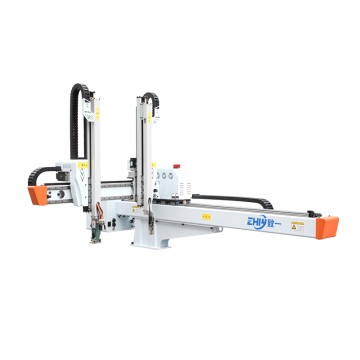
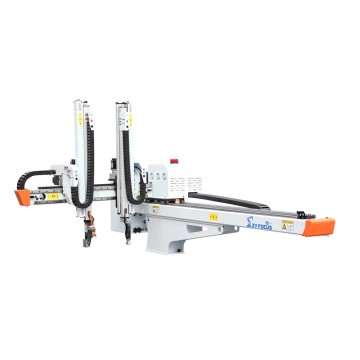
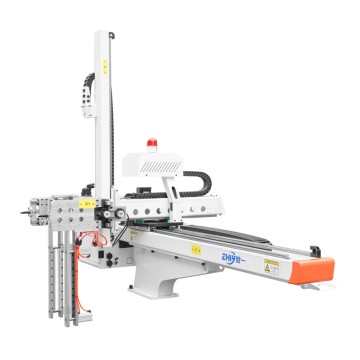
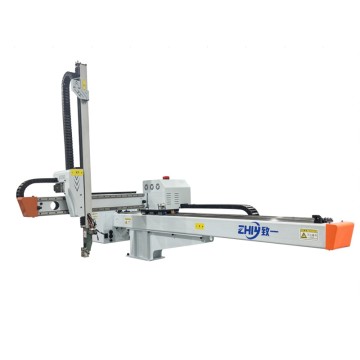
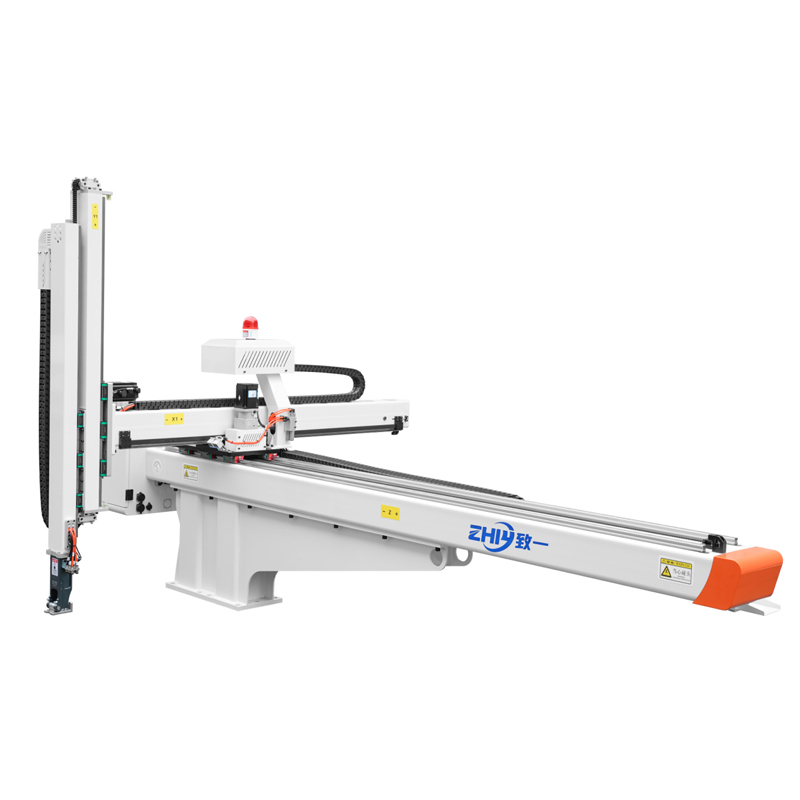
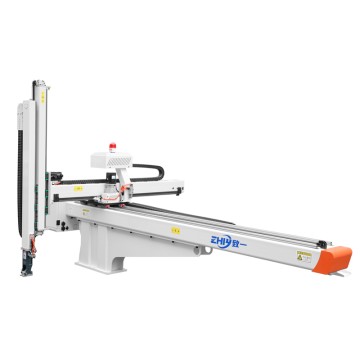
A 3-axis servo manipulator consists of three independent motion axes—vertical (up/down), longitudinal (forward/backward), and lateral (left/right). It features a simple structure with fewer moving parts and is primarily designed to perform basic tasks such as part extraction and handling, making it well-suited for the automated production of standard injection-molded products.
Building upon the 3-axis foundation, a 5-axis servo manipulator incorporates two additional axes: rotation and tilting. This enables the execution of complex operations—such as multi-angle picking and placing, insert molding, and multi-station transfers—while featuring a more precise structure, a higher number of motion axes, and more sophisticated control logic.
Structural complexity directly impacts energy consumption, serving as the fundamental basis for the differences in the energy-saving capabilities of these two systems.
Key Factors Influencing Energy Consumption Differences
Number of Motion Axes
The 3-axis system is driven by only three sets of servo motors, whereas the 5-axis system requires five sets of servo motors working in coordination; consequently, the 5-axis system incurs higher baseline power consumption in both standby and operational states.
Motion Travel and Load
Under equivalent load conditions, the multi-axis linkage required by the 5-axis system increases mechanical friction and drive losses, resulting in higher energy consumption compared to the independent, single-axis movements of the 3-axis system.
Operational Complexity
For simple part extraction tasks, the 3-axis system involves no superfluous movements and thus consumes less energy. For complex tasks—such as insert molding or stacking—although the 5-axis system has higher individual power consumption, its ability to replace multiple separate pieces of equipment results in superior overall energy efficiency.
Servo System Efficiency
High-quality servo drives and energy-saving algorithms can help narrow the energy consumption gap between the two systems; however, the inherent structural advantages of the 3-axis system—specifically its simplicity and efficiency—remain irreplaceable.
3-Axis Manipulators: The Energy-Efficient Choice for Basic Applications
3-axis servo manipulators are the preferred energy-saving solution for standard injection-molded parts and simple part-retrieval scenarios.
Featuring a streamlined structure, they exhibit low standby power consumption and stable energy usage during continuous operation.
With no superfluous axes in motion, there is no wasted energy or unnecessary power loss.
Compatible with over 80% of conventional injection molding operations, they reduce electricity costs by 20% to 35% compared to 5-axis systems.
Maintenance costs are low—free from the additional energy consumption and potential failure risks associated with extra axes—making them a more economical choice for long-term operations.
Ideal for standardized injection molding workshops producing daily necessities, packaging materials, and small plastic components; a top priority for buyers seeking low operating costs and high energy efficiency.
5-Axis Manipulators: Balancing Energy Efficiency in Complex Operations
While the power consumption of 5-axis servo manipulators is higher than that of their 3-axis counterparts, they offer unique, comprehensive energy-saving advantages in complex process scenarios.
Multi-axis coordination enables tasks such as insert loading, part flipping, stacking, and multi-station transfers—effectively replacing multiple individual machines and manual labor to reduce overall production line power consumption.
A high-end servo system facilitates precise torque control, eliminating wasted energy from idle running and maximizing energy efficiency during complex movements.
Suitable for high-end injection molding applications—such as automotive components, precision electronic parts, and products requiring inserts—a single unit can execute multiple processing steps, resulting in lower overall energy consumption than a combination of multiple 3-axis units.
The "high power consumption" associated with 5-axis systems is relative only to basic applications; within the context of complex manufacturing processes, they represent a highly cost-effective and energy-efficient choice.
Energy-Saving Selection Recommendations for Various Injection Molding Scenarios
Standard Part Extraction (No Complex Movements) → Choose a 3-axis servo manipulator; it offers the highest energy savings and lowest cost.
Multi-Station Transfer / Product Flipping → Choose a 5-axis servo manipulator; it results in lower overall energy consumption for the production line.
Small-to-Medium Injection Molding Plants (Cost-Conscious) → Prioritize 3-axis manipulators; they offer distinct energy-saving advantages per individual unit.
High-End Precision Parts / Automated Production Lines → 5-axis manipulators are a better fit, offering the optimal balance between process capability and energy efficiency.
Practical Tips for Enhancing Manipulator Energy Efficiency
Match the manipulator model to the actual load to avoid energy waste caused by "oversizing" (using a large machine for a small task).
Activate the servo energy-saving mode to reduce power consumption during standby and idle states.
Optimize motion paths to shorten travel distances and minimize unnecessary movements.
Perform regular maintenance on guide rails and motors to reduce frictional losses.
Integrate energy-efficient electrical control systems to boost overall drive efficiency.
Core Summary: Energy Consumption Comparison of 3-Axis vs. 5-Axis Manipulators
Basic Injection Molding Scenarios: 3-axis servo manipulators are more energy-efficient, featuring lower energy consumption per unit and lower operating costs.
Complex Process Scenarios: 5-axis servo manipulators offer superior overall energy efficiency; by consolidating multiple tasks into a single unit, they reduce total energy consumption across the production line.
Key Selection Principle: Base your choice on specific production process requirements—rather than simply the number of axes—to ensure a precise match that delivers maximum energy savings.
Amidst the global industrial trend toward cost reduction, whether you choose a 3-axis or 5-axis servo manipulator, selecting the model best suited to your specific production line is the key to maximizing energy savings and boosting your company's competitiveness.
Website:https://www.zhiyirobotics.com/
Email:sales@zhiyirobotics.com
#3-axis servo manipulator #5-axis servo manipulator #Power saving comparison of Injection Molding Machine manipulators #3-axis manipulator energy consumption #5-axis manipulator power consumption #Servo manipulator energy-saving selection #Injection molding automation energy-saving equipment #Manipulator operating cost optimization #Industrial manipulator power saving tips #Energy consumption analysis of injection molding machine manipulators