
Leave Your Message
0102030405
3-Axis Manipulator Manufacturer Strength Evaluation Guide
2026-04-01
3-Axis Manipulator Manufacturer Strength Evaluation Guide
Table of Contents
- Core Logic for Evaluating 3-Axis Manipulator Manufacturer Strength
- Evaluation of Manufacturer’s R&D Technical Strength
- Evaluation of Product Quality & Compliance Certification
- Evaluation of Production Delivery & Scalability Capacity
- Evaluation of Customization & Industry Adaptation Capability
- Evaluation of Global Service & After-Sales Support
- Evaluation of Cost & Long-Term Investment Value
- Common FAQs on 3-Axis Manipulator Procurement
- Conclusion
Core Logic for Evaluating 3-Axis Manipulator Manufacturer Strength
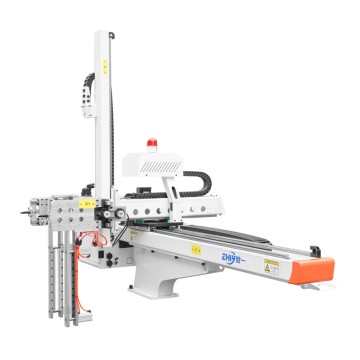
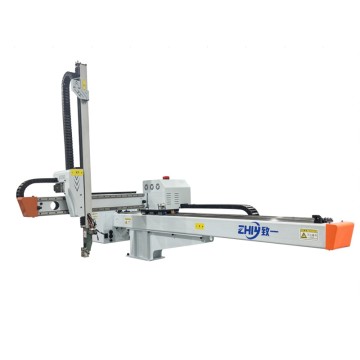
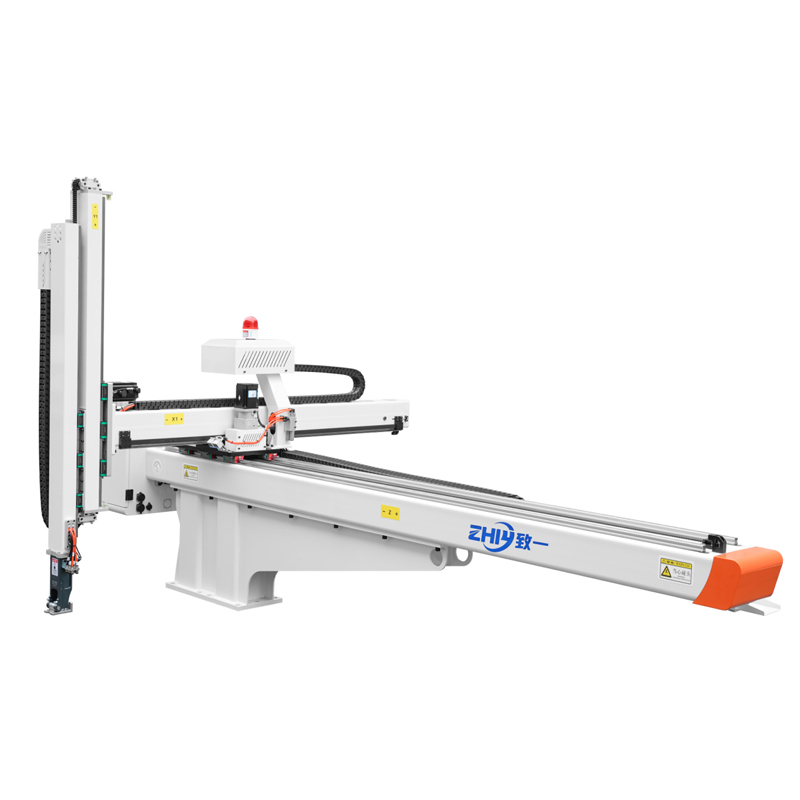
In scenarios such as injection molding automation, part picking & placing, and assembly line handling, 3-axis servo manipulators are core equipment that steadily boosts efficiency, guarantees yield rates, and reduces labor reliance. For global wholesale buyers, selecting a reliable 3-axis manipulator manufacturer cannot only focus on quotations and parameters. It requires comprehensive judgment across technology, quality, delivery, service and long-term costs, ensuring the equipment adapts to production lines, operates stably and creates sustained value.
From an international procurement perspective, this article provides a practical and quantifiable strength evaluation system to help wholesalers quickly screen high-quality partners and reduce procurement risks.
Evaluation of Manufacturer’s R&D Technical Strength
R&D capability determines the precision, response speed, durability and iteration ability of 3-axis manipulators, representing a manufacturer’s core competitiveness.
- Independence of core technology: Whether the servo control system, motion algorithms and structural design are independently developed. Avoid core component dependence that leads to poor compatibility, difficult maintenance and restricted upgrades.
- Precision and dynamic performance: Repeat positioning accuracy, motion speed, acceleration & deceleration control, and multi-axis coordination stability directly affect picking cycle and product consistency.
- Patents & technical accumulation: The number of utility patents and invention patents reflects technological reserves and innovation capacity, supporting stable long-term supply and technical iteration.
- Adaptive development capability: Ability to match different tonnage Injection Molding Machines, product structures and working conditions to enable rapid debugging and deployment.
Evaluation of Product Quality & Compliance Certification
For export wholesale, quality and certifications directly determine customs clearance eligibility, stable operation and compliance with local safety standards.
- Authoritative international certifications: Prioritize manufacturers with ISO9001 and CE certifications to meet market access requirements in Europe, America and most regions, lowering compliance risks.
- Raw materials & craftsmanship: Selection of machine frame steel, servo motors, reducers and transmission parts, together with welding, assembly and aging testing procedures, determine equipment lifespan and failure rates.
- Factory inspection standards: Implementation of full-process tests including load testing, durability testing, precision rechecking and protection testing to ensure consistency in bulk orders.
- Structural stability: High-rigidity design and deformation resistance support long-term continuous production and minimize downtime maintenance.
Evaluation of Production Delivery & Scalability Capacity
Wholesale procurement values stable lead times, batch consistency and production capacity to avoid supply interruptions, delays or quality fluctuations.
- Annual production capacity: Output volume reflects mature production lines that can fulfill bulk orders and continuous replenishment demands.
- Supply chain management: Stable supply of core components, standardized production workflows and strict quality control guarantee unified quality for mass delivery.
- On-time delivery rate: Historical order fulfillment performance is a key indicator for assessing management capability and reliability.
- Project case volume: Large numbers of practical applications prove the equipment is market-verified and adaptable to diverse industry scenarios.
Evaluation of Customization & Industry Adaptation Capability
Different products, molds and production lines require tailored 3-axis manipulator solutions. Customization capability determines whether equipment can deliver real operational improvements.
- Structural customization: Flexible adjustments for single/double arms, single/double sections, stroke length, load capacity and installation methods to match various injection molding machines and picking paths.
- Functional customization: Support for insert molding, trimming, stacking and vision system integration to fulfill complex process demands.
- Software customization: Programmable controls, multi-formula storage, fault diagnosis and data feedback adapt to diverse operational habits and management needs.
- Industry experience: Mature solutions for household appliances, automotive parts, 3C electronics and packaging reduce on-site debugging risks.
Evaluation of Global Service & After-Sales Support
In cross-border procurement, service quality directly affects equipment installation, commissioning, maintenance and long-term operating costs.
- Pre-sales support: Professional selection calculation, solution design, simulation and technical consultation to ensure accurate requirement matching.
- Global response: Multilingual technical support, remote debugging and fast spare parts supply shorten downtime caused by malfunctions.
- Installation training: Detailed installation guidance, operational training and maintenance manuals help clients achieve fast onboarding.
- After-sales guarantee: Comprehensive warranty policies, lifelong technical support and upgrade services ensure long-term stable equipment operation.
Evaluation of Cost & Long-Term Investment Value
Wholesale buyers should not only focus on unit price but calculate overall operating costs and return on investment cycles.
- Initial procurement cost: Reasonable pricing aligned with quality and configuration prevents low-cost inferior equipment from causing excessive long-term maintenance expenses.
- Operating costs: Low energy consumption, low failure rates and easy maintenance reduce long-term expenses on power, spare parts and labor.
- Efficiency improvement: Stable high-speed operation shortens production cycles and increases yield rates for faster investment recovery.
- Resale value & upgradability: Durable structures and software upgrade support extend equipment service life and enhance asset value.
Common FAQs on 3-Axis Manipulator Procurement
1. How to choose between a 3-axis manipulator and a 5-axis manipulator?
3-axis manipulators suit standard picking, handling and stacking with stable performance and cost advantages. 5-axis models are ideal for complex angle flipping, side picking and deep-cavity products. Buyers can select based on product structure.
2. How to verify qualified precision for a 3-axis manipulator?
Focus on repeat positioning accuracy. Standard injection picking requires within ±0.1mm, while high-precision products demand stricter standards. Request official test reports and actual operation videos.
3. Which certifications matter for export procurement?
CE and ISO9001 are essential for mainstream markets. Additional local electrical and safety standards may apply to specific regions.
4. How to ensure consistent quality for bulk orders?
Cooperate with manufacturers owning standardized production lines, strict quality control and large-scale delivery capacity. Request batch inspection reports and sample testing.
5. How to evaluate long-term usage costs?
Calculate overall expenses including energy consumption, failure frequency, spare parts prices, warranty terms and maintenance difficulty instead of merely comparing unit prices.
Conclusion
Selecting a qualified 3-axis manipulator manufacturer requires comprehensive evaluation of technology, quality, delivery, service and cost. For international wholesale buyers, premium manufacturers feature independent R&D, stable quality, scalable production, strong customization and global service systems. They can satisfy current orders while supporting long-term business growth.
Reasonable evaluation of manufacturer strength effectively reduces procurement risks, improves equipment return rates and establishes stable long-term supply chain partnerships.
#3-axis manipulator #3-axis Servo Manipulator #3-axis manipulator manufacturer #injection molding 3-axis manipulator #servo manipulator procurement #3-axis manipulator wholesale #industrial manipulator factory #automated pick-and-place manipulator #injection molding automation equipment #3-axis manipulator export