
Leave Your Message
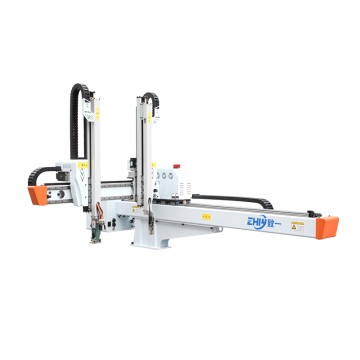
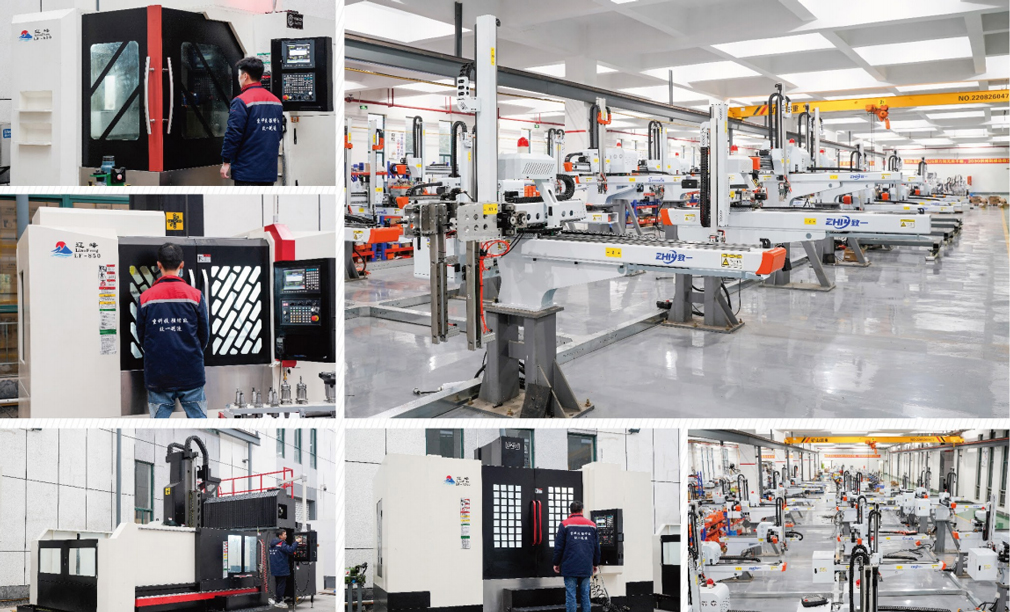
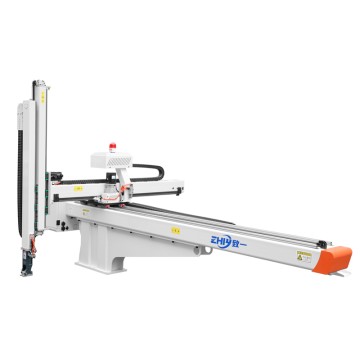
2026 Global Servo Robot Market Development Trend Forecast
2026 Global Servo Robot Market Development Trend Forecast
I. Continued Market Expansion, Servo Drives Become the Core Growth Engine
The global servo robot market is expected to continue its high growth trend in 2026. According to MarketsandMarkets, the global electric robot market (with servo drives as the mainstream) is projected to exceed US$21 billion, maintaining a high CAGR of 10.7%. This growth is primarily driven by three main factors:
Irreplaceable Demand for Manufacturing Automation: Global labor costs are rising by an average of 8%-12% annually, driving industries such as automotive and electronics to accelerate the replacement of manual labor with servo Robotic Arms. The penetration rate of servo robotic arms in the industrial sector is projected to reach 42% by 2026.
Improved Cost-Effectiveness:Breakthroughs in the localization of servo motors and reducers (outside of China) have led to a 23% decrease in the unit price of mid-range five-axis servo robotic arms compared to 2021, shortening the return on investment cycle to less than 1.8 years.
Explosive Growth in Emerging Markets:Southeast Asia, India, Mexico, and other manufacturing relocation destinations are expected to see a year-on-year increase of over 35% in servo robotic arm procurement by 2026, with five-axis products showing a significantly higher growth rate than the industry average.
II. Three Major Directions in Technological Iteration, Reshaping Core Product Competitiveness:
1. Deep Integration of Intelligent Sensing and Control Technologies
AI + Visual Guidance: 3D vision systems equipped with deep learning algorithms are becoming standard in mid-to-high-end servo robotic arms, with a penetration rate expected to reach 65% by 2026, improving positioning accuracy to… ±0.01mm accuracy, supporting unstructured environment operations. Force control feedback upgrade: The cost of six-dimensional force sensors has decreased by 40%, driving the application of five-axis servo robots in precision assembly, grinding, and other scenarios. Leading companies such as ABB and FANUC have launched mass-produced models with force control accuracy reaching 0.1N. Edge computing deployment: Over 90% of high-end servo robots will integrate edge computing modules to process sensor data in real time, with multi-axis collaborative response latency below 1ms.
2. Modular and flexible design becomes mainstream. Three-axis servo robots are evolving towards "standardized modules + customized end effectors," shortening the delivery cycle from 3-4 months to 45 days. Five-axis products break through traditional structural limitations; modular joint design reduces maintenance costs by 30%, while supporting rapid switching between multiple scenarios to adapt to small-batch, multi-variety production needs. Human-Robot Collaboration safety technology upgrade: ISO/TS 15066 certification coverage reaches 90%, and the proportion of collaborative servo robots without safety fences will increase to 28%.
3. Energy Efficiency and Green Manufacturing Adaptation: The European market leads the R&D of energy-efficient servo robots. By 2026, products compliant with the EU ERP directive will account for over 70%, with energy consumption reduced by 25%-35% compared to traditional models. Regenerative braking technology and high-efficiency motor design have become core competitive advantages. Japanese manufacturers maintain technological leadership in the field of low-power optimization of harmonic reducers.
III. Restructuring of Regional Markets, Differentiated Growth Paths Emerging
1. North America: High-End Market Leads Technological Innovation: The semiconductor manufacturing reshoring policy drives demand for six-axis and above high-precision servo robots. Imports are expected to increase by 29% in 2026, with premiums for specialized models in the medical and aerospace fields reaching 120%. Patent applications for AI vision sorting, remote control, and other technologies account for 44% of the global total. Tesla and Apple supply chains drive a surge in the procurement of miniature servo robots.
2. Europe: Green and Safety Standards Drive Upgrades: The EU's "Industry 5.0" strategy requires 80% of production lines to achieve human-machine collaboration by 2026, with collaborative servo robots showing rapid growth. 32.5% Germany leads modular servo solutions for automotive manufacturing; installation of specialized robotic arms in Italy's ceramics industry surged 45% year-on-year; carbon border tax policies are forcing companies to purchase energy-efficient equipment.
3. Emerging Markets: Explosive Demand for Basic Automation
The textile and electronics assembly industries in Southeast Asia are driving the adoption of three-axis servo robotic arms; Vietnam's automation investment is projected to grow by 41% in 2026. India's smart manufacturing plan reduces import tariffs on robots by 30%, but infrastructure shortcomings are leading to strong demand for system integration services, with local service providers growing at over 50%.
IV. Application Areas Break Boundaries, Niche Market Opportunities Emerge
1. Deep Penetration into Traditional Industries
New Energy Vehicle Battery Module Assembly: The usage rate of five-axis servo robotic arms increased from 23% in 2024 to 38% in 2026, supporting rapid changeover on flexible production lines.
3C Electronics Precision Manufacturing: The penetration rate of micro servo robotic arms in semiconductor packaging and testing reached 62%, with repeatability requirements exceeding ±0.005mm.
2. Emerging Fields Accelerate Expansion
Healthcare: The market size of surgical assist servo robotic arms has exceeded $3.5 billion, with orthopedic-specific models accounting for over 45% of demand. Force control and vision-based collaborative technologies have become core barriers to entry.
Logistics & Warehousing: Special servo robotic arms for cold chain logistics are growing at a rate of 23%, with Japanese and Dutch companies leading the R&D of low-temperature adaptability technologies.
Agricultural Automation: Servo robotic arms for harvesting cash crops are growing at a rate of 17% annually, with five-axis products capturing 60% market share due to their flexible operation advantages.
V. Evolution of the Competitive Landscape: Coexistence of Giant Monopolies and Niche Breakthroughs
International leading companies (FANUC, ABB, Yaskawa Electric) monopolize the high-end market with their core component technologies, maintaining a combined market share of over 55% in 2026.
Regional manufacturers focus on niche markets: North American companies focus on AI-enabled solutions, European manufacturers strengthen their green and energy-saving advantages, and emerging market local companies break through with high-performance, cost-effective three-axis products.
Increased Mergers and Acquisitions: Industry M&A activity is expected to increase in 2026. 40%, with core focus on three major areas: servo systems, vision technology, and industry solutions.
Conclusion: Key Success Factors for 2026
The global servo robot market is undergoing a triple transformation: technological iteration, scenario expansion, and regional restructuring. Companies need to focus on three key areas: first, upgrading the precision and efficiency of core components such as servo motors and reducers; second, deeply cultivating customized solutions for vertical industries, especially focusing on high-growth sectors such as new energy, healthcare, and logistics; and third, adapting to regional policy guidance, strengthening technological innovation in North America, deploying green products in Europe, and optimizing cost structures in emerging markets. With the deepening of intelligent manufacturing, three-axis and five-axis servo robots with "high precision + high flexibility + intelligence" will become the core infrastructure for the upgrading of global manufacturing.
#Send Robot#Servo Motor Arm#Swing Robot#Teach In Robot#The Robot Co