Leave Your Message
0102030405
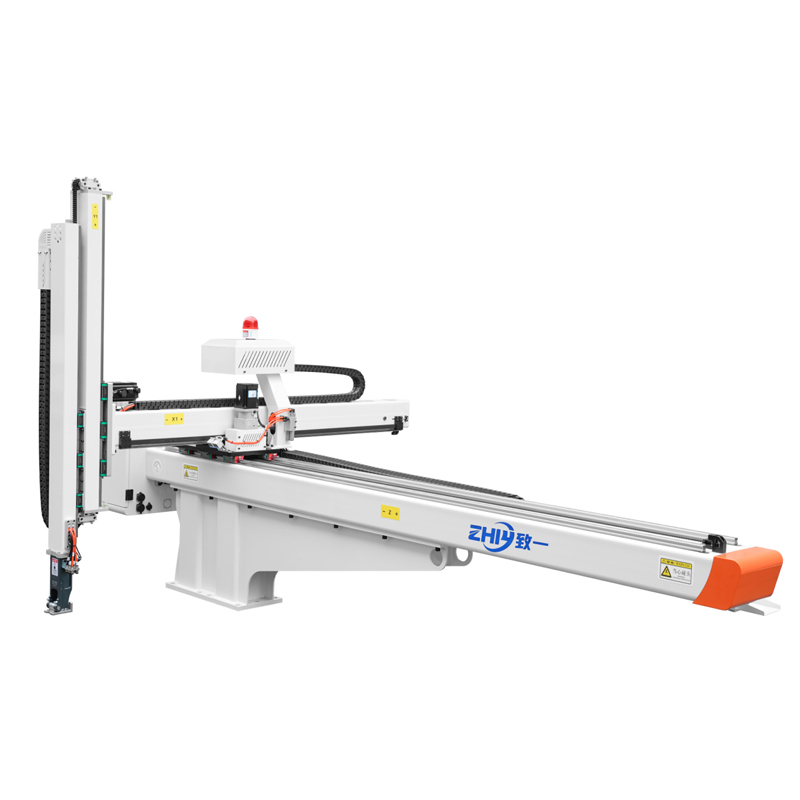
Injection Molding Machine Servo Manipulators Factory Certification Guide
2026-04-23
Injection Molding Machine Servo Manipulators Factory Certification Guide
Injection molding automation relies heavily on high-performance servo manipulators to ensure stable output, consistent quality, and compliance with global safety and quality regulations. For global buyers, importers, and project managers, factory certifications are not just formalities—they are direct proof of a supplier’s ability to deliver reliable, safe, and market-compliant equipment. This guide walks you through the essential certifications for injection molding machine servo manipulator factories, what each certification covers, and how to verify them during supplier evaluation.
Table of Contents
- Why Certifications Matter for Servo Manipulator Suppliers
- Core Quality & Management System Certifications
- Key Product Safety & Performance Certifications
- Regional Market Access Certifications
- How to Verify Factory Certifications Effectively
- Red Flags to Watch During Supplier Audit
- Conclusion: Build Confidence with Certified Suppliers
Why Certifications Matter for Servo Manipulator Suppliers
Servo manipulators for injection molding operate in high-speed, high-cycle industrial environments. Poorly manufactured or uncertified equipment can lead to production downtime, safety incidents, inconsistent part quality, and even non-compliance with import regulations in your target market.
Certified factories demonstrate:
- Stable and repeatable production processes
- Compliance with international safety and performance standards
- Traceable quality control from raw materials to finished goods
- Eligibility for customs clearance and market access in major regions
- Lower long-term operational and maintenance costs
For buyers, working with certified suppliers reduces risk, speeds up project deployment, and supports continuous production efficiency.
Core Quality & Management System Certifications
These certifications validate a factory’s overall management system, process control, and quality assurance capability.
ISO 9001 (Quality Management System)
- Purpose: Ensures the factory maintains a formal quality management system covering design, production, testing, and after-sales service.
- What it covers: Process standardization, document control, non-conformity handling, continuous improvement, customer satisfaction.
- Why it matters: Foundation for consistent product quality and reliable delivery.
- Buyer check: Valid certificate with correct scope including “manufacture of Industrial Robots / servo manipulators for injection molding machines”.
ISO 45001 (Occupational Health & Safety)
- Purpose: Confirms the factory follows safe production practices to protect workers and reduce workplace accidents.
- Relevance: Responsible manufacturing indicates better discipline and equipment reliability.
ISO 14001 (Environmental Management)
- Purpose: Shows compliance with environmental laws and sustainable production.
- Benefit: Reduces supply chain risks related to environmental regulations.
Key Product Safety & Performance Certifications
These certifications apply directly to the servo manipulator products and are often mandatory for market access.
CE Certification (EU Market)
- Directive compliance:
- MD (Machinery Directive): Mechanical safety, risk assessment, emergency stop, guard design.
- EMC (Electromagnetic Compatibility): Ensures equipment does not interfere with other machinery and is immune to external interference.
- LVD (Low Voltage Directive): Safety of electrical systems under 75V–1500V DC / 50V–1000V AC.
- Standards referenced: EN ISO 10218 (robots and robotic devices safety), EN 60204 (safety of machinery electrical equipment).
- Buyer check: Certificate includes product model, technical file availability, EU authorized representative details.
ISO 13849 (Functional Safety)
- Purpose: Validates safety-related parts of control systems (e.g., safety relays, PLC safety functions, emergency stops).
- Critical for: High-speed pick-and-place, heavy-load manipulators, and automated production lines.
- Indicator: Factory can provide PL (Performance Level) or CAT (Category) ratings.
ETL / UL Certification (North America)
- Purpose: Product safety certification for the US and Canadian markets.
- Covers: Electrical safety, mechanical stability, temperature rise, overload protection.
- Note: Often required for customs and insurance purposes.
CR Certification (China Robot Certification)
- Purpose: National-level safety and performance certification for industrial robots in China.
- Covers: Safety, EMC, functional safety, and basic performance.
- Relevance: Strong quality benchmark for export-oriented factories.
Regional Market Access Certifications
Different regions have specific requirements for injection molding automation equipment.
| Region | Key Certification | Purpose |
|---|---|---|
| European Union | CE | Mandatory for free movement within the EU |
| North America | UL / ETL | Product safety compliance |
| Southeast Asia | SIRIM, TISI, etc. | National market entry requirements |
| Middle East | G-Mark | Conformity for Gulf countries |
| Global | ISO 9001 + CE | Widely recognized baseline for importers |
How to Verify Factory Certifications Effectively
- Request original certificates: Check issuer, validity period, product scope, and factory name consistency.
- Verify online: Use official certification database portals to confirm authenticity.
- Audit on-site: Confirm certificate scope matches actual production lines and equipment.
- Check test reports: Ask for EC test reports, EMC reports, safety test data.
- Confirm coverage: Ensure models you plan to purchase are listed in the certificate.
Red Flags to Watch During Supplier Audit
- Certificates expired or issued by unrecognized bodies.
- Scope does not include “injection molding servo manipulators”.
- Inconsistent factory name between certificate and business license.
- Cannot provide technical files, test reports, or calibration records.
- Reluctance to arrange on-site verification or third-party inspection.
Conclusion: Build Confidence with Certified Suppliers
Selecting a certified injection molding servo manipulator factory is one of the most impactful decisions you can make to protect your production efficiency, product quality, and market compliance. Prioritize suppliers with ISO 9001, CE, and product-specific safety certifications to minimize risk and maximize long-term value.
A truly reliable factory not only holds certificates but also uses certified processes to design, produce, test, and support every servo manipulator—so you can deploy automation with confidence.
Email:sales@zhiyirobotics.com
Phone:15215884071