Leave Your Message
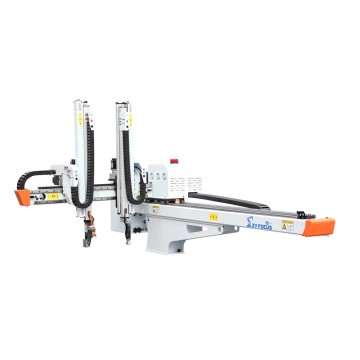
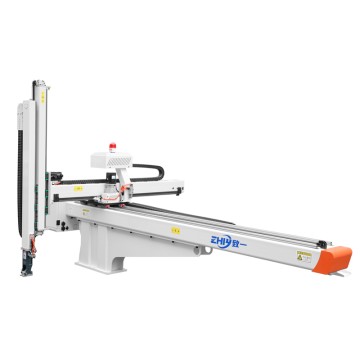
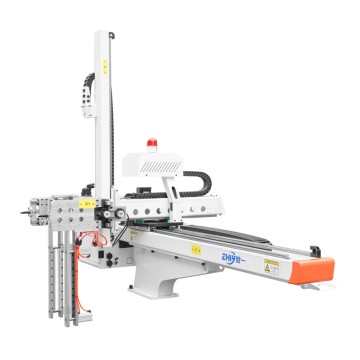
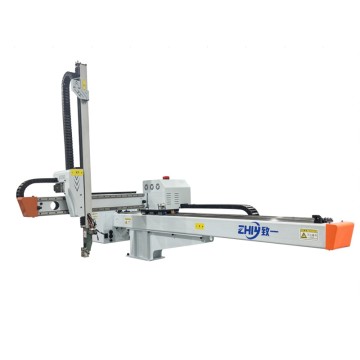
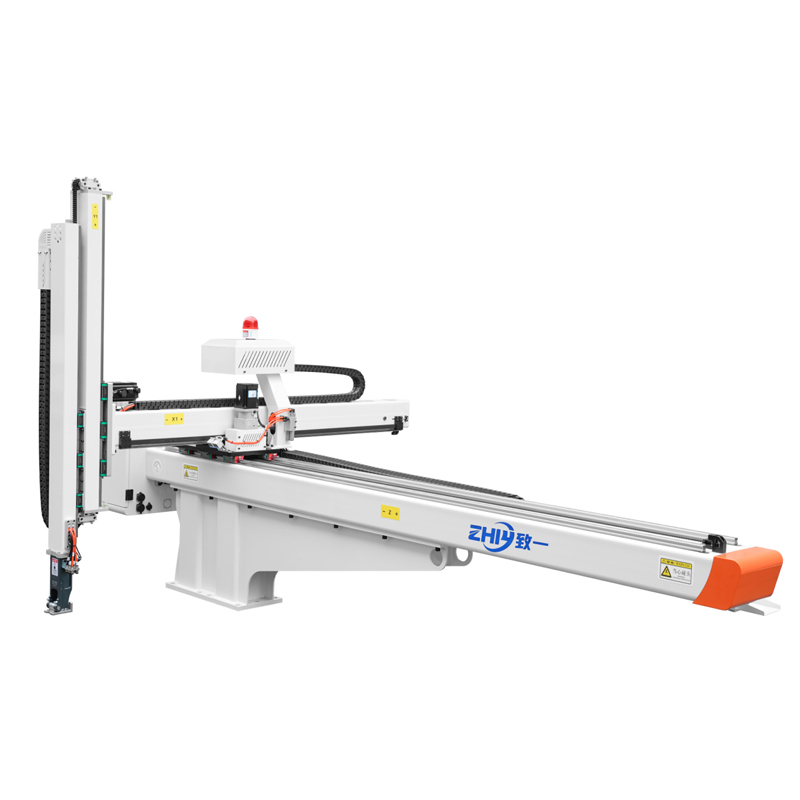
Importance and negotiation of after-sales service terms when purchasing a five-axis servo robot
The Importance and Negotiation of After-Sales Service Terms When Purchasing Five-Axis Servo Robots
Amidst the wave of industrial automation upgrades, five-axis servo robots, with their high precision and flexibility, have become core production partners in the 3C electronics, automotive, and aerospace industries. For cross-border buyers, the performance and price of the equipment are often the focus, but after-sales service terms—the "invisible guarantee" throughout the equipment's lifecycle—are often overlooked.
In fact, five-axis servo robots are technology-intensive, involving precision components such as servo systems, CNC systems, and harmonic reducers. Furthermore, cross-border procurement presents challenges such as regional, time-sensitive, and standard variations. Ambiguous after-sales terms can lead to downtime losses at best, or even disrupt the stability of the entire production line. Today, we will discuss the crucial after-sales terms when purchasing five-axis servo robots, focusing on their importance and negotiation strategies.
First, why are the after-sales service terms for five-axis servo robots so "unusual"?
Unlike ordinary automation equipment, the after-sales service requirements for five-axis servo Robotic Arms are characterized by high complexity, time-sensitive requirements, and cross-border relevance. This makes after-sales terms far more important than in conventional procurement:
1. High Equipment Complexity, Maintenance Depends on Professional Support
The accuracy error of a five-axis servo robotic arm is typically measured in microns, and troubleshooting involves multiple factors: issues could include abnormal servo motor torque, parameter drift in the CNC system, or wear and tear on the mechanical structure leading to trajectory deviation. These issues cannot be resolved through "general repairs"—the supplier must provide original technical diagnostics, specialized tools, and calibration solutions. If the terms and conditions do not clearly specify "original support obligations," buyers may face the dilemma of "no access to repair services." For example, an automotive parts manufacturer purchased a five-axis robotic arm. Because the after-sales terms and conditions didn't specify "precision calibration responsibility," the equipment developed an error of 0.05mm after six months of operation. The supplier refused to perform free calibration, citing "improper operation." The buyer ultimately incurred an additional 120,000 yuan in factory service fees, and the machine was down for three days, delaying the order.
2. Cross-border procurement is time-sensitive, and slow after-sales response = direct losses.
Five-axis servo robotic arms are often critical equipment on production lines. A downtime can result in daily losses of tens of thousands of yuan (or even more). In cross-border procurement, if the after-sales terms and conditions don't specify "response timelines," suppliers may delay response due to geographical distance. This can include untimely remote support, lengthy visa processing for on-site repair personnel, and customs clearance issues for parts shipments. In a case study from a 3C manufacturing company, a servo motor for a five-axis robotic arm failed. Because the terms and conditions only stated "repair as soon as possible" without specifying a specific timeframe, the supplier took 15 days from receiving the repair report to dispatching an engineer, causing production lines to shut down during that time and resulting in direct losses exceeding 800,000 yuan.
3. Component and Compliance Dependency Clauses
Core components for five-axis servo robotic arms (such as harmonic reducers and absolute encoders) are often customized and must comply with the industrial standards of the purchasing country (such as EU CE and US UL). If after-sales terms and conditions are unclear:
An "original supply commitment" for components could lead to the supplier substituting aftermarket parts, resulting in reduced accuracy and shortened lifespan.
Compliance assurance: If regulatory authorities require subsequent rectification of components in equipment that do not meet local standards, the supplier may refuse to assume responsibility.
Second, the "Core Value Points" of After-Sales Service Terms: Five Key Points Buyers Must Focus on
After clarifying their importance, buyers should focus on the "key components" in after-sales terms, as these directly determine the lifecycle costs and risks of the equipment:
1. Warranty Period: Go beyond "one year" and clarify the "coverage."
Conventional equipment warranties often include a "one-year warranty for the entire device," but five-axis servo robots require more detailed stipulations:
Extend the warranty period for core components: For high-value, wearable components such as servo motors, CNC systems, and reducers, it is recommended to stipulate a "two-year warranty," which far exceeds the warranty period for the entire device.
Eliminate vague language regarding "non-quality issues": Clarify that "damage caused by operational errors and force majeure is not covered by the warranty" to avoid subsequent disputes.
Demarcation of responsibilities during the warranty period: Agree that "the supplier will provide free accessories and on-site installation" and cover the engineer's travel and accommodation expenses to avoid additional expenses.
2. Repair Response and Resolution Timeframes: Quantify Standards, Avoid Verbal Promises
Timeframes are crucial for cross-border after-sales service. Terms and conditions should replace vague terms like "as soon as possible" and "timely" with quantifiable figures:
Remote Response Timeframe: Agree to "provide remote technical support within 2 hours of reporting a problem" (e.g., video diagnosis and parameter tuning);
On-site Repair Timeframe: Specify "If remote resolution is unavailable, an original manufacturer's engineer will be dispatched to your site within 7 business days" (note whether the purchasing country has a reserve of engineers. If not, agree to "process temporary visas, which will be shortened to 5 business days");
Downtime Compensation Agreement: If downtime is caused by the supplier's failure to respond/resolve the problem on time, agree to "deduct 10% of the monthly equipment rental fee for each day exceeded" (applicable to leasing or installment purchase scenarios).
3. Parts Supply Guarantee: Avoiding Supply Disruption Risk
If the supply of customized parts for a five-Axis Robot Arm is discontinued, the equipment could be left idle for an extended period. Therefore, the following terms must be in place:
Parts Inventory and Supply Cycle: Suppliers are required to establish a parts warehouse in the purchasing country or a nearby region, and commonly used parts (such as encoders and sensors) must be delivered within 72 hours.
Alternatives for Discontinued Parts: The agreement stipulates that "if a part is discontinued, the supplier must provide six months' advance notice and a free upgrade to a compatible part." This prevents equipment from becoming obsolete due to part discontinuation.
4. Technical Training and Upgrade Support: Ensuring Long-Term Usability
The operation and maintenance of the five-axis servo robot arm requires specialized skills, so after-sales terms and conditions must include "technical empowerment" content:
Number and number of free training sessions: Within one month of equipment delivery, two factory training sessions will be provided, each training 5 operators and 2 maintenance personnel. The training content must cover "routine maintenance, troubleshooting, and precision calibration."
Software Upgrade Benefits: This clearly states that "basic CNC system software upgrades" (such as function optimization and compatibility improvements) will be provided free of charge during the equipment's lifecycle, avoiding additional charges for subsequent upgrades.
5. Dispute Resolution and Responsibility Allocation: A "Safety Net" for Cross-Border Procurement
Due to regional differences, the resolution method for post-sales disputes must be agreed upon in advance:
Responsibility Determination Mechanism: Agree that "a mutually recognized third-party testing organization (such as SGS or TÜV) will determine the cause of the failure" to avoid unilateral determinations;
Dispute Resolution Methods: Prioritize "an arbitration institution in the purchasing country" (for example, Chinese buyers can choose the China International Economic and Trade Arbitration Commission) rather than the supplier's country to reduce the cost of legal action;
Force Majeure Limits: Clarify that "for post-sales delays caused by force majeure such as epidemics or war, the supplier must provide written certification, and the delay must not exceed 15 days" to avoid indefinite delays.
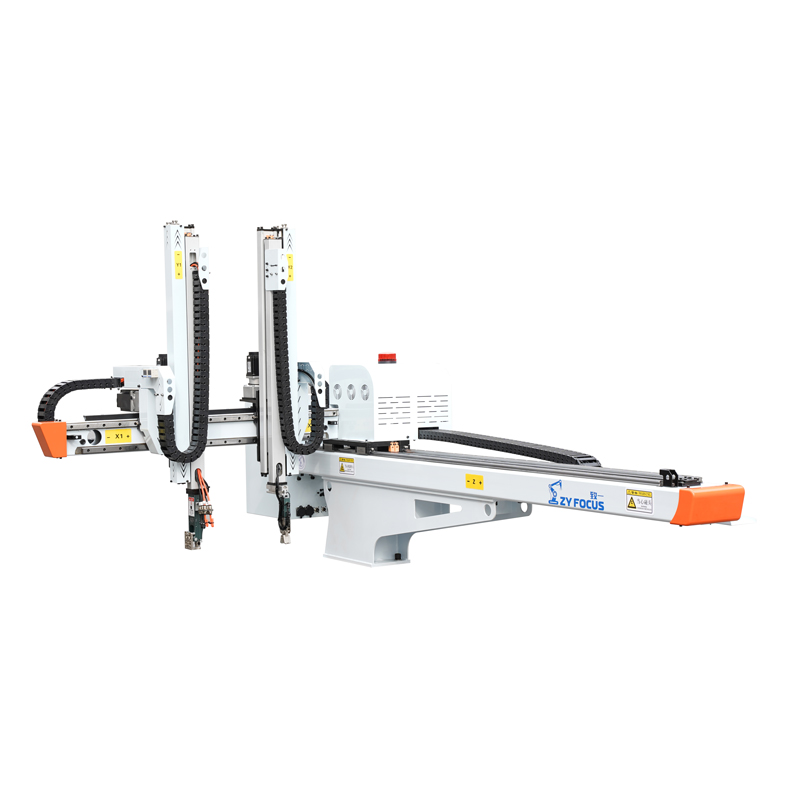
Third, Practical Strategies for Negotiating After-Sales Terms: 3 Steps to Seize the Initiative
After understanding the core terms, buyers must prioritize during negotiations to avoid the trap of trying to cover everything but failing to deliver:
1. Research the supplier's cross-border after-sales capabilities in advance as a bargaining chip
Verify the supplier's after-sales capabilities before negotiations:
Ask them whether they have an after-sales service branch/engineering team in the country of purchase. If so, request that the terms clearly state that "local engineers will be available on-site, with response times shortened to 48 hours."
Review past customer after-sales reviews (such as case studies on independent websites and feedback on industry forums). If there are any issues with after-sales delays, include a penalty clause in the terms (e.g., daily compensation for overdue repairs).
2. Prioritize Risk and Focus on Core Demands
If the supplier refuses to accept all terms, prioritize key items based on risk:
Highest priority: Warranty period for core components, repair response time, and spare parts supply cycle (these three items directly impact the equipment's ability to function properly);
Second priority: Number of technical training sessions and software upgrade benefits (you can negotiate to reduce the number of training sessions by one, but increase online training support);
Flexible concessions: Arbitration for dispute resolution (if the supplier insists on its country of residence, you can agree on arbitration in a neutral third party, such as Singapore or Switzerland).
3. Require "Written and Traceable" Arbitration, Avoid Verbal Promises
All negotiated after-sales agreements must:
Be written into the formal purchase contract, not in a supplemental agreement or verbal promise;
Clearly specify the supplier's "after-sales contact person" (name, contact information, and email address), and stipulate that "any change in the contact person requires 7 days' written notice" to avoid confusion about the responsible person later.
Conclusion: After-sales Service Terms Are a "Long-Term Investment" for Five-Axis Servo Robots
For high-value, long-life equipment like five-axis servo robots, after-sales service terms are more than just a final touch in the procurement process; rather, they are a long-term investment that ensures stable production and reduces overall costs. In cross-border procurement, buyers must move beyond price considerations and prioritize after-sales service terms alongside equipment performance and supplier strength. After all, a robot that can operate stably for five years must be backed by clear and comprehensive after-sales service terms.