Leave Your Message
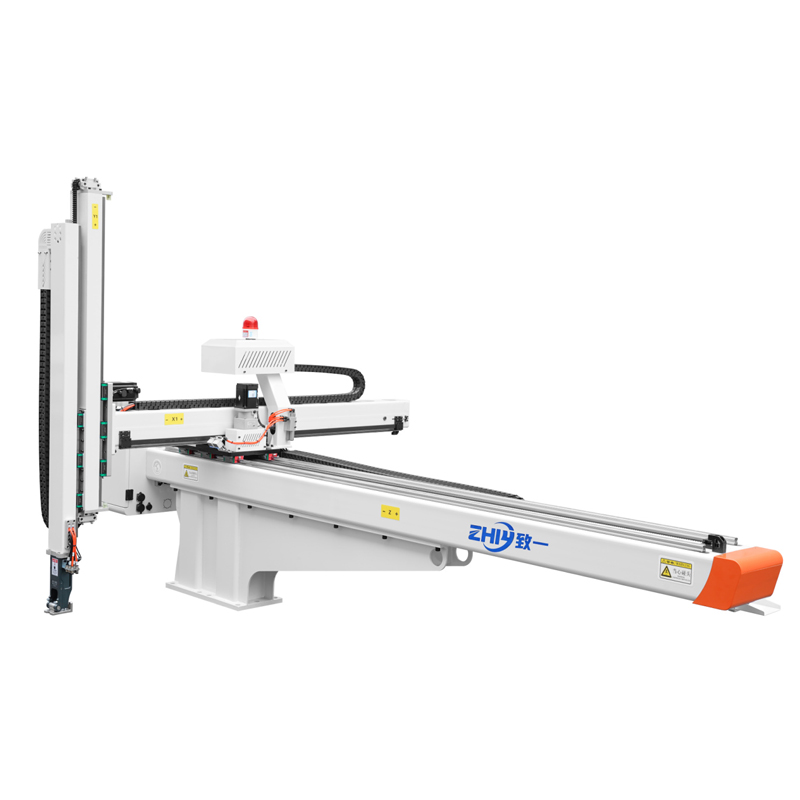
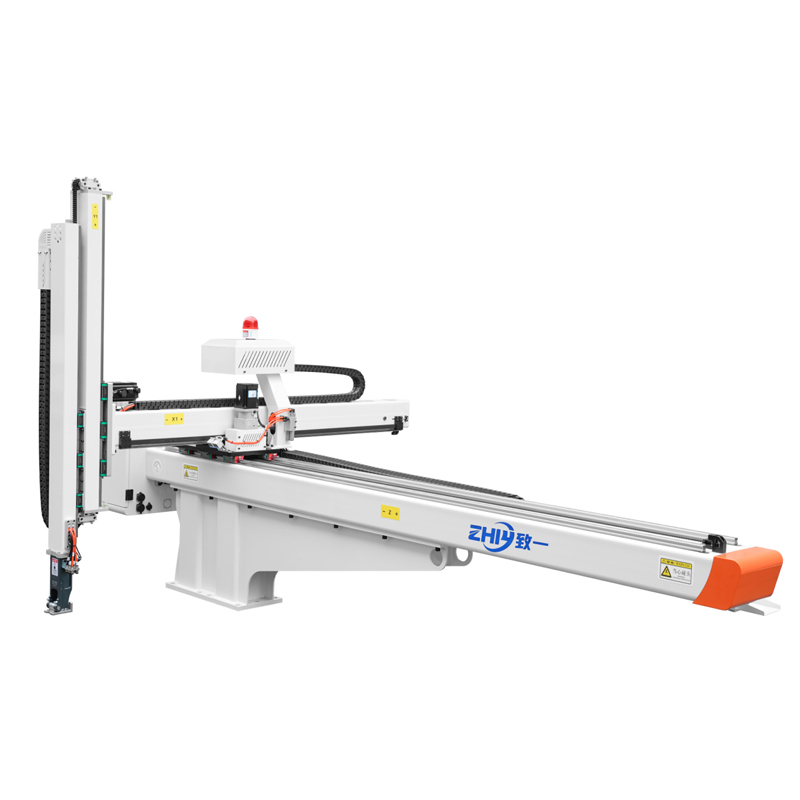
Implementation of Multi-Axis Linkage in a Five-Axis Servo Robot
Implementation of Multi-Axis Linkage in a Five-Axis Servo Robot
1. Core Definition and Industrial Application Value of Multi-Axis Linkage
2. Hardware Architecture Support System of a Five-Axis Servo Robot
3. Core Control Algorithm and Logic Principle of Multi-Axis Linkage
4. Implementation Path of Drive System and Signal Synchronization Technology
5. Software Programming and System Integration Adaptation Scheme
6. Industrial Scenarios Optimization Strategies and Practical Application Cases
1. Core Definition and Industrial Application Value of Multi-Axis Linkage
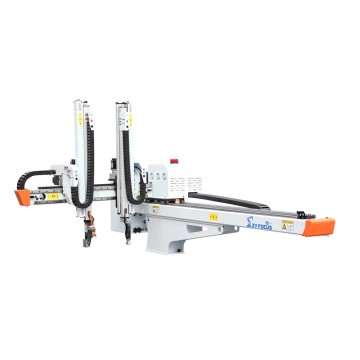
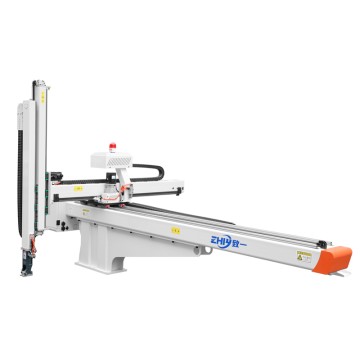
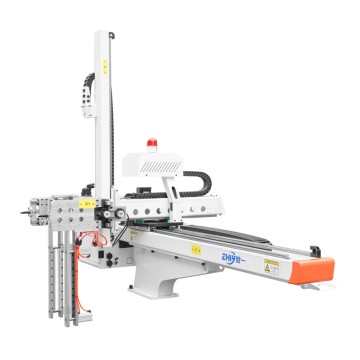
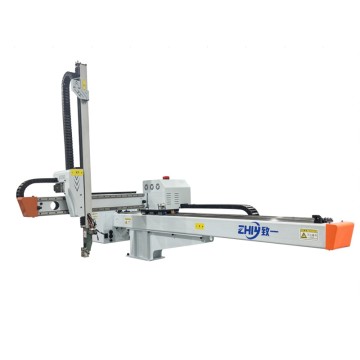
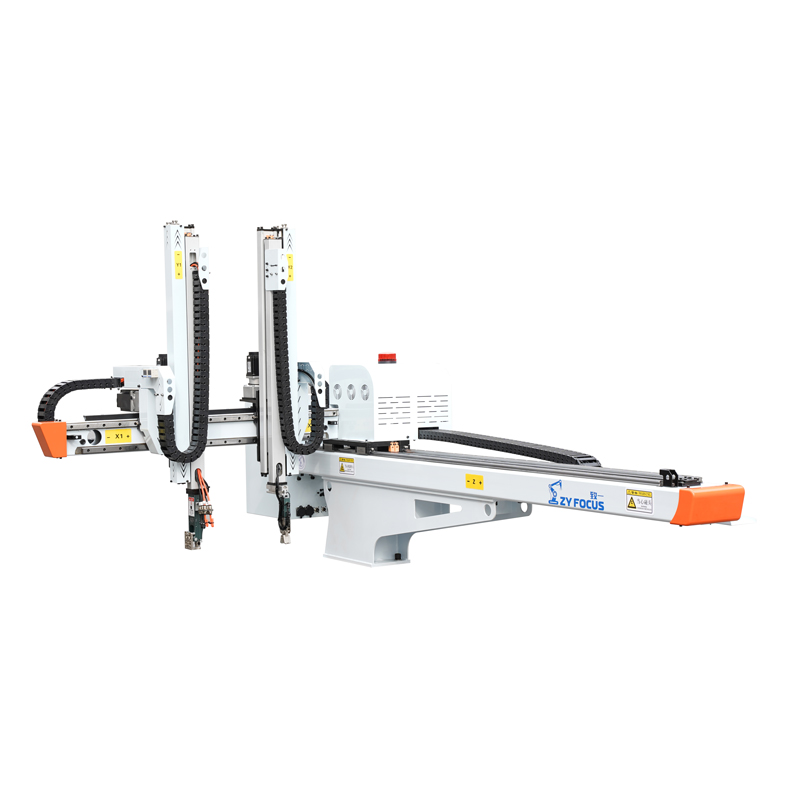
Multi-axis linkage refers to the synchronous and coordinated movement of the five motion axes (usually including X, Y, and Z linear axes and A and B rotary axes) of a five-axis servo robot according to a preset trajectory under the command of the control system, achieving complex spatial posture adjustment and precise operation. Unlike single-axis independent motion, its core advantage lies in breaking the limitations of motion dimensions, allowing the robot to complete multi-directional and multi-angle composite movements.
In industrial settings, the value of this technology is particularly prominent: on the one hand, it significantly improves the processing accuracy and efficiency of complex processes, such as precision parts assembly and complex surface machining, replacing high-precision operations that are difficult for humans to perform; on the other hand, it expands the application boundaries of Robotic Arms, covering multiple industries such as automotive manufacturing, 3C electronics, new energy, and medical devices, adapting to diverse needs from heavy-duty load handling to micro-parts assembly, helping companies achieve production line automation upgrades and capacity increases.
2. Hardware Architecture Support System of the Five-Axis Servo Robot
The realization of multi-axis linkage relies first and foremost on a stable and reliable hardware architecture. The performance of each core component directly determines the linkage effect:
Servo Motors and Reducers: High-precision servo motors (such as permanent magnet synchronous servo motors) are used to provide precise power output, paired with harmonic reducers or planetary reducers to reduce speed, increase torque, and ensure smooth motion. Zhiyi's five-axis robotic arm uses imported-grade servo motors with a positioning accuracy of ±0.01mm, meeting the requirements of high-precision operations.
Motion Controller: As the "brain" of multi-axis linkage, it needs to have multi-axis synchronous control capabilities and support complex trajectory planning. Zhiyi employs a self-developed high-performance motion controller capable of simultaneously processing motion commands across five axes with a response latency of less than 1ms.
Sensor and Feedback Module: Equipped with position sensors such as grating rulers and encoders, it collects motion data from each axis in real time, forming a closed-loop control system to ensure the motion trajectory matches the preset commands and compensates for mechanical errors.
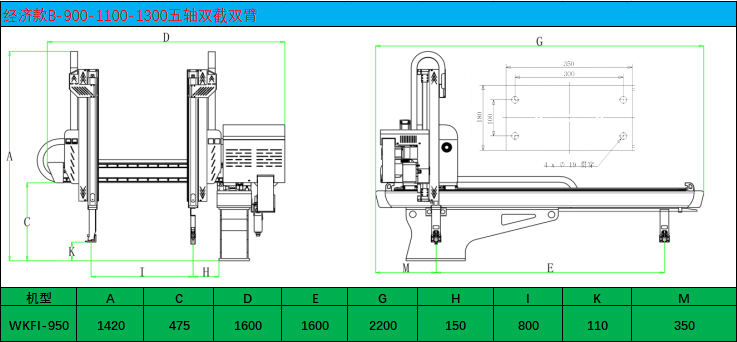
Mechanical Structure Design: Utilizing a modular design for the body and joint structure, it optimizes the mechanical model, reduces motion interference, and enhances the flexibility and stability of axis linkage, adapting to the installation and operation requirements of various industrial scenarios.
3. Core Control Algorithm and Logic Principles for Multi-Axis Linkage
The control algorithm is the core of achieving precise multi-axis linkage, directly determining motion accuracy and trajectory smoothness: Forward and Inverse Kinematics Algorithms: The forward algorithm calculates the actual position of the robot's end effector based on the motion parameters of each axis; the inverse algorithm, based on the target position of the end effector, derives the motion parameters to be executed on each axis, forming the basis for achieving complex trajectories. Zhiyi has optimized the inverse algorithm to shorten calculation time and improve dynamic response speed.
Trajectory Planning Algorithm: Supports various trajectory types including straight lines, circular arcs, and spline curves. Through interpolation calculations, complex motion is decomposed into continuous motion commands for each axis, avoiding shocks caused by abrupt motion changes. For example, in surface machining scenarios, NURBS spline curve planning is used to ensure smooth transitions of the end effector.
Error Compensation Algorithm: Addresses errors caused by factors such as mechanical backlash, load variations, and temperature drift by using algorithms to correct the motion parameters of each axis in real time. This includes geometric error compensation and dynamic error compensation, further improving the accuracy of multi-axis linkage.
4. Implementation Path of Drive System and Signal Synchronization Technology
The key to multi-axis linkage lies in "synchronization." The stability of the drive system and signal transmission directly affects the linkage effect:
Servo Drive Unit: Each motion axis is equipped with an independent servo driver, receiving controller commands and driving the servo motor. The driver must have fast response capabilities, support torque, speed, and position control modes, and adapt to different motion scenarios.
Signal Synchronization Technology: Employing industrial Ethernet buses such as EtherCAT and Profinet, high-speed data transmission between the controller and each driver is achieved, with a bus cycle as low as 125μs, ensuring synchronized command issuance across all axes. Simultaneously, a clock synchronization mechanism eliminates inter-axis deviations caused by signal transmission delays.
Dynamic Load Adaptive Technology: The driver monitors motor load changes in real time and automatically adjusts output parameters. When the robot grips workpieces of different weights or experiences varying resistance, it ensures coordinated movement across all axes, avoiding trajectory deviations caused by uneven loads.
5. Software Programming and System Integration Adaptation Solutions
Flexible software-level adaptation allows multi-axis linkage technology to be quickly integrated into the production systems of different enterprises:
Programming Method Support: Provides multiple programming methods including ladder diagrams, function block diagrams, G-code, and Python scripts, catering to the usage habits of both traditional industrial engineers and technical developers. Supports offline programming; motion trajectories can be preset using 3D simulation software, imported into the controller, and run directly, reducing on-site debugging costs.
**PC-PLC Interaction:** Supports integration with mainstream PLC brands (such as Siemens, Mitsubishi, and Omron) and MES systems, enabling collaborative operation of multiple devices. For example, in a production line, A Robotic arm can receive production instructions from the PLC to perform actions such as material gripping, assembly, and handling. Data is fed back to the MES system in real time, enabling visualized management of the production process.
**Customizable Parameter Configuration:** The software system supports flexible adjustment of parameters such as axis parameters, motion speed, acceleration, and trajectory accuracy. Enterprises can quickly configure adaptation solutions based on their product characteristics and production needs without large-scale hardware modifications.
6. Industrial Scenarios Optimization Strategies and Practical Application Cases
The value of multi-axis linkage technology ultimately manifests in industrial scenarios. Zhiyi has developed mature application solutions through targeted optimization and practical verification:
**Scenario-Based Optimization Strategies:** For heavy-load scenarios, enhance servo motor torque output and mechanical structure rigidity, and optimize trajectory planning to reduce energy consumption; for precision assembly scenarios, improve position feedback accuracy and inter-axis synchronization, and adopt micro-feed control technology; for high-speed handling scenarios, optimize acceleration parameters and path planning to shorten the operation cycle. Practical Application Cases: In automotive parts manufacturing, Zhiyi's five-axis servo robot achieves high-precision drilling and assembly of engine cylinder blocks through multi-axis linkage, controlling the synchronization error between axes within 0.02mm and increasing production efficiency by 40%. In the 3C electronics industry, it completes the curved surface grinding of mobile phone casings, adapting to complex curved surfaces through five-axis linkage, increasing the product qualification rate from 92% to 99.5%. In new energy battery production, it achieves precise stacking and handling of battery electrode sheets, with multi-axis collaboration completing high-speed gripping and positioning, meeting the 24-hour continuous operation requirements of the production line.
Stability Assurance Solution: Through redundant design and a fault self-diagnosis system, the reliability of the equipment during multi-axis linkage is ensured. When an abnormality occurs on a certain axis, the system can quickly switch to standby mode or stop and alarm, avoiding production accidents and product damage.
#Robot Machine#Robot Pendant#Five Robot#Robot A Robot#Robot And Robot#Robot On Robot