
Leave Your Message
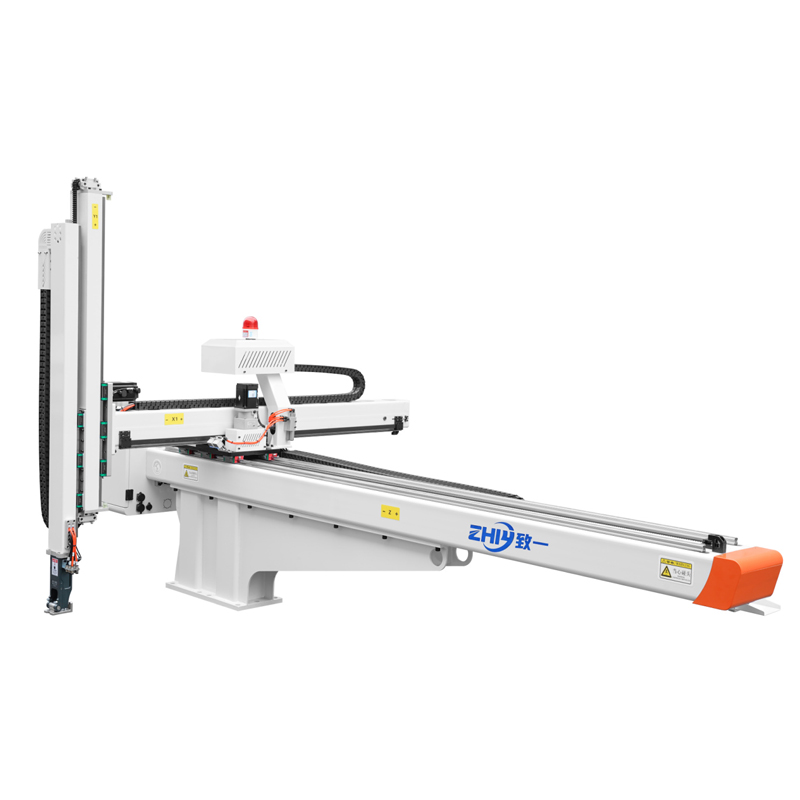
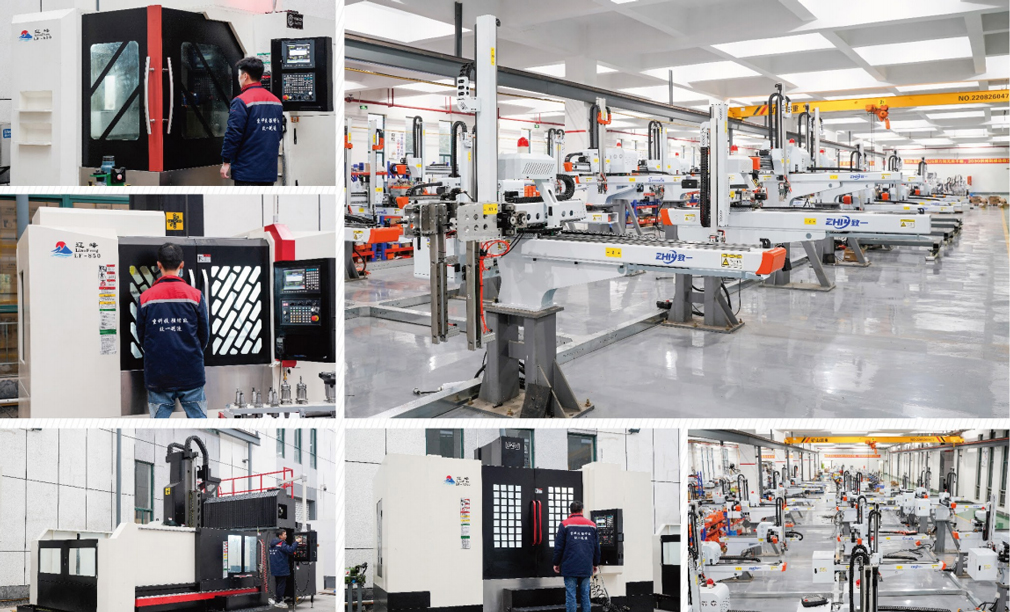
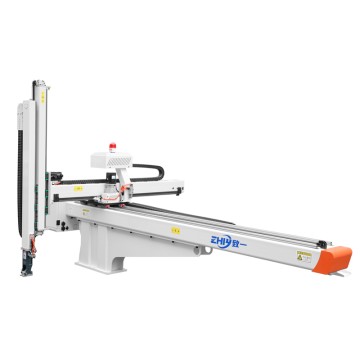
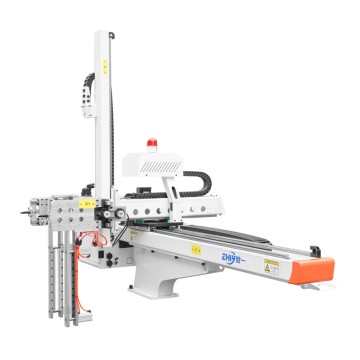
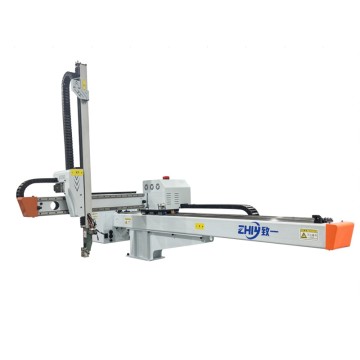
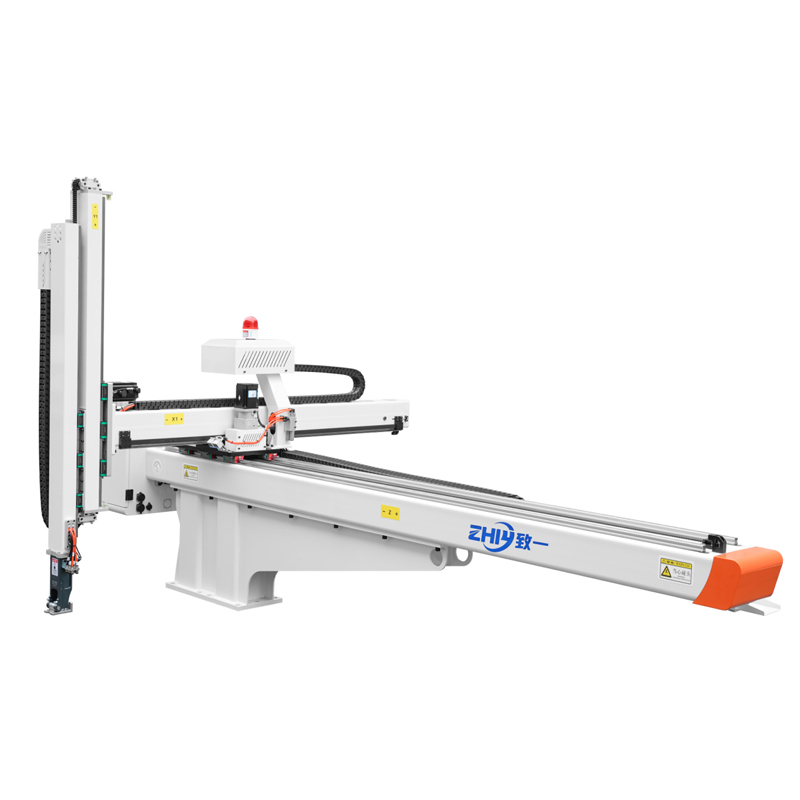
Comparison of Applications of Three-Axis Servo Robots with Different Precision Levels
Comparison of Applications of Three-Axis Servo Robots with Different Precision Levels
In the wave of industrial automation, three-axis servo robots, with their simple structure and strong motion controllability, have become core equipment spanning multiple fields such as electronics manufacturing, automotive industry, and logistics warehousing. Precision, as a core indicator determining its application boundaries, directly impacts production efficiency, product quality, and manufacturing costs. This article will start with the standards for defining precision levels, systematically compare the differences in application scenarios for three-axis servo robots with different precision levels, and outline the core selection logic, providing a reference for industrial practitioners worldwide.
1. Core Standards for Defining the Precision Levels of Three-Axis Servo Robots
2. High Precision Level: High-end manufacturing scenarios under micron-level control
3. Medium Precision Level: Mainstream industrial applications driven by cost-effectiveness
4. Standard Precision Level: Covering essential scenarios for basic automation
5. Core Logic of Precision Selection: A decision-making framework balancing needs and costs
I. Core Standards for Defining the Precision Levels of Three-Axis Servo Robots
In the industrial field, the precision definition of three-axis servo robots mainly revolves around two core indicators: repeatability accuracy (the deviation of the end effector position when the robot repeatedly performs the same action) and absolute positioning accuracy (the deviation between the actual and theoretical end effector positions). Combined with auxiliary parameters such as load capacity and motion speed, this forms a three-level classification system commonly used in the industry. It is important to note that the accuracy grades are not absolutely standardized and may be slightly adjusted depending on the specific needs of the application industry, but the core range remains consistent:
- High Precision Grade: Repeatability ≤ ±0.02mm, Absolute Positioning Accuracy ≤ ±0.1mm. Typically paired with external sensing elements such as linear scales, it adapts to the high-precision combination of servo motors and harmonic reducers, suitable for scenarios with stringent requirements for micro-manipulation.
- Medium Precision Grade: Repeatability between ±0.02mm and ±0.1mm, Absolute Positioning Accuracy ≤ ±0.3mm. Employs the classic configuration of servo motors + planetary reducers, representing the mainstream industrial choice that balances accuracy and cost.
- Standard Precision Grade: Repeatability ≥ ±0.1mm, Absolute Positioning Accuracy ≤ ±0.5mm. Mostly uses servo motors paired with synchronous belts or gear drives, focusing on basic handling and positioning functions.
The essence of this grade classification is to achieve an optimal match between "accuracy requirements and manufacturing costs" through differentiated configurations of drive systems, transmission mechanisms, and sensing elements.
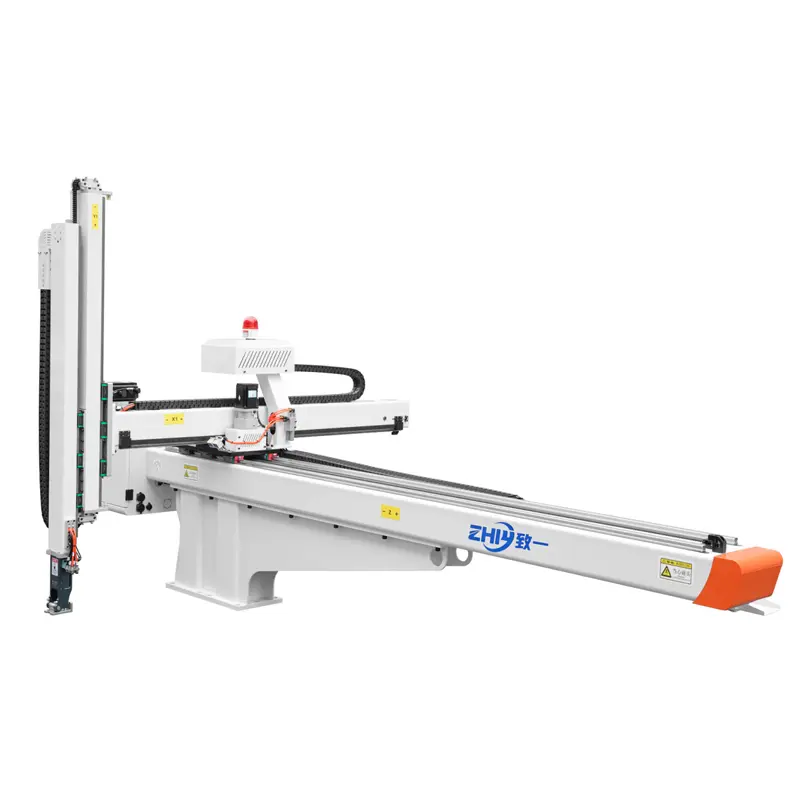
II. High Precision Level: High-End Manufacturing Scenarios Under Micrometer-Level Control
The core value of high-precision three-axis servo robots lies in controlling motion errors at the micrometer level, meeting the stringent "zero-defect" requirements in the manufacturing of high-value products. Their application scenarios generally possess the "three highs" characteristics: high product added value, high process complexity, and high environmental requirements. Typical areas include:
1. Semiconductor and Microelectronics Manufacturing
In silicon wafer processing and chip packaging, the value of a single wafer can reach thousands of euros, and the processing has already completed nearly 90% of the production steps. Any minor error can lead to the scrapping of the entire batch of products. At this point, three-axis servo robots with repeatability accuracy ≤ ±0.01mm are needed to complete automated wafer handling, photoresist coating, and other processes. For example, the high-precision cleanroom robots used by the German company SÜSS MicroTec not only achieve absolute placement accuracy of ±50 micrometers but also meet ISO Class 3 to ISO Class 4 cleanroom requirements, avoiding damage to wafers from static electricity and dust. These Robotic Arms typically employ a Cartesian coordinate configuration, paired with C3-grade ball screws and THK HSR series linear guides. Pre-tensioning eliminates transmission backlash, ensuring smooth, vibration-free movement.
2. Precision Assembly of Medical Devices
In the manufacturing of micro-medical components, such as the assembly of cardiac stent delivery catheters and minimally invasive surgical instruments, part dimensions are often on the millimeter scale, with mating clearances required to be ≤0.02mm. High-precision three-axis servo robotic arms can perform delicate operations such as heat-fusion welding of catheter interfaces and positioning and attaching of micro-sensors. Their repeatability is controlled between ±0.005mm and ±0.01mm, and they are equipped with anti-static wrist straps (ESD rating <10^6Ω) to prevent damage to electronic components. In these applications, robotic arms typically integrate vision inspection systems, adjusting the motion trajectory through real-time feedback to further improve operational accuracy.
3. Precision Electronic Component Packaging
In the chip mounting and PCB board insertion processes of 3C products, high-precision robotic arms must achieve precise alignment of pins and pads, with a repeatability of ±0.01mm. For example, in the mobile phone processor packaging process, after a three-axis servo robot picks up a chip using a suction nozzle, it needs to complete coordinated X/Y/Z axis movements within 0.5 seconds to accurately place the chip at a designated position on the substrate, with a deviation controlled within 5 micrometers. These robots often employ an integrated drive and control system, achieving millisecond-level motion response via the EtherCAT bus to ensure accuracy and stability during high-speed operation.
III. Medium Precision Level: Mainstream Industrial Applications Driven by Cost-Effectiveness
Medium-precision three-axis servo robots, with their core advantages of "moderate precision + controllable cost," occupy more than 70% of the global industrial Robot Market share. They are widely used in large-scale production scenarios such as automobile manufacturing, 3C product assembly, and injection molding. Their precision performance perfectly matches the core requirements of "high-efficiency mass production + stable quality" in these scenarios.
1. Automotive Parts Manufacturing
In automotive welding and interior assembly processes, medium-precision robots (with repeatability accuracy of ±0.05mm to ±0.1mm) can efficiently complete processes such as door hinge installation and dashboard positioning. For example, a domestic OEM uses a three-axis NC robot with a ton-level load capacity. The maximum load per leg exceeds 800 kg, and the repeatability is < ±0.01 mm. This meets the handling requirements of large automotive parts and ensures precise welding point alignment. These robotic arms often employ cylindrical coordinates or articulated configurations, paired with high-torque servo motors and gear transmissions, increasing load capacity while maintaining accuracy, thus boosting production line capacity by 10%-30%.
2. Mid-range Assembly of 3C Products
In processes such as mobile phone casing polishing and laptop screw fastening, mid-precision robotic arms can achieve repeatability of ±0.02 mm to ±0.05 mm, meeting the fitting requirements of parts assembly. For example, the Siweike "Lushan" series three-axis servo robotic arm has a load capacity of 3-8 kg and is compatible with 80-420 ton Injection Molding Machines. It automates the removal and initial positioning of mobile phone mid-frames. Its use of the Huichuan servo system and integrated drive and control design reduces equipment costs while ensuring accuracy. For processes like screw fastening, a 200W servo motor paired with a 1:5 planetary reducer can precisely control the fastening torque and position, preventing stripping or overtightening that could damage parts.
3. Injection Molding Automation
In the injection molding industry, processes such as finished product removal and in-mold labeling require robotic arms with precision requirements ranging from ±0.03mm to ±0.1mm. Shini USA's ST series three-axis servo robots, especially the single-arm model, are compatible with 80-160 ton injection molding machines, with a minimum removal time of only 1.3 seconds, ensuring consistent placement while rapidly removing thin-walled products. The Siweike SW7112DS model, with a 3.3-second idle cycle, is compatible with 450-ton high-speed injection molding machines. Its standard 5kg load capacity allows it to handle both product removal and complex operations like in-mold labeling, demonstrating the functional flexibility of a medium-precision robotic arm.
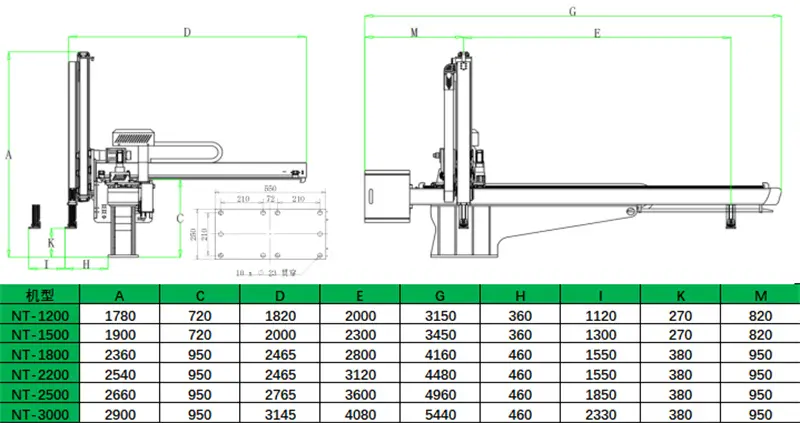
IV. Standard Precision Level: Covering Essential Scenarios for Basic Automation
Standard precision three-axis servo robots focus on "completing basic positioning and controlling costs." Their repeatability is typically between ±0.1mm and ±0.5mm. They are mainly used in scenarios where high positional accuracy is not required, such as handling, sorting, and palletizing. They represent the "entry-level" equipment for automating industrial processes.
1. Logistics Warehousing and Sorting
In scenarios such as express delivery sorting and e-commerce warehousing, robots need to grasp, classify, and stack packages. A repeatability of ±0.2mm to ±0.5mm is sufficient. These applications often use cylindrical coordinate three-axis robots with a θ-axis rotation range of 0°-360°. Combined with a vision recognition system, they can quickly identify package dimensions and barcode information, enabling precise placement in different areas. Their transmission mechanism is often a synchronous belt, costing only 1/3 of a ball screw, and features low noise, simple maintenance, and suitability for 24-hour continuous operation.
2. Food and Packaging Industry
In food packaging and beverage palletizing, standard precision robotic arms can automate the handling of bags and bottles, typically requiring an accuracy of ±0.3mm to ±0.5mm. Considering the hygiene requirements of the food industry, these robotic arms often use stainless steel shells and food-grade lubricant to avoid contamination risks. For example, in a instant noodle packaging production line, a three-axis servo robotic arm can sequentially place noodle cakes and seasoning packets into cartons, with a processing capacity of over 2000 cartons per hour, significantly improving sorting efficiency and reducing labor costs.
3. Heavy-Duty Material Handling
In heavy industrial settings such as forging and casting, robotic arms need to handle blanks or finished products weighing ≥50Kg. In this case, the accuracy requirement can be relaxed to ±0.1mm to ±0.3mm, with a focus on load capacity and structural stability. These types of robotic arms typically employ a steel structure body and hydraulically assisted drive. The X/Y/Z axis travel is customized according to the work area. For example, in an automotive wheel casting workshop, a three-axis servo robot can remove high-temperature wheels from the casting mold and transfer them to the cooling area, avoiding the safety risks of manual operation.
V. The Core Logic of Precision Selection: A Decision-Making Framework Balancing Needs and Costs
Choosing the precision level of a three-axis servo robot essentially involves finding a balance between "process requirements, manufacturing costs, and operational efficiency." The following three core principles can help companies make informed decisions:
1. Prioritize Process Precision
Before selection, the precision threshold of the core processes must be clearly defined: For micro-operations such as semiconductor packaging, a high-precision model with ≤±0.02mm must be selected; for automotive parts assembly, a medium-precision model is sufficient; for basic material handling, a standard-precision product is the optimal solution. For example, PCB soldering requires ±0.01mm precision, while logistics sorting can be relaxed to ±0.5mm. Blindly pursuing high precision will only lead to wasted costs.
2. Balancing Load and Environmental Adaptability
Accuracy is not the only metric; a comprehensive assessment based on load requirements is necessary. In heavy-duty scenarios, even with moderate accuracy requirements, a medium-precision model with a high-rigidity structure is required. In cleanroom environments, high-precision cleanroom robots should be prioritized, rather than simply pursuing cost reduction. For example, in the medical industry, drug sorting, while requiring ±0.1mm accuracy (which falls within the medium precision range), necessitates a dustproof and anti-static structure, a selection logic entirely different from that of ordinary industrial scenarios.
3. Calculating the Total Lifecycle Cost
The procurement cost of a high-precision robot is approximately 3-5 times that of a standard-precision robot, and maintenance costs (such as grating ruler calibration and harmonic reducer replacement) are even higher. Companies need to calculate the difference between the "reduction in scrap rate due to improved accuracy" and the "additional investment costs." If a chip packaging scenario results in a 5% scrap rate due to insufficient accuracy, the additional investment in a high-precision robot can be recovered within 3 months; however, in ordinary logistics scenarios, this cost is completely unnecessary.
Conclusion
There is no absolute superiority or inferiority among three-axis servo robots with different precision levels; the difference lies only in their "suitability for various scenarios." From micron-level semiconductor manufacturing to meter-level logistics sorting, the selection of precision level always revolves around the core logic of "meeting process requirements and controlling reasonable costs." With the development of servo drive and detection technologies, three-axis servo robots are achieving a dual breakthrough in "high precision" and "low cost," and will enable precise empowerment in more industrial scenarios in the future.
Three Axis Servo Robot#Robots Arm 250-350t#3 Axis Servo Robot#Axis Servo Robot#Threeaxis Servo Robot Arm
Website:https://www.zhiyirobotics.com/
Email:sales@zhiyirobotics.com