
Leave Your Message
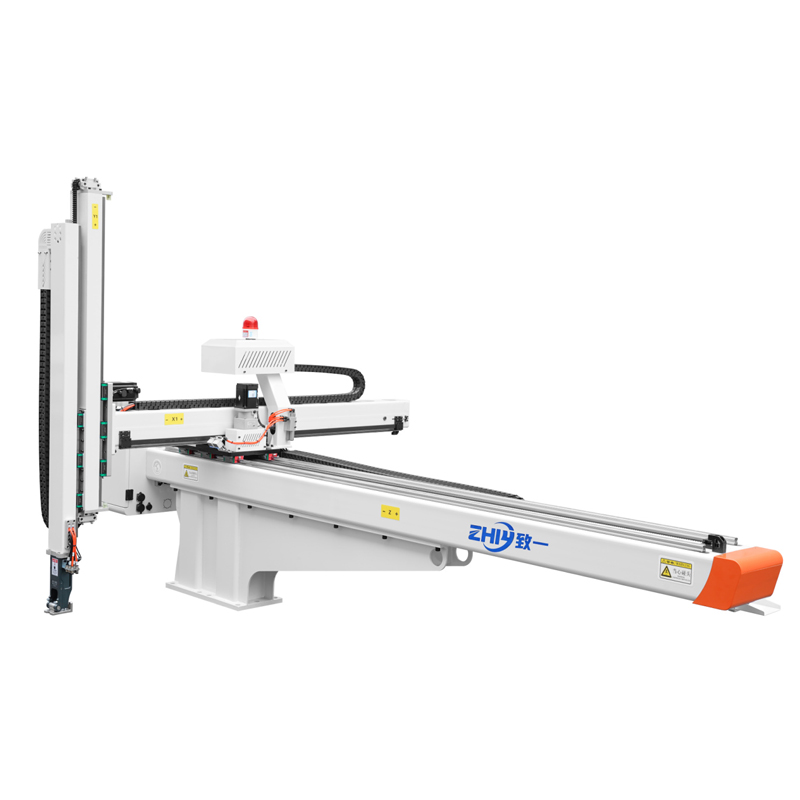
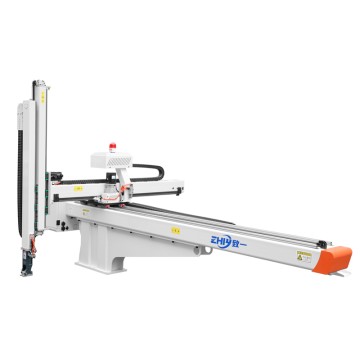
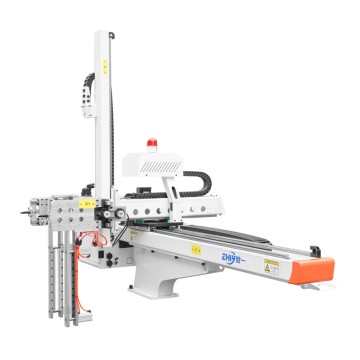
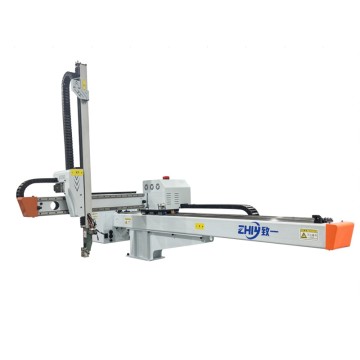
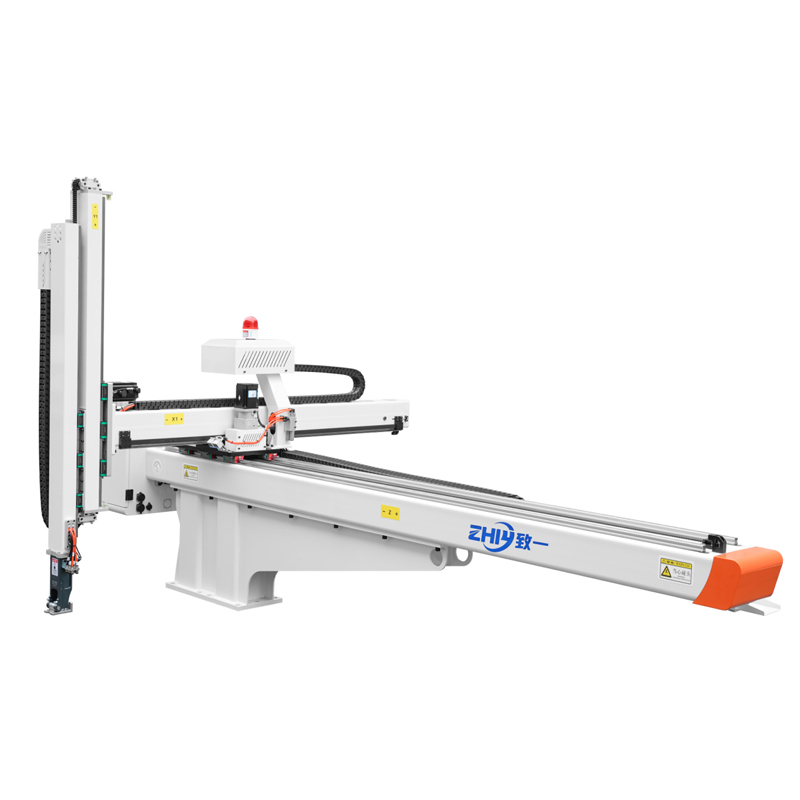
Case Study of High-Speed Packaging with Three-Axis Servo Robot in the Food Packaging Industry
High-Speed Packaging Case Study of Three-Axis Servo Robots in the Food Packaging Industry
In food packaging production workshops, balancing speed and precision is always a core challenge—meeting the demands of bulk orders during peak holiday seasons while ensuring food hygiene, safety, and packaging integrity. When manual packaging faces efficiency bottlenecks and labor shortages, and traditional machinery struggles to adapt to flexible production across multiple product categories, three-axis servo robots, with their high-speed response and precise control, become key equipment for solving industry pain points. The following three practical cases from different food sectors will fully demonstrate how their technological value is transformed into production advantages.
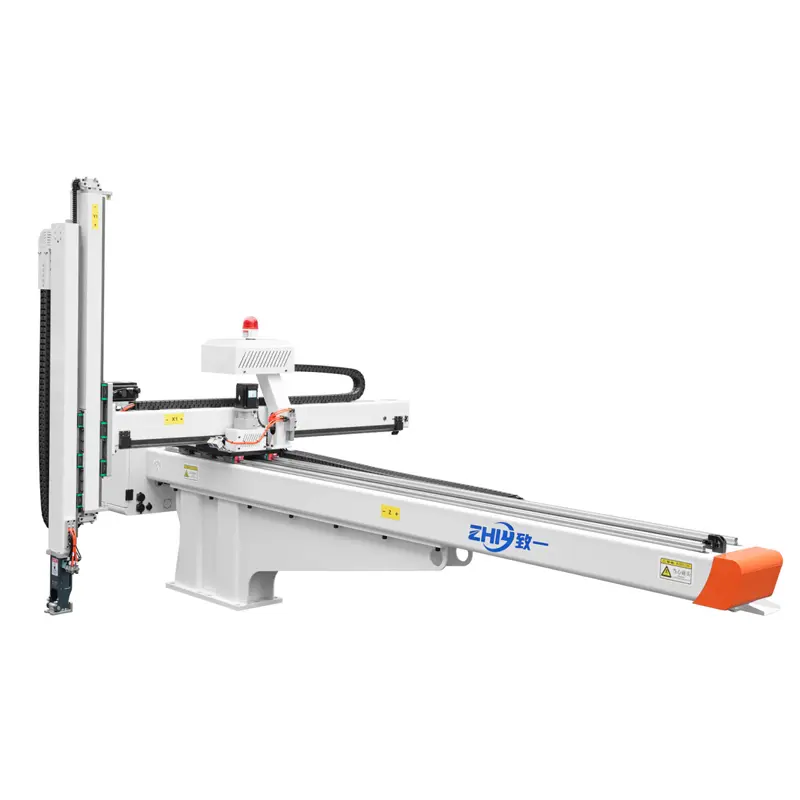
Case Study 1: Disposable Folding Spoon Packaging—1 Solution for 24 Achieves 90% Labor Cost Savings
In the production of disposable tableware for the catering industry, the small size and high-volume characteristics of folding spoons place stringent demands on packaging automation. A global catering supply chain company had long relied on manual labor for folding spoon packaging, facing production interruptions due to a 30% staff turnover rate and difficulty in consistently controlling the hygiene compliance rate of individual packages. The introduction of the SW6308s three-axis servo robot from Siweike has completely transformed the production process, enabling a 1-out-24 automation solution.
This system achieves full automation from Injection Molding Machine part picking to folding and packaging through precise coordination of three-axis servo motors. Equipped with customized vacuum grippers, the robot picks up the entire batch of folding spoons within 0.3 seconds after the 250-ton injection molding machine completes the 1-out-24 mold forming process. High-speed translation along the X and Y axes (maximum speed up to 1.5 m/s) transfers the spoons to the folding system, while the Z axis precisely controls the downward pressure to complete the shaping. In the packaging stage, the repeatability of the three-axis motion reaches ±0.1 mm, ensuring that each spoon is precisely embedded in the predetermined position in the transparent packaging film, avoiding the wrinkles and misalignments common in manual packaging.
Actual operational data shows that this solution increases the packaging efficiency of a single production line to 1440 pieces/minute, equivalent to the workload of 6 skilled workers, directly reducing labor costs by 90%. More importantly, the fully enclosed servo drive system eliminates the risk of contamination from human contact, increasing the packaging hygiene compliance rate from 92% to 99.8%. The brand logo positioning error on transparent packaging is controlled within 0.5mm, providing support for catering companies to achieve brand premium.
Case Study 2: Ready-to-Eat Sandwich Packaging – A High-Speed “Gentle” Solution of 60 Sandwiches per Minute
The labor shortage in the food industry following Brexit brought a large ready-to-eat food company's sandwich packaging line to the brink of shutdown. Traditional manual packaging not only achieved a speed of only 15 sandwiches per minute, but also suffered from a 3% product deformation rate due to uneven hand temperature and pressure, and an 8% appearance defect rate for windowed packaging. These problems were easily solved by introducing the KR AGILUS HM robot equipped with a three-axis servo system.
Addressing the soft and fragile nature of sandwiches, this solution uses flexible grippers made of food-grade stainless steel, combined with force control technology from a three-axis servo motor, to precisely control the gripping pressure between 5-10N – ensuring a stable grip without squeezing and deforming the bread. On the conveyor line, an X-axis servo motor drives the grippers to translate at 1.2 m/s, while the Z-axis moves them vertically at 0.8 m/s, transferring the sandwiches from the conveyor belt to the kraft paper bags. The Y-axis adjusts the product angle to ensure the triangular sandwiches are precisely positioned within the bag.
The integrated image sensor and three-axis servo system form a closed-loop control system: when the sensor detects a sandwich cutting angle deviation >2°, the servo motor immediately adjusts the gripper rotation angle to prevent defective products from entering the packaging stage. This achieves a stable packaging speed of 50-60 sandwiches per minute, three times faster than manual packaging; product deformation rate is reduced to 0.1%, and appearance defect rate is less than 0.5%. More importantly, the servo system's permanent lubrication design reduces equipment maintenance costs by 40%, allowing for a payback period of just 16 months, perfectly solving the pain point of the ready-to-eat food industry where "high speed and gentleness are difficult to achieve simultaneously."
Case Study 3: Baking Dough Packaging – High-Efficiency Collaboration in a Compact Space (1.5 Seconds)
A Vienna-based baking company was packaging thin-crust crepe dough directly from a 6°C cooler. The low temperature caused a sharp drop in manual operation efficiency, and the soft dough was easily damaged during transfer. Even more challenging was the limited space in the production workshop, which couldn't accommodate traditional large packaging equipment. A compact automation solution based on three-axis servo technology became the key to overcoming both space and efficiency bottlenecks.
This solution employed two inverted, suspended three-axis servo robots. Through compact motion trajectory planning along the X and Y axes, a complete packaging unit was constructed within a space of only 3 square meters. The robot responsible for grasping the dough was equipped with a shovel-shaped gripper, and the Z-axis servo motor precisely controlled the descent depth, avoiding contact with the cooled, rigid foil packaging. After grasping four 125-gram packages of dough, the coordinated X-Y axis motion completed the transfer in just 0.8 seconds. Another Robot Simultaneously completes the cardboard box forming: after being lifted by a vacuum gripper, the three-axis servo system drives the cardboard box through the adhesive nozzle, and, in conjunction with the die, completes the forming process. The entire process, along with the dough transfer, forms a 1.5-second coordinated cycle.
The high dynamic performance of the three-axis servo system is the core of its efficiency improvement—the robot's acceleration performance reaches 10m/s², far exceeding the limits of manual operation, and its repeatability of ±0.02mm ensures that each package of dough is accurately placed into the box. Simultaneously, the servo system's SIL3-Ple safety rating design allows the equipment to operate safely without protective barriers, further saving space. During peak season for apple burgers, this system operates continuously 24 hours a day, increasing daily packaging volume to five times that of traditional manual methods, and reducing the dough breakage rate from 12% to 0.3%, perfectly meeting the stringent hygiene and integrity requirements of baked goods.
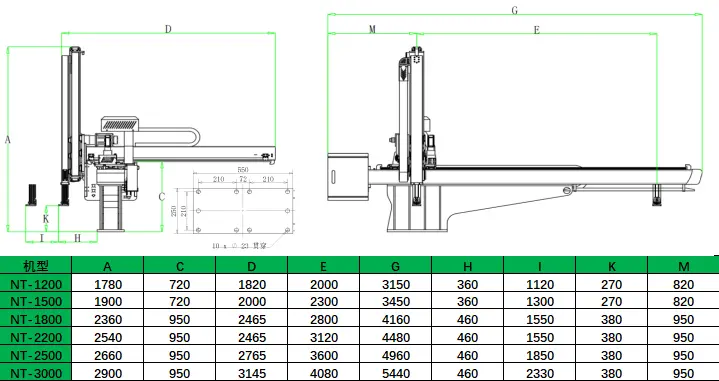
Three-Axis Servo Technology: Reconstructing the Core Competitiveness of Food Packaging
The above case demonstrates the core value of three-axis servo robots in the food packaging field: their servo motors achieve millisecond-level response through pulse control, combined with high-precision ball screws and linear guides, achieving a perfect balance between high-speed motion and precise positioning—the key to resolving the contradiction between "efficiency bottlenecks" and "quality loss" in food packaging. Simultaneously, the fully sealed structural design and the application of food-grade lubricating materials easily meet international hygiene standards such as FDA and EU 10/2011, and are suitable for special production environments such as low temperatures and humidity.
From disposable tableware to ready-to-eat foods, from baking ingredients to high-end gift boxes, three-axis servo robots are redefining the efficiency and quality standards of food packaging through flexible motion control, compact spatial design, and intelligent collaborative capabilities. For food production companies, choosing a three-axis servo packaging solution tailored to their product categories is not only a temporary measure to address labor shortages, but also a long-term investment to build economies of scale and enhance brand competitiveness.
3 Axis Arm#Three Axis Robot Arm#Traverse Robot#Standard Servo#Single Arm Robot#Articulated Arm Robot
Website:https://www.zhiyirobotics.com/
Email:sales@zhiyirobotics.com