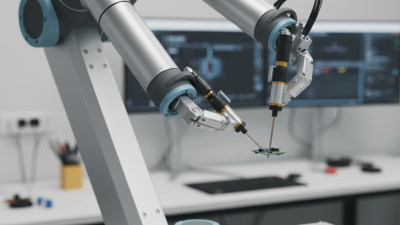
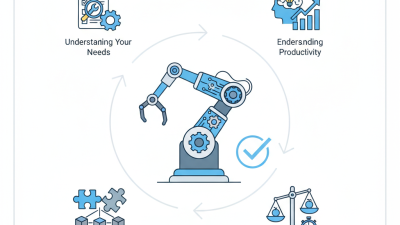
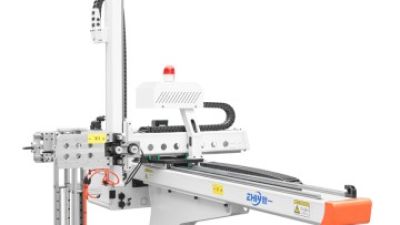
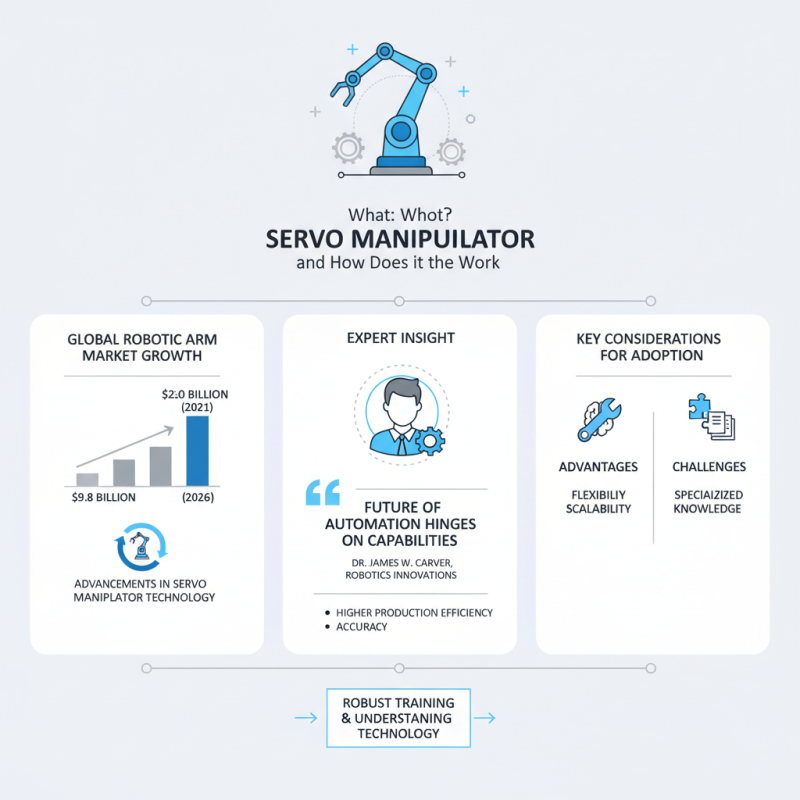
The Servo Manipulatoris honestly a pretty big deal when it comes to automation and robotics. You know, it’s used all over in different industries, helping things run smoother. I read somewhere that, according to MarketsandMarkets, the global market for robotic arms is set to go from about $9.8 billion in 2021 to a whopping $25 billion by 2026. And a lot of this growth? Thanks to how awesome and advanced Servo Manipulators are becoming. It just shows how much companies are leaning on these precise, efficient automation tools to get things done faster and better.
Dr. James W. Carver, who’s a pretty big name in robotic systems at Robotics Innovations, once said, “The future of automation really depends on what servo manipulators can do.” It’s a pretty strong statement that highlights just how crucial these systems are for boosting productivity and accuracy. Plus, they’re super flexible and scalable — something a lot of folks tend to overlook when they're first figuring these things out.
Of course, it’s not all smooth sailing. Bringing servo manipulators into the mix isn’t without its challenges. Companies need to be mindful of potential issues, like whether their existing systems play nice with new tech or if they need special skills to get everything running smoothly. It’s really important to weigh these factors carefully if you want the whole thing to work out. In my opinion, investing in good training and really understanding the ins and outs of the tech is key to getting the most out of servo manipulators.
Definition and Overview of Servo Manipulators
A servo manipulator is a versatile device used extensively in robotics. It is designed to perform precise movements, making it invaluable in various applications. These manipulators utilize servo motors to control position and speed. They are crucial in industries such as manufacturing, healthcare, and entertainment.
The core function of a servo manipulator lies in its ability to execute complex tasks with high accuracy. It operates based on feedback systems. Sensors collect position data, allowing for adjustments in real-time. This feedback loop ensures that movements are smooth and reliable. However, challenges may arise during integration with other systems. Communication issues can lead to inconsistent performance.
Designing a servo manipulator requires a deep understanding of mechanics and control systems. Engineers must consider load capacities and response times. Potential weaknesses can include motor overheating or wear. Careful planning and testing can mitigate these risks. Operators must possess knowledge of these devices to maximize performance. Continuous reflection on user feedback is essential for ongoing improvement.
Key Components of Servo Manipulators
Servo manipulators are pivotal in automation and robotics, used to enhance precision and efficiency in various applications. Their effectiveness stems from a few key components. Central to their operation is the servo motor, which transforms electrical energy into precise mechanical movement. These motors allow for quick and accurate positioning, making them ideal for tasks where exact placement is essential.
Another crucial element is the feedback system. Sensors provide real-time data to the control system, ensuring that the manipulator's position is always monitored. This feedback loop allows for adjustments that enhance accuracy and prevent errors. The integration of control algorithms further elevates performance, making these systems versatile in industries such as manufacturing and healthcare.
Tips: Regular maintenance of servo manipulators is essential. Dust and wear can compromise performance. Also, training staff to effectively use these systems can lead to higher efficiency rates. Additionally, consider the load capacity and operational speed of the Traverse Axis Servo Manipulator when designing workflows. This attention to detail can significantly reduce downtime and increase productivity.
Performance Comparison of Servo Manipulators
How Servo Mechanisms Function
Servo mechanisms are pivotal in various fields, including robotics and automation. They operate based on precise control and feedback loops. At the heart of these systems lies an electric motor, often working with a sensor to maintain an optimal position. This combination ensures that the manipulator can adjust its movements in real-time, responding to changes in its environment.
The Three-Axis Full Servo Manipulator exemplifies this technology. It allows for movement along three distinct axes, enabling complex tasks with minimal manual intervention. Such manipulators can perform repetitive tasks with high accuracy. However, achieving this precision requires regular calibration and maintenance. If neglected, their accuracy can diminish.
Understanding how servo mechanisms function offers insight into their strengths and weaknesses. While they enhance efficiency, they also introduce complexity. Users must be aware of potential pitfalls. This includes the need for constant monitoring to sustain performance. Balancing their advantages against their challenges is crucial in any application.
What is a Servo Manipulator and How Does it Work? - How Servo Mechanisms Function
| Feature | Description | Application | Advantages |
| Precision Control | Ability to precisely control the position and speed of movement. | Robotics, CNC machining, automation. | High accuracy and repeatability. |
| Feedback Systems | Uses sensors to provide feedback on position and speed. | Servo motors in various machines. | Improves performance and reliability. |
| Types of Servo Motors | Includes AC, DC, and stepper motors. | Used in industrial automation and robotics. | Versatile and can be adapted for many uses. |
| Applications | Used in robotics, conveyor belts, and automated machinery. | Manufacturing, assembly lines, packaging. | Increases efficiency and productivity. |
| Energy Efficiency | Modern servos are designed to minimize energy use. | Electric vehicles, automated systems. | Reduced operational costs and environmental impact. |
Different Types of Servo Manipulators
Servo manipulators are versatile tools widely used in robotic systems. They come in various types, each designed for specific applications. Understanding these different types can help businesses select the right equipment for their operations.
One common type is the Frame Type Full Servo Manipulator. This manipulator features a robust frame providing stability and precision during operation. Its full servo motors allow for responsive and accurate movements, ideal for tasks that require intricate handling. Many industries utilize this type, from automotive to electronics, due to its efficiency. It can handle tasks such as assembly, welding, and material handling with ease.
Another popular design is the Cartesian Servo Manipulator. This manipulator moves along three linear axes, allowing for straightforward programming and operation. It is often used in pick-and-place applications. However, it may not offer the same level of flexibility as other designs. In contrast, the SCARA (Selective Compliance Assembly Robot Arm) manipulator excels in speed and flexibility, making it suitable for fast-paced assembly lines. Each type has its strengths and weaknesses, underscoring the importance of assessing operational needs before making a choice.
Applications of Servo Manipulators in Various Industries
Servo manipulators are versatile tools widely used across various industries. These devices can precisely control movement and positioning. Their precise control is essential in fields like manufacturing, aerospace, and healthcare. In automotive assembly lines, servo manipulators streamline processes. They can lift and position heavy components with high accuracy. This capability not only enhances efficiency but also reduces the risk of human error.
In the medical field, these manipulators play a critical role. They assist in surgeries, ensuring precision during delicate procedures. Surgeons rely on servo manipulators to perform tasks that require stability and accuracy. This advanced technology improves patient outcomes and recovery times. However, it is essential to consider the potential for technical failures. Regular maintenance and calibration are necessary to ensure reliability.
Another significant application is in material handling. Warehousing and logistics companies use servo manipulators to automate sorting and packaging. This automation enhances speed and reduces labor costs. However, the integration of such technology can be complex. Training staff to operate and troubleshoot these systems is vital. Adopting new technologies often requires adjustments and ongoing learning.
Advantages of Using Servo Manipulators
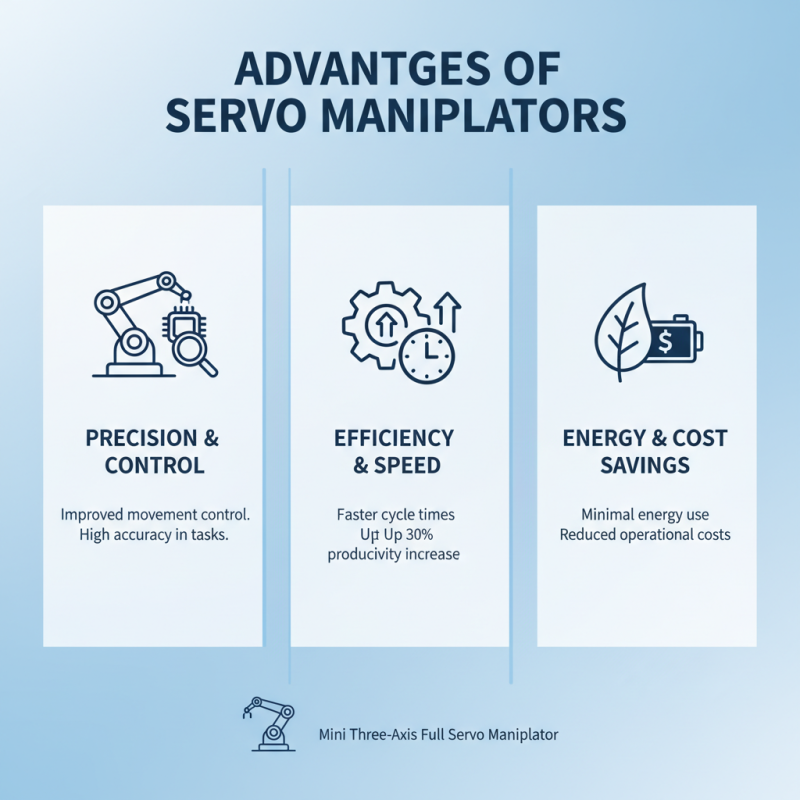
Servo manipulators have gained popularity due to their precision and efficiency in various industries. The Mini Three-Axis Full Servo Manipulator is a prime example, providing improved control over movement with minimal energy use. Research indicates that companies utilizing servo manipulators can achieve productivity increases of up to 30%. This is significant for industries requiring high accuracy in tasks like assembly, welding, or painting.
One notable advantage of using servo manipulators is their flexibility. These systems can be easily programmed for different applications, making them ideal for companies with diverse product lines. Additionally, servo manipulators offer enhanced safety features. Sensors and feedback loops ensure that they operate within predetermined safe parameters, reducing workplace accidents. Reports suggest that workplaces using advanced robotics experience a 50% decrease in injury rates.
Despite the many benefits, some challenges still exist. The initial investment in servo technology can be high, which may deter smaller businesses. However, the long-term savings in labor costs and operational efficiency often outweigh these initial costs. Companies must weigh these factors carefully. Efficient training of staff is also crucial for maximizing the potential of the Mini Three-Axis Full Servo Manipulator.
Challenges and Limitations of Servo Manipulators
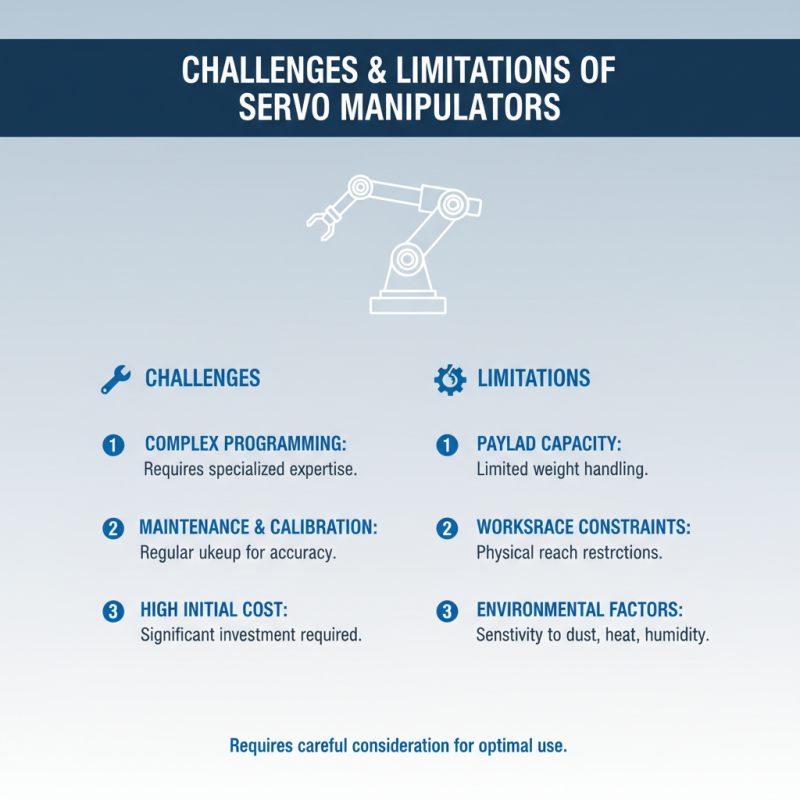
Servo manipulators are powerful tools used in various industries. They provide precision and flexibility for automation tasks. However, they come with challenges and limitations that require careful consideration.
One notable challenge is the complexity of control systems. Programming a servo manipulator can be intricate. Users often face difficulties in tuning parameters for optimal performance. This can lead to inconsistent results. Additionally, servo manipulators may struggle with heavy loads or tasks requiring rapid movements. Users must evaluate their needs to ensure the manipulator can handle specific applications.
**Tip:** Start with small test tasks to understand your manipulator's capabilities and limitations. Gradually increase complexity as you gain confidence.
Another limitation is the cost associated with high-quality servo systems. Premium manipulators can be expensive. This can deter small businesses or startups from adopting this technology. Maintenance of these systems is also essential, as wear and tear can affect performance over time.
**Tip:** Regularly inspect and maintain your equipment to prolong its lifespan. This can save costs and improve efficiency.
Ultimately, while servo manipulators offer remarkable advantages, understanding their limitations is crucial for success in automation.
Innovative Applications of 3-Axis Silicone Servo Controlled Robotic Arms in Injection Molding Processes
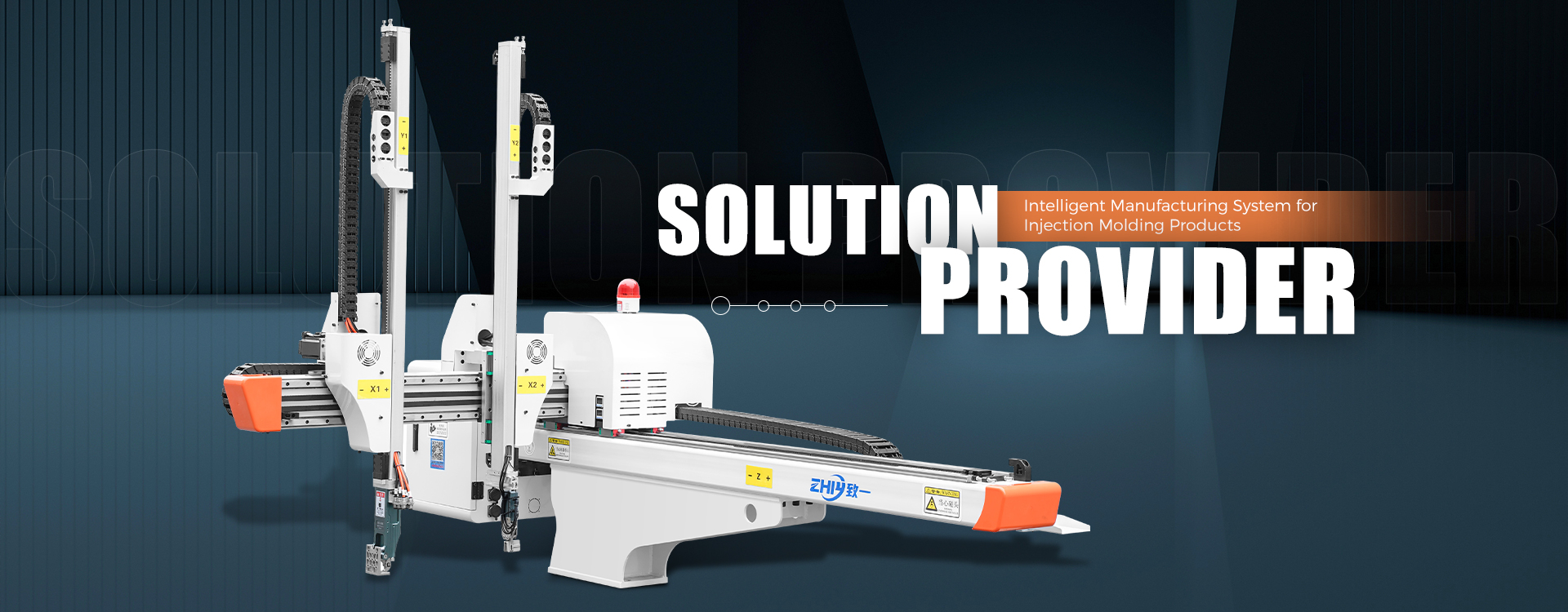
The integration of 3-axis silicone servo-controlled robotic arms in injection molding processes has revolutionized how manufacturers enhance automation and efficiency. These robotic systems are specifically designed for moderate to large injection molding machines, effectively handling the complexities of product removal, transportation, and placement, thereby streamlining production workflows. Reports from industry analysts indicate that automating injection molding can increase production efficiency by up to 30%, significantly reducing cycle times and labor costs.
The WKG-1000 model exemplifies the advantages of high-tech servo-controlled robotics in this field, providing a stroke of 1700×800×1000mm and a load capacity of 12-20kg. This capability enables the precise handling of various molded parts, crucial for industries that rely on high accuracy and reliability in their manufacturing processes. Enhanced servo control systems integrated into these robotic arms offer notable improvements in precision, stability, and responsiveness, which are critical factors for maintaining quality in mass production.
Furthermore, in an industry where time-to-market is essential, the ability to rapidly adapt to different product sizes and shapes becomes paramount. The advanced technology found in 3-axis robotic arms empowers manufacturers to respond swiftly to changing market demands while also ensuring consistent quality. As companies continue to embrace automation, the trend toward using silicone servo-controlled robotic arms will only intensify, reinforcing their essential role in the future of injection molding.
FAQS
: They are used to control movement and positioning in manufacturing, aerospace, and healthcare, among other fields.
They streamline assembly processes, lifting heavy components accurately, which enhances efficiency and reduces human error.
They assist in surgical procedures, ensuring precision and stability, which can lead to better patient outcomes.
The complexity of control systems can lead to inconsistent results and difficulties in programming.
Maintenance ensures reliability and can prevent technical failures, which is crucial for accurate performance.
The initial investment can be high, but long-term savings in operational efficiency may justify the cost.
Proper training enables staff to operate and troubleshoot effectively, maximizing the potential benefits of the technology.
They may struggle with heavy loads, complex tasks, and require careful programming to achieve optimal performance.
Automation with servo manipulators can significantly reduce labor costs while maintaining or improving productivity levels.
Start with simple tasks to understand capabilities, then progress to more complex applications as confidence builds.
Conclusion
A servo manipulator is a sophisticated automated device designed to operate with precision in various industrial applications. Typically composed of key components such as motors, controllers, and sensors, these mechanisms function through closed-loop control systems that allow for accurate movement and positioning. There are different types of servo manipulators tailored to specific tasks, ranging from simple robotic arms to complex multi-axis systems.
Servo manipulators find extensive usage across various industries, including manufacturing, robotics, and healthcare, due to their ability to enhance efficiency, improve accuracy, and minimize manual labor. While they offer several advantages, such as flexibility and rapid response times, challenges like high initial costs and technical complexity can limit their widespread adoption. Overall, servo manipulators represent a vital technology in modern automation, significantly impacting productivity and operational capabilities.