Leave Your Message
0%

Picking the right Cnc Robot Arm for your business can be pretty overwhelming. I mean, with so many options out there, it’s super important to really think about what you actually need. Are you after absolute precision? Or maybe speed is your top priority? Or perhaps you need something super flexible? Figuring that part out is key.

Every Cnc Robot Arm has its own perks and quirks. Some are fantastic at handling delicate, detailed work, while others are built for blasting through large batches quickly. So, choosing the wrong one might end up costing you a lot of time and money, not to mention missed opportunities.

It’s a good idea to check out trusted brands and models—look for reviews from other users and see what kind of track record they’ve got. Taking a close look at what your current setup might be missing could actually give you some helpful clues. Sometimes, reflecting on your past experiences can really steer you toward the right choice. Investing in the right CNC Robot Arm can seriously boost your efficiency and give you a leg up in the market.

How to Choose the Right CNC Robot Arm for Your Business?

Understanding the Basics of CNC Robot Arms

CNC robot arms are revolutionizing manufacturing processes. Understanding their fundamentals is critical for businesses looking to invest in automation. A report by MarketsandMarketsindicates that the Cnc Machine market is expected to reach$100 billion by 2025, indicating strong growth and demand for robots like the 5 Axis Cnc Robot Arm.

CNC robot arms come with various features that affect performance. The configuration and type of axes significantly impact their capabilities. A 5 Axis CNC Robot Arm, for instance, offers complex motion paths. This makes it suitable for intricate machining tasks. However, businesses must assess their specific needs carefully. Investing in overly advanced models without justification can lead to financial strain.

Maintenance is another critical area often overlooked. Regular service is essential to ensure optimal function. Downtime during maintenance can disrupt production, highlighting the need for a reliable support system. As reported by IBISWorld, 40% of manufacturing businesses face challenges in equipment downtime. Evaluating these factors helps businesses make informed decisions on CNC robot arm selection. Investing wisely ensures efficiency improvements while avoiding unexpected costs.

Identifying Your Business Needs and Objectives

How to Choose the Right CNC Robot Arm for Your Business?

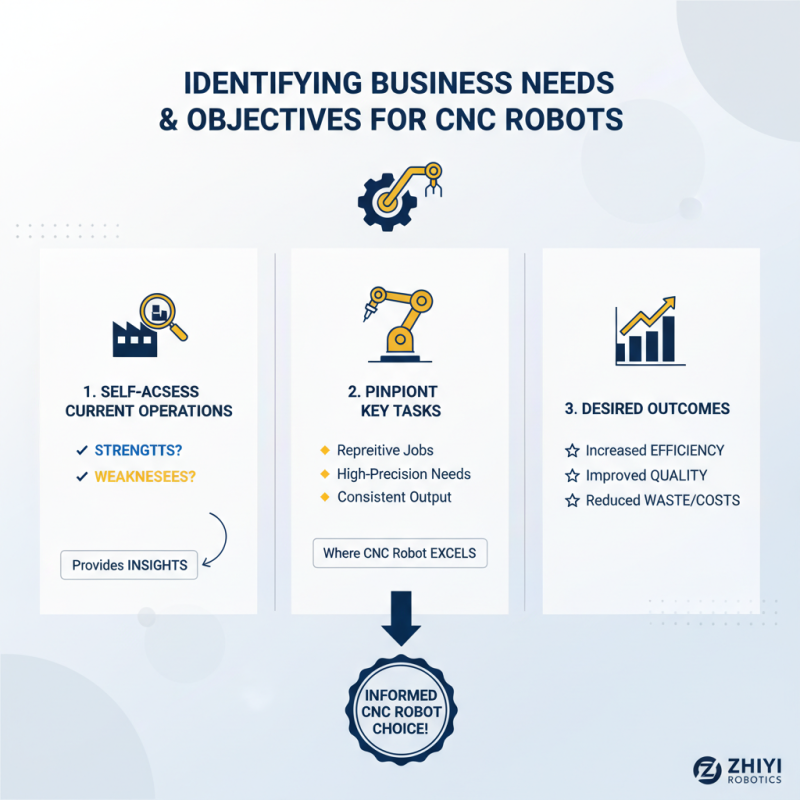
Identifying your business needs is crucial when choosing a Cnc Robot arm. Start by evaluating your current operations. What are the strengths and weaknesses? This self-assessment provides insight into what you need. Look for tasks that require precision and consistency – that’s where a CNC robot shines.

Consider the scale of your production. A small business might not require an industrial-grade machine. However, it’s not just size that matters. Think of the specific tasks the Cnc Robot will perform. Will it handle heavy materials or lighter components? Each scenario demands different capabilities.

Remember, it’s okay if your needs evolve over time. Stay flexible and open to adjusting your choices. Testing various tasks can reveal unexpected requirements. Seek feedback from your team as they offer practical insights. Investing time in identifying your needs ensures that your Cnc Robot serves your business well.

Evaluating Different Types of CNC Robot Arms

When evaluating different types of CNC robot arms, it’s crucial to understand your specific needs. Not all arms are created equal, and each type serves distinct purposes. For example, some are designed for heavy-duty tasks, while others excel in precision work. Consider the weight and type of materials you will handle. This will guide your decision in selecting the right Robot Cnc Machine.

When assessing functionality, look at the arm's reach and flexibility. A longer reach may increase efficiency in larger workspaces. However, balance this with the arm's precision. A robot arm that is too fast may compromise accuracy in detailed tasks. Think about the type of operations you perform regularly. Adjustments may be necessary to ensure the Robot Cnc Machine fits smoothly into your current process.

Tips: Always review user experiences and case studies. They provide valuable insights into performance and reliability. Testing the arm in real-world scenarios, if possible, can also highlight potential shortcomings. Additionally, don’t overlook the importance of support and training. Reliable customer service will save time and reduce frustration when integrating the arm into your workflow.

Comparison of Different Types of CNC Robot Arms

Analyzing Payload Capacity and Range of Motion

When selecting a CNC robot arm, understanding payload capacity is crucial. This refers to the maximum weight the arm can lift. A higher payload means the robot can handle heavier materials. Businesses in manufacturing often require robust arms for metalwork. Evaluating your needs is important. Overestimating can lead to wasted investment.

Range of motion also plays a significant role. This determines how far and in what directions the robot arm can move. A wider range allows for versatile applications. For example, if your processes include intricate cutting, a robot with high flexibility will be essential. Many use Cnc Machines for precise operations that require this flexibility.

Consider the workspace dimensions too. A powerful arm in a cramped area may not function to its potential. Installation space might limit the range of motion. As a result, it’s essential to analyze all dimensions carefully. Identifying your specific tasks will help clarify which specifications matter most. Reflection on these elements can guide you to an informed decision.

Considering Software Compatibility and Integration

How to Choose the Right CNC Robot Arm for Your Business?

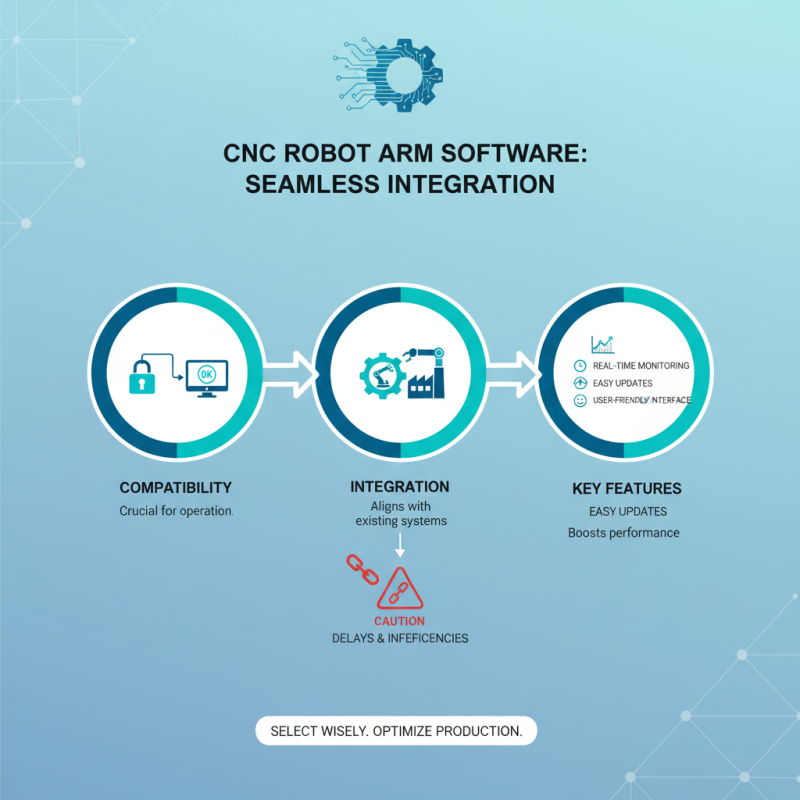
When selecting a CNC robot arm, software compatibility must take center stage. The control software’s integration with your existing systems is crucial. Without proper alignment, your operations might face delays and production inefficiencies. Identify the software features you need. Real-time monitoring, easy updates, and user-friendly interfaces can significantly affect performance.

Consider the type of programming language the arm uses. Complex languages may require additional training for your team. This can cause downtime if staff cannot adapt swiftly. Simplicity in software can reduce learning curves. Look for systems that offer intuitive controls and extensive tutorials. This minimizes the risk of operational hiccups.

Integration with current equipment is also essential. A CNC robot arm should fit seamlessly into your workflow. Lack of compatibility can lead to frustration. Analyze your existing software architecture before making a decision. Ensure the new system can communicate effectively with other tools. Keep in mind that sometimes, the newest technology may not be the best choice for your current setup. Finding balance between technology and practicality is key.

Assessing Budget Constraints and Total Cost of Ownership

When considering the purchase of a CNC robot arm, budget constraints play a crucial role. It’s essential to evaluate not only the initial purchase price but also the TOTAL COST OF OWNERSHIP (TCO). TCO includes maintenance expenses, energy consumption, and repairs. Many businesses overlook these factors, leading to unexpected financial burdens down the line.

Selecting the right CNC robot arm requires a deep understanding of your production needs. For instance, low-cost models might not withstand intense workloads. This often results in higher maintenance costs. It's important to analyze these trade-offs. Investing more upfront may lead to reduced overall costs later on. Moreover, consider potential downtime. An unreliable robot can disrupt production schedules, affecting profitability.

Don’t forget about the human factor. Training staff to operate complex CNC systems incurs additional costs. Sometimes, businesses underestimate this aspect. It’s worth assessing whether to invest in training or hiring skilled technicians. These reflections are vital in making an informed decision. The right balance between initial costs and long-term savings can lead to more sustainable business practices.

Exploring Manufacturer Support and Warranty Options

When selecting a CNC robot arm, manufacturer support and warranty options are crucial for your business. A reliable manufacturer should offer comprehensive support throughout the product lifecycle. This support can include installation assistance, training, and troubleshooting. It’s essential to understand whether the manufacturer provides 24/7 customer service, which can be vital during critical operations.

Consider the warranty terms carefully. A robust warranty reflects the manufacturer’s confidence in their product. Look for warranties that cover parts and labor for an extended period. This coverage can save you significant costs in case of unexpected failures. Checking the service history of the manufacturer can give you insights into their reliability.

Tips: Evaluate the manufacturer’s track record with past clients. Ask for case studies if possible. Understanding how they resolved issues can help gauge their support quality. Additionally, confirm the availability of spare parts. Waiting for replacement parts can disrupt production timelines, impacting workflow and efficiency. Make sure you do not overlook these details, as they can greatly affect your operations.

FAQS

: Why is identifying business needs important when choosing a CNC robot arm?

: It helps evaluate strengths and weaknesses. Insight into needs ensures accurate selection, enhancing operational efficiency.

How does payload capacity influence the choice of a CNC robot arm?

Payload capacity indicates the maximum weight the arm can lift. Higher capacity handles heavier materials, essential for manufacturing tasks.

What does range of motion mean for a CNC robot arm?

Range of motion defines how far and in which directions the arm can move. A wider range allows for more versatile applications.

Why should workspace dimensions be considered when selecting a CNC robot?

Limited space can restrict range of motion. A powerful arm may underperform in a cramped area, impacting productivity.

What kind of manufacturer support should be considered?

Look for comprehensive support, including installation, training, and troubleshooting. 24/7 customer service is vital during critical operations.

How important is warranty when choosing a CNC robot arm?

Warranty terms reflect manufacturer confidence. Robust coverage can save costs, especially for unexpected failures in operations.

What should I ask about a manufacturer’s service history?

Evaluate the track record and ask for case studies. Past client experiences reveal the manufacturer’s reliability and support quality.

How can team feedback aid in selecting a CNC robot?

Team insights provide practical perspectives. Testing various tasks can highlight unexpected requirements, guiding better decision-making.

What are some common mistakes in determining business needs?

Overestimating capabilities can lead to wasted investments. Failing to adapt as needs evolve may hinder operational success.

Why is it essential to reflect on the specifications of a CNC robot?

Reflection helps clarify which specifications matter most. Understanding specific tasks ensures you choose the right technology for your business.

Conclusion

Choosing the right CNC robot arm for your business involves a comprehensive understanding of your specific needs and objectives. Begin by familiarizing yourself with the basics of CNC robot arms, which can greatly enhance automation in manufacturing processes. It’s essential to identify the key requirements of your operation, including the types of tasks the robot will perform and the environments in which it will operate.

Once you have a clear understanding of your needs, evaluate the various types of CNC robot arms available. Analyzing factors such as payload capacity and range of motion will help you determine which robot suits your applications best. Additionally, consider software compatibility to ensure seamless integration into your existing systems. Budget constraints and the total cost of ownership should also be assessed to make a financially sound decision. Finally, exploring the support and warranty options provided by manufacturers can further safeguard your investment in a CNC robot arm, ensuring longevity and reliability in your automated solutions.


Olivia

Olivia

Olivia is a seasoned marketing professional with a strong commitment to advancing the manufacturing industry's intelligent transformation. Since joining the company in 2017, she has played a pivotal role in shaping the company’s outreach efforts, leveraging her in-depth knowledge of high-quality......
Previous Top 5 Single Arm Robots for Efficient Automation Solutions?