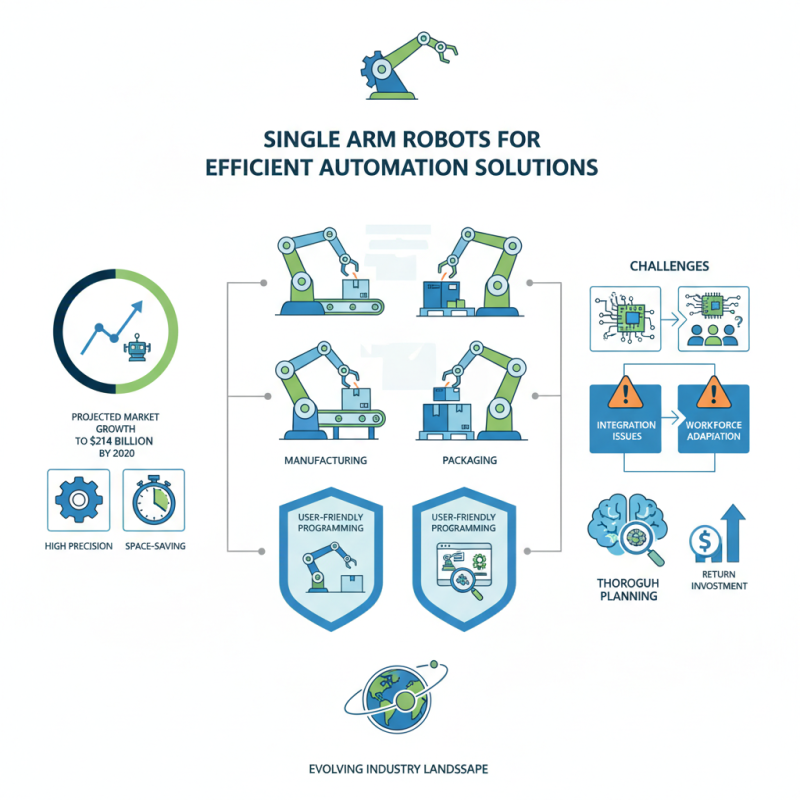
Lately, we've been seeing a big boom in automation across industries, and one of the hot picks is the Single Arm Robot. According to a report from MarketsandMarkets, the global robotics market is expected to hit around $214 billion by 2030, and a huge chunk of that growth is thanks to these nifty single-arm systems. They're pretty versatile—really good at making things more efficient, whether it’s in manufacturing, packing, or other tasks. Plus, they don’t take up much space but still deliver really precise results, so companies looking to boost productivity are definitely interested.
Big names like Universal Robots and ABB are really pushing the envelope here, coming up with new ways to make these robots easier to use. They’re focusing on features that even folks with no tech background can handle, which is a game-changer. But, of course, it’s not all smooth sailing—bringing robotics into the mix can bring some unexpected headaches, like integrating with existing systems or training staff to adapt to the new tech. Industry folks are quick to say that a good, solid plan from the start is key to avoiding those hiccups.
Automation promises a lot—more efficiency and cost savings, for starters—but it’s super important to take a measured approach. Those single-arm robots aren’t just about saving money; they’re an investment, so it’s smart to look at the potential return and how ready your team is for the change. The industry's changing fast, and keeping these factors in mind helps businesses make smarter decisions as they jump on the automation bandwagon, especially with trends like the Arm Single-Arm Robot Cut becoming more prevalent.
Overview of Single Arm Robots in Automation
The rise of Single Arm Robots in automation is reshaping industries. These robots bring versatility and efficiency to various tasks. Ideal for assembly lines, they can handle intricate components with precision. Their ability to work alongside humans enhances productivity.
Tips: Ensure you choose a single arm robot that matches your specific application needs. Check the payload capacity and reach to avoid potential limitations. Testing different models can provide insight into their capabilities.
These robots are capable of performing repetitive tasks with consistent accuracy. However, they may struggle with more complex operations that require multiple joint movements. Understanding these limitations is crucial for any automation project.
Tips: Regular maintenance is key to longevity. Schedule checks to identify wear and tear. This helps avoid unexpected downtimes in your operations. Proper training for personnel also optimizes the integration of single arm robots into existing workflows.
Top 5 Single Arm Robots for Industrial Automation
The landscape of industrial automation is evolving rapidly, particularly with the rise of single arm robots. These machines are designed to perform tasks ranging from assembly to packaging, often improving efficiency significantly. A recent report by the International Federation of Robotics (IFR) noted that the industrial robotics market is projected to grow by 10% annually through 2025. This growth showcases the increasing demand for flexible automation solutions in various sectors.
Single arm robots offer versatility that traditional robotic systems may lack. They can be easily integrated into existing workflows, making them ideal for small to medium enterprises. According to a study by MarketsandMarkets, the adoption of single arm robots can boost productivity by 30%, even in high-mix environments. This efficiency is crucial for companies aiming to reduce lead times and meet customer demands swiftly.
However, challenges remain. Single arm robots can struggle with tasks requiring a high level of dexterity or complex movements. They may not be suitable for every application. Additionally, the initial investment can be significant for some businesses. Therefore, assessing specific operational needs is vital before implementation, ensuring these robots are the right choice for enhancing workflow efficiency.
Top 5 Single Arm Robots for Industrial Automation
| Robot Model | Max Payload (kg) | Reach (mm) | Precision (mm) | Application |
| Model A | 10 | 1300 | 0.1 | Assembly |
| Model B | 5 | 1000 | 0.2 | Pick and Place |
| Model C | 8 | 1200 | 0.15 | Packaging |
| Model D | 12 | 1400 | 0.08 | Quality Control |
| Model E | 7 | 1100 | 0.12 | Testing |
Features and Capabilities of Each Robot
Single arm robots are rapidly gaining popularity for their versatility. Their compact design allows them to fit into tight spaces. This is particularly useful in manufacturing environments. Many models are equipped with advanced sensors, enabling precise movements and tasks. Their ability to handle different materials makes them suitable for various applications.
These robots often feature intuitive programming interfaces. Users can easily customize their operations without extensive training. Some models are designed for collaborative tasks, working alongside human operators. This enhances workplace efficiency while ensuring safety. Despite their capabilities, not all single arm robots suit every application. Each robot has its unique limitations and requires thoughtful consideration in deployment.
In terms of adaptability, some robots can switch tasks with minimal downtime. This flexibility is essential in fast-paced production lines. However, achieving balance between speed and accuracy can be challenging. Users must be aware of these trade-offs. Continuous evaluation of tasks can reveal potential improvements in robot deployment.
Top 5 Single Arm Robots for Efficient Automation Solutions
This bar chart displays the payload capacities of the top five single arm robots, showcasing their capabilities in efficient automation solutions. As shown, each robot has a unique payload capacity measured in kilograms, indicating their strength and versatility in various applications.
Applications of Single Arm Robots in Various Industries
Single arm robots are becoming vital in various industries due to their adaptability. These devices are increasingly utilized in manufacturing, logistics, and even healthcare. According to a report from the International Federation of Robotics, revenue from single arm robots is projected to exceed $6 billion by 2025. This growth highlights their significant contribution to automation solutions.
In manufacturing, Robot Single systems can perform repetitive tasks with high precision. They are used for assembly, packaging, and quality control. For instance, in the automotive sector, these robots can assemble components efficiently, reducing human error. The flexibility of single arm robots allows them to fit into diverse workflows, yet they require sufficient space and reprogramming for new tasks, which can pose challenges.
In logistics, single arm robots offer improved handling and sorting capabilities. They can easily adapt to different package sizes and weights. However, their reliance on sensors can lead to errors in complex environments. In healthcare, these robots assist in surgeries, providing steadiness and precision. Yet, the integration of Robot Single into such critical tasks demands rigorous testing to ensure safety and reliability, reflecting an ongoing need for advancements in technology.
Future Trends in Single Arm Robot Technology
Single arm robots are gaining traction in various industries due to their efficiency and versatility. Recent reports indicate that the global single arm robot market is projected to grow at a compound annual growth rate (CAGR) of over 25% from 2023 to 2030. This surge is driven by advancements in artificial intelligence and machine learning, making robots more intuitive and responsive. Their ability to perform tasks ranging from assembly to packaging significantly reduces labor costs and increases productivity.
Future trends suggest that single arm robots will become more collaborative, working alongside human operators. This development emphasizes safety and ease of use. Recent data show that over 45% of manufacturers are now prioritizing collaborative robotic solutions. However, challenges remain, such as the need for comprehensive safety standards and the training of employees to work alongside these new technologies. Companies must assess their requirements carefully to fully leverage the potential of these robots.
Tip: Ensure that your facility is equipped with up-to-date safety measures when integrating single arm robots. Effective training programs for staff can enhance collaborative efforts and optimize productivity. Watching the evolution of smart sensors and AI capabilities will also keep you ahead in adopting advanced automation solutions.
Comparative Analysis of Cost and Efficiency
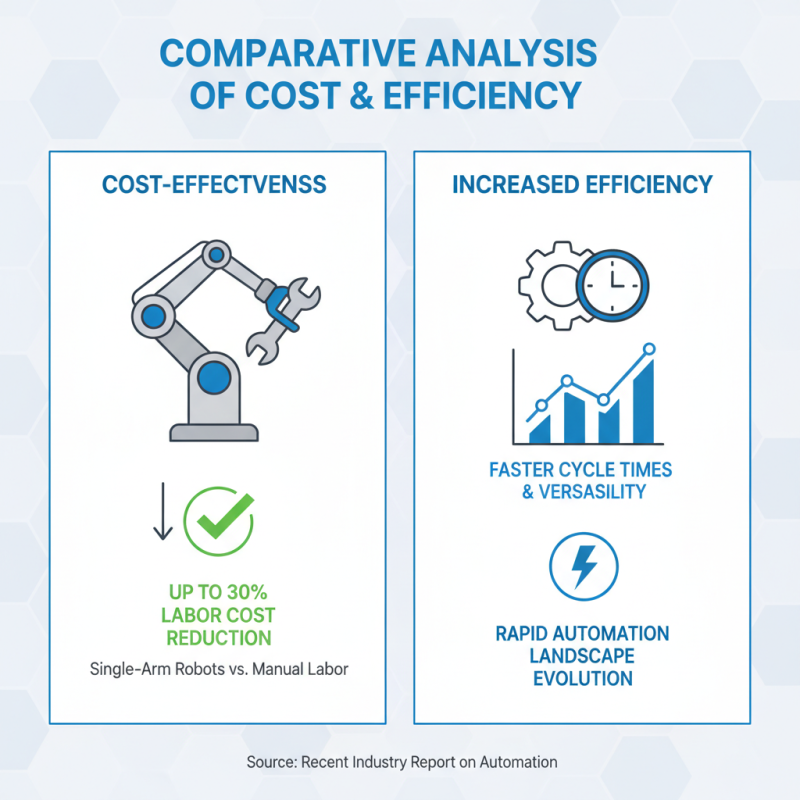
The automation landscape is evolving rapidly, driven by the need for efficiency. Single-arm robots are gaining traction due to their versatility and cost-effectiveness in various industries. A recent industry report indicated that automation could reduce labor costs by up to 30%. This presents a compelling argument for businesses considering single-arm robots.
When comparing cost and efficiency, the upfront investment in these robots is significant. However, the return on investment can be substantial. According to data from leading automation studies, companies have reported a 40% increase in productivity after implementing single-arm robots in their workflows. These figures emphasize the efficiency gains that come with intelligent automation systems.
Yet, not all implementations yield the same results. Challenges such as integration with existing systems can hinder performance. Some facilities experience downtime during the adjustment period. Understanding the nuances of each operation is crucial. An effective deployment requires thorough planning and an open dialogue among teams. These hurdles remind us that while automation offers clear advantages, mindful execution is essential to fully realize its potential.
Conclusion
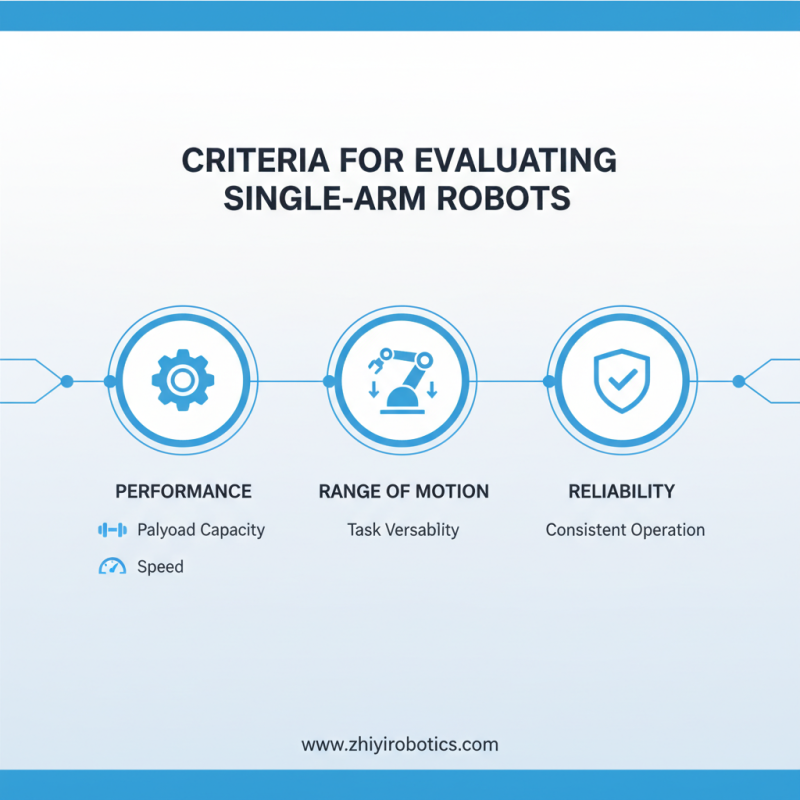
Single arm robots are becoming increasingly important in the realm of industrial automation due to their efficiency and versatility. This article delves into an overview of single arm robots, outlining key criteria for evaluating their performance, including factors such as precision, payload capacity, and adaptability to various tasks.
The article highlights the top five single arm robots, detailing their features and capabilities, which cater to a wide range of applications across different industries. Additionally, it discusses future trends in single arm robot technology, emphasizing advancements that may enhance productivity and cost-effectiveness. A comparative analysis of cost and efficiency provides insights into the optimal choices for businesses looking to invest in automation solutions, showcasing the potential impact of single arm robots on operational efficiency.