
Leave Your Message
0102030405
What Is the Cost Difference Between 3 Axis and 5 Axis Robots
2026-07-31
What Is the Cost Difference Between 3 Axis and 5 Axis Injection Molding Robots
Table of Contents
- Understanding the Core Function Difference Between 3-Axis and 5-Axis Robots
- Initial Purchase Cost Breakdown & Direct Price Gap
- Hidden Upfront Costs That Widen the Price Difference
- Long-Term Operational & Maintenance Cost Comparison
- Labor & Production Efficiency ROI Gap
- When Extra Cost for 5-Axis Robots Delivers Clear Value
- When a 3-Axis Robot Is the More Cost-Effective Pick
- FAQ: Cost-Related Questions From Global Injection Molding Buyers
- Final Conclusion: Calculate Total Cost of Ownership, Not Just Upfront Price
Understanding the Core Function Difference Between 3-Axis and 5-Axis Robots
For injection molding manufacturers, cartesian servo robots are the standard automation choice for removing finished plastic parts and sprue waste from molds. The axis count directly defines movement freedom, which is the root of all cost differences between 3-axis and 5-axis models.
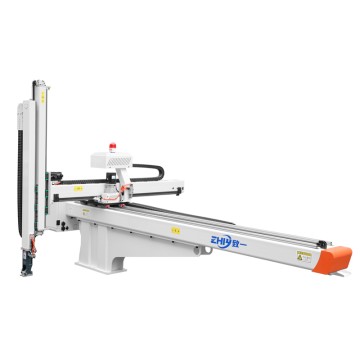
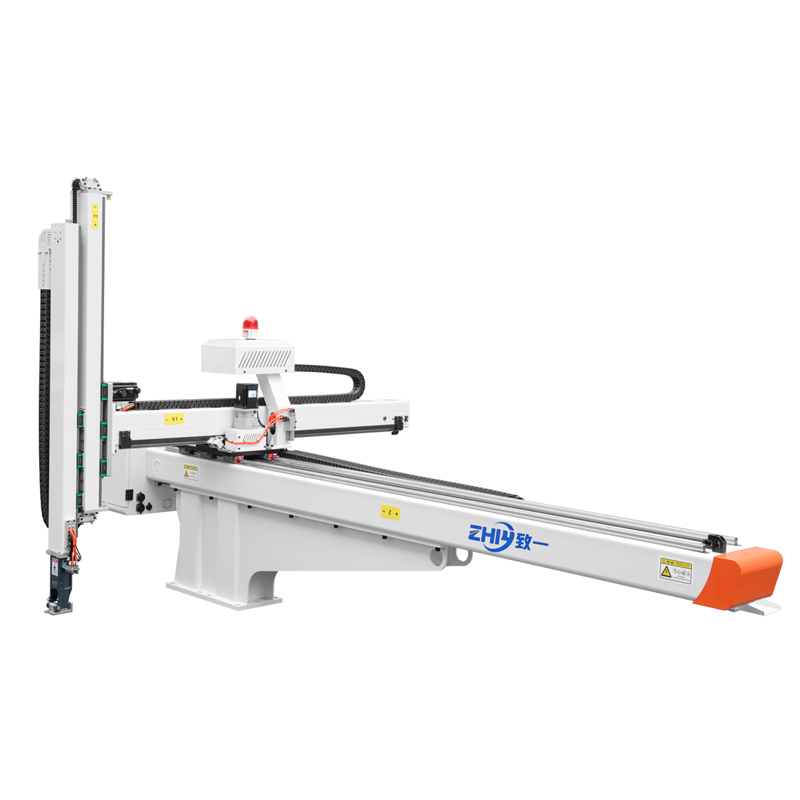
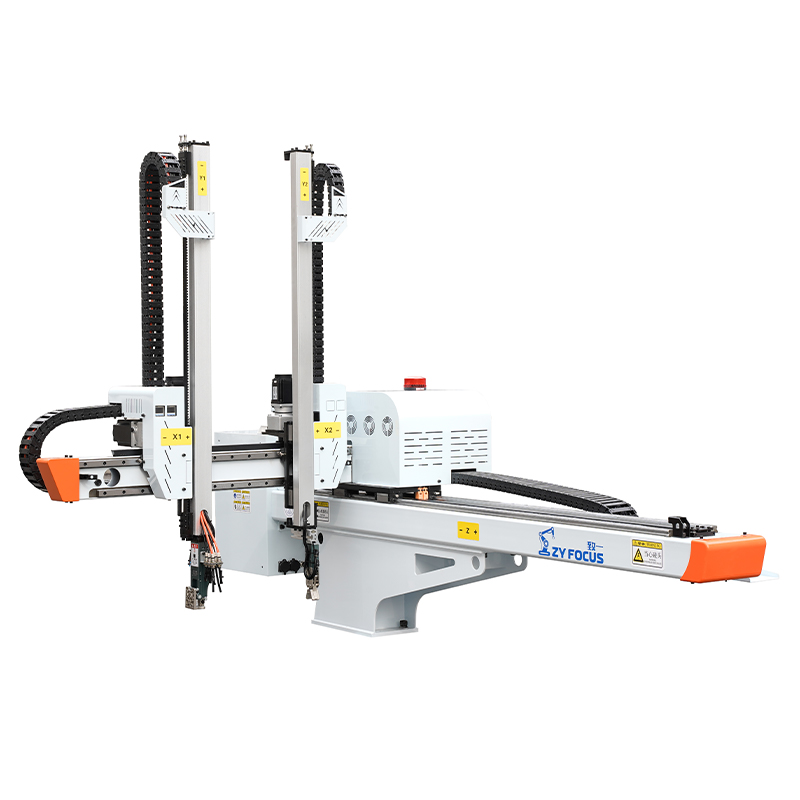
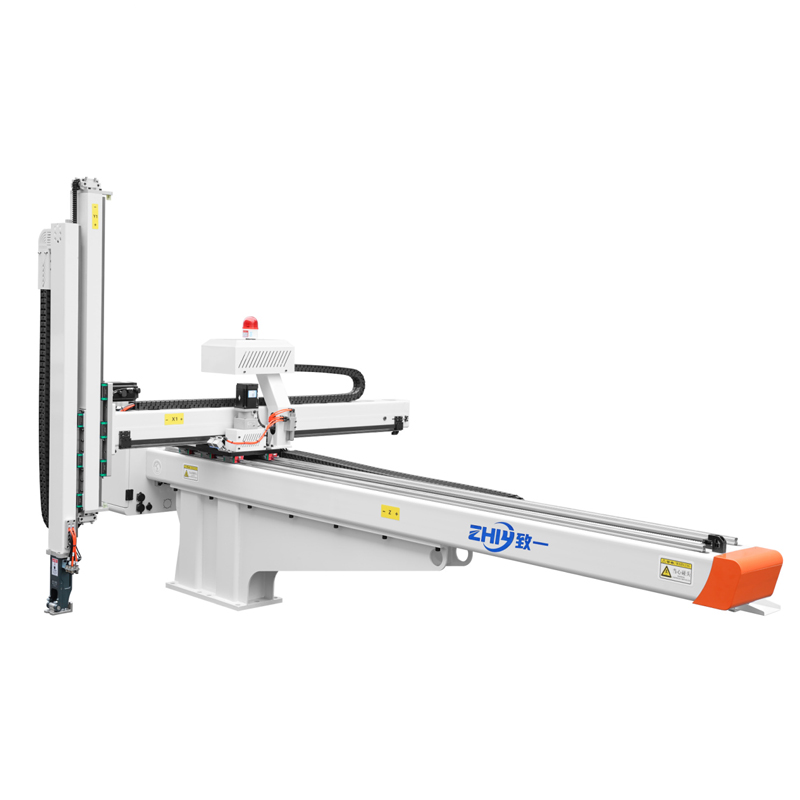
A standard 3-axis servo robot only supports three linear movements: horizontal cross travel, vertical up/down stroke, and forward/backward eject stroke. Most single-arm 3-axis units can only complete one task per cycle—either grabbing finished products or extracting runner waste, requiring extra cycle time or secondary manual handling for complex molds.
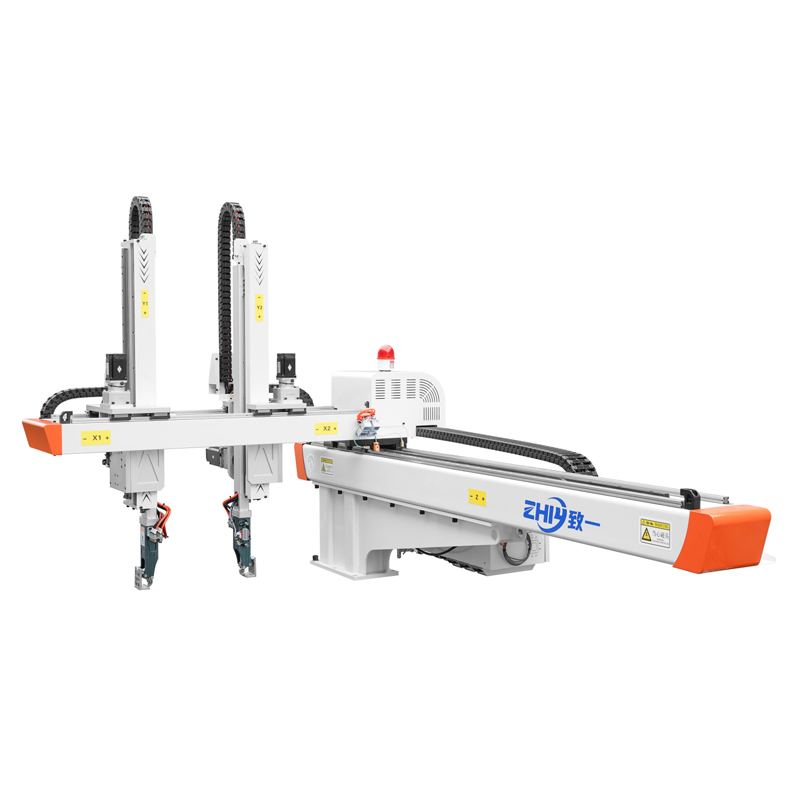
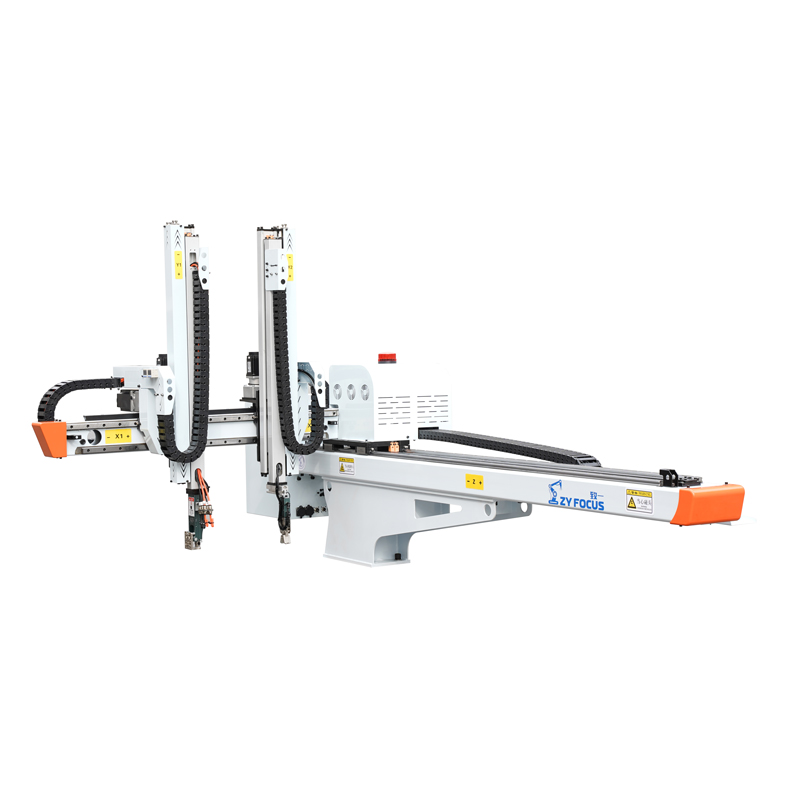
5-axis robots add two extra rotational servo axes on the extraction arm, with most configurations built as double-arm designs. The dual arms operate simultaneously: one extracts molded parts while the other pulls sprue waste in the same mold opening window. The rotational axes enable flipping, stacking, in-mold labeling (IML), insert loading, and side ejection handling that 3-axis robots cannot support without costly custom add-ons.
This difference in functional capability creates both higher hardware manufacturing costs for 5-axis robots and variable long-term production savings for manufacturers. Any cost comparison must balance short-term spending against multi-year production gains.
Initial Purchase Cost Breakdown & Direct Price Gap
The most immediate cost difference appears in base equipment pricing, based on global FOB market ranges for CE-certified injection molding robots for medium-tonnage machines (150T–450T injection molding presses):
| Robot Type | Standard Payload | Global FOB Price Range | Average Base Price Gap vs 3-Axis |
|---|---|---|---|
| Entry-level 3-axis single-arm servo robot | 3kg–10kg | $3,200 – $7,800 | Reference baseline |
| Mid-range 3-axis heavy-load single-arm robot | 10kg–50kg | $8,000 – $16,500 | Reference baseline |
| Entry-level 5-axis double-arm servo robot | 5kg–12kg | $6,800 – $13,200 | +$3,600 per unit |
| Mid-range high-precision 5-axis dual-arm robot | 8kg–25kg | $14,000 – $28,000 | +$7,500 per unit |
What Makes 5-Axis Robots More Expensive Upfront
- Extra servo hardware: 5-axis units include two additional servo motors, dedicated drive modules, and precision reducers for rotational axes. These core electronic components account for roughly 35% of the base price premium.
- Expanded mechanical structure: Double-arm frames, rotating joint assemblies, and reinforced linear guides increase raw material and assembly labor costs during production.
- Advanced control system: 5-axis robots require multi-axis motion controllers with more complex programming logic, larger touchscreen teach pendants, and compatibility with secondary automation attachments (feeders, label dispensers).
For mass buyers placing bulk orders of 10+ units, manufacturers typically offer volume discounts that shrink the per-unit price gap by 10%–18%, but the 5-axis model still maintains a consistent upfront premium.
Hidden Upfront Costs That Widen the Price Difference
Many procurement teams only compare base robot prices and overlook auxiliary setup costs that amplify the total initial investment gap:
- Custom fixture & gripper tooling Simple two-finger pneumatic grippers suffice for most 3-axis single-arm picking tasks. 5-axis robots often require dual independent grippers, rotating suction cups, and insert holding jigs, adding $800–$2,500 in one-time tooling fees per robot.
- Factory integration & programming labor 3-axis robot programming follows simple linear movement logic, with most operators fully trained in 1–2 days. 5-axis multi-axis motion, dual-arm synchronization, and rotational workflow setup demand 3–5 days of certified technician programming, increasing on-site service labor fees by 2–3x.
- Peripheral automation compatibility If your production requires IML, automatic metal insert loading, or offline part stacking conveyors, 3-axis robots need costly aftermarket add-on kits. 5-axis robots ship with native ports for these systems, eliminating $1,200–$4,000 in retrofitting charges.
- Installation space modification While both robot types mount to standard injection molding machines, 5-axis double-arm units require wider overhead clearance for rotational movement. Factories with compact cell layouts may need minor structural adjustments, a cost rarely required for slim single-arm 3-axis models.
Long-Term Operational & Maintenance Cost Comparison
To accurately measure true cost difference, manufacturers must calculate 5–10 year total cost of ownership (TCO), including recurring operational expenses:
1. Power Consumption
5-axis robots feature extra servo motors that draw slightly more electricity during full-cycle operation. For a factory running 24/7 production, power costs increase roughly 7–12% annually per robot. For low-volume single-shift operations, this difference becomes negligible.
2. Routine Maintenance Expenses
- Consumable parts: 5-axis rotating joints wear bearing and reducer components faster than fixed 3-axis linear structures. Annual replacement costs for lubricants, seals, and joint bearings run $300–$600 higher for each 5-axis robot.
- Service intervals: 3-axis robots only require quarterly basic inspections. 5-axis models need bi-annual full axis calibration by certified technicians, adding scheduled service labor fees each year.
- Spare part inventory: Factories running multiple 5-axis robots must stock extra servo drives, rotational joint assemblies, and dual-arm cables, raising spare parts holding costs.
3. Repair Downtime Loss
When breakdowns occur, 5-axis multi-axis motion faults take longer to diagnose and resolve than simple 3-axis linear errors. For high-volume production lines with tight order deadlines, extended unplanned downtime creates indirect revenue loss beyond direct repair fees.
Labor & Production Efficiency ROI Gap
This category is where 5-axis robots offset their higher upfront and maintenance costs for most medium-to-large injection molding facilities:
- Cycle time reduction Standard single-arm 3-axis robots complete part removal + sprue extraction in two separate mold open cycles, adding 1.5–3 seconds to every production run. Dual-arm 5-axis robots finish both tasks simultaneously, cutting per-mold cycle time by 10–25% for multi-cavity molds. Over thousands of daily production runs, this accelerates daily output without adding extra machine capacity.
- Labor reduction potential Simple 3-axis setups still require 1 operator to tend 2–3 injection molding presses to handle complex post-mold tasks. A single 5-axis robot can automate stacking, insert placement, and part trimming, allowing one operator to oversee 5–7 machines. For factories with rising hourly labor costs, the labor savings quickly cover the robot price premium within 1–3 years.
- Scrap rate reduction The precise rotational positioning of 5-axis arms eliminates part collision damage common when 3-axis robots struggle with deep, undercut, or thin-wall molded products. Lower scrap percentages reduce wasted raw plastic material costs month-over-month.
When Extra Cost for 5-Axis Robots Delivers Clear Value
Investing in the higher-priced 5-axis robot delivers positive ROI for manufacturers matching any of these production profiles:
- Production runs complex multi-cavity molds, thin-wall containers, or undercut plastic components
- Requirements for in-mold labeling (IML), automatic metal insert overmolding, or offline part stacking
- 24-hour continuous high-volume production with strict daily output quotas
- Labor markets with elevated operator wages and persistent staffing shortages
- Long-term product lines with stable 5+ year order schedules (maximizing multi-year efficiency savings)
- Plans to expand automated production cells without purchasing additional injection molding machines
When a 3-Axis Robot Is the More Cost-Effective Pick
A lower-cost 3-axis robot minimizes unnecessary spending for businesses with these operational conditions:
- Small-batch, single-shift production with simple solid plastic parts with flat geometry
- Low-complexity single-cavity molds with separate sprue chute ejection systems
- Tight short-term capital budget with no plans to scale output within 3 years
- Limited factory overhead with no need for secondary automated workflows (labeling, insert loading)
- Short product lifecycle orders that will be discontinued within 1–2 years
FAQ: Cost-Related Questions From Global Injection Molding Buyers
Q1: Does robot payload size change the cost gap between 3-axis and 5-axis models?
Yes. The price difference widens significantly for heavy-load variants (20kg+ payload). Heavy-duty 5-axis double-arm robots require reinforced rotational joints and high-torque servos, pushing the per-unit premium above $10,000, while heavy-load 3-axis robots only upgrade linear beams with minimal added cost. Light-load 3–8kg models carry the smallest relative price gap.
Q2: Can I upgrade a 3-axis robot to 5-axis functionality later to avoid upfront cost?
No. The mechanical frame, controller hardware, and arm structure are fundamentally different. Retrofit kits to add rotational axes cost nearly 70% of a brand-new 5-axis robot, making full replacement far more economical than partial upgrades.
Q3: Do warranty terms balance out maintenance cost differences?
Reputable robot suppliers include 1–2 year full component warranties for both 3-axis and 5-axis units. After warranty expiration, the higher wear parts on 5-axis robots create consistent annual maintenance cost gaps that no standard service contract fully eliminates. Extended maintenance packages can reduce this gap but add recurring monthly fees.
Q4: How does regional sourcing impact the 3-axis vs 5-axis price difference?
Domestic European or North American robot brands carry a much larger absolute price gap (up to $15,000) between equivalent 3-axis and 5-axis models. Asian OEM manufacturers offer compressed pricing gaps with standardized component supply chains, making 5-axis automation accessible to small and mid-sized molding businesses worldwide.
Final Conclusion: Calculate Total Cost of Ownership, Not Just Upfront Price
The core cost difference between 3-axis and 5-axis injection molding robots starts with a clear upfront purchase premium for 5-axis units, compounded by small recurring annual expenses for power, maintenance, and calibration over the robot service life.
However, this extra spending is not inherently a waste of capital. For high-volume, complex molding production, faster cycle times, reduced labor overhead, and lower scrap rates generate consistent operational savings that erase the price gap and deliver net profit gains within 1–4 years of deployment. For low-complexity, low-volume small-batch manufacturing, the simple, low-cost 3-axis robot delivers superior short-term value without unnecessary feature overhead.