
Leave Your Message
0102030405
Three-Axis Servo Robot for 2000T-2300T Machines: Selection Guide
2026-08-10
Three-Axis Servo Robot for 2000T-2300T Machines: Selection Guide
Table of Contents
- Understanding Core Basics of 3-Axis Servo Robots for Large Tonnage Molding
- Key Matching Parameters Between 2000T–2300T Injection Molding Machines & Robots
- How Product & Mold Characteristics Impact Robot Model Selection
- Factory Environment & Installation Space Checkpoints
- Structural Options: Single-Arm vs Double-Arm for 2000–2300T Equipment
- Performance Benchmarks & Efficiency Matching Standards
- Core Component Quality Checklist to Avoid Long-Term Failure
- Cost-Benefit Analysis: Avoid Over-Spec & Under-Spec Purchases
- Frequently Asked Questions for Global Molders
- Final Selection Checklist for Procurement Teams
Understanding Core Basics of 3-Axis Servo Robots for Large Tonnage Molding
Large-tonnage injection molding machines (2000T to 2300T) are primarily used for manufacturing oversized plastic parts including automotive bumpers, large home appliance shells, pallet containers, and industrial storage bins. Unlike small-tonnage molding equipment, these machines feature wider tie-bar spacing, longer mold opening strokes, and heavier finished products, which raise unique demands for robotic automation systems.
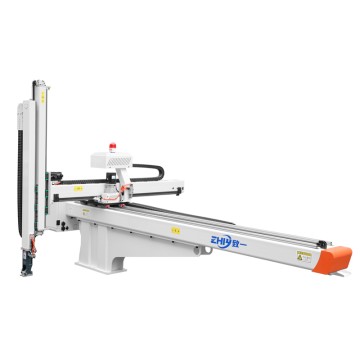
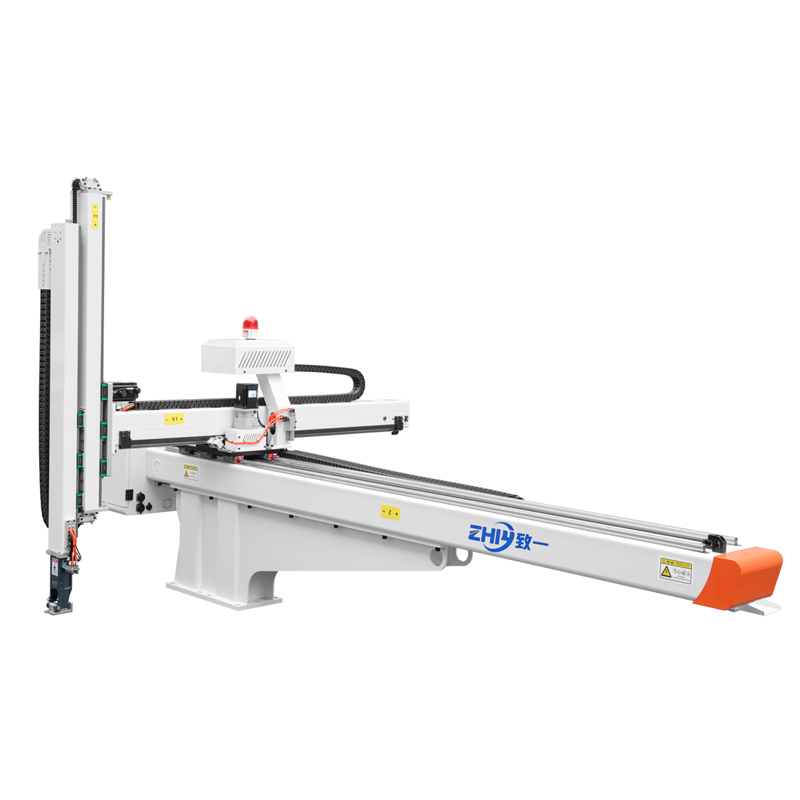
Three-axis servo robots operate on fully servo-controlled X (horizontal traverse), Y (pull-out), and Z (vertical lifting) axes, delivering stable linear movement without extra rotational joints. For factories focused on basic pick-and-place, sprue separation, and simple stacking workflows, 3-axis servo models deliver balanced speed, precision, and cost efficiency compared to five-Axis Robots.
The core advantage of deploying a dedicated 3-axis servo robot on 2000T–2300T machines lies in consistent cycle alignment. Servo drives eliminate pneumatic speed fluctuations, cut manual safety risks, and stabilize dimensional consistency of large molded components—critical metrics for automotive and industrial plastic manufacturers serving global OEM clients.
Key Matching Parameters Between 2000T–2300T Injection Molding Machines & Robots
When sourcing automation for 2000–2300 tonnage molding presses, four parameter groups must be fully aligned to prevent mechanical interference or production bottlenecks.
1. Rated Payload (Non-Negotiable Safety Standard)
Total effective load equals finished product weight + sprue weight + fixture weight. Industry best practice mandates robot rated payload to be at least 1.2 times this combined total, reserving safety margin for acceleration and long-stroke movement.
- Typical product weight range for 2000T–2300T machines: 15–45kg
- Recommended robot load specification: 40–50kg maximum carrying capacity
- Under-spec risk: Arm deflection, servo motor overload, frequent alarm shutdown, shortened linear guide service life
2. Three-Axis Stroke Calculation Standards
Each axis travel distance follows fixed calculation formulas tailored to large molds, with mandatory safety clearances built in:
Horizontal Traverse (X Axis)
Traverse stroke = Maximum mold width of injection machine + 50–100mm safety gap + 150–300mm placement offset for conveyor/pallet For 2000–2300T equipment, minimum recommended X stroke: 2800–3500mm
Vertical Lifting (Z Axis)
Vertical stroke = Maximum mold opening stroke + full product height + 80–120mm safety clearance + ejection height allowance Minimum Z stroke standard for this tonnage bracket: 2000–2600mm
Pull-Out (Y Axis)
Pull-out stroke must fully cover full ejection travel plus extra space to extract oversized deep-cavity parts without scraping mold surfaces. Standard range: 1580–1800mmSHINI PLAS...
3. Tie-Bar Spacing Compatibility
The robot’s main arm body width must be 10–20mm narrower than the machine’s tie-bar inner clearance to avoid collision during mold change and full-stroke movement. Most 2000–2300T presses feature tie-bar spacing above 1800mm, requiring widened base frame robot designs.
4. Mold Thickness & Platen Dimension Matching
Robot standby vertical height must accommodate minimum mold thickness plus reserved clearance. For variable mold heights in multi-product production lines, select adjustable base mounting brackets rather than fixed-height frames.
How Product & Mold Characteristics Impact Robot Model Selection
Single-Plate vs Three-Plate Molds
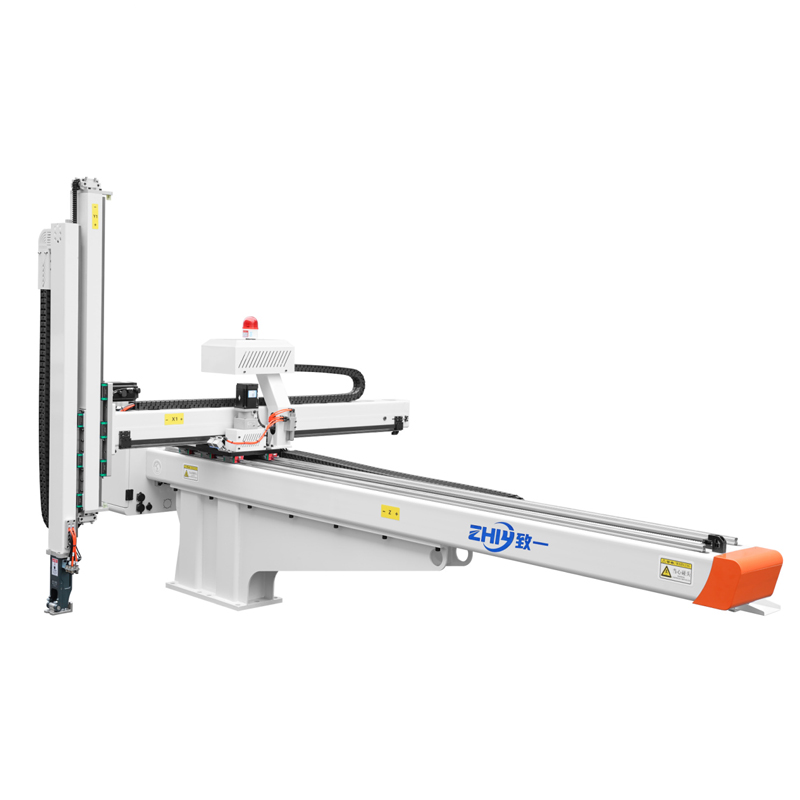
- Single-plate molds (large automotive shells, pallets): Single-arm three-axis servo robots meet all pick-and-place demands, lower equipment investment
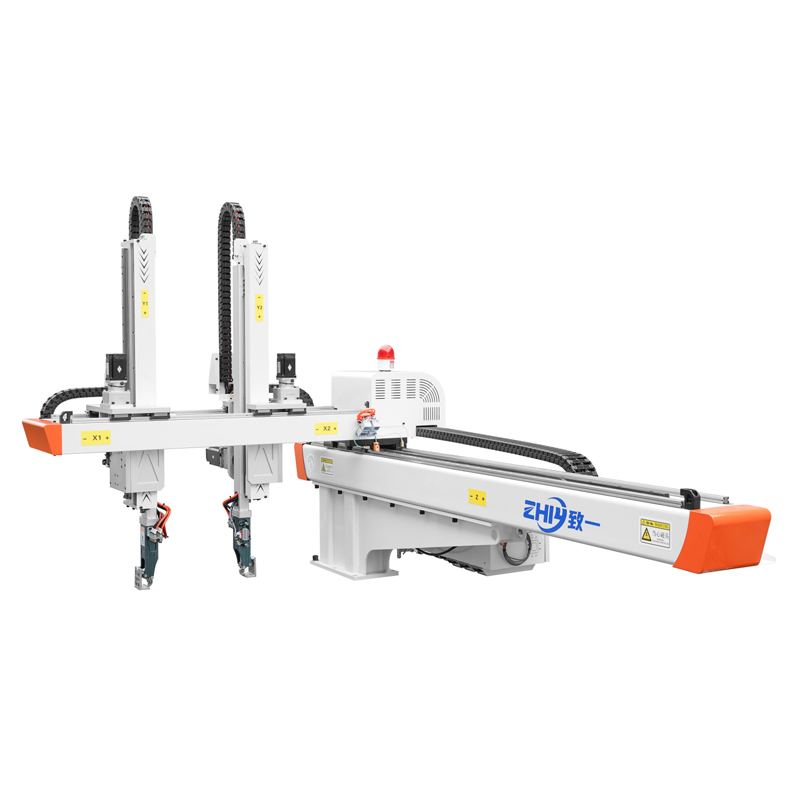
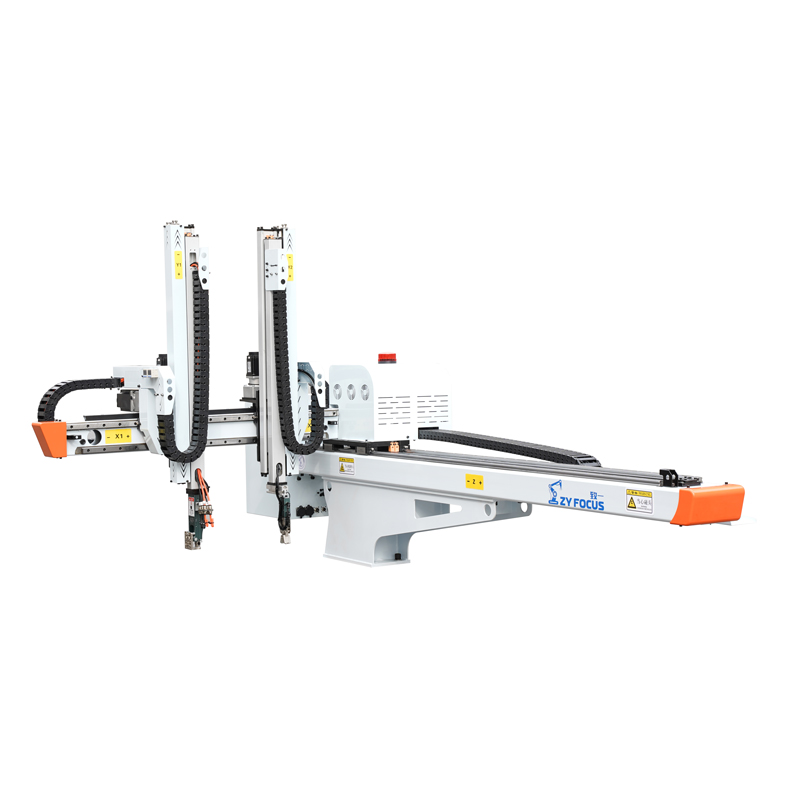
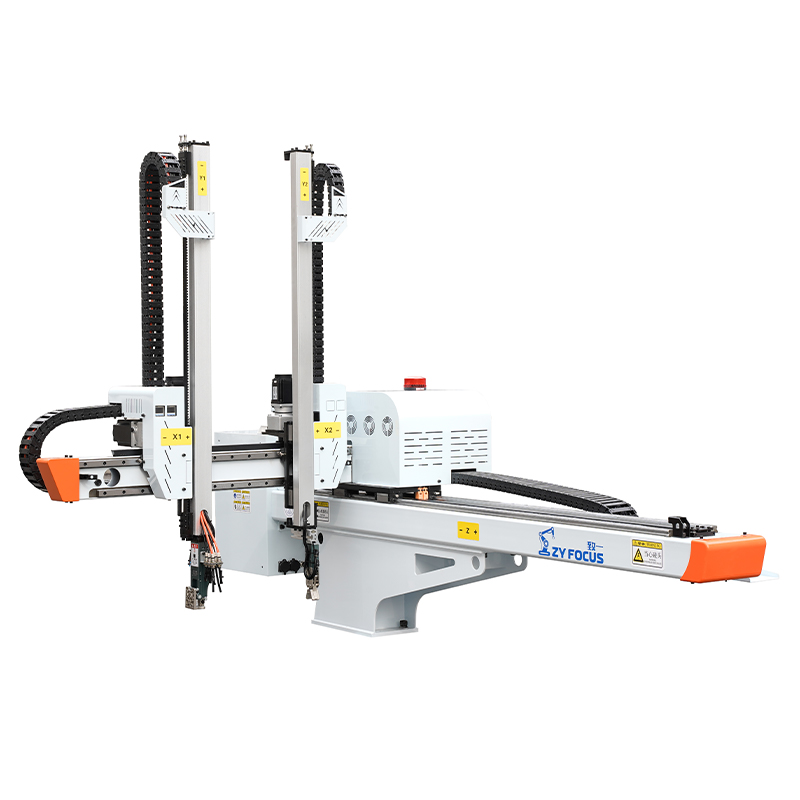
- Three-plate molds (multi-cavity large components, separate sprue runners): Double-arm three-axis servo configurations are required. The main arm extracts finished parts, while the secondary arm removes sprues simultaneously to compress overall cycle time
Product Geometry Classification
- Flat large panels (refrigerator side panels, bus interior trim): Standard single-section three-axis arms are sufficient
- Deep-cavity hollow products (large storage containers, chemical tanks): Double-section telescopic vertical arms reduce overall machine height, ideal for factories with limited overhead crane clearance
- Irregular heavy components (automotive front/rear bumpers): Reinforced linear guide structures and heavy-duty fixture mounting plates are mandatory to eliminate arm vibration during high-speed transfer
Secondary On-Line Processes
If production requires inline trimming, cooling rack placement, or automated boxing after extraction, specify extended horizontal traverse stroke to cover auxiliary station space without adding secondary conveyor transfer equipment.
Factory Environment & Installation Space Checkpoints
Many procurement teams overlook site limitations, leading to costly post-delivery modification work for large 3-axis robots. Complete this site audit before finalizing model selection:
- Workshop ceiling height & overhead crane travel path If ceiling clearance is below 4200mm, prioritize double-section vertical arm robots to cut static machine height by 400–700mm versus single-section alternatives
- Machine side operational aisle width Minimum aisle space: 1800mm for robot maintenance, mold swap, and fixture replacement
- Power supply configuration 2000–2300T matched three-axis robots require 5.4–7.2KVA power capacity; confirm three-phase industrial power stability and dedicated circuit distribution
- Ambient temperature & dust levels Workshops with high plastic dust or elevated heat need sealed servo motor enclosures and dust-proof linear guide covers to extend component service life
- Safety fence layout Reserve full horizontal travel range space behind the molding machine for robot retraction during standby mode
Structural Options: Single-Arm vs Double-Arm for 2000–2300T Equipment
表格
| Structure Type | Best Fit Production Scenarios | Core Advantages | Key Limitations |
|---|---|---|---|
| Single-Arm 3-Axis Servo | Single-plate molds, single product extraction, low to medium production volume | Lower upfront cost, simpler programming, smaller footprint, easier maintenance | Cannot separate sprue and finished parts in one cycle; longer overall molding cycle time |
| Double-Arm 3-Axis Servo | Three-plate molds, high-volume mass production, simultaneous sprue removal | 2–4 second cycle time reduction, synchronized dual-task workflow, higher hourly output | Higher equipment investment, wider required installation space, slightly more complex programming logic |
For most mass manufacturers running 2000–2300T machines on 24-hour production schedules, double-arm three-axis servo robots deliver superior long-term ROI by eliminating separate sprue handling labor. Single-arm models remain a practical choice for low-batch, variable-mold job shops.
Performance Benchmarks & Efficiency Matching Standards
Robot cycle performance must align with the injection molding machine’s full production cycle to avoid costly machine idle waiting periods. Industry standard benchmarks for 2000–2300T matched three-axis servo robots:
- Empty full-stroke circulation time: 24–28 seconds
- In-mold product extraction time (unobstructed mold): Maximum 4.5 seconds
- Repeat positioning accuracy: ±0.1mm, critical for consistent fixture gripping of oversized heavy parts
- Continuous 24-hour stable operation without overload alarms
Critical matching rule: Total robot action cycle must be 2–3 seconds shorter than the molding machine’s full cooling and injection cycle. This buffer eliminates bottlenecks and unlocks the press’s full production capacity.
Core Component Quality Checklist to Avoid Long-Term Failure
Large-tonnage robots operate under constant heavy dynamic load; low-grade core parts lead to frequent downtime within 1–2 years of deployment. All qualified models for 2000–2300T machines must include these standard high-grade components:
- Servo drive system: Closed-loop heavy-load servo motors dedicated to large injection robot applications, with overload protection algorithms for long-stroke acceleration
- Linear guide rails: Wide-flange heavy-duty linear guides with dual slider blocks per axis, anti-wear hardening treatment for sustained heavy payload movement
- Arm extrusion frame: High-strength thick-wall aviation aluminum alloy, with internal rib reinforcement to reduce deflection under full rated load
- Control system: Industrial touchscreen controller with pre-programmed large-tonnage mold logic templates, remote diagnostic support for overseas factory after-sales
- Cable management: Torsion-resistant drag chains rated for over 10 million reciprocating cycles, anti-high-temperature shielding for workshop molding environments
Avoid entry-level models equipped with light-load small servo motors or thin single-slider linear guides—these configurations cannot sustain the repeated heavy lifting required by 2000–2300T molding applications.
Cost-Benefit Analysis: Avoid Over-Spec & Under-Spec Purchases
Risks of Under-Spec Selection
Sourcing smaller load or shorter stroke robots to cut initial procurement cost creates cascading operational losses:
- Daily unplanned downtime from servo overload alarms and arm collision errors
- Accelerated wear of linear guides, requiring full replacement within 12–18 months
- Restricted mold compatibility, limiting production expansion to larger component lines
- Inability to fully utilize the 2000–2300T molding machine’s output capacity
Risks of Over-Spec Selection
Specifying 3000T+ grade robots for 2000–2300T presses adds unnecessary capital expenditure without production gains:
- Higher equipment purchase, shipping, and installation fees
- Larger footprint requiring workshop layout rework
- Increased power consumption during daily operation
- Slower dynamic response due to oversized heavy arm frames, slightly extending cycle times
Balanced ROI Reference
A properly matched three-axis servo robot for 2000–2300T equipment typically delivers labor cost payback within 8–14 months for 24-hour continuous production lines, eliminating 1–2 full-time operator positions per molding press while reducing product defect rates caused by manual handling.
Frequently Asked Questions for Global Molders
Q1: Can a three-axis servo robot complete product flipping for automotive bumper production?
A1: Standard three-axis models lack rotational joints for 180-degree part flipping. If inline flipping is required, select five-axis servo robot variants instead. Three-axis robots are optimized for linear pick, transfer, and stacking workflows only.
Q2: Is a double-section vertical arm mandatory for all 2000–2300T installations?
A2: No. Double-section arms only serve factories with ceiling height restrictions above the molding machine. Workshops with overhead clearance exceeding 4500mm can select single-section vertical arm designs for simpler maintenance and lower cost.
Q3: What certification standards should the robot hold for cross-border manufacturing facilities?
A3: For global export production lines, verify CE safety certification and ISO 9001 manufacturing compliance. These credentials simplify factory audit requirements for international automotive and appliance brand clients.
Q4: Can one robot serve two separate 2000T molding machines?
A4: Not recommended. The long traverse stroke required for oversized parts creates excessive cycle delays when switching between two presses. Each 2000–2300T machine should be paired with an independent dedicated three-axis servo robot for stable throughput.
Q5: How much routine maintenance time is required weekly for large three-axis servo robots?
A5: Basic weekly maintenance takes 30–45 minutes, including linear guide lubrication, drag chain cable inspection, fixture air pressure testing, and controller error log review. Heavy 24-hour production lines require bi-weekly full servo system calibration.
Final Selection Checklist for Procurement Teams
Complete this checklist before confirming robot purchase for any 2000T–2300T injection molding machine:
- Capture full machine parameters: Tie-bar spacing, maximum mold opening stroke, maximum mold width, standard mold thickness range
- Calculate combined weight of finished product + sprue + fixture; confirm robot rated payload ≥1.2x total weight
- Verify workshop ceiling height, overhead crane travel path, and side aisle maintenance space
- Confirm mold type (single-plate / three-plate) to select single-arm or double-arm structure
- Cross-check X/Y/Z three-axis stroke against calculated minimum travel requirements
- Audit core component specifications: Heavy-load servo motors, wide-flange dual-block linear guides, reinforced aluminum arm frames
- Match robot empty cycle time to molding machine cooling cycle with 2–3 second buffer
- Confirm control system language support, remote diagnostic access, and global after-sales coverage
- Validate third-party safety certifications (CE, ISO 9001) for export-focused production
- Test compatibility with existing auxiliary equipment: conveyors, cooling racks, boxing stations
By following this structured selection workflow, procurement and engineering teams eliminate mismatched automation purchases, maximize long-term production efficiency, and reduce unplanned maintenance downtime for large-tonnage injection molding operations.