Leave Your Message
0102030405
Three-Axis Bull Head vs Standard Robotic Arm: Key Differences Explained
2026-08-04
Three-Axis Bull Head vs Standard Robotic Arm: Key Differences Explained
Table of Contents
- Understanding Injection Molding Three-Axis Robot Basics
- Core Structural Difference: Bull Head Open Frame vs Standard Closed Frame
- Load Capacity & Stroke Range Comparison
- Speed, Rigidity & Operational Stability Performance
- Compatible Injection Molding Machine Tonnage & Mold Types
- Suitable Production Application Scenarios
- Cost & Long-Term ROI Breakdown
- Quick Reference Comparison Chart
- Frequently Asked Questions
- Final Buying Guide: Which Robot Should You Pick?
Understanding Injection Molding Three-Axis Robot Basics
Injection molding automation relies heavily on three-axis servo robotic arms to remove molded parts, embed metal inserts, and connect downstream production workflows. All standard three-axis robots and three-axis bull head robots run on X (traverse), Y (vertical up/down), Z (extraction) full servo drive systems, delivering repeatable automated part handling to cut labor costs and shorten molding cycle times.
While both robot types fulfill core take-out functions, their core mechanical architecture creates massive gaps in load capacity, usable fixture space, installation footprint, and compatible production jobs. Many manufacturing buyers struggle to select the correct robot model, resulting in underperformance, frequent equipment vibration, or wasted capital on over-spec machinery.
This guide breaks down every critical distinction between bull head three-axis robots and standard frame three-axis robotic arms, structured to help mold shop procurement teams, production engineers, and factory owners make data-backed equipment purchasing decisions.
Core Structural Difference: Bull Head Open Frame vs Standard Closed Frame
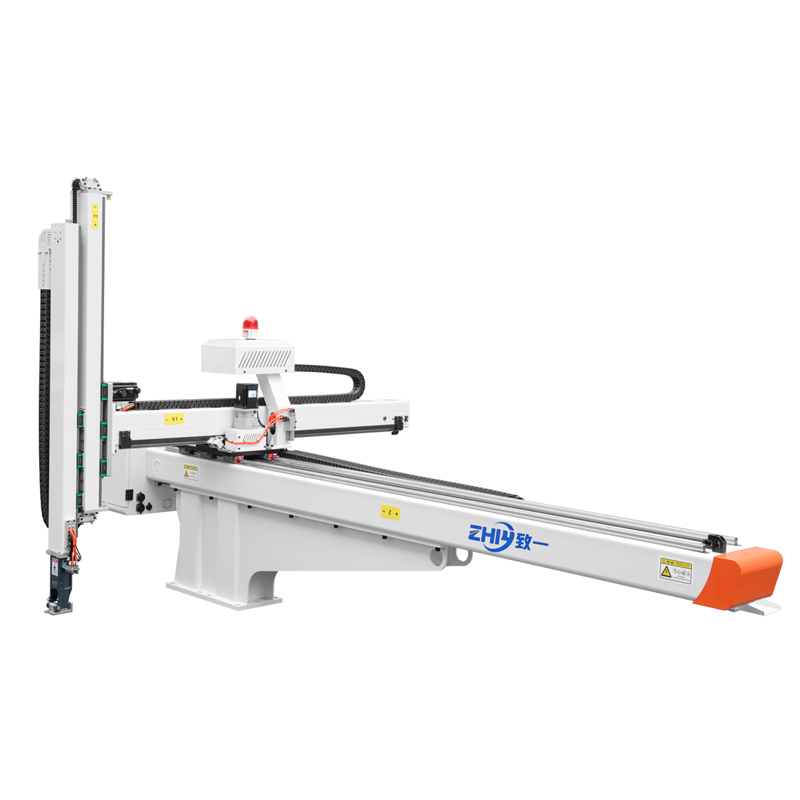
Three-Axis Bull Head Robot (Open Bull Head Architecture)


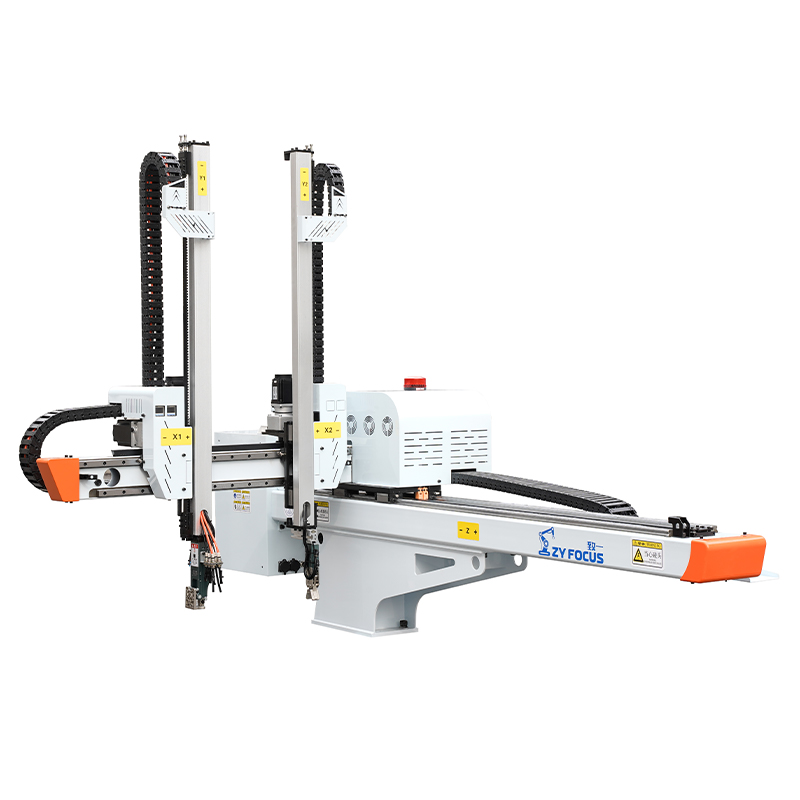
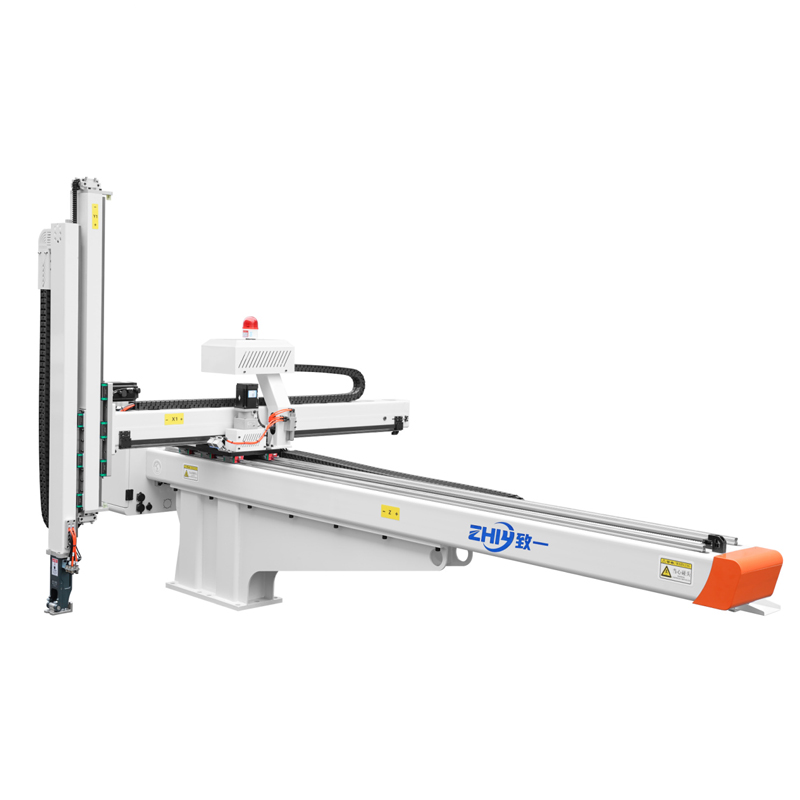
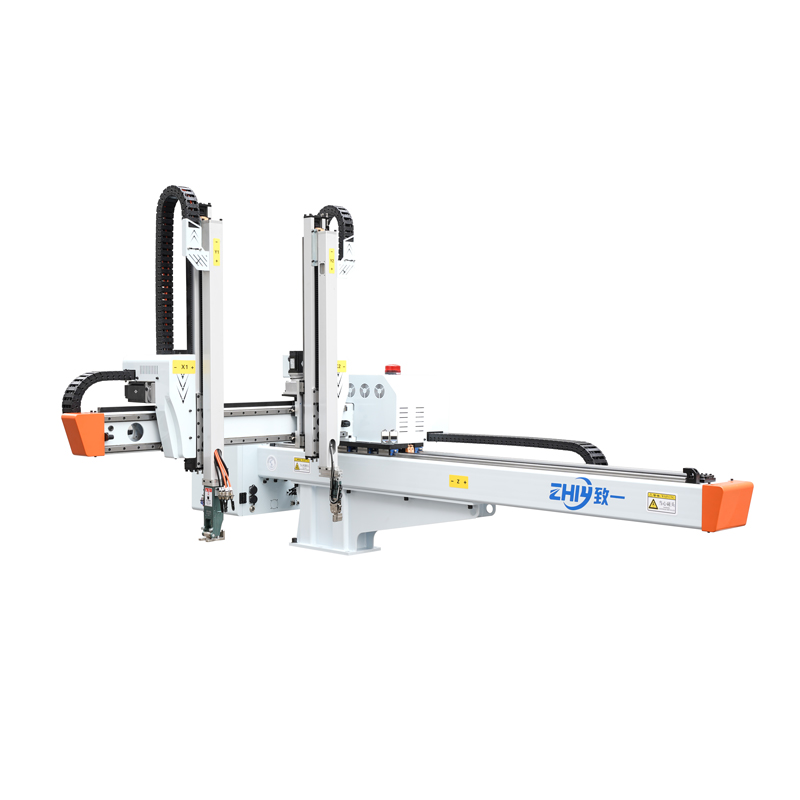
Three-Axis Bull Head Robot

Single-Arm Bull Head Manipulator
The bull head design gets its name from its exposed, front-mounted vertical arm assembly, resembling a bull’s head layout. The vertical extraction arm mounts directly on the front end of the Z-axis cross beam, creating a fully open working zone with zero side or front frame obstructions.
- All three sides of the extraction fixture are unrestricted, adding up to 35% more fixture mounting space for oversized jigs, multi-cavity tools, and complex insert hardware.
- Shorter force transmission arm length evenly distributes heavy load stress across the beam, eliminating frame twisting during high-speed heavy part extraction.
- Compact horizontal footprint: the open frame cuts required installation space by roughly 30% compared to equivalent standard robots, ideal for factories with narrow machine aisles.
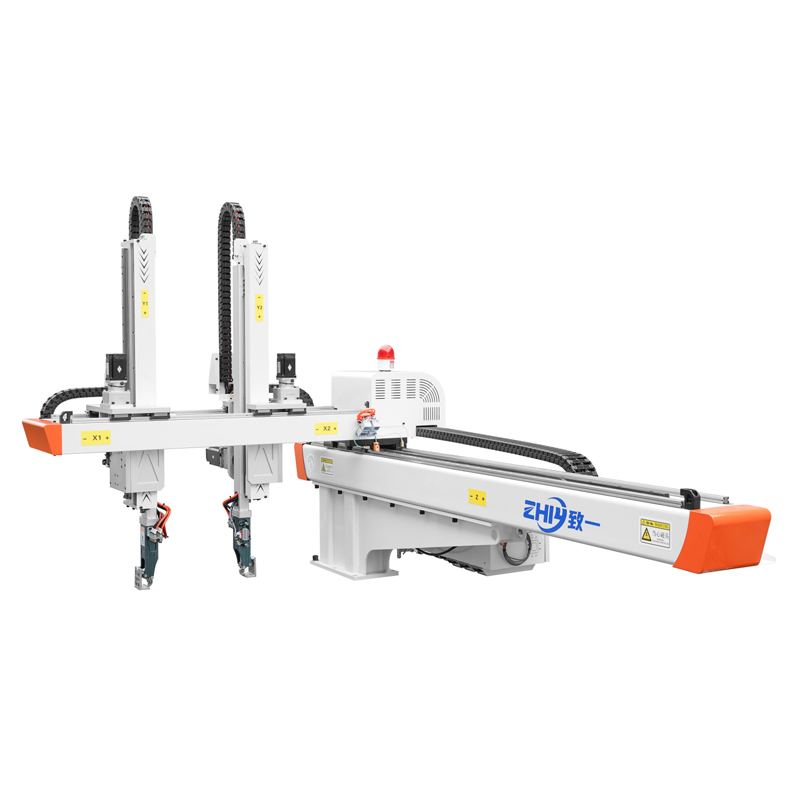
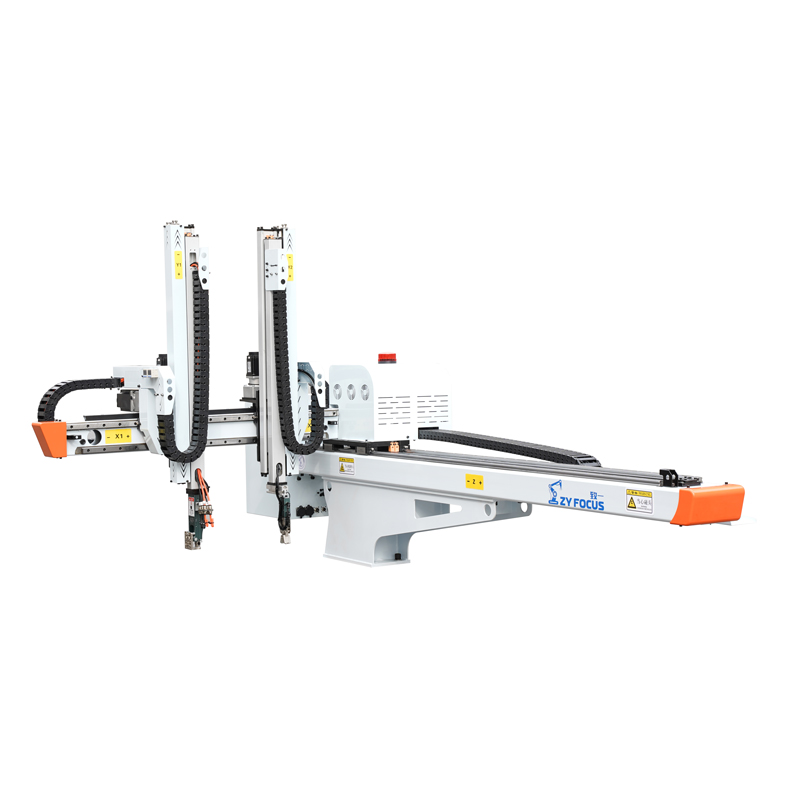
Standard Three-Axis Robotic Arm (Closed Frame Structure)

Standard Closed Frame Three-Axis Robot
Traditional standard three-axis manipulators use an enclosed C-frame support structure. The vertical extraction arm sits nested inside the internal frame rail system, with vertical support beams blocking both left and right sides of the fixture area.
- Frame rails limit fixture width and depth; oversized molds or wide product jigs risk collision with side frame supports during extraction movement.
- Longer mechanical lever arms generate higher torque when lifting heavy loads, introducing minor vibration at maximum speed or full load limits.
- Wider horizontal base frame requires extra floor clearance between injection molding machines, a drawback for densely arranged production floors.
Load Capacity & Stroke Range Comparison
Maximum Load Handling
- Three-Axis Bull Head Robot: Tiered load options from 10kg up to 50kg total weight (product + fixture). Reinforced heavy-duty bull head variants support large automotive bumpers, plastic pallets, and deep storage bins with combined heavy massGuangDong .... The uniform force dispersion structure avoids beam bending even at peak rated load.
- Standard Three-Axis Robotic Arm: Most standard models cap maximum load at 5–15kg. The closed frame’s weaker torque resistance makes sustained heavy load operation risky, leading to accelerated linear guide wear and reduced positioning accuracy over long production runs.
Stroke Travel Parameters
- Vertical (Y-axis) Stroke Bull head robots deliver extended vertical strokes ranging 1,500mm to 3,000mm, built for deep cavity molds with large mold opening distances. Standard arms top out at 600–1,200mm vertical travel, only matching shallow small/medium molds.
- Extraction (Z-axis) Stroke Bull head open architecture allows longer forward extraction reach without frame collision, perfect for long tubular, cabinet, or container molded goods. Standard closed frames limit Z-axis extension due to side support rail interference.
- Traverse (X-axis) Stroke Both robot styles offer matching horizontal traverse stroke options, with no meaningful performance gap for side-to-side part transfer to conveyors or stacking stations.
Speed, Rigidity & Operational Stability Performance
Cycle Speed
Light-load standard robots achieve fast empty cycle speeds for tiny consumer parts, but performance drops sharply under full load. Bull head robots maintain consistent high-speed movement even at maximum rated weight; independent factory testing records 8–12% faster full-load cycle times for medium-to-large molded productsGuangDong ....
Mechanical Rigidity & Vibration Control
Bull head integrated heavy steel beam construction delivers superior structural rigidity. During rapid acceleration/deceleration with heavy parts, minimal arm sway preserves ±0.1mm repeat positioning accuracy. Standard closed frame arms show measurable end-arm vibration when handling loads above 10kg, widening positioning tolerance and increasing risk of surface scratches on high-gloss plastic components.
Long-Term Wear Resistance
Evenly distributed load stress on bull head beams extends linear guide and servo motor service life by 20–30% for continuous heavy production. Standard frames suffer concentrated torque stress at frame joints, requiring more frequent rail lubrication and component replacement in high-volume manufacturing environments.
Compatible Injection Molding Machine Tonnage & Mold Types
Bull Head Three-Axis Robot Matching Range
Optimized for medium to ultra-large injection molding machines spanning 320 tons up to 4,000 tons. Ideal mold profiles include:
- Deep cavity single-cavity molds for large household goods (washing machine tubs, refrigerator liners, storage totes)
- Automotive large component molds (bumpers, instrument panels, wheel arch liners)
- Multi-insert complex molds requiring wide fixture space for metal hardware embedding
- Extra-wide multi-cavity molds with broad part layouts that collide with standard frame side rails
Standard Three-Axis Robot Matching Range
Designed for small to mid-size molding machines (50 tons to 300 tons), suited exclusively for:
- Shallow cavity small consumer goods (electronics housings, cosmetic caps, small toy parts)
- Low-complexity single-cavity molds with compact, lightweight finished products
- High-speed thin-wall small part mass production with minimal fixture hardware
Suitable Production Application Scenarios
Ideal Use Cases for Three-Axis Bull Head Robots
- Automotive plastic component manufacturing (heavy, oversized exterior/interior trim parts)
- Large household appliance plastic housing production
- Industrial plastic pallet, waste bin, and logistics container molding
- Molded products requiring simultaneous metal insert embedding + part take-out
- Factories running large tonnage injection machines with limited aisle space
- Fully automated lines with downstream stacking, cutting, or inspection stations for bulky parts
Ideal Use Cases for Standard Three-Axis Robotic Arms
- High-volume small consumer electronics and consumer disposable plastic goods
- Low-weight cosmetic packaging, medical small plastic accessories
- Small tonnage vertical or horizontal injection molding cells with compact mold openings
- Simple single-action take-out workflows with no secondary insert or assembly steps
- Small-scale startups producing lightweight plastic components with tight equipment budget limits
Cost & Long-Term ROI Breakdown
Upfront Equipment Price
Equivalent travel stroke bull head robots carry an initial purchase price premium of 30–80% versus standard three-axis arms. The price gap stems from thicker reinforced structural steel, higher-torque servo motors, and heavy-duty linear guide components built for sustained heavy load operation. Standard robots deliver lower upfront capital expenditure for light-duty production.
Long-Term Operational ROI
For factories producing medium/large heavy molded parts, bull head robots deliver clear long-term cost advantages:
- Eliminates downtime from frame vibration-induced mold or product damage
- Reduces maintenance frequency for rails, bearings, and drive motors
- Supports fully automated heavy part handling without secondary lifting equipment or extra labor staff For light-duty small-part production lines, standard three-axis arms deliver faster ROI, as the bull head’s heavy-duty structural features remain underutilized and add unnecessary capital cost.
Quick Reference Comparison Chart
| Comparison Factor | Three-Axis Bull Head Robot | Standard Three-Axis Robotic Arm |
|---|---|---|
| Core Structure | Open front bull head frame, unobstructed fixture zone | Closed C-frame, side support rail obstructions |
| Max Load Capacity | 10kg–50kg | 5kg–15kg |
| Vertical Stroke Range | 1500mm–3000mm (deep cavity molds) | 600mm–1200mm (shallow small molds) |
| Structural Rigidity | High, minimal vibration under full load | Moderate, noticeable sway at max load |
| Compatible Machine Tonnage | 320T–4000T large molding machines | 50T–300T small/mid molding machines |
| Fixture Usable Space | +35% wider jig mounting area | Restricted by internal frame rails |
| Installation Footprint | 30% narrower horizontal space required | Wider base frame, larger aisle clearance needed |
| Upfront Cost | Higher (30–80% premium vs standard) | Lower initial investment |
| Best Production Fit | Large, heavy, deep-cavity molded products | Small, lightweight, shallow-cavity mass goods |
Frequently Asked Questions
Q1: Can a standard three-axis robot replace a bull head robot for large part production?
A1: Not recommended. Standard closed frame structures lack the rigidity, load capacity, and fixture space required for oversized or heavy molded goods. Continuous heavy operation accelerates mechanical failure, creates positioning inaccuracies, and raises risk of expensive mold collisions.
Q2: Is a bull head robot worth the price premium for low-volume large part runs?
A2: Yes. Even low-volume large mold production requires the bull head’s open fixture design and high load tolerance to avoid manual lifting labor costs. The reduction in manual handling and mold damage risk offsets the upfront price gap within 12–18 months for most medium-volume large-part manufacturers.
Q3: Can bull head robots be retrofitted onto existing small tonnage injection molding machines?
A3: Technically possible, but economically inefficient. Bull head robots feature over-sized servo drives and heavy structural frames that remain underutilized on small molds, wasting power and capital investment. Standard three-axis arms are purpose-built to match small machine output parameters.
Q4: Do bull head robots support secondary automation like insert embedding and stacking?
A4: Bull head open frame design excels at multi-task secondary operations, with ample fixture space to mount multiple grippers, insert feeders, and rotating axes. Standard closed frame robots have limited fixture room, restricting complex multi-step automated workflows.
Final Buying Guide: Which Robot Should You Pick?
Choose a Three-Axis Bull Head Robot if any of these apply:
- Your facility runs injection molding machines 320 tons or larger
- You manufacture large, heavy plastic products (automotive parts, storage containers, appliance housings)
- Molds have deep cavities or extra-wide multi-cavity layouts
- Production requires metal insert embedding, multi-gripper jigs, or secondary automated stacking
- Factory aisles between molding machines have limited floor clearance
- You aim to eliminate manual heavy lifting and reduce long-term equipment maintenance downtime
Choose a Standard Three-Axis Robotic Arm if all these apply:
- All injection molding equipment is under 300 tons clamping force
- Production focuses on small, lightweight consumer plastic components
- Molds feature shallow cavities with compact part footprints
- Workflows only require simple single-action part take-out with no secondary insert processes
- You operate high-volume light-goods lines with strict upfront equipment budget constraints
For mixed production lines producing both small and large molded products, many manufacturers deploy a hybrid setup: standard three-axis arms on small tonnage cells and bull head three-axis robots on all large molding machines to balance upfront cost and production performance.