
Leave Your Message
Spare-Parts Availability and Mean-Time-to-Repair Planning for Injection Molding Servo Robots
Spare-Parts Availability and Mean-Time-to-Repair Planning for Injection Molding Servo Robots
Most injection molding plants evaluate a servo robot on price, reach, payload, and cycle time. Those numbers decide whether the cell can make the part. They do not decide whether the cell will keep making the part six months after commissioning, when a vacuum generator fails at 2 a.m. or a linear bearing starts to chatter on a Friday shift. For overseas buyers sourcing from a Chinese manufacturer such as Zhejiang Zhiyi Intelligent Robotics Co., Ltd. (Zhiyi Robotics), the real risk is not the robot on the boat — it is the missing part that turns a two-hour repair into a nine-day wait. This article treats spare-parts availability and mean-time-to-repair (MTTR) as a purchasing specification, not an afterthought, and gives plant managers and equipment dealers a concrete framework for de-risking robot uptime.
Why Spare-Parts Planning Belongs in the Robot Purchase Decision
An injection molding cell earns its keep only while it is running. A servo robot that removes, separates, and stacks parts at 22-second cycles is adding value every second; the moment it faults, the molding machine behind it either idles or runs scrap. For a typical 8-cavity plant running 24/5, a single day of robot downtime can erase more margin than the difference between two competing robot quotes. That is why a serious buyer should negotiate the spare-parts bill of materials at the same time as the robot price, not after the warranty expires.
Buyers who treat the Robot And Its Parts as one procurement package consistently report lower lifetime cost and shorter outages. The supplier's ability to ship the right part, with the right documentation, to a port you can clear, is a capability that varies sharply between manufacturers. A factory in Ho Chi Minh City, Monterrey, or Łódź has very different logistics reality than one in Ningbo, and the spare-parts plan has to reflect that.
Building a Spare-Parts Bill of Materials Before You Buy
Before issuing a purchase order, ask the supplier for a structured parts list that maps every wear item and failure-prone component to a part number, a photo, and a recommended stocking quantity. A good bill of materials is not a 400-page service manual — it is a focused, procurement-ready table. At minimum it should cover:
- End-of-arm tooling consumables: suction cups, gripper fingers, vacuum pads, and seals sized to your specific part geometry.
- Linear motion items: bearings, guide rails, belts or synchronized tooth belts, and lubrication cartridges for the traverse and vertical axes.
- Pneumatic and vacuum components: vacuum generators, solenoid valves, filters, regulators, and quick-connect fittings.
- Electrical and control items: servo drives, encoders, cables, I/O modules, and the Teach Pendant or controller board.
- Structural spares: gripper mounting plates, take-out jigs, and safety interlock components unique to your cell layout.
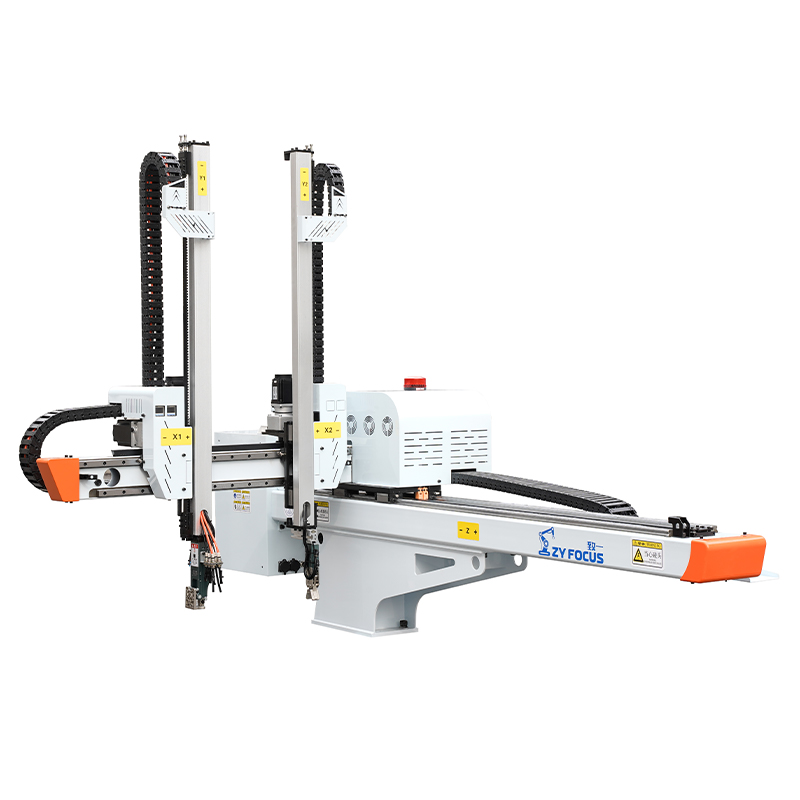
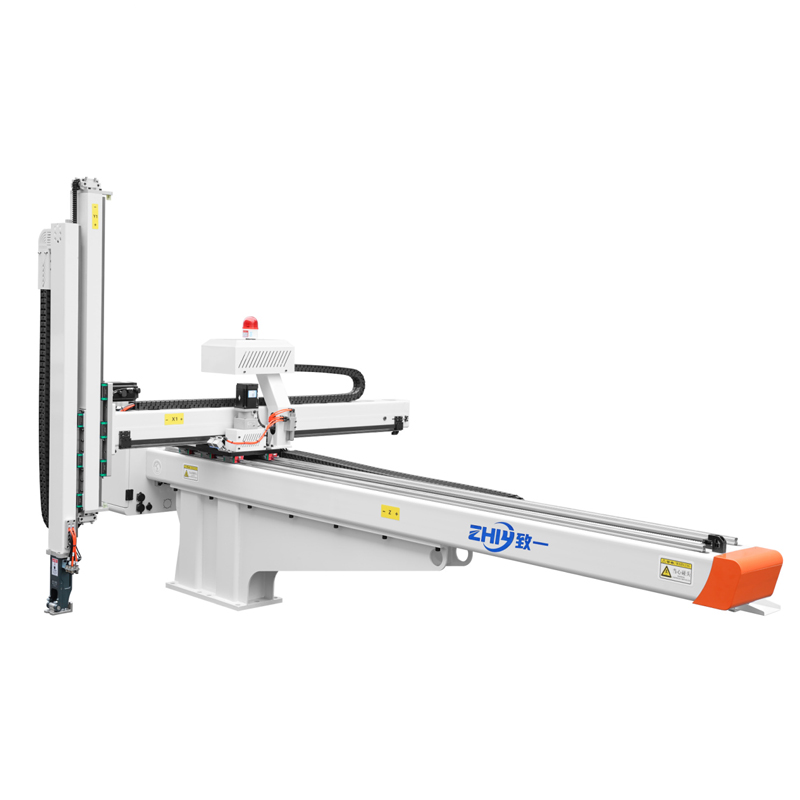
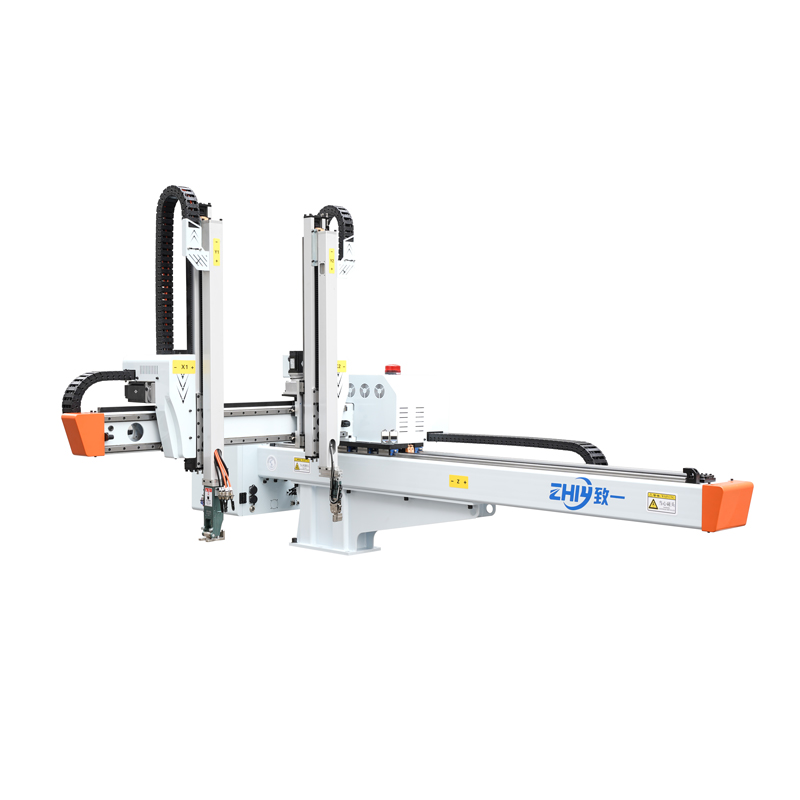
Requesting this document early forces the supplier to confirm part standardization. Zhiyi Robotics builds 3-axis and 5-axis servo robots on modular platforms, which means many consumables and drive components are shared across models — a real advantage when you run mixed cells and want to minimize the number of distinct SKUs on your shelf.
Classifying Parts by Failure Risk and Lead Time
Not every component deserves shelf space. A useful method is to sort parts into three bands by how often they fail and how long they take to arrive. This classification drives both your on-site inventory and your contract negotiations.
Consumable Wear Parts
These fail predictably and often. Consumable wear parts such as suction cups, O-rings, and belt tensioners should always be held locally in quantities sized to your cycle volume. They are cheap, small, and their failure stops the cell immediately. There is no excuse for a four-day outage caused by a $2 seal.
Mechanical and Structural Components
Bearings, guide rails, and gripper plates fail slowly and show warning signs — noise, vibration, rising take-out variance. These are candidates for a preventive maintenance schedule rather than heavy on-hand stock, but you should confirm the supplier can deliver them within an acceptable window, ideally with a regional hub or express freight option.
Electronics and Servo Drives
Servo drives, controllers, and encoders fail rarely but carry the longest lead times and the highest unit cost. For these, the right strategy is usually a single critical spare held at the distributor or a guaranteed exchange program with the manufacturer, rather than one per plant. This is where vendor lead time becomes a contractual term, not a hope.
Calculating Mean Time to Repair for Your Cell
MTTR is the average time from fault detection to verified production resumed. It is not just the repair labor; it includes diagnosis, parts retrieval, customs clearance if the part is imported, reinstallation, and re-validation. A practical formula your team can use:
MTTR = (diagnosis time + parts availability delay + on-site repair time + re-validation time) averaged across historical or estimated failures.
For an overseas buyer, the single largest and most variable term is parts availability delay. A vacuum generator sourced from a local pneumatic supplier might add two hours; a servo drive flown from the factory in China might add five to nine days once you include freight, import brokerage, and inspection. The goal of spare-parts planning is to compress that term toward zero for the components that actually fail often.
Tip: negotiate a guaranteed maximum lead time for your top ten failure-prone SKUs and write it into the supply agreement, because a verbal "we can usually ship in a week" will not help you during a customs hold at 3 a.m.
Defining a Critical Spare-Parts Kit
Rather than stocking everything, most plants are better served by a defined critical spare-parts kit sized to one molding cell. A sensible starter kit for a 3-axis or 5-axis servo robot cell includes: a full set of end-of-arm consumables for one changeover, one spare vacuum generator and solenoid bank, one spare encoder cable and controller I/O module, a spare linear bearing set, and the unique gripper plates for your current tool. This kit typically fits in a single cabinet and costs a fraction of one day of lost production.
Document the kit in your maintenance system with part numbers, minimum and maximum quantities, and a reorder trigger. Many Zhiyi Robotics buyers standardize this kit across all their cells running similar arms, which simplifies training and lets a single regional stock cover several plants.
Working With Your Supplier on Lead Times and Local Stock
The fastest part is the one already in your region. When sourcing from zhiyirobotics.com, discuss whether a local stocking distributorexists in your market, or whether the factory can pre-position a rotational buffer of high-turn SKUs at a freight forwarder near your port. For equipment dealers, this is also a commercial opportunity: carrying the critical kit for your customers turns a one-time Robot Sale into a recurring parts relationship and shortens their MTTR dramatically.
Also confirm documentation quality. Every shipped part should arrive with the correct part number, compatibility note, and at least a one-page installation guide. Poorly labeled spares are a common cause of "wrong part shipped" delays that quietly double your real MTTR.
Turning MTTR Into a Procurement Specification
Once you have the classification, the kit, and the lead-time commitments, write MTTR expectations into the request for quotation. A strong specification reads something like: "Supplier shall provide a spare-parts BOM, maintain a critical-spare exchange program with a maximum 72-hour dispatch for listed SKUs, and supply MTTR guidance validated against similar installations." Buyers who include this language get visibly better post-sale support, because the manufacturer knows uptime is being measured, not assumed.
Applications such as Automotive Parts Molding with 3-Axis Servo Robotic Arm and 3-Axis Servo Robots for Food-Grade Silicone Molding: A Practical Specification Guide for Buyers show how part-specific tooling changes the consumable profile — and therefore the spare-parts plan — so align your kit with the actual parts you run.
FAQ
How many spare suction cups should a molding plant keep on hand?
As a starting point, hold at least one full set per active end-of-arm tool plus 20–30% extra for high-cycle or abrasive parts; for food-grade silicone or kitchenware runs described in 3-Axis Silicone Servo Robot for Kitchenware Manufacturing, increase the buffer because soft-tooling surfaces wear cups faster and unexpected changeovers are common.
What is a realistic MTTR target for a servo robot cell?
For consumable-related faults with a local kit, target under two hours including diagnosis and re-validation; for imported electronic spares without a regional buffer, plan for five to nine days, which is exactly why a critical-spare or exchange program matters for drives and controllers.
Should I buy spares from the original manufacturer or a local pneumatic shop?
Standardized pneumatic items like filters and fittings can safely come from local suppliers to cut lead time, but robot-specific components such as servo drives, encoders, and proprietary gripper plates should come from the manufacturer to guarantee compatibility and warranty coverage.
How do I know which parts are failure-prone for my application?
Request the supplier's field-return data or a recommended stocking list for your part family; high-speed thin-wall molding strains belts and bearings, while dusty or oily environments accelerate pneumatic wear, so the profile shifts with your process.
Can a dealer resell the critical spare-parts kit to my plant?
Yes, and it is often the most reliable model: a local stocking distributor holding the kit close to your operation can deliver same-day and turn the robot sale into an ongoing service relationship with measurable MTTR improvement.
Does spare-parts planning change when moving from 3-axis to 5-axis automation?
It adds complexity because 5-axis arms introduce rotary and wrist axes with more bearings and cables, so your BOM and kit must expand to cover those extra motion stages while keeping shared-platform consumables centralized.