
Leave Your Message
Single-Section vs Double-Section Robotic Arm: Which Configuration Delivers Better ROI?
Single-Section vs Double-Section Robotic Arm: Which Configuration Delivers Better ROI?
When evaluating automation investments for injection molding operations, procurement managers and production engineers face a fundamental question: should you go with a single-section robotic arm or invest in a double-section configuration? The answer isn't always straightforward, and the wrong choice can mean thousands of dollars in unnecessary capital expenditure or, worse, a system that fails to deliver the throughput you need.
This article breaks down the ROI implications of both configurations, drawing on real product specifications and independent research, to help you make an informed decision for your specific production environment.
Understanding the Configurations
Before diving into the numbers, let's clarify what we're comparing.
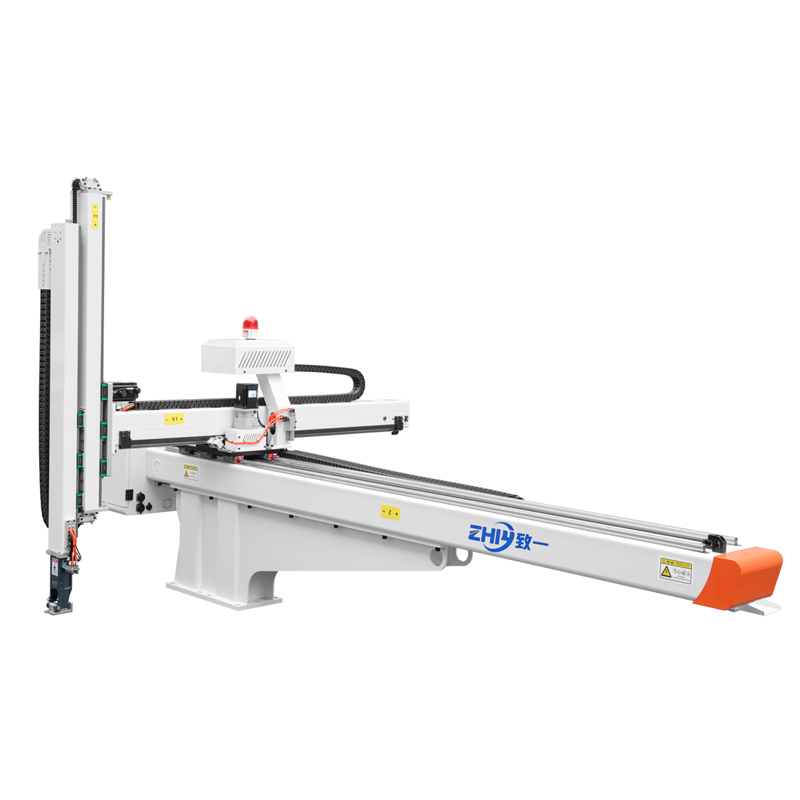
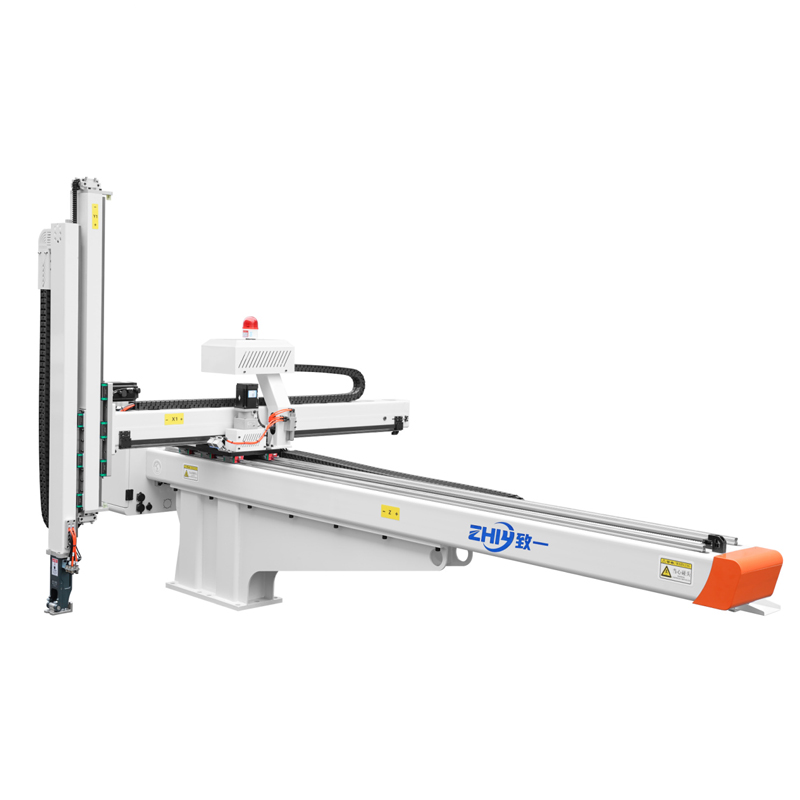
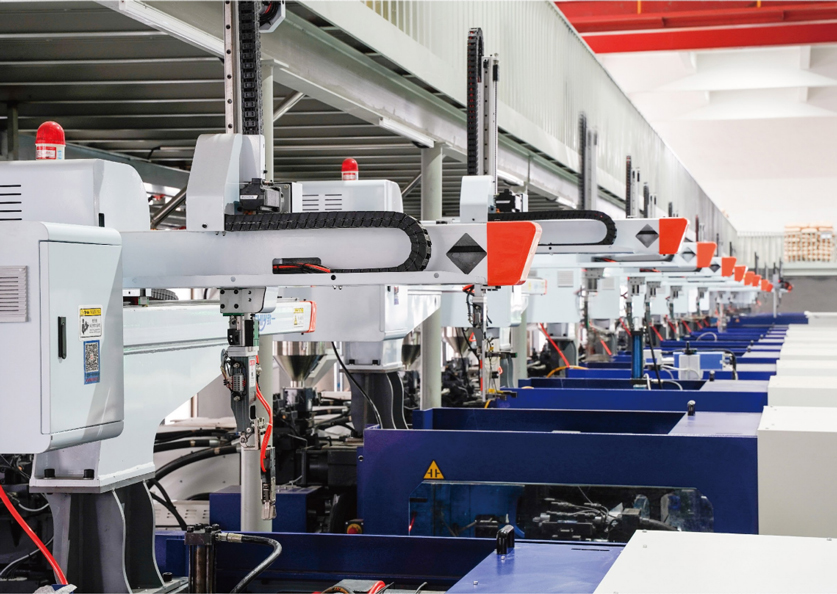
Single-section robotic arms feature a single vertical beam (the "section") that handles the primary picking and placing motion. These are typically found in three-axis single-arm configurations, where one arm handles the entire workpiece transfer. They are the workhorses of many injection molding lines, offering a straightforward, cost-effective entry point into automation.
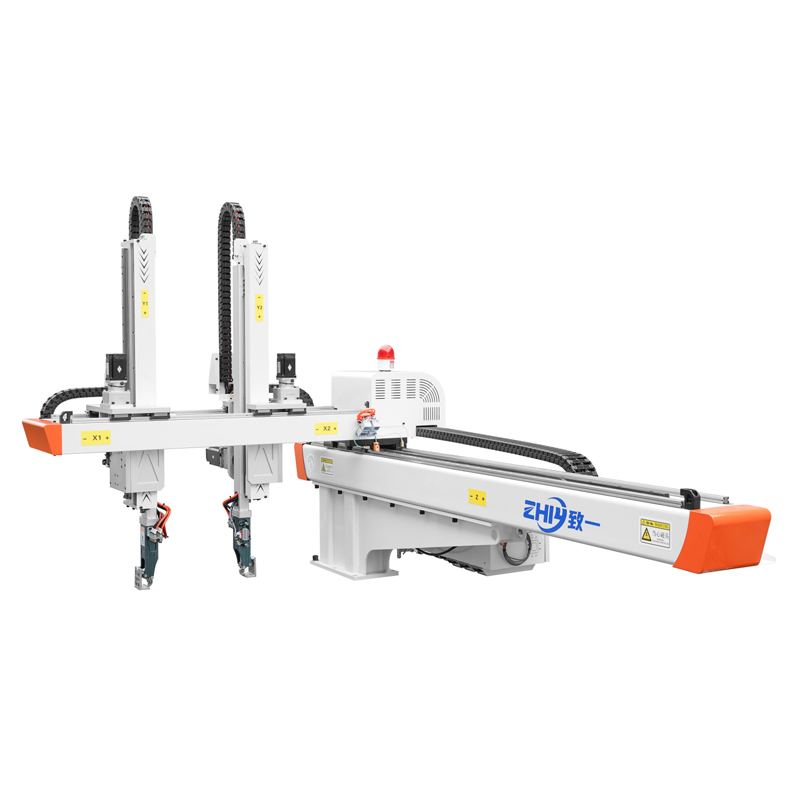
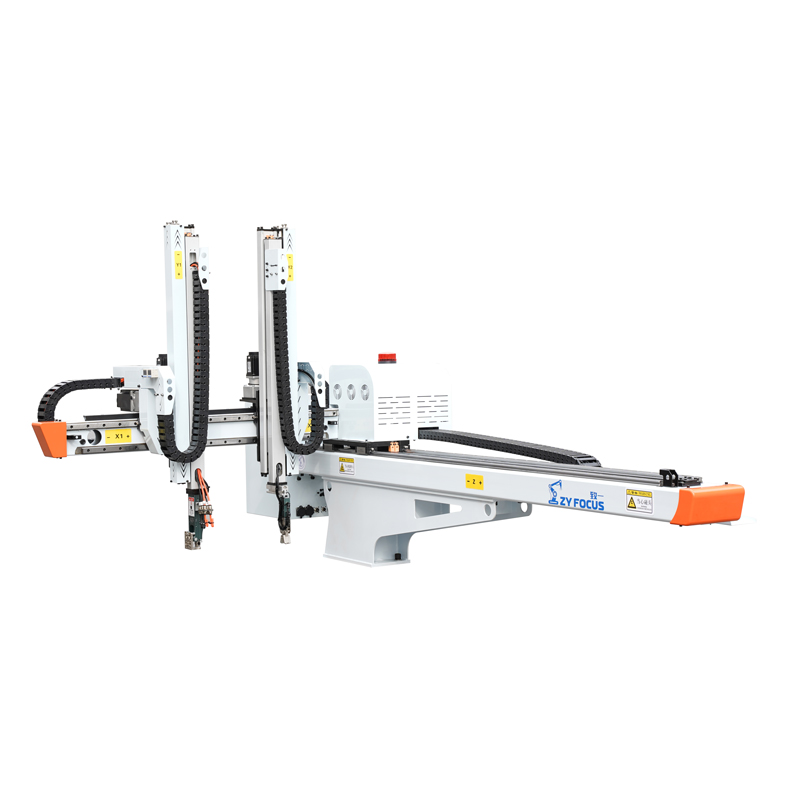
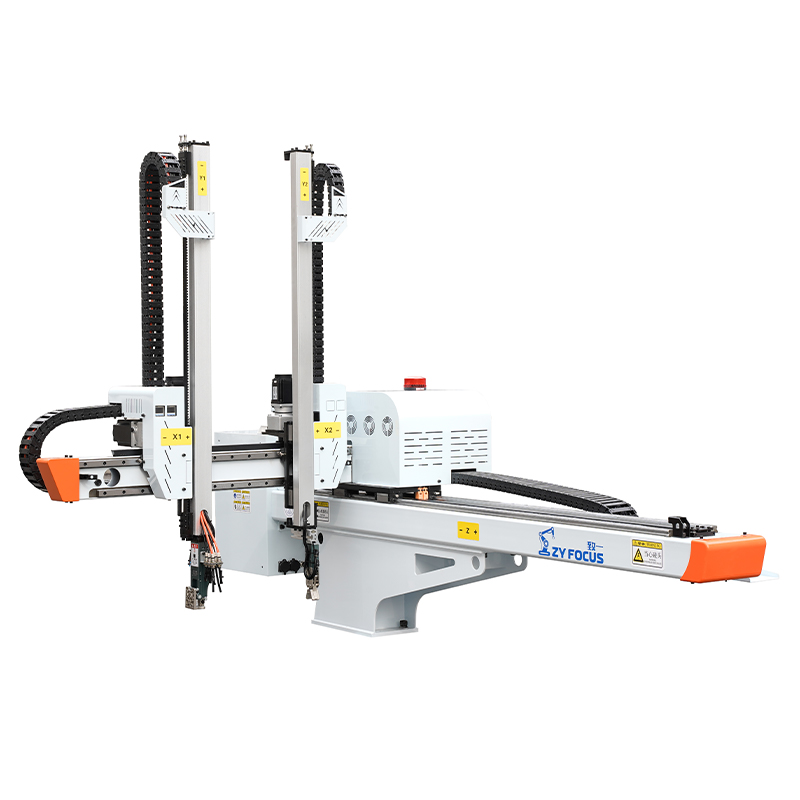
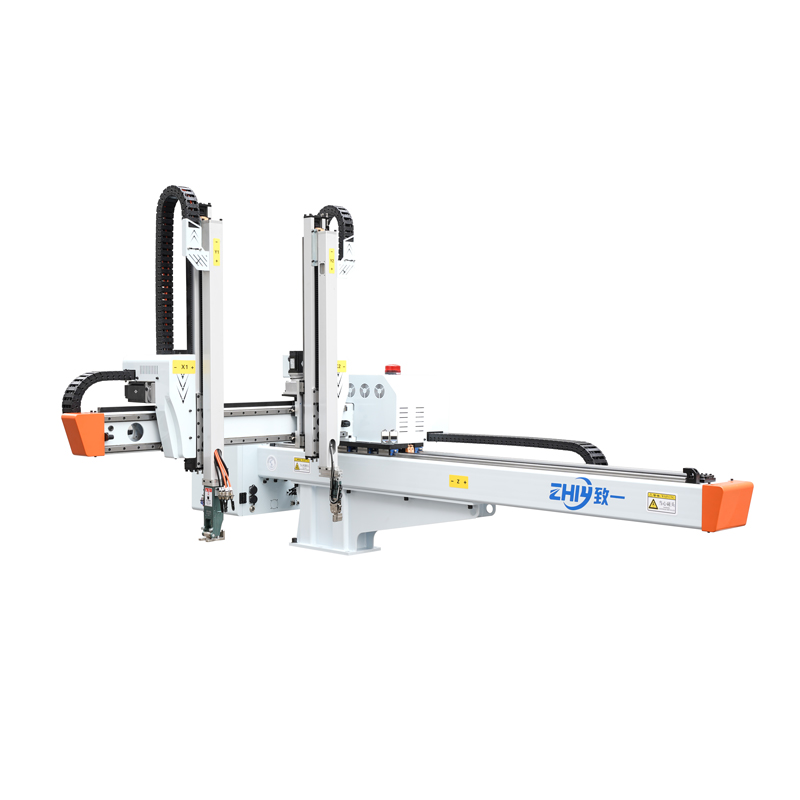
Double-section robotic arms, by contrast, incorporate two vertical sections—essentially two beams that can operate independently or in coordination. These are often paired with dual-arm designs, as seen in five-axis double-arm double-section configurations. The additional section provides greater flexibility in motion planning and the ability to handle more complex tasks simultaneously.
The Cost Picture: Upfront Investment
The most immediate differentiator between these configurations is the initial capital outlay. Single-section arms generally carry a lower purchase price. For instance, a three-axis single-arm single-section unit like the WKG-900 comes with a maximum load capacity of 8-12kg and weighs approximately 250kg. A five-axis double-arm double-section robot like the WKFI-950, while offering comparable load capacity (5-10kg), represents a more sophisticated piece of equipment with a correspondingly higher price tag.
However, focusing solely on the purchase price misses the bigger picture. Industry data suggests that Cartesian Robots used in injection molding typically achieve an ROI of 1-2 years, while more complex articulated systems may extend to 3-5 years. The question is whether the additional capability of a double-section configuration can shorten that payback period enough to justify the premium.
Throughput: Where Double-Section Configurations Shine
Independent research provides compelling evidence on the throughput advantage of dual-arm configurations. A comparative study examining single-arm versus dual-arm collaborative robots in precision assembly found that while the single-Arm Robot was more energy-efficient, the dual-arm robot proved to be 20% faster. The same study concluded that the profitability of the dual-arm robot paid off after approximately eight months of operation.
Why the speed advantage? Double-section arms can perform coordinated motions that single-section systems cannot. In injection molding applications, this translates to the ability to remove finished products while simultaneously handling inserts or performing secondary operations like trimming. A single-section arm must complete one operation before beginning the next—a sequential workflow that inherently limits cycle time reduction.
One study framed the economic comparison directly: "a two-arm robot is a more advantageous economic solution due to higher profits per month." The cumulative profit advantage of dual-arm systems becomes increasingly pronounced over time, as the monthly throughput differential compounds.
Space and Installation Considerations
Space constraints can be a decisive factor, particularly in facilities with limited floor space or where injection molding machines are tightly packed.
Single-section arms are typically lighter and more compact. The WKG-900 single-arm single-section unit has a net weight of just 250kg, making it easier to install and requiring less structural support. It's also designed with a smaller footprint, which can be critical in crowded production workshops.
Double-section configurations, while offering greater capability, come with additional weight and spatial requirements. The WKFI-950 double-arm double-section robot weighs approximately 220kg—comparable in weight but requiring more careful planning for installation and clearance.
That said, some double-section designs are engineered specifically to optimize space. Certain configurations incorporate dual-speed mechanisms and pneumatic components that can save 30-40% of the space typically required for injection molding machine installation. The trade-off depends heavily on the specific model and manufacturer.
Maintenance and Operating Costs
The total cost of ownership extends well beyond the purchase price. Maintenance requirements, energy consumption, and downtime all factor into the ROI calculation.
Single-section arms generally benefit from simpler mechanical designs, which can translate to lower maintenance costs and easier troubleshooting. The WKG-900, for example, features a modular design that allows for quick replacement of key components, reducing downtime and improving production efficiency. It also employs a lubrication-free design, with daily maintenance limited to regular cleaning and simple inspection—reportedly reducing maintenance costs by over 30% compared to similar products.
Double-section configurations introduce additional complexity. More moving parts, additional axes of motion, and coordinated control systems mean more potential points of failure and potentially higher maintenance requirements. However, this complexity also enables capabilities that can reduce overall operational costs in other ways—for instance, by eliminating the need for secondary manual operations that would otherwise require additional labor.
Energy efficiency is another consideration. The same research that found dual-arm robots to be 20% faster also found single-arm robots to be more energy-efficient. For operations where energy costs are a significant concern or where sustainability targets are a priority, this efficiency advantage may tilt the scales toward single-section configurations.
Application Fit: Matching Configuration to Need
Perhaps the most critical factor in the ROI calculation is whether the configuration actually fits your specific application.
Single-section arms are ideally suited for:
-
Simple pick-and-place operations where the primary requirement is removing finished parts from the mold.
-
Single-product, high-volume production where cycle time is the primary metric and the motion path is repetitive.
-
Smaller injection molding machines (150T-250T range), where the lighter weight and smaller footprint are advantages.
-
Operations with limited budgets or where automation is being introduced for the first time.
Double-section configurations excel in:
-
Simultaneous handling of products and runners/sprues, where the second arm can remove the waste material while the first handles the finished part.
-
Multi-cavity molds where multiple parts need to be removed in a single cycle.
-
Complex operations requiring secondary processes like trimming, inspection, or insertion between molding cycles.
-
Mid-to-large injection molding machines (250T-400T range and above), where the additional capability can be fully utilized.
The ROI Calculation: A Framework
To make an apples-to-apples comparison, procurement teams should evaluate both configurations using a consistent framework:
1. Throughput gain. Estimate the cycle time reduction achievable with each configuration. For double-section systems, research suggests a 20% throughput improvement is realistic in many applications.
2. Labor savings. Calculate the reduction in manual handling required. A good rule of thumb for labor estimation alongside a robotic system is approximately 25% of current labor costs.
3. Quality improvement. Factor in reduced scrap rates and improved consistency. High-precision servo drives can achieve repeat positioning accuracy of ±0.05mm to ±0.5mm depending on the configuration, directly impacting yield.
4. Maintenance and energy costs. Account for the ongoing operational expenses of each configuration over the expected lifespan.
5. Downtime and reliability. Consider the impact of potential failures and the ease of maintenance on overall equipment effectiveness.
Making the Decision
The choice between single-section and double-section robotic arms ultimately comes down to your specific production requirements, budget constraints, and long-term automation strategy.
For many operations—particularly those running smaller injection molding machines with straightforward pick-and-place requirements—a single-section arm offers an excellent ROI with lower upfront investment and simpler maintenance. The payback period is typically shorter, and the risk profile is lower.
For operations with higher throughput requirements, multi-cavity molds, or the need for secondary operations within the molding cycle, the additional investment in a double-section configuration can deliver superior long-term returns. The 20% throughput advantage identified in independent research, combined with the ability to eliminate secondary manual operations, often justifies the higher initial cost—with payback occurring in as little as eight months in some applications.
The key is to model your specific production environment, run the numbers for both scenarios, and choose the configuration that delivers the best total cost of ownership for your unique circumstances. Neither configuration is universally superior—the best choice is the one that fits your operation.