
Leave Your Message
Servo vs Pneumatic Robots for Injection Molding: A TCO Energy and Operating-Cost Guide for Plant Buyers
Servo vs Pneumatic Robots for Injection Molding: A TCO Energy and Operating-Cost Guide for Plant Buyers
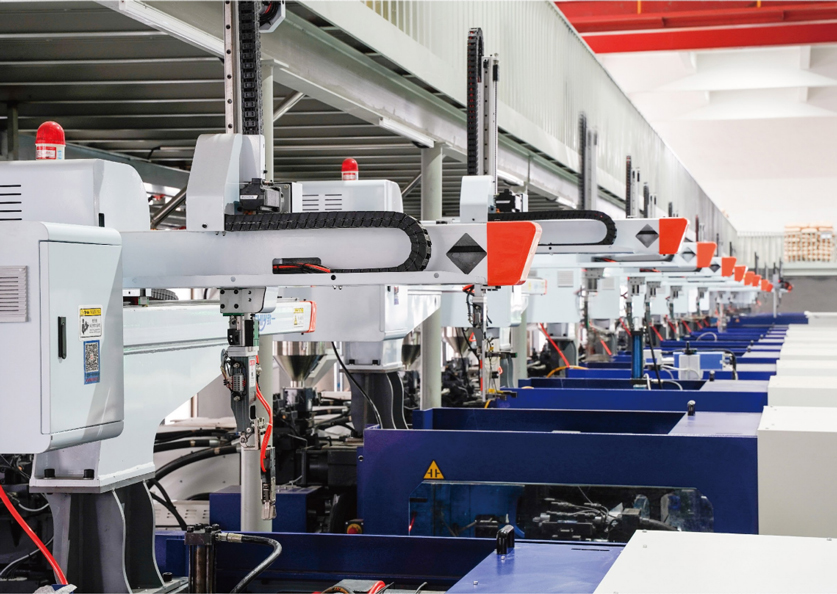
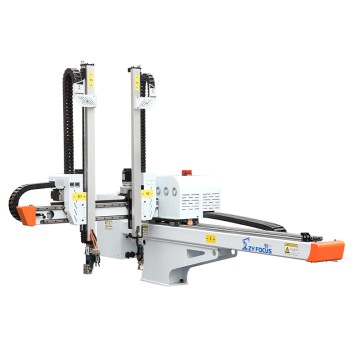
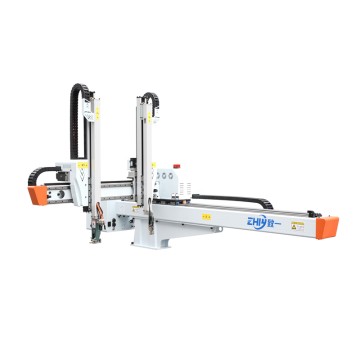
For plastics processors running 10, 50, or 200 Injection Molding Machines, the robot on top of the platen looks like a small line item on the capital budget. In reality, the choice between aservo-Electric Robot and a pneumatic robot decides a recurring monthly expense that quietly compounds for the entire service life of the cell. Energy is the largest and least visible part of that expense, and it is the one variable most purchase orders still ignore. This guide gives plant owners, automation engineers, and finance teams a concrete way to model energy and operating cost before signing a specification.
Why Energy Belongs in the Robot Purchase Decision
A molding plant already spends the bulk of its utilities bill on the injection unit, the mold-temperature controllers, and the chiller. The robot is rarely the top consumer. But two forces make its energy profile worth a serious line in the business case. First, pneumatic robots pull their cost not from the robot itself but from a centralized air system that runs 24/7 whether or not the robot is moving. Second, servo robots have fallen enough in price that the purchase premium over pneumatics is frequently recovered inside the first 18 to 36 months once air, leakage, and maintenance are counted honestly. Treating the robot as a one-time capital cost is the single most common error in molding automation budgeting.
The Core Energy Difference: Motion-Only vs Always-On
The fundamental split between the two technologies is when they consume energy.
Servo Motors Draw Power Only During Motion
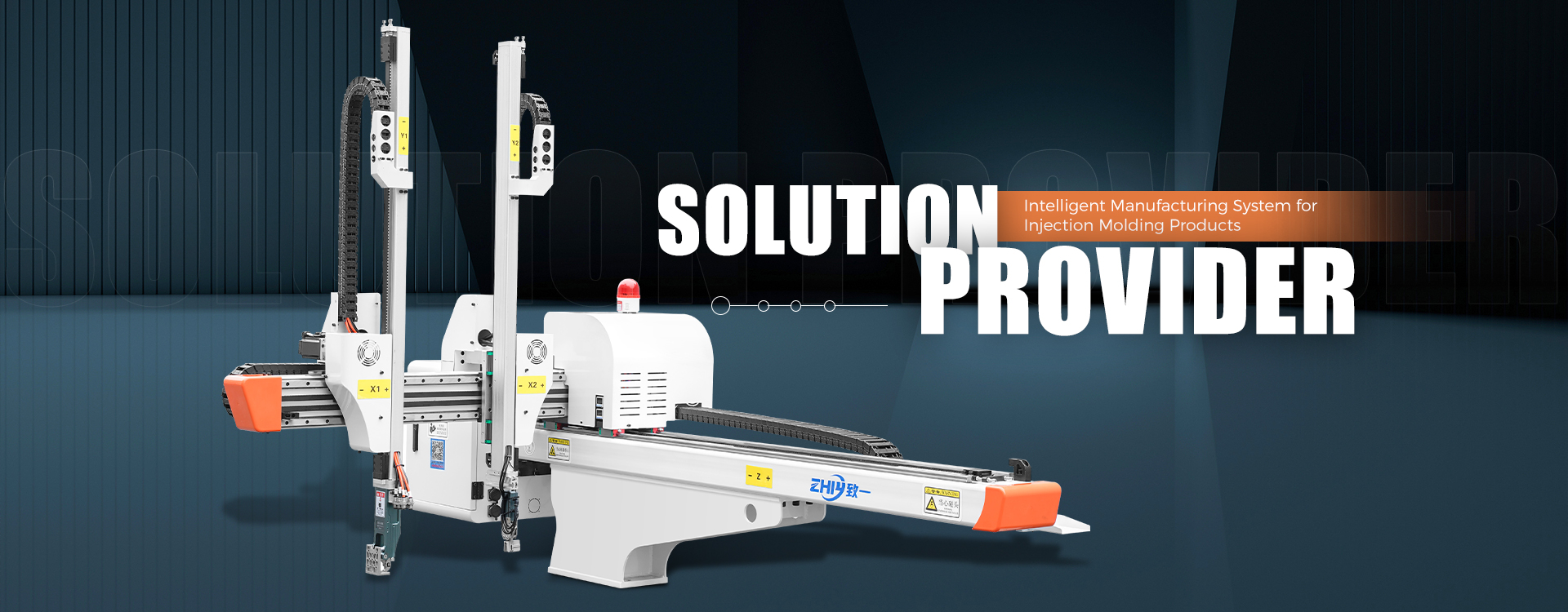
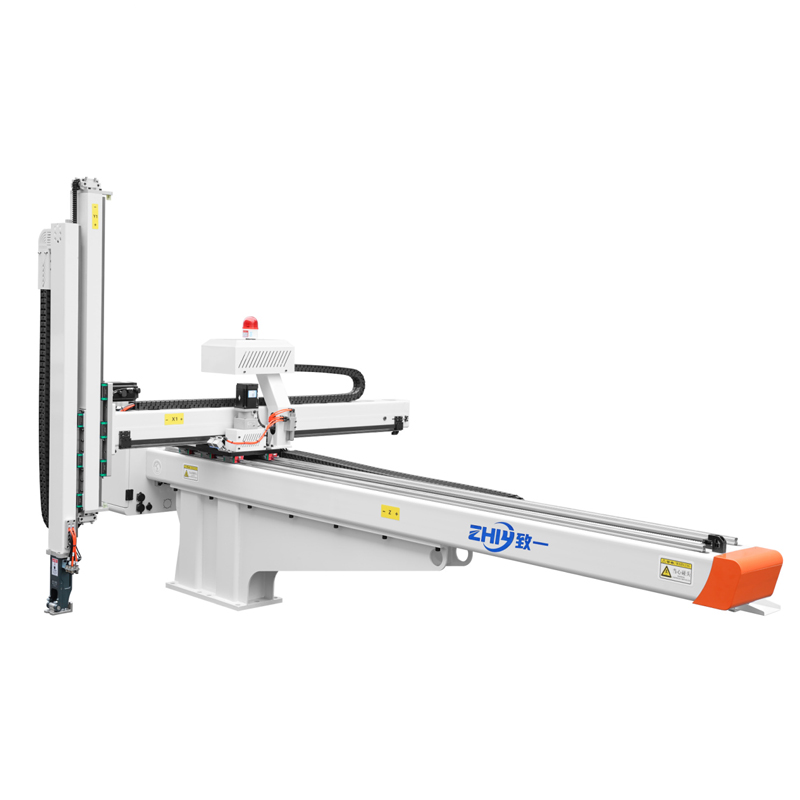
A 3-axis servo take-out robot rated at roughly 1.5 to 3.0 kW peak draws current only while the axis is accelerating, moving, and decelerating. Between cycles, when the arm waits at the gate for the mold to open, the drive sits at near-zero load. Typical measured draw during a 6 to 10 second take-out cycle lands in the range of 0.25 to 0.6 kWh per 1,000 cycles, depending on payload, stroke, and acceleration profile. A 5-axis double-arm unit handling 8 to 15 kg parts might reach 0.5 to 1.2 kWh per 1,000 cycles. The key point for procurement is that idle time costs almost nothing in a servo cell.
Pneumatic Robots Need Continuous Compressed Air
A pneumatic robot has no battery and no motor torque reserve. It depends on a plant air header that must be pressurized at all times to roughly 6 to 7 bar. Even when the gripper is simply holding position, air bleeds through valves, FRL units, and unavoidable leaks. The compressor that feeds the header runs continuously to replace that loss, so the energy cost of a pneumatic robot is effectively the energy cost of keeping the whole air system alive during every operating hour, not just the seconds the arm travels.
The Hidden Cost of Compressed-Air Systems
Compressed air is frequently the most expensive utility in a molding plant, and almost no one prices it correctly.
Cost Per Nm³ of Compressed Air
Industry benchmarks put the delivered cost of compressed air in the range of 0.010 to 0.015 USD per normal cubic meter (Nm³), or roughly 0.03 to 0.05 USD per 100 scf, when you include compressor electricity, desiccant or refrigerant drying, filtration, and maintenance. Cheap plants with efficient centrifugal compressors and heat recovery sit near the low end; older reciprocating or oil-lubricated screw units with poor recovery sit at the high end or beyond. A single pneumatic take-out cylinder consuming 0.3 to 0.8 Nm³ per cycle at a 6-second cycle therefore burns roughly 0.003 to 0.012 USD of air per cycle before any part is actually moved.
Leakage Losses That Never Appear on the Robot Quote
Compressed-air systems routinely lose 20% to 30% of their volume to leaks, and poorly maintained plants exceed 40%. A header sized for 20 pneumatic robots that leaks at 25% means the plant pays for a quarter of its air doing nothing. Because the leakage is invisible at the robot, it never enters the robot comparison, yet it is precisely the cost that makes pneumatics expensive over time.
Building an Annual Electricity vs Air Cost Model for One Robot
A transparent single-robot model lets procurement compare two quotes on equal footing. Use the following annual inputs as a starting template, assuming two shifts at 6,000 operating hours per year:
- Cycles per year: 3,600,000 at a 6-second cycle (one shift-equivalent doubled to two shifts)
- Servo energy: 0.40 kWh per 1,000 cycles at an electricity rate of 0.10 to 0.15 USD/kWh
- Servo annual electricity: 3,600,000 / 1,000 x 0.40 x 0.12 = approximately 1,730 USD per year
- Pneumatic air: 0.50 Nm³ per cycle at 0.012 USD/Nm³
- Pneumatic annual air cost: 3,600,000 x 0.50 x 0.012 = approximately 21,600 USD per year, plus the share of compressor fixed losses
The gap is roughly an order of magnitude. Even after adding the servo drive's standby and the pneumatic robot's lower capital price, the air cost alone typically overtakes the servo premium within the first two to three years of two-shift operation. The 5-year TCO is where the servo option almost always wins for continuous production.
Standby and Sleep Strategies That Change the Math
Energy optimization is not only about technology choice; it is about how the cell is commissioned.
- Put the servo drive into a low-power standby during mold changes, lunch breaks, and weekend idling rather than leaving it fully enabled.
- Schedule the plant air header to drop to 4 bar or shut off entirely on lines that have been converted to servo robots, since no pneumatic consumer remains.
- Program the robot controller to enter sleep after a configurable idle timeout, cutting standby draw from tens of watts to single digits.
- Audit pneumatic lines monthly; a 3 mm leak at 6 bar wastes roughly 1,000 to 1,500 Nm³ per month, or 12 to 18 USD, and dozens of such leaks are common.
Cycle-Time Optimization and Per-Part Energy Amortization
Every second shaved from the robot cycle does double duty: it raises throughput and it lowers the energy cost attributed to each finished part. If a servo robot completes a take-out in 5 seconds instead of 7, the same 3,600,000 annual cycles consume about 28% less motion energy, and the fixed overhead of lighting, extraction, and building services is spread across more good parts. Procurement teams should ask suppliers for the energy per 1,000 cycles at the proposed acceleration profile, then model per-part energy amortization at the real production volume rather than trusting nameplate ratings.
Variable Frequency, Regenerative Drives, and Recovered Energy
Modern servo robot controllers recover deceleration energy through regenerative resistors or, in newer cells, feed it back to the DC bus shared with the injection machine. On a 5-axis double-arm unit with long vertical strokes and heavy payloads, regeneration can return 10% to 25% of the gross motion energy to the system. Variable-frequency compressors for any residual air needs trim their own part-load consumption versus fixed-speed units, which waste energy whenever demand dips below capacity. Specifying a regenerative servo drive is one of the few options on a robot quote that pays for itself through the energy line rather than the throughput line.
Where the Robot Sits in the Plant Energy Ledger
To keep perspective, a single servo robot in a two-shift cell typically represents 1% to 4% of total plant electricity, while the injection molding machine, barrel heater, and ancillary temperature control dominate the rest. The strategic value is not the robot's own share but the air system it lets you shrink. Converting a row of 20 pneumatic robots to servo can allow a smaller, or even idle, compressor, cutting plant air energy by 15% to 35% depending on how much pneumatic equipment remains. That systemic saving is the number finance teams should put at the top of the business case.
The TCO Comparison Template for Procurement
Use this five-line template to compare a servo robot against a pneumatic alternative over a 5-year horizon. Replace the bracketed values with your plant's real rates.
- Line 1 - Acquisition: servo premium vs pneumatic base price (often 3,000 to 12,000 USD higher for the servo unit, depending on axis count and payload).
- Line 2 - 5-year energy: servo electricity at roughly 1,500 to 2,500 USD/year vs pneumatic air at 15,000 to 25,000 USD/year per robot in two-shift duty.
- Line 3 - Maintenance: servo needs periodic belt or gear inspection and bearing service; pneumatic needs seal kits, FRL elements, and valve rebuilds, typically 300 to 800 USD/year higher for pneumatics.
- Line 4 - Spare parts and downtime: budget 500 to 1,500 USD/year per robot for either, weighted by MTTR and local stock availability.
- Line 5 - Residual value: servo units retain more value at year five due to broader reuse across molds and plants.
Sum lines 1 through 4 and subtract residual value. In most continuous two-shift molding operations the servo column lands 20,000 to 60,000 USD lower per robot over five years, and the payback period on the acquisition premium normally falls inside 36 months. For low-volume, single-shift, or intermittent duty the crossover stretches longer, which is the honest exception procurement should still model explicitly.
FAQ
Is a servo robot always cheaper to run than a pneumatic one?
No. For very low annual cycles, single-shift intermittent duty, or applications where the pneumatic robot is already installed and the air system is fully amortized, the servo premium may take longer than five years to recover. The TCO template above is the only reliable way to know for your specific volume.
How much does compressed air really cost per month per robot?
Using 0.50 Nm³ per cycle at a 6-second cycle over two shifts, expect roughly 1,500 to 2,000 USD per month of air consumption per pneumatic robot, before counting compressor fixed losses and leakage. Multiply by the number of pneumatic robots to size the opportunity.
What leakage rate should a healthy air system target?
A well-maintained molding plant should keep total leakage below 10% of compressor capacity. Leakage above 20% is common and above 30% is a strong signal that conversion to servo robots plus an air audit will pay back fast.
Do regenerative servo drives matter for small robots?
They matter most on 5-axis and double-arm units with heavy payloads and long strokes, where 10% to 25% of motion energy can be recovered. On light 3-axis take-out arms the absolute saving is smaller but still positive over five years.
Should we convert pneumatic robots we already own?
Only after running the per-robot TCO. If the existing pneumatic robot is reliable and annual cycles are low, retrofitting may not clear the payback bar. High-cycle, two-shift lines are the strongest candidates for replacement with servo units.
What is the single biggest hidden cost in this comparison?
The continuous energy of keeping the compressed-air header alive, including leakage, is the cost that never appears on the robot quotation yet dominates the five-year result for pneumatic cells.
Related Pages
- 3-Axis Servo Robots for Food-Grade Silicone Molding
- 3-Axis Silicone Servo Robot for Kitchenware Manufacturing
- Five-Axis Servo Double Arm for Industrial Equipment Housings
- Automotive Parts Molding with 3-Axis Servo Robotic Arm
Tip: Audit your plant air header for leakage before comparing robot quotes, because unmeasured compressed-air loss is the cost that most often flips a pneumatic robot from cheap to expensive over five years.