
Leave Your Message
Servo Robot Safety Compliance for Injection Molding: ISO 10218, CE Guarding, and Risk Assessment Requirements for Plant Buyers
Servo Robot Safety Compliance for Injection Molding: ISO 10218, CE Guarding, and Risk Assessment Requirements for Plant Buyers
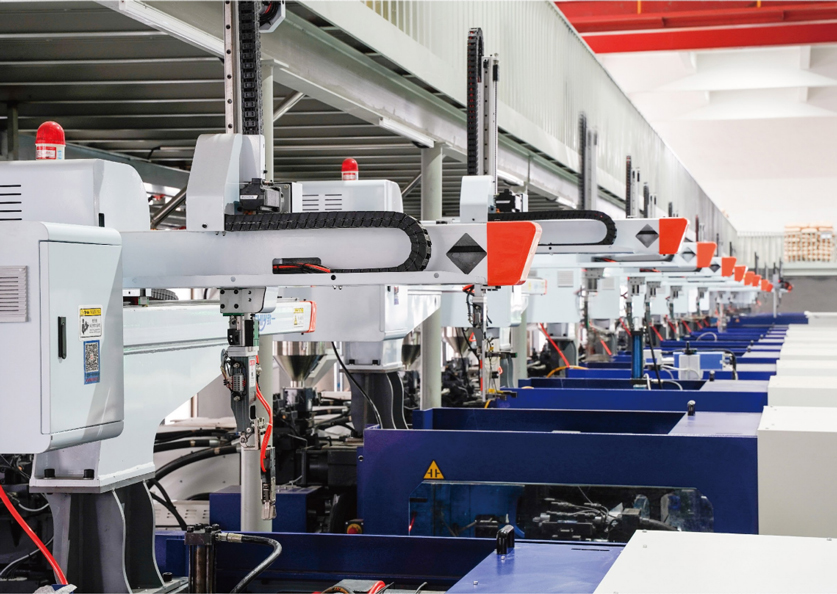
When a purchasing manager signs a capital order for a servo robotto sit beside an 800 to 2,500 ton Injection Molding Machine, the line item that gets the least attention and causes the most delayed commissioning is safety compliance. Most buyers focus on cycle time, payload, and repeatability, then discover during plant acceptance that the robot cannot legally run because its safety circuit does not match the molding machine, the guarding package is incomplete, or the supplier cannot produce a valid risk assessment. In the EU and in any plant supplying EU or North American OEMs, that gap stops production and triggers costly retrofits that were never in the budget.
This guide is written for plant buyers, equipment engineers, and EHS managers who specify and receive servo robots for injection molding cells. It explains what documents and hardware you must require from the supplier, what the ISO 10218-1 and ISO 10218-2 standards actually demand on the plant floor, how CE guarding is verified, and how to audit a supplier safety file during a factory inspection. Treat safety compliance as a procurement specification, not an afterthought buried in the final invoice.
Why Safety Compliance Is a Procurement Spec, Not a Paperwork Formality
A servo robot in an injection molding cell operates inside a perimeter where the mold closes with clamp forces from 60 to 4,000 metric tons and where the ejector and take-out strokes happen inside a few seconds. A trapped-finger or crush event is not theoretical: the robot arm moving at 1.5 to 3.0 m/s across a 1,200 mm stroke can close a hazard zone faster than a person can withdraw a hand. The compliance framework exists to force a documented, verified barrier between that motion and the operator who must periodically reach into the cell.
For the buyer, the practical consequences are concrete. First, customs and end customers increasingly demand a Declaration of Conformity and CE marking before goods ship or before a line is commissioned. Second, most corporate EHS audits now require evidence of a robot-specific risk assessment and of interlocking with the press. Third, insurance and workers compensation exposure rises sharply when a cell runs without validated safety circuits. Specifying compliance up front typically adds 4 to 9 percent to the robot order but avoids 3 to 8 week commissioning delays that cost far more in lost output.
ISO 10218-1 and ISO 10218-2: What Each Part Covers
The ISO 10218-1 and ISO 10218-2 pair splits responsibility between the robot builder and the integrator. Part 1 governs the robot itself and its built-in safeguards; Part 2 governs the robot system and integration into a work cell. For an injection molding buyer, both apply because you are buying a robot and integrating it into a molding cell with a press, conveyor, and periphery.
Key Part 1 requirements that affect your acceptance test:
- Emergency stop must achieve a stop category per ISO 13850 that is at minimum Category 0 or Category 1, with the function verified by an actual test on the floor.
- Protective stops must be independently functional from the normal operating stop and must be initiated by the safeguarding devices, not by the production logic.
- Speed and separation monitoring, where used, must keep the robot outside the operator safeguarded space during manual intervention and setup.
- Control reliability of the safety-related parts of the control system must meet the declared Performance Level, supported by a validation report.
- Axes must have means to prevent unexpected motion after a stop, including energy isolation and gravity retention for vertical axes that could drop.
Part 2 adds cell-level duties: the integrator must define the collaborative or fenced operating mode, document the reduced-speed manual mode, and ensure that the robot, molding machine, and periphery share a coordinated stop and restart logic. As the buyer you should receive both the Part 1 robot declaration from the robot manufacturer and the Part 2 integration record from whoever built and validated the cell.
CE Machinery Directive and the Guarding Package
Robots placed on the EU market must comply with the CE Machinery Directive 2006/42/EC, supported by the Low Voltage Directive and EMC Directive where relevant. CE marking is the supplier declaration that the machine meets the essential health and safety requirements. For your acceptance, the marking alone is not enough; you need the underlying evidence file that proves the claim.
A complete guarding package for a molding cell typically includes:
- Fixed perimeter fencing at least 1,800 mm high with panels that cannot be removed without a tool.
- A latchable access gate fitted with a safety-position interlock switch rated to the declared Performance Level.
- Safety light curtains or laser scanners across the mold-area opening where the operator reaches in to clear jams and part strings.
- Adequate means of restraint so the arm cannot drift into the operator space during a power loss or air-pressure drop.
- Clearly labeled emergency stop devices within 1.0 m of each normal operating position and reachable without stepping into the hazard.
Buyers should require the supplier to state the standard each guarding component is certified against, such as EN ISO 13857 for reach-over distances and EN 61496 for electro-sensitive protective equipment. Generic safety fence claims without a certificate number should be rejected at the purchase order stage rather than discovered at commissioning.
Risk Assessment Documentation You Must Receive
A compliant robot shipment is accompanied by a risk assessment prepared per ISO 12100. The document is not a formality; it is the record that proves the safeguards were chosen by analysis, not by guesswork or by copying a competitor brochure. Your supplier safety file should contain at minimum:
- A scope description of the robot cell, including all operating modes such as automatic, setup, manual, and maintenance.
- A hazard identification list covering crush, shear, trapped parts, ejection, electrical, and ergonomic hazards specific to the cell.
- Risk estimation with severity, frequency, and probability of avoidance rated for each identified hazard.
- Risk reduction measures mapped to the safeguarding hardware and to the required Performance Level for each function.
- A residual risk statement and the instructions for the user describing safe use and forbidden modifications.
Tip: A common failure we see at factory inspection is a risk assessment dated after the robot was built, or copied from an unrelated model. Require that the assessment reference your exact robot model and configuration, and that it is signed by a competent person with a named role and date before shipment.
Safety Light Curtains, Fencing, and Emergency Stop Circuit Interfaces
The Type 4 safety light curtains remain the most reliable way to protect the operator reaching into the mold area. For injection molding, specify a resolution of 14 to 30 mm depending on the smallest body part to be protected, with a response time that, combined with the machine closing speed, keeps the stopping distance inside the intrusion depth. A typical muting logic is needed so parts ejected onto a conveyor do not trip the curtain during normal take-out, but the muting must itself be safety-rated and time-limited.
The emergency stop interface deserves specific attention. Your robot should present a safety-rated stop input and output using a dual-channel architecture. The Category 3 or Category 4 stop circuit is achieved with two independently monitored channels and a fault-detection test that activates on each cycle or at power-on. Avoid single-channel relay interlocks; they fail silently and will not pass a modern EHS audit or a customer product-safety review.
Functional performance is quantified by the EN ISO 13849-1 Performance Level d (PL d) target for most molding cells, with PL e where operators work inside the fence with the gate open in a reduced-speed mode. Request the supplier validation report that shows the achieved PL, the mean time to dangerous failure (MTTFd), and the diagnostic coverage (DC) for the safety-related control system.
Interlocking with the Injection Molding Machine Safety Circuit
The robot does not run in isolation; it must share the press safety loop. The safety-rated interlocking with the injection molding machine ensures that if the mold-area guard opens or the press emergency stop actuates, both the press and the robot stop in a coordinated sequence and cannot restart until the guard is closed and the reset is deliberately pressed by an operator.
For the buyer, the integration contract should specify the interface standard. The two common approaches are a hardwired safety chain using dual-channel contacts rated to the same PL as the press, and a fieldbus safety protocol such as PROFIsafe or FSoE where the cell controller exchanges safety telegrams with the press controller. Confirm the pin assignment and the expected behavior on loss of signal: a safe stop, never a free run or an uncontrolled continued cycle.
During commissioning, verify the cross-interlock with a documented test: open the gate while the robot is in automatic take-out and confirm the robot protective stop engages within the specified response time and that the press cannot close the mold. Record the measured stop distance and the time from gate open to full motion halt, then file it with the acceptance record for the cell.
Auditing the Supplier Safety File During Factory Inspection
If you send an engineer or a third-party inspector to the supplier plant, the safety file should sit on the checklist alongside the FAT run. The audit should confirm:
- The Declaration of Conformity lists the correct robot model, serial range, and applicable directives and harmonized standards.
- The CE marking is applied to the robot and to the control cabinet, not only on the sales brochure or the nameplate photo.
- The risk assessment file is complete, model-specific, and signed by a named competent person with an identifiable role.
- Electrical schematics show the safety circuit as dual-channel with test pulses, not as a single-channel relay driven by the PLC output.
- The safety components such as curtains, interlocks, and e-stop buttons carry their own certificates with valid, traceable numbers.
- The integration record demonstrates interlocking logic between the robot and the molding machine across every operating mode.
- A spare-parts list identifies the safety-rated components so a future replacement keeps the same declared Performance Level.
A practical acceptance trick is to ask the inspector to trigger every safeguard during the FAT and to photograph the robot safety status on the HMI for each event. If the supplier resists live testing of the emergency stop or the light curtain, treat that as a disqualifying signal and escalate before the robot ships.
Practical Procurement Checklist with Parameters
Before you issue the purchase order, turn the above into a measurable specification. A usable internal checklist for a 3-axis or 5-axis servo take-out robot on an injection press includes:
- Compliance declared to ISO 10218-1 for the robot and ISO 10218-2 for the cell integration, with both documents supplied.
- CE marking with a Declaration of Conformity citing 2006/42/EC, the Low Voltage Directive, and the EMC Directive.
- Risk assessment per ISO 12100, model-specific, signed, and dated before shipment, not after the build.
- Perimeter fence height 1,800 mm minimum, with tool-removable panels only and no hand-removable access points.
- Safety light curtains Type 4, resolution 14 to 30 mm, with a certified response time and a documented stopping distance.
- Emergency stop dual-channel, validated to PL d or PL e via an EN ISO 13849-1 report showing MTTFd and DC.
- Cross-interlock to the press safety loop, hardwired or PROFIsafe or FSoE, with a safe stop on signal loss.
- User manual including safe operating instructions, setup mode limits, and a list of forbidden modifications.
- FAT evidence showing every safeguard triggered and the resulting status recorded on the robot HMI.
The functional safety of the emergency stop is the single item most often found deficient at audit, so make its validation report a mandatory attachment to the commercial invoice, not a document to be supplied later when the line is already down.
Cost and Lead-Time Impact of Getting Compliance Wrong
When a cell fails a safety audit after arrival, the typical remediation path is a retrofit of the safety circuit and guarding, which means custom fabrication, re-validation, and a new risk assessment. In our experience across molding plants, a post-delivery safety retrofit adds 6 to 14 percent of the original robot value and extends time-to-production by three to eight weeks. By contrast, spending the same engineering effort at the specification stage costs almost nothing in lead time and protects the commissioning schedule. The buyer who treats the safety file as a release gate rather than a closing document consistently commissions faster and passes customer audits on the first attempt.
FAQ
Does a servo robot bought from China automatically carry CE marking?
No. CE marking is the manufacturer or importer self-declaration of conformity to EU essential requirements. A robot can be built in China and be CE-marked if the supplier has completed the conformity assessment, prepared the technical file, and applied the mark correctly. Always request the actual Declaration of Conformity and the underlying test or validation reports rather than assuming the mark on the machine is valid. Verify the certificate numbers trace to the named component and the named model.
What Performance Level should I require for a standard take-out robot cell?
For a fenced molding cell where the operator does not enter during automatic cycles, PL d is the typical target under EN ISO 13849-1. If the operating mode allows the operator to be inside the safeguarded space with the gate open at reduced speed, specify PL e. Ask the supplier for the achieved MTTFd and diagnostic coverage, not just a claimed letter, because the letter without the underlying calculation carries no audit value.
Can the robot and the injection molding machine use different safety standards?
They can use different component standards, but their interlocking must reach a consistent safe state. Practically, specify that the robot safety outputs and the press safety inputs share the same Performance Level and that a fault or gate open on either side forces a coordinated protective stop. Document the expected behavior in the integration specification so the commissioning team tests the right scenario rather than guessing.
How do I verify the safety circuit without specialist tools?
During FAT, trigger each safeguard and confirm the HMI shows the protective stop and that motion halts within the stated response time. Review the electrical schematic for dual-channel architecture with test pulses. For a deeper check, request the EN ISO 13849-1 validation report, which is a paper verification you can read without field instruments and which an EHS auditor will accept as evidence.
Is a risk assessment valid if it covers the robot family but not my exact configuration?
It is not sufficient. The risk assessment must reflect your cell actual reach, payload, end-of-arm tooling, and interaction with the press. A family-level document is a starting point, but acceptance should require a configuration-specific assessment, especially where options change the hazard zones or the stopping distances. Insist that the document names the serial number or configuration code of the robot you are receiving.
What should I do if the supplier cannot provide a validation report for the emergency stop?
Treat the missing report as a specification breach and withhold final payment or acceptance until it is supplied. A servo robot without a validated stop circuit cannot be commissioned lawfully in most regulated plants, and the cost of discovering this after delivery is far higher than delaying shipment by a few days. Put the validation report on the mandatory document checklist attached to the purchase order.