Leave Your Message
Remote Diagnostics and Digital Service for Injection Molding Servo Robots: A B2B Procurement Checklist
Remote Diagnostics and Digital Service for Injection Molding Servo Robots: A B2B Procurement Checklist
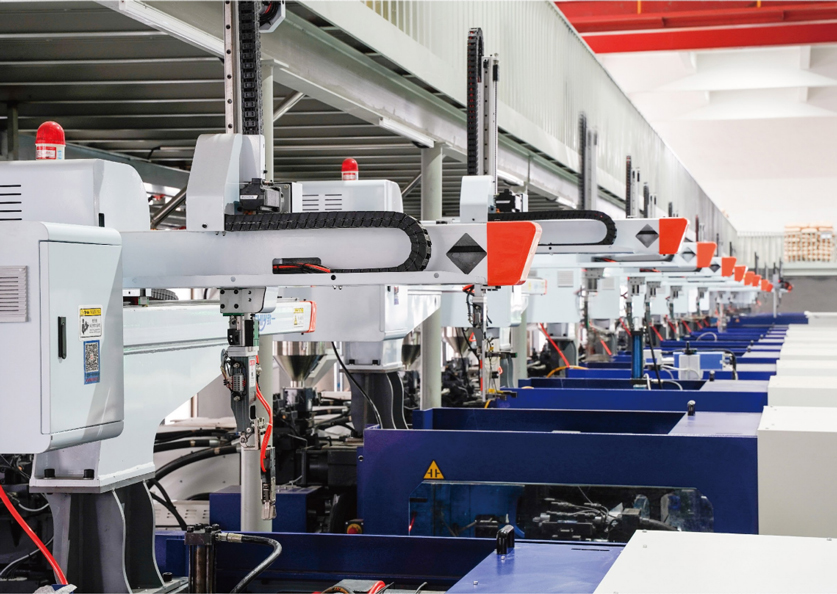
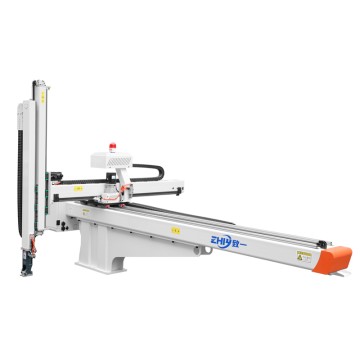
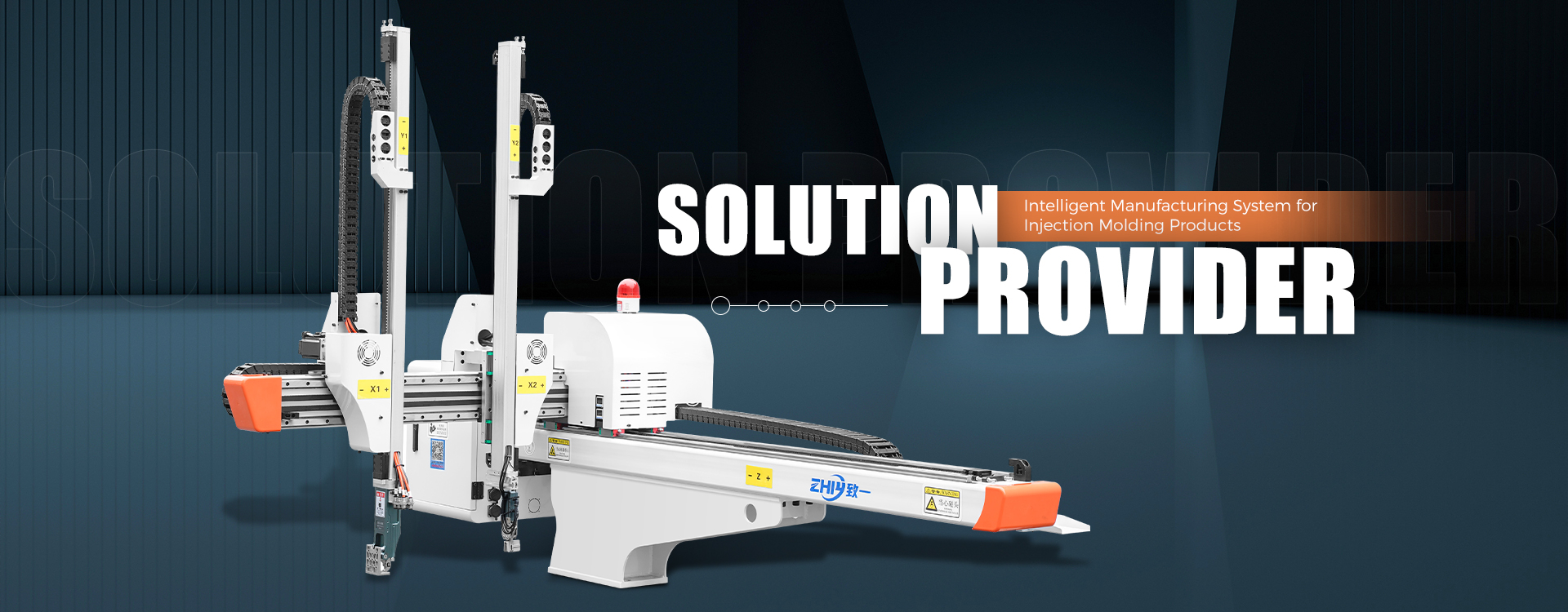
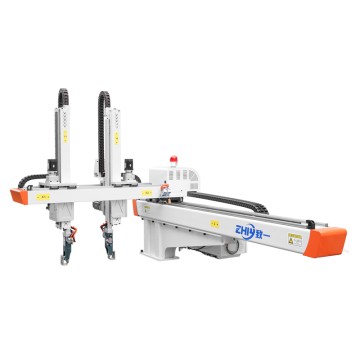
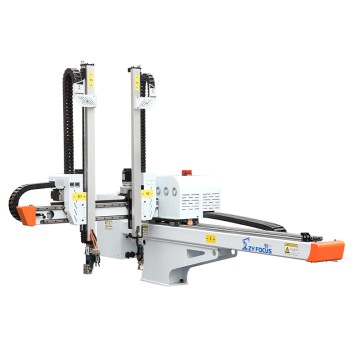
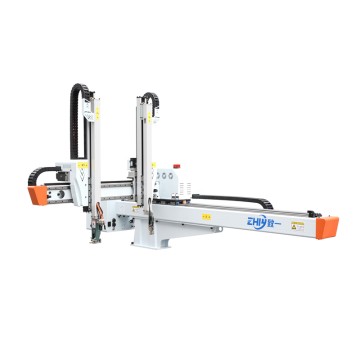
When a plastics processor runs 10 to 200 Injection Molding Machines, the servo robot on the end of each press is rarely the component people worry about until it stops. A single downed3-axis or 5-axistake-out Robot Can idle an entire cell, and at typical cycle times of 18 to 45 seconds the lost throughput reaches 1,500 to 9,000 parts per hour of downtime. For a plant owner in Mexico, Turkey, or Vietnam sourcing a servo robot from an overseas supplier, the real question is no longer only "how fast is the traverse axis" but "when something breaks at 2 a.m., who sees it first, and how quickly can we recover?" This guide walks B2B buyers, procurement managers, automation engineers, and OEM buyers through the concrete criteria for evaluating remote diagnostics and digital service packages before signing a purchase order.
Why Remote Visibility Is Now a Procurement Issue
Five years ago, most injection molding servo robots shipped with little more than a local HMI and a paper manual. The buyer's evaluation ended at price, payload, and stroke. Today, labor shortages and thinner margins have pushed unplanned downtime cost to the top of every plant manager's agenda. Industry benchmarks place the fully loaded cost of an injection molding line stoppage between USD 200 and USD 1,500 per hour, depending on part value and secondary operations. In a 3-shift operation running 8,000 hours per year, a reduction of just 30 minutes of monthly unplanned stoppage per cell recovers USD 1,200 to USD 9,000 annually on that single line.
The procurement pain is not the hardware failure itself. It is the sequence that follows: an operator notices the robot fault, a supervisor calls a maintenance technician who may not be on shift, the technician opens a panel and reads a generic alarm code, then someone emails the supplier's support desk in another time zone and waits 12 to 24 hours for a reply. Remote diagnostics collapses that gap by letting the supplier's engineer see the exact fault, axis trace, and parameter set before the buyer has finished the first phone call.
What "Remote Diagnostics" Actually Covers
The term is used loosely by suppliers, so buyers should decompose it into specific, contractable capabilities. A credible digital service package should address at least the following layers.
Telemetry and Condition Monitoring
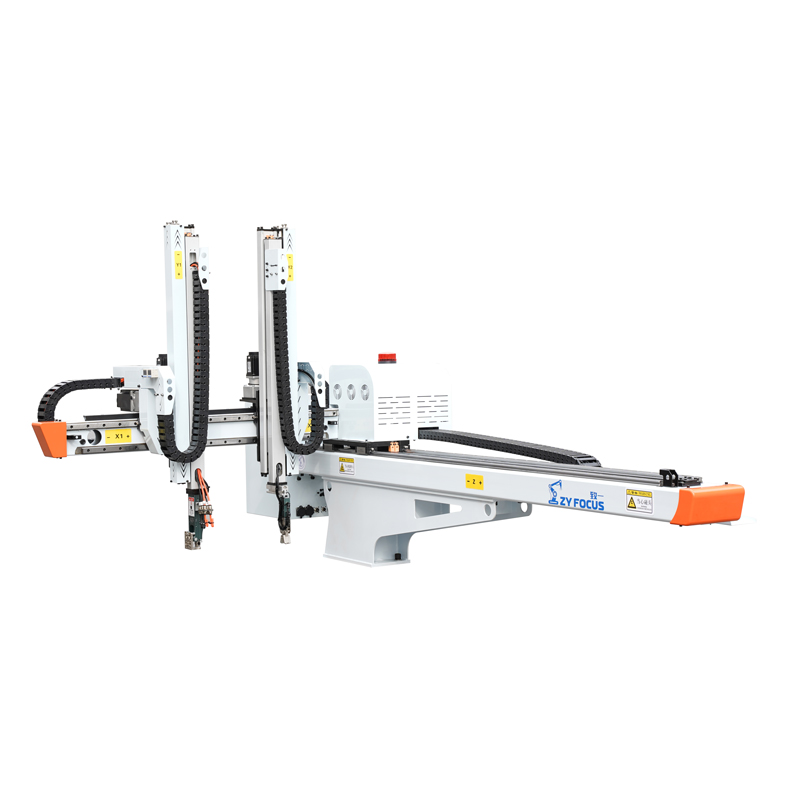
Continuous collection of servo drive temperature, bus voltage, motor current, cycle count, and vibration trend lets the system flag a degrading bearing or an over-current axis weeks before it fails. For a 3-axis top-entry robot, the most predictive signals are typically the traverse and vertical servo currents, which rise 8 to 15 percent in the 200 to 400 hours before a mechanical fault. Buyers should ask for a defined list of monitored tags and the sampling interval, which should be 1 second or finer for motion-critical channels.
Alarm and Fault Push Notification
Rather than polling the HMI, the Robot Should push structured alarm events to a dashboard or mobile app. Useful implementations include the fault code, the active program step, and a 30-second pre-fault motion trace. Plants with more than 20 machines should insist on acentralized alarm feed that rolls every robot into one view instead of forcing the team to log into 20 separate controllers.
Secure Remote Access and VPN Tunneling
When a fault cannot be resolved by the local team, the supplier's engineer needs controlled access to the controller. The secure pattern is a one-time, session-scoped VPN tunnel authorized by the buyer, not a permanently open port. Buyers should reject any proposal that requires port forwarding on the plant firewall or a static public IP on the robot controller.
Digital Service Models Buyers Should Compare
Remote diagnostics capability is only useful if a service organization stands behind it. When evaluating a supplier, separate the software from the support contract, because they are often priced and delivered differently.
- Reactive remote support – the supplier connects only after you report a fault; typical response is within 4 to 24 hours, often free during the warranty period.
- Monitored remote support – the supplier receives telemetry and proactively contacts you on anomalies; commonly priced at 3 to 8 percent of equipment value per year.
- Outcome-based contract – the supplier guarantees a maximum mean-time-to-repair or a minimum availability figure, with penalties; suited to lines above 20 cells where one stoppage cascades.
- On-premise gateway license – you own the data and dashboards, the supplier charges a one-time license plus annual maintenance, typically USD 800 to USD 3,000 per gateway.
The right model depends on your internal competency. A plant with two dedicated automation engineers may only need reactive support plus a gateway license. A processor with 60 machines and one part-time technician should budget for monitored support.
A 12-Point Procurement Checklist
Before issuing a request for quotation, automation engineers should document the following items. Treat any "we can do that" verbal answer as unconfirmed until it appears in the written specification.
- 1. List of monitored tags and sampling rate for each servo axis.
- 2. Alarm data format: structured JSON or plain text, and whether a pre-fault trace is included.
- 3. Remote access method: session-scoped VPN, role-based authorization, and session logging.
- 4. Data residency: where telemetry is stored, and whether the buyer retains full ownership.
- 5. Integration path to existing MES or SCADA (OPC UA, Modbus TCP, REST, or MQTT).
- 6. Cybersecurity certification of the edge gateway (IEC 62443 alignment or equivalent).
- 7. Historical data retention window, typically 90 days to 24 months.
- 8. Mobile app availability on iOS and Android, and multi-user role permissions.
- 9. Firmware update policy: signed images, rollback support, and change notes.
- 10. Training included: how many engineers get remote-diagnostics onboarding.
- 11. Support hours and target response time, defined per severity level.
- 12. Exit clause: data export format and continued local access after contract end.
Each item should carry a number in the acceptance criteria of the purchase order. Defining acceptance numbers up front is what separates a usable digital service from a marketing checkbox.
Cybersecurity and Data Ownership
Connecting a robot controller to any network expands the attack surface of the plant. Procurement teams should require that the edge gateway sit in a demilitarized zone and that all telemetry uses TLS 1.2 or higher. The buyer, not the supplier, should hold the encryption keys for production data. Data ownership clauses must state that cycle counts, scrap rates, and molding parameters remain the property of the processor and will not be resold or used to benchmark the buyer against competitors. A reasonable contract limits the supplier to using anonymized, aggregated fleet data for product improvement only.
Integration With MES, SCADA, and OEE Calculation
Remote diagnostics delivers the most value when its data feeds the plant's existing systems instead of becoming another silo. For injection molding, the robot contributes directly to Overall Equipment Effectiveness: a robot fault counts as an availability loss, a slow take-out stroke as a performance loss, and a dropped part as a quality loss. Buyers should confirm the robot can publish machine-state signals (running, idle, fault, changeover) in a standard model so the MES can compute OEE without a custom connector per machine.
In practical terms, ask for OPC UA companion specification support or a documented Modbus register map. A plant standardizing on MQTT should expect topic definitions and a sample broker configuration. Avoid suppliers who only offer a proprietary Windows software with no open interface, because that locks every future integration to their roadmap.
Total Cost of Ownership of Digital Services
The hardware price is the smallest part of the long-term equation. When building the business case, include the recurring service fee, gateway licensing, cellular or wired connectivity at each press, and the internal labor to manage alerts. For a 30-machine plant, a monitored remote support contract at 5 percent of a USD 12,000 robot value equals roughly USD 18,000 per year, before connectivity. Offset that against avoided downtime: if the service prevents one 8-hour stoppage per quarter across the plant at USD 600 per hour loaded cost, the annual saving is USD 19,200, already near break-even before counting faster repairs on smaller faults. Quantify the avoided-stoppage hours with your own historical MTBF data rather than the supplier's reference figures.
Running a Pilot Before Full Rollout
Do not commit 40 machines on the first order. Specify a pilot of 2 to 4 robots on your highest-value or most failure-prone cells for 90 days. During the pilot, measure three numbers: reduction in mean-time-to-diagnose, percentage of faults resolved without an on-site visit, and the accuracy of proactive alerts. A healthy pilot shows diagnosis time dropping from the typical 45 to 90 minutes to under 20 minutes, and at least 40 percent of faults closed remotely. Use those results to negotiate the plant-wide contract and to set realistic internal expectations with production supervisors.
Negotiating the Service Level Agreement
The SLA is where procurement adds or loses real money. Define severity tiers with committed response and resolution targets. A workable structure for injection molding is: critical fault (line down) with 2-hour remote response and 8-hour resolution target; major fault (degraded mode) with 8-hour response; minor fault with next-business-day response. Insist that response time is measured from accepted alert, not from your phone call. Where monitored support is purchased, add a proactive-contact commitment: the supplier must acknowledge any critical anomaly within 30 minutes of detection, or the monthly fee is credited.
Tip: Require the supplier to demonstrate a live remote session on your own pilot robot during the factory acceptance test, not just a polished demo on their showroom unit.
Common Buyer Mistakes
Several patterns recur when plants buy digital service for the first time. The first is buying the dashboard but not the support, leaving an understaffed internal team to interpret alarms they do not understand. The second is accepting a closed protocol, which strands the data inside the robot vendor's ecosystem. The third is ignoring data residency, which later blocks a corporate IT security audit. The fourth is failing to train enough users, so alerts reach one engineer who is on leave when the fault occurs. Assign at least two trained responders per shift so the remote channel is never a single point of failure.
FAQ
Do small plants with under 10 machines still benefit from remote diagnostics?
Yes, but the model differs. A small processor usually lacks a dedicated automation engineer, so a monitored remote support contract with the supplier doing the watching is more cost-effective than a self-managed gateway. Even two robots benefit when a fault at night can be triaged before the morning shift starts, avoiding a full day of lost production.
Will remote access let the supplier change my robot program without permission?
It should not. A correct implementation requires the buyer to authorize each session, logs every command sent, and keeps write access to motion programs disabled by default. Insist that program downloads and parameter writes require a separate, explicit authorization step from your side, recorded in the session log.
How much shop-floor bandwidth does telemetry require?
Surprisingly little for most plants. Compressed periodic telemetry from one robot typically uses 5 to 50 KB per minute, so even 50 machines fit comfortably on a shared 10 Mbps business connection. Video or full motion-trace streaming during a live session is the only bandwidth-heavy case, and that is session-scoped and brief.
Can remote diagnostics work with older servo robots already on the floor?
Often yes, through a retrofit edge gateway rather than a controller replacement. If the existing robot exposes servo drive alarms over Modbus or a serial interface, a gateway can capture and forward them. Expect partial coverage, limited to whatever the legacy controller exposes, and budget for a site survey to confirm available signals before quoting.
What happens to my data if I switch suppliers?
That depends entirely on the exit clause you negotiated. Require data export in a standard format such as CSV or JSON, continued local read access for a defined wind-down period, and deletion of your production data from the supplier cloud on contract termination. Without this clause, historical OEE baselines can be lost during a supplier change.
Is predictive maintenance the same as remote diagnostics?
No. Remote diagnostics is the visibility layer, telling you what is wrong and often why. Predictive maintenance is the analytics layer that forecasts failure before it happens using that data. Buyers can adopt remote diagnostics alone, but predictive maintenance requires the telemetry history and the modeling effort on top of it, which is why most plants start with diagnostics and graduate to prediction after 6 to 12 months of data collection.