
Leave Your Message
0102030405
How to Select High-Speed Robot Arm?
2026-06-29
How to Select High-Speed Robot Arm: A Complete Buyer’s Guide for Manufacturing Procurement
Introduction
High-speed robotic arms are the backbone of high-throughput production lines across electronics, food packaging, pharmaceutical, new energy and logistics sorting. Unlike standard industrial manipulators optimized for heavy payload or complex curved motion, high-speed robot arms are engineered for ultra-short cycle times, rapid acceleration and stable repetitive pick-and-place tasks.
For manufacturing procurement teams, picking the wrong high-speed robot leads to underwhelming line throughput, frequent vibration-induced precision drift, unexpected downtime and inflated total ownership costs. Many buyers only compare maximum joint speed on spec sheets, ignoring real-world factors like payload margin, workspace geometry, motion rigidity and production environment compatibility.
This guide breaks down every critical evaluation criterion from application matching, core performance parameters, mechanical structure, integration compatibility to long-term operational costs, tailored to industrial procurement workflows. It helps purchasing managers narrow down viable models, avoid over-specification or under-sizing, and calculate clear ROI before final procurement.
1. Start with Defining Your Production Application & Cycle Time Target
Before reviewing Robot Specifications, quantify your full production workflow requirements—this is the foundation of all high-speed arm selection. Pure top speed numbers on datasheets are meaningless without matching your actual task loop.
1.1 Map your core task type
Different high-speed tasks demand distinct robot architectures:
- Ultra-fast point-to-point pick-and-place (small electronic components, candy sorting, capsule packaging): Delta parallel robots deliver the shortest cycle times, often under 0.3 seconds for lightweight workpieces.
- Horizontal high-speed assembly, screw driving, PCB component insertion: SCARA Robots balance rapid planar movement and vertical precision, ideal for confined tabletop stations.
- Multi-angle high-speed handling, flexible packaging with complex routing: Compact 6-axis high-speed articulated arms combine fast joint rotation with full spatial freedom.
- High-speed machine tending, light stamping loading/unloading: Slim lightweight 6-axis arms with optimized acceleration curves to cut idle transfer time between fixtures.
1.2 Calculate realistic cycle time benchmarks
Ignore marketing maximum speed values; measure your target full cycle: pick, move, place, retract, plus waiting time for vision detection or conveyor feeding.
- Consumer electronics assembly: Target cycle time 0.3–0.8s
- Food primary packaging sorting: 0.2–0.5s
- Small part packaging and labeling: 0.5–1.2s
- Battery cell stacking and testing transfer: 0.8–1.5s
Key procurement tip: Reserve 15–20% speed buffer for future production expansion. If your current required cycle is 0.6s, select a robot validated to complete the same motion within 0.48–0.51s to avoid bottlenecks when line output rises.
2. Evaluate Three Non-Negotiable Core Performance Metrics
Speed only works if paired with stable payload, reach and repeatability. These three parameters form the performance triangle for all high-speed robotic arms.
2.1 Rated payload with safety margin
Payload includes three parts: raw workpiece weight, end-of-arm gripper, vision camera and auxiliary tooling.
- Standard procurement rule: Total payload demand × 1.2–1.3 safety margin.
- Under-sizing payload causes severe vibration during fast acceleration, eroding positioning accuracy and accelerating joint reducer wear.
- Light-duty high-speed arms (0.1–3kg): Delta, compact SCARA for micro-components
- Medium high-speed arms (3–10kg): Slim 6-axis, large-format SCARA for consumer goods packaging
- Avoid heavy payload high-speed models for tiny parts: larger arm mass slows acceleration and wastes energy.
2.2 Effective working reach & mounting flexibility
Check two dimensions: horizontal stroke and vertical stroke, plus obstacle clearance in your workstation layout.
- Delta robots: Limited vertical stroke, best for overhead mounting above flat conveyor belts
- SCARA robots: Cylindrical workspace, floor-mounted on assembly benches
- High-speed 6-axis articulated arms: Spherical working envelope, supports floor, wall or inverted ceiling mounting
Critical check: Do not rely on maximum rated reach. At full extension, most high-speed arms automatically limit acceleration to reduce vibration. Calculate your farthest workpiece position and confirm stable high-speed motion at that coordinate via manufacturer motion simulation reports.
2.3 Repeatability under continuous high-speed operation
High-speed repetitive movement amplifies minor positioning errors over thousands of cycles. Prioritize repeatability data collected under full rated speed, not static low-speed test values.
- Micro assembly (semiconductor, medical parts): ≤ ±0.02mm repeatability
- General packaging, sorting: ±0.03–0.08mm repeatability
- Standard light handling: ±0.1mm repeatability
Procurement verification step: Request long-run cycle test reports showing precision drift after 100,000 continuous high-speed loops. Robots with poor rigidity will display obvious accuracy degradation over extended shifts.
3. Choose the Right High-Speed Robot Architecture for Your Workflow
Each mechanical design carries unique speed, payload and footprint tradeoffs. Procurement teams must match structure to line layout rather than picking the “fastest” model universally.
Delta Parallel Robots
- Core strengths: Fastest linear end-effector speed, minimal moving mass, outstanding acceleration for short-distance pick-and-place
- Limitations: Short vertical travel, low maximum payload, limited angular rotation of end tools
- Best buyers: Food & beverage packaging, pharmaceutical capsule sorting, 3C electronic chip sorting
SCARA Robots
- Core strengths: Fast horizontal motion, rigid vertical axis, compact footprint, lower cost than multi-joint arms
- Limitations: Limited vertical rotation, unsuitable for complex 3D curved paths
- Best buyers: PCB assembly, screw fastening, cosmetic product filling, small component testing stations
High-Speed Compact 6-Axis Articulated Robots
- Core strengths: Full spatial flexibility, fast joint rotation, adaptable to multi-angle loading/unloading
- Limitations: Slightly longer cycle time than Delta/SCARA for simple point-to-point tasks
- Best buyers: Battery module handling, plastic injection molding machine tending, multi-stage packaging lines
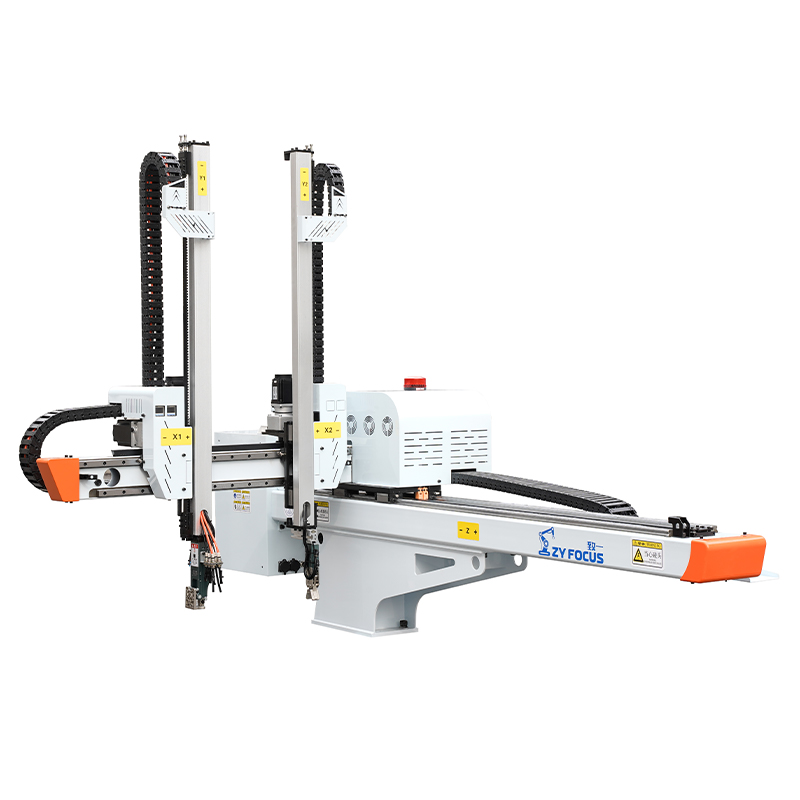
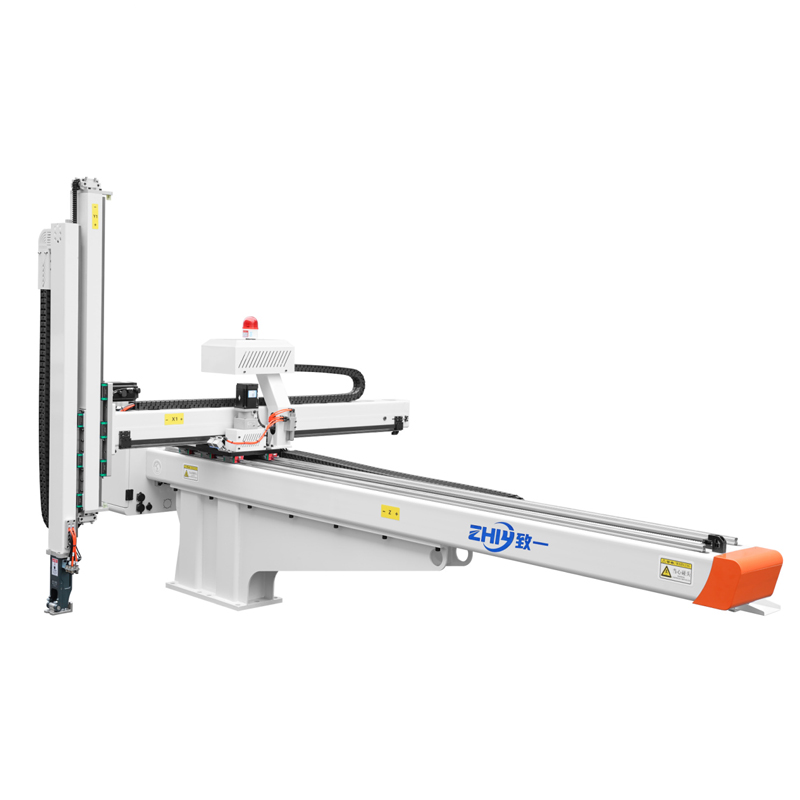
Cartesian High-Speed Gantry Robots
- Core strengths: Extra-long linear travel, consistent speed across full stroke, simple maintenance
- Limitations: Large floor/ceiling space occupation, slower vertical acceleration
- Best buyers: Large-format panel transfer, warehouse high-speed carton sorting lines
4. Inspect Mechanical & Drive Components for Long-Term High-Speed Stability
Continuous rapid acceleration and deceleration creates heavy mechanical fatigue. For procurement focused on low downtime, audit core motion components before tender finalization.
4.1 Servo drive and encoder systems
High-speed arms require high-response servo motors with multi-turn absolute encoders. Low-grade incremental encoders lose position reference during emergency stops, triggering frequent production halts. Modern premium high-speed robots adopt high-resolution encoders with real-time vibration suppression algorithms to stabilize fast movement.
4.2 Reducer quality
Harmonic reducers for light compact arms, planetary reducers for medium payload high-speed models. Budget reducers develop backlash after 3–6 months of 24/7 high-speed cycling, ruining repeatability. Request supplier reducer service life data measured under full-speed continuous operation.
4.3 Arm frame rigidity
Lightweight hollow cast aluminum frames balance speed and rigidity. Thin, low-stiffness arm structures vibrate heavily during peak acceleration, creating blurry vision capture and inconsistent placement. Ask manufacturers for vibration test data at maximum operating speed.
4.4 Environmental protection rating
Match IP rating to workshop conditions:
- Clean room electronics/medical production: IP65, stainless steel end joints, dust-proof internal wiring
- Food processing with water washdown: IP67, corrosion-resistant surface coating
- Standard dry assembly workshop: IP54 minimum to block airborne dust from joint gears
5. System Integration & Software Compatibility
A high-speed arm only delivers full throughput if it seamlessly connects with your existing factory automation ecosystem—this factor is often overlooked by buyers focused solely on hardware specs.
5.1 Industrial communication protocols
Confirm native support for mainstream industrial bus standards: PROFINET, EtherNet/IP, Modbus TCP, EtherCAT. Fast EtherCAT communication is mandatory for high-speed lines, as millisecond-level signal delays create misalignment between robot movement and conveyor or vision trigger signals.
5.2 Vision and end-effector compatibility
Check if the robot controller supports third-party vision systems without proprietary locked interfaces. Closed proprietary ecosystems force buyers to purchase brand-exclusive grippers, cameras and sensors, raising spare part costs long-term. Standard ISO tool flanges deliver maximum flexibility for swapping vacuum cups, pneumatic fingers and magnetic grippers.
5.3 Programming ease for rapid product changeover
High-speed production lines frequently switch product batches. Evaluate two programming modes:
- Handheld teach pendant for quick on-site adjustments
- Offline programming software to simulate motion paths offline without stopping production
Advanced high-speed robot controllers include automatic motion smoothing functions, which trim unnecessary deceleration points to shorten cycle times without manual programming tweaks.
5.4 Safety configuration options
Two mainstream safety setups for procurement evaluation:
- Traditional fenced high-speed robots: Lower upfront robot cost, requires dedicated safety light curtains and physical barriers, ideal for fixed high-volume mass production lines
- High-speed collaborative robot variants: Built-in collision detection, allows human-machine shared workspace, cuts safety infrastructure investment, suited for small-batch mixed production
All selected models must carry internationally recognized safety certifications such as ISO 10218 and ISO/TS 15066 to meet global factory compliance standards.
6. Calculate Total Cost of Ownership (TCO), Not Just Upfront Price
Procurement teams focused only on initial purchase price often face inflated operational costs within 1–2 years. Full TCO analysis covers six cost buckets:
- Base robot hardware cost
- Auxiliary peripherals (grippers, vision, safety barriers, mounting frames)
- Integration engineering fees for line deployment
- Energy consumption: High-efficiency servo systems reduce power draw during continuous high-speed cycling
- Scheduled maintenance: Grease replacement, encoder calibration, reducer overhaul intervals
- Spare component lead time and pricing
Key TCO insight: A mid-tier high-speed robot with standardized, widely available spare parts often delivers lower 5-year total cost than a budget proprietary model with expensive, long-lead replacement components. Also verify global after-sales service coverage to avoid extended production downtime during equipment breakdowns.
7. Final Procurement Validation Checklist Before Order Placement
Use this checklist to cross-verify all requirements with robot suppliers before signing purchase contracts:
- Confirmed target cycle time test data matching your exact workpiece and motion path
- Payload calculation including gripper, camera and auxiliary tools with 20% safety margin
- Workspace simulation report confirming no motion interference at full speed
- Long-run repeatability stability test logs for continuous high-speed operation
- Compliance certification documents (safety, environmental, industrial standard)
- Full list of supported communication protocols and third-party peripheral compatibility
- Written maintenance schedule, component service life and spare part pricing matrix
- Local technical support response time and on-site integration service scope
- Warranty coverage duration for core motion components (servos, reducers, controllers)
- Compatibility with future line expansion and product format changes
Conclusion
Selecting a high-speed robot arm is not a simple comparison of maximum joint speed figures. Successful procurement balances application requirements, mechanical stability, system integration capability and long-term total operational costs.
Start by quantifying your cycle time, payload and workspace demands, then match the optimal robot mechanical architecture (Delta, SCARA or compact 6-axis). Rigorously audit core drive components to guarantee stable performance under non-stop high-speed cycling, and prioritize open, standardized automation interfaces to preserve production flexibility for future product iterations.
By following this structured selection workflow, procurement teams can eliminate mismatched equipment risks, maximize line throughput and generate clear, measurable ROI from high-speed robotic automation investments.