
Leave Your Message
0102030405
How to Choose Servo Robot for Automation Upgrade
2026-07-15
How to Choose Servo Robot for Automation Upgrade
Introduction
Global manufacturers are accelerating automation upgrades to cut labor costs, stabilize production quality and shorten cycle times. Servo robots stand at the core of flexible automated production lines, delivering precise positioning, fast dynamic response and consistent repeatability that basic pneumatic or stepper-driven equipment cannot match.
However, many procurement teams make costly mistakes during selection: over-specifying performance leading to inflated total cost of ownership (TCO), under-sizing units that trigger frequent downtime, or picking hardware incompatible with existing factory control systems. This guide breaks down every critical evaluation dimension from a buyer’s perspective, offering actionable standards to match servo robots to your unique production upgrade goals, without biased brand promotion or region-specific limitations.
1. Start by Mapping Your Exact Production Upgrade Requirements
Before reviewing servo Robot Specifications, document all process constraints to avoid mismatched equipment. This foundational step eliminates post-installation retrofitting expenses.
1.1 Core Load & Motion Parameters
- Payload & TCP offset: Calculate the total moving mass including workpieces, grippers, fixtures and cables. Measure the distance from the robot flange to the workpiece center of gravity (TCP offset). Exceeding rated payload or offset will cause vibration, positioning drift and premature servo wear. Always reserve a 1.2–1.5 safety margin for unexpected peak loads during stacking, pressing or assembly cycles.
- Cycle time targets: Define required acceleration, deceleration and maximum linear speed. High-speed packaging, electronic assembly or pick-and-place lines demand high-bandwidth servo drives for rapid start-stop movement. Heavy-duty machining or palletizing prioritizes continuous torque output over extreme speed.
- Position repeatability tolerance: Sort applications by precision tiers:
- Ultra-precision (±0.01–0.05mm): Semiconductor packaging, medical device assembly, micro-component fitting
- Standard precision (±0.05–0.2mm): Automotive parts assembly, consumer electronics testing
- General precision (±0.2–0.5mm): Packaging, palletizing, material handling
1.2 Facility & Environmental Boundaries
- Operating temperature range: Cold storage food lines, high-temperature welding stations or dust-heavy metal foundries demand sealed, heat-resistant servo robot enclosures with IP65 or higher ingress protection.
- Power supply standard: Confirm factory mains voltage (200V, 230V, 400V three-phase) to avoid transformer add-ons.
- Floor space constraints: Compact tabletop servo robots suit small-batch lab lines; multi-axis gantry servo robots fit wide-span continuous production lines.
1.3 Existing Production Line Compatibility
Note current PLC, motion controller and fieldbus protocols deployed on your line. Most modern servo robots support EtherCAT, Profinet or CANopen, but older legacy equipment may lack these high-speed communication interfaces, requiring additional gateway hardware.
2. Evaluate Key Servo Robot Performance Specifications
Once baseline requirements are locked, compare technical specifications with application priorities—avoid blindly chasing peak torque or maximum speed metrics.
2.1 Torque & Inertia Matching (Most Critical for Stable Operation)
Two torque values must be cross-checked: continuous rated torque for steady running and peak torque for acceleration/deceleration bursts. The load-to-motor rotor inertia ratio determines motion smoothness:
- High-response precision processes: Maintain ratio below 5:1 to eliminate oscillation during fast positioning
- Medium-speed assembly lines: Acceptable range up to 10:1
- Slow, heavy palletizing work: Ratios up to 30:1 are manageable with damping tuning
Poor inertia matching leads to visible shaking, inconsistent part placement and accelerated wear on gears and servo bearings, drastically shortening service life.
2.2 Feedback Encoder Resolution
Encoders deliver position feedback to servo drives, directly shaping repeatability:
- Absolute encoders: Preferred for continuous manufacturing; retain position data after power cuts, no homing sequence required after emergency stops, reducing downtime.
- Incremental encoders: Cost-effective for low-precision, non-stop batch lines but require full homing after power loss.
High-resolution 23-bit or 26-bit encoders are mandatory for micro-assembly, while 17–20-bit encoders cover most packaging and metal fabrication workflows.
2.3 Servo Drive Bandwidth
Speed loop bandwidth reflects how quickly The Robot Corrects motion deviations. Bandwidth above 1kHz delivers tight tracking for fast pick-and-place, while 500–800kHz bandwidth meets standard assembly needs. Higher bandwidth units generate more electrical noise; factories with sensitive inspection equipment need integrated noise suppression filters.
3. Select the Right Servo Robot Form Factor for Your Workflow
Servo robots are categorized by mechanical structure, each optimized for distinct automation upgrade scenarios:
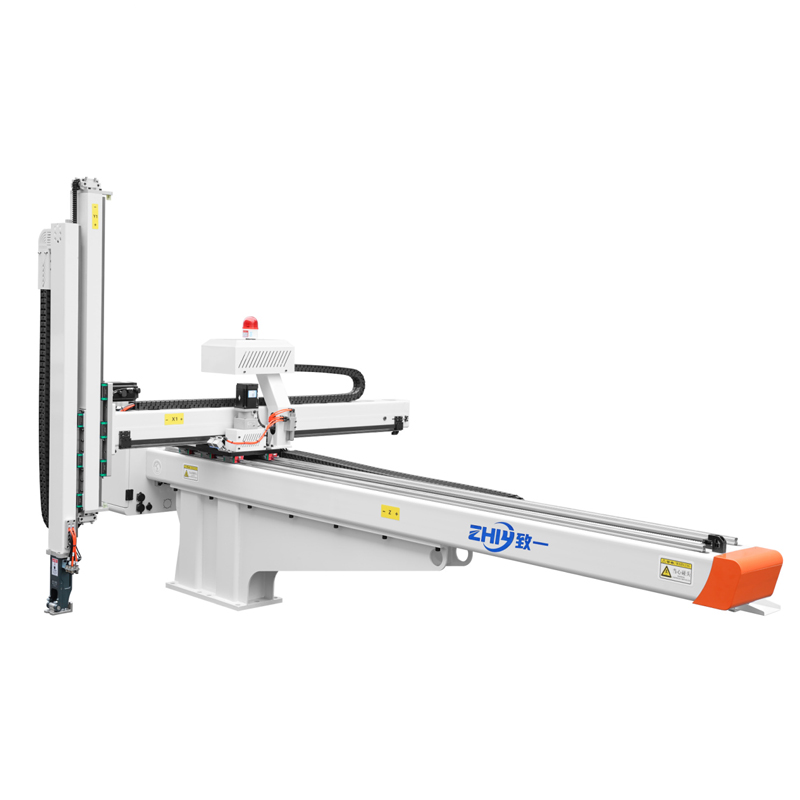
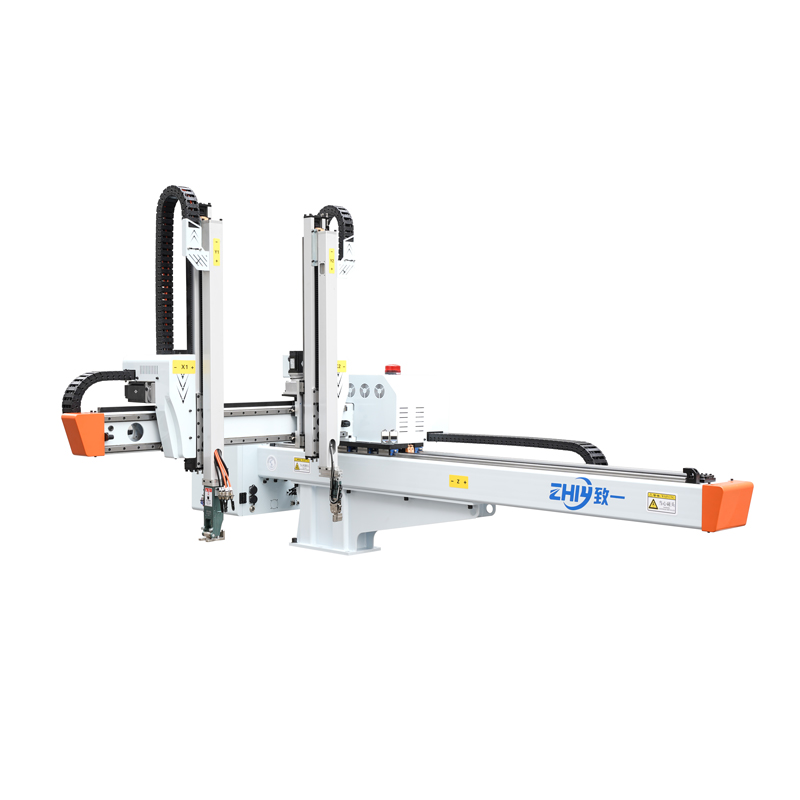
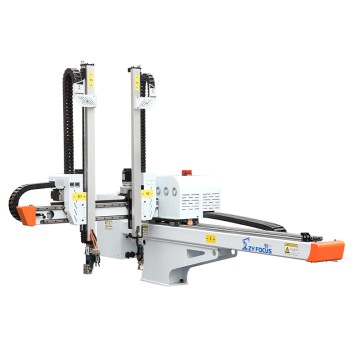
3.1 Cartesian/Gantry Servo Robots
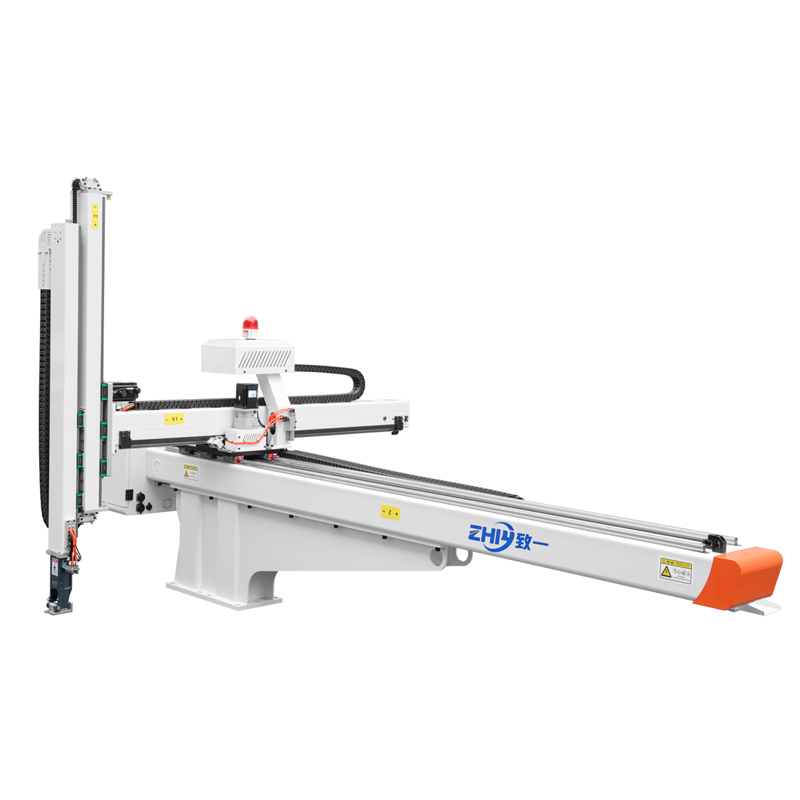
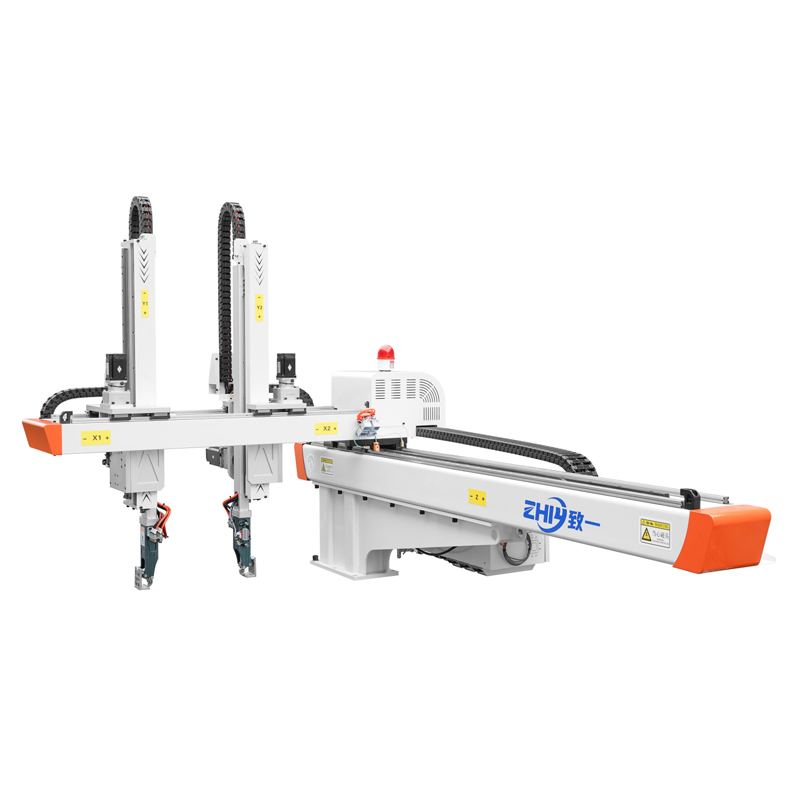
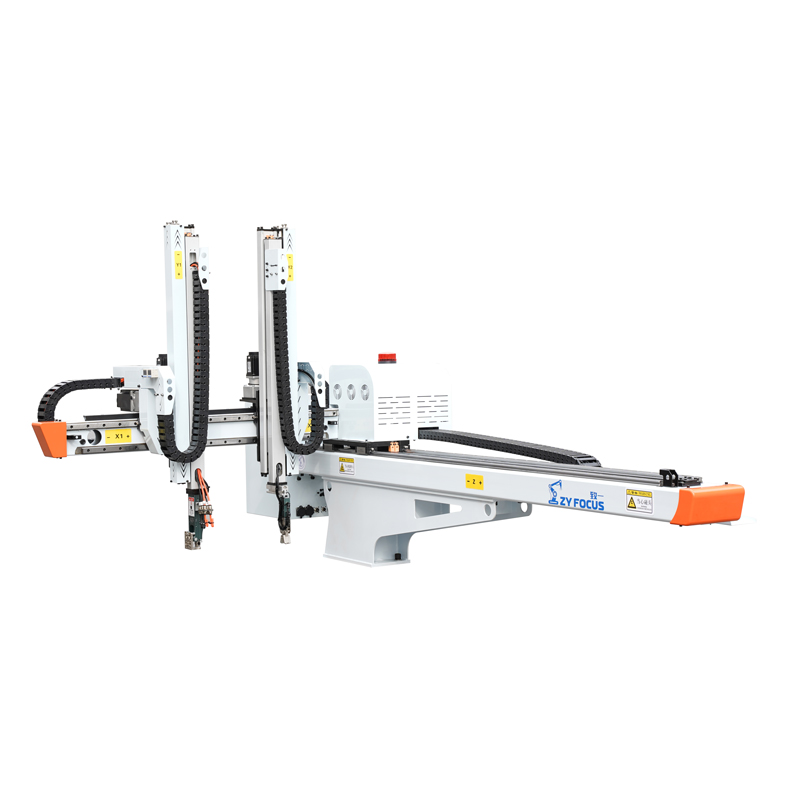
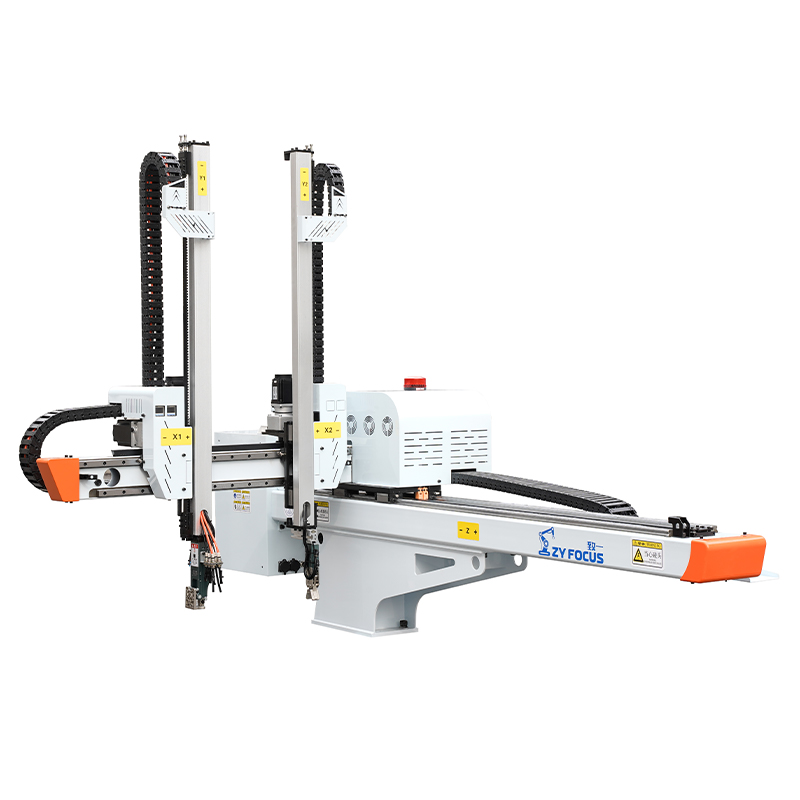
Linear multi-axis layout with independent X/Y/Z servo axes. Ideal for wide-span processing: laser marking, panel coating, large-component machining. Easy to integrate into long conveyor lines and offer customizable stroke lengths. Best for factories upgrading large-format continuous production.
3.2 Scara Servo Robots
4-axis compact arm design with high horizontal rigidity, built for fast horizontal pick-and-place. Dominant in circuit board assembly, connector insertion and small electronic component sorting. Minimal floor footprint, perfect for compact cell-based automation upgrades.
3.3 6-Axis Articulated Servo Robots
Full 3D movement with flexible joint rotation, capable of complex angled assembly, welding and material handling. Suited for mixed-batch flexible manufacturing where workpieces require multi-angle manipulation. Higher integration complexity but maximum process versatility.
3.4 Rotary Index Servo Stations
Single or dual-axis rotary servo platforms for circular assembly lines, such as cosmetic filling, injection molding unloading. Delivers steady cyclic indexing with low space occupation, ideal for semi-automatic line upgrades.
4. Assess Integration & Control Ecosystem Compatibility
A high-performance servo robot fails to deliver ROI if it cannot seamlessly connect to your existing production infrastructure. Procurement teams must audit three integration layers:
4.1 Motion Control Communication
Prioritize units supporting your factory’s standard industrial bus. EtherCAT remains the global benchmark for high-speed multi-axis synchronization, while Profinet dominates European automotive manufacturing facilities. Avoid proprietary closed communication systems that lock you into a single supplier for all future expansion parts.
4.2 Programming & Operator Usability
Evaluate the robot’s programming environment: intuitive graphical HMI interfaces reduce engineer training time, while standardized G-code or script compatibility simplifies cross-line program migration. For multi-site factory upgrades, uniform programming logic cuts maintenance labor costs across all facilities.
4.3 Peripheral Compatibility
Confirm native support for common automation peripherals: pneumatic grippers, vision cameras, force-torque sensors and safety light curtains. Servo robots with built-in digital I/O ports eliminate extra terminal block hardware during line retrofits.
5. Calculate Total Cost of Ownership (TCO), Not Just Upfront Price
Procurement decisions often overemphasize initial purchase cost while ignoring long-term operational expenses. Use this TCO checklist for fair comparison between servo robot models:
- Initial hardware cost (robot body, servo drives, cables, encoders)
- Integration & programming labor fees
- Facility modification costs (power upgrades, safety guard installation)
- Annual energy consumption: High-efficiency servo motors cut electricity bills for 24/7 continuous production
- Spare part pricing and availability (servo bearings, encoders, drive modules)
- Scheduled maintenance intervals and service labor rates
- Expected service lifespan before major overhaul
Over-specified high-end servo robots for low-demand workflows create unnecessary long-term energy and maintenance costs. Conversely, budget under-sized units generate constant downtime losses that far outweigh upfront savings.
6. Verify Supplier Support & After-Sales Service Terms
For cross-border or multi-region manufacturing buyers, global service infrastructure directly impacts production uptime:
- Local spare parts inventory: Suppliers with regional warehouses deliver replacement components within 24–48 hours, avoiding multi-week production halts.
- Remote diagnostic support: Cloud-connected servo robot systems allow engineers to tune parameters, troubleshoot faults and push program updates without on-site visits.
- Training resources: Comprehensive operation, maintenance and safety training materials reduce reliance on third-party integration consultants.
- Warranty coverage: Standard 1–3 year warranties on servo core components; extended warranty options for high-volume continuous production lines.
Avoid suppliers offering rock-bottom pricing with limited regional service networks—delayed repairs will erase automation upgrade efficiency gains.
7. Common Selection Pitfalls to Avoid During Automation Upgrade
- Judging performance solely by peak torque ratings without accounting for continuous load cycles
- Ignoring TCP payload offset limits, leading to uncorrectable positioning errors
- Choosing closed proprietary control systems that block future line expansion
- Underestimating environmental dust, moisture or temperature and selecting low IP-rated robots
- Skipping inertia ratio calculation, resulting in unstable vibration and part scrap
- Focusing only on upfront purchase cost without full TCO evaluation
- Overlooking factory power supply standards, requiring costly auxiliary electrical hardware
8. Final Step: Conduct Small-Scale Pilot Testing
Before full line deployment, run a pilot cell with the shortlisted servo robot model using your actual production workpieces and cycle times. The pilot verifies:
- Actual cycle time matches upgrade productivity targets
- Position repeatability meets quality control standards
- Compatibility with existing conveyors, vision and safety equipment
- Stability during 8–24 hour continuous operation
- Noise, heat and vibration levels within factory operating limits
Pilot testing eliminates costly full-line retrofits after mass equipment procurement, a critical risk-mitigation step for all automation upgrade projects.
Conclusion
Selecting a servo robot for factory automation upgrade is a process driven by production process requirements, not marketing specifications. Successful procurement balances payload, precision, speed, system compatibility, TCO and global after-sales support to deliver sustained productivity gains. By following the structured evaluation framework in this guide, engineering and procurement teams can eliminate mismatched hardware, reduce unplanned downtime and maximize the long-term return on automation investment.