
Leave Your Message
0102030405
How to Choose Robot Arm for Factory Automation
2026-08-03
How to Choose Robot Arm for Factory Automation
Table of Contents
- Understanding Core Robot Arm Selection Basics
- Match Robot Axes to Your Production Workflow
- Key Technical Parameters to Evaluate Before Quotation
- Match Robot Specs to Your Working Environment
- Integration & Programming Compatibility Factors
- Cost, ROI & Long-Term Operational Value
- Certification, Warranty & Global After-Sales Support
- Common Selection Mistakes to Avoid
- Final Quick Reference Checklist for Buyers
- Frequently Asked Questions
Understanding Core Robot Arm Selection Basics
Manufacturing facilities across injection molding, electronics, automotive and consumer goods rely on robotic arms to cut labor costs, stabilize output and eliminate human error. However, many factory buyers end up overspending on over-specified robots or purchasing underpowered units that slow down production lines, simply because they skip foundational pre-selection planning.
Before requesting any robot quotations, document four core production requirements to narrow your options:
- Maximum weight and dimension of finished products plus end-of-arm tooling (grippers, suction cups, insert fixtures)
- Target cycle time and daily production throughput goals
- Existing equipment specifications (Injection Molding Machine tonnage, conveyor layout, available floor/ceiling mounting space)
- Secondary process demands (insert molding, part flipping, gate cutting, automatic sorting, vision inspection)
Every robot arm purchase should prioritize fit for your specific workflow, rather than defaulting to the most advanced or cheapest model available. Proper matching delivers consistent 20%-30% labor cost reduction and faster return on investment for small and medium manufacturers alike.


Match Robot Axes to Your Production Workflow
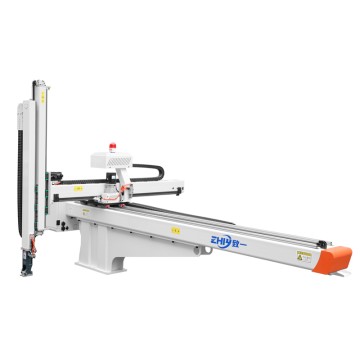
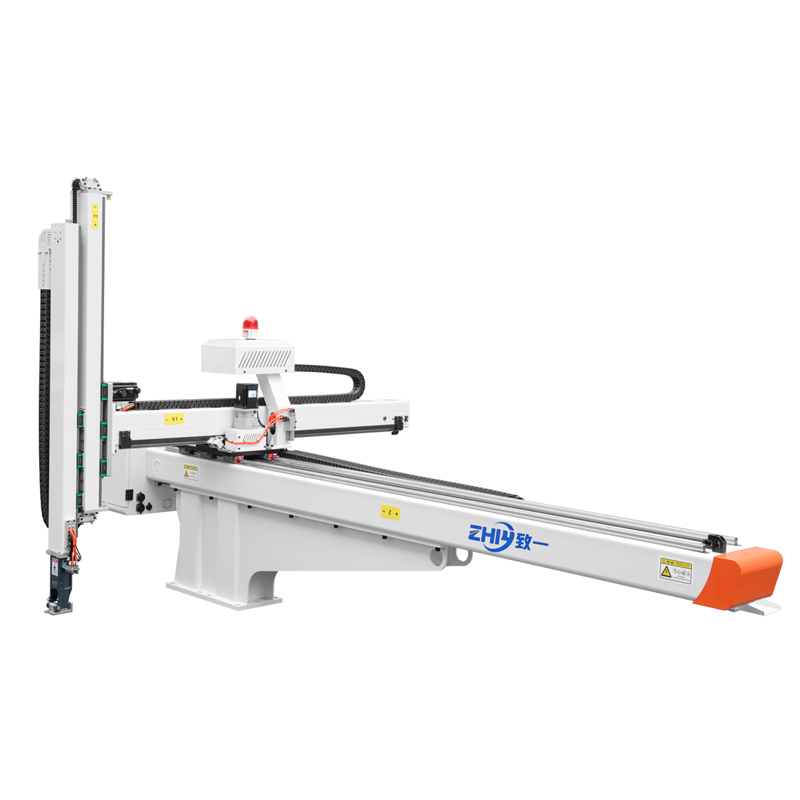
Axis count directly defines the movement flexibility of a robot arm, and it is the first decision point for most factory automation projects. Three mainstream servo robot configurations dominate injection molding and general machine tending lines, each built for distinct production scenarios.
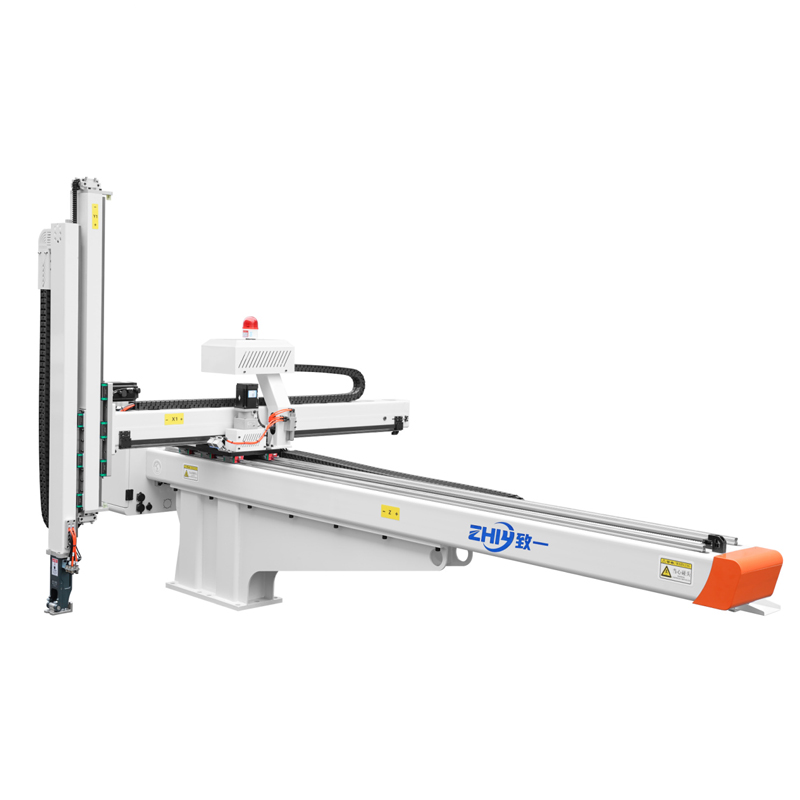
3-Axis Servo Robot Arms
3-axis models deliver linear X/Y/Z movement only, with simple vertical and horizontal travel. Best suited for:
- Two-plate mold simple product extraction
- Straight-line transfer from mold to conveyor or collection bin
- Small-batch, low-complexity consumer plastic housings
- Factories with tight budget and minimal secondary processing needs
Core advantages: Lower upfront investment, simpler programming, fewer wear parts, shorter training time for on-site operators. Ideal for entry-level automation upgrades for small-tonnage injection molding machines (50T–250T).
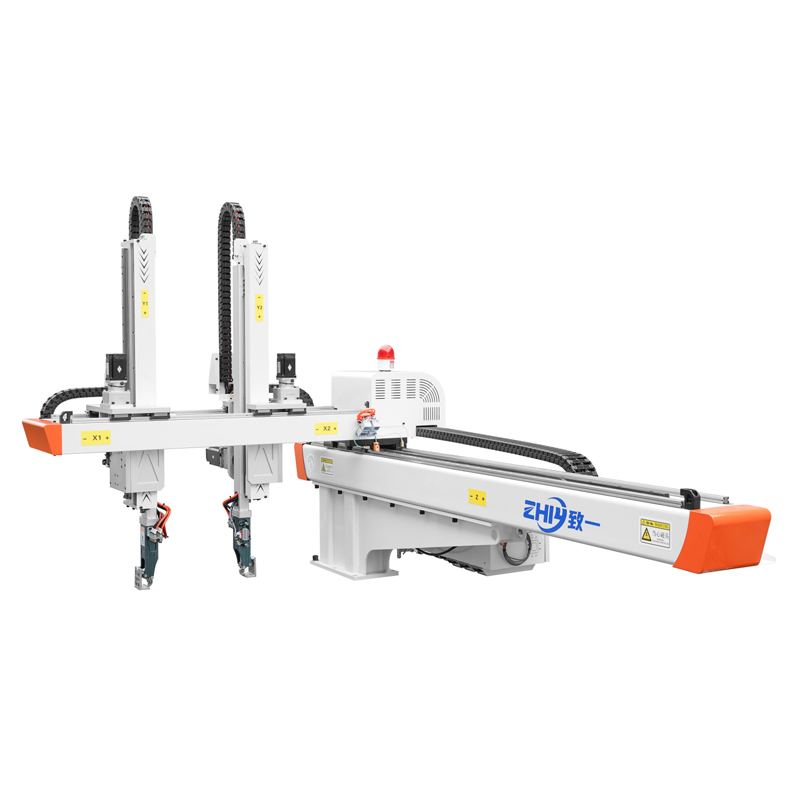
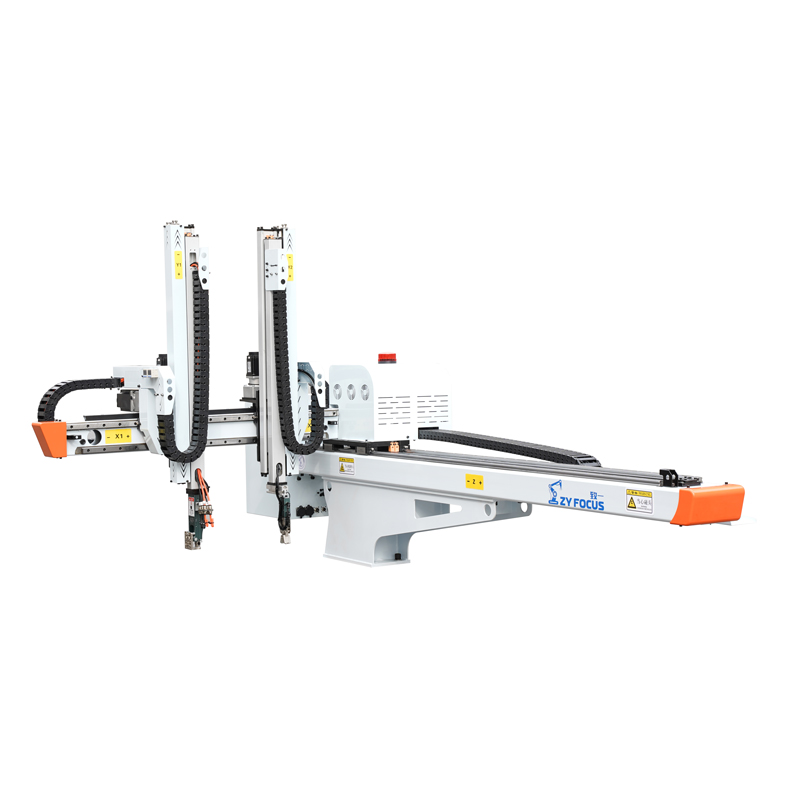
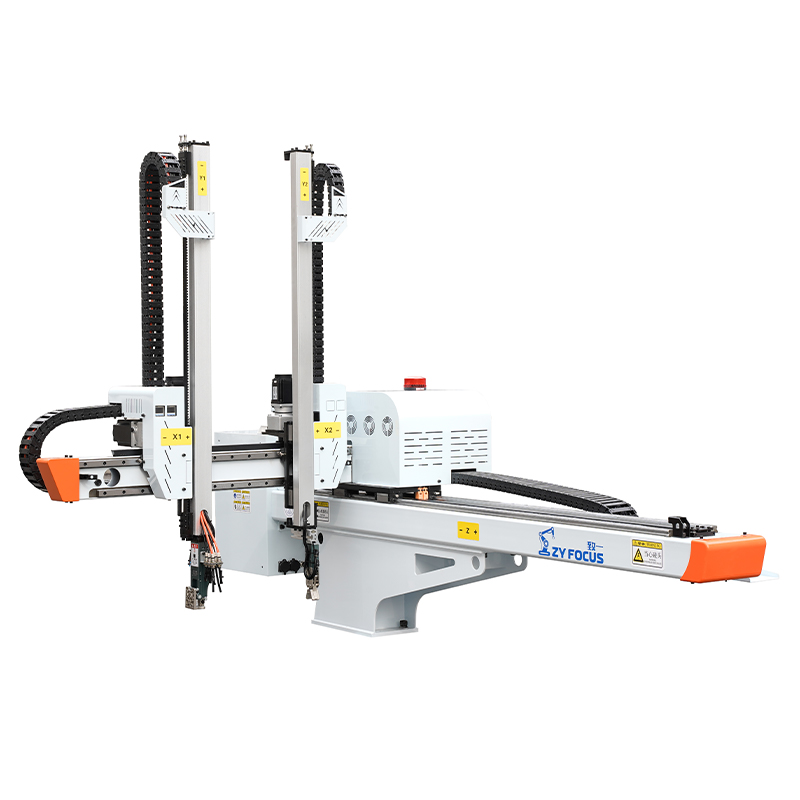
5-Axis Servo Robot Arms
Built on 3-axis linear motion with added servo rotation and flip axes for multi-angle part positioning. Many 5-axis variants feature double-arm designs to handle finished products and sprues simultaneously for three-plate molds. Best suited for:
- Insert molding with metal nuts or custom inserts
- Precision electronics and medical plastic components
- Workflows requiring part flipping, stacking or offset placement
- Medium-to-large tonnage injection machines (280T–1300T) producing complex molded parts
Core advantages: Higher repeat positioning accuracy, flexible multi-angle movement, supports integrated post-mold cutting and sorting, reduces manual secondary processing steps.
6-Axis Articulated Robot Arms
Full multi-joint industrial robots with complete spatial movement freedom, separate from overhead Cartesian servo manipulators for injection molding. Best suited for:
- Multi-station automated assembly lines
- Post-mold polishing, packaging and offline inspection
- Hybrid production cells combining molding, testing and packaging
- Large-scale smart factory Industry 4.0 integration
Key consideration: Higher initial capital cost and longer programming learning curve; only recommended for factories running fully automated end-to-end production rather than standalone molding machine tending.
| Robot Type | Flexibility | Typical Payload Range | Primary Application |
|---|---|---|---|
| 3-Axis Servo | Basic linear movement | 3kg–50kg | Simple mold take-out, basic transfer |
| 5-Axis Servo | Multi-angle rotation & flip | 5kg–50kg | Precision insert molding, complex part handling |
| 6-Axis Articulated | Full 3D spatial motion | 3kg–100kg | Multi-process assembly, offline secondary work |
Key Technical Parameters to Evaluate Before Quotation
Once you select the correct axis configuration, verify these critical performance parameters to avoid operational bottlenecks after installation.
1. Payload Capacity
Calculated payload must cover the total weight of finished products plus gripper/suction tooling, with a mandatory 20% safety margin to offset inertial stress during high-speed cycling. Formula reference: Required Payload = (Product Weight + End Tool Weight) × 1.2
- Light-load (1–5kg): Small electronic connectors, thin-wall consumer plastic parts
- Medium-load (5–20kg): Automotive small plastic components, household appliance shells
- Heavy-load (20–50kg): Large automotive bumpers, thick industrial plastic housings
Running a robot continuously at full rated payload accelerates servo motor and guide rail wear, increasing long-term maintenance downtime.
2. Stroke & Working Coverage
Three stroke dimensions determine collision-free operation:
- Pull stroke: Must exceed mold opening distance plus product thickness to avoid part scratching
- Cross travel stroke: Covers horizontal distance between injection machine and unloading station
- Vertical stroke: Accommodates mold height and material stacking height
Overly long, oversized strokes extend cycle time and waste energy; undersized strokes cause frequent collision alarms and production halts. Match stroke length to your exact machine layout instead of over-specifying.
3. Repeat Positioning Accuracy
Accuracy standards vary widely by production application:
- General consumer molding: ±0.1mm tolerance sufficient for simple take-out
- Precision insert molding, medical/electronics: ±0.02mm–±0.05mm required to guarantee consistent insert placement
- High-speed mass production: Stable precision under continuous high-speed cycling is more critical than static lab accuracy ratings
4. Cycle Time Matching
Your robot’s empty cycle speed must run 10%–20% faster than your injection molding machine’s full molding cycle. If robot movement lags behind mold opening/closing, the entire line throughput will be capped by robotic movement speed, wasting machine capacity.
Match Robot Specs to Your Working Environment
Factory workshop conditions heavily impact robot service life and maintenance frequency. Always disclose environmental details to robot suppliers for proper hardware configuration.
- Temperature & Humidity: Standard servo robots operate within 0–45°C. High-temperature molding workshops require heat-resistant cable and motor options to prevent overheating faults.
- Oil Mist & Dust Levels: Injection molding environments generate mold release agent mist and plastic dust. Prioritize units with sealed servo modules and IP54+ protection grades to avoid internal component corrosion.
- Cleanroom Requirements: Medical or food-contact plastic production needs dedicated dust-proof, low-particle robot variants with stainless steel hardware and fully enclosed wiring harnesses.
- Mounting Space Constraints: Measure overhead ceiling clearance, machine side width and floor footprint before finalizing robot size. Compact single-section arms fit small workshop layouts, while double-section extended arms serve large tonnage molding machines.
Integration & Programming Compatibility Factors
A robot arm is only one component of your automated cell; seamless compatibility with existing factory equipment directly impacts production efficiency.
Control System Compatibility
Confirm the robot controller supports mainstream industrial communication protocols (Modbus TCP, EtherCAT, Profinet) to connect with your injection machine PLC, conveyor systems, downstream cutting and testing equipment. Closed proprietary control systems create costly integration barriers for future line expansion.
Programming Usability
Two programming styles benefit different factory production models:
- Graphical touchscreen drag-and-drop teaching: Best for small-batch, frequent product changeovers; operators can complete new mold setup within 10–20 minutes without advanced coding knowledge
- Offline simulation programming: Suitable for mass production with stable molds; pre-program new part paths on office software to reduce machine downtime during product switching
Customization Flexibility
If your workflow requires insert feeding, automatic gate cutting, vision positioning or multi-station sorting, select suppliers offering modular upgrade packages instead of rigid fixed-standard robots. Modular design allows adding auxiliary functions later without full robot replacement.
Cost, ROI & Long-Term Operational Value
When comparing robot arm quotations, avoid judging value solely by upfront purchase price. Calculate total cost of ownership across 3–5 years of operation:
- Initial hardware cost (robot main body, controller, standard gripper)
- Customization fees for special fixtures, extended strokes or high-precision upgrades
- Shipping, on-site installation and operator training charges
- Annual maintenance cost (lubrication, wearing parts replacement, service labor)
- Spare parts pricing and regional delivery lead time
ROI Benchmark Reference
Most injection molding factories see full cost recovery within 12–24 months by replacing manual labor with servo robots, driven by three core savings:
- Eliminate 1–2 full-time pick-up workers per molding machine
- Reduce product scrap rate caused by inconsistent manual handling
- Extend daily production runtime via unmanned overnight shifts
For small manufacturers with limited capital, modular 3-axis robots deliver faster short-term ROI, while high-volume precision production lines justify the higher investment of 5-axis double-arm models.
Certification, Warranty & Global After-Sales Support
For cross-border factory buyers, compliance certification and reliable after-sales service eliminate major operational risks.
Mandatory Global Certifications
- ISO 9001 quality management certification: Validates standardized manufacturing and pre-delivery aging testing
- CE safety certification: Mandatory for all machinery imported into European markets, covering mechanical and electrical safety standards Suppliers without complete certification packages risk customs clearance delays and local workplace safety inspection fines.
After-Sales Support Checklist
- Standard warranty coverage period for servo motors, guide rails and control systems
- Remote technical troubleshooting via video call for fast fault resolution
- Regional spare parts inventory to cut waiting time for replacement components
- Free operator training covering daily operation, basic fault diagnosis and routine maintenance
- Global service team availability for on-site commissioning and annual equipment inspection
Common Selection Mistakes to Avoid
- Oversizing payload blindly: Buying heavy-load robots for lightweight products increases purchase cost and slows cycle speed unnecessarily.
- Ignoring mold complexity for axis selection: Using 3-axis robots for insert molding leads to unstable placement and high scrap rates.
- Underestimating workshop environmental hazards: Standard robots deployed in oily, dusty molding workshops suffer frequent breakdowns within 1–2 years.
- Matching robot speed to molding cycle exactly: No buffer for minor mold movement delays creates consistent production line downtime.
- Overlooking integration compatibility: Closed control systems cannot connect with downstream automation equipment, limiting future factory expansion.
Final Quick Reference Checklist for Buyers
Fill out this checklist before contacting robot suppliers to receive accurate, customized quotations:
- Maximum product weight + end tool weight: ____ kg
- Injection molding machine tonnage: ____ T
- Mold type (2-plate / 3-plate) and required secondary processes: ____
- Target cycle time per molded part: ____ seconds
- Workshop temperature, dust/oil exposure and cleanroom requirements: ____
- Existing PLC and communication protocols: ____
- Daily production volume and target unmanned operation hours: ____
- Required certification standards (CE, ISO 9001): ____
Frequently Asked Questions
Q1: Should small factories choose 3-axis or 5-axis robot arms first?
A1: If your production only requires simple product take-out without flipping, insert placement or multi-angle stacking, 3-axis servo robots deliver the best cost-performance. Factories producing electronics, medical or automotive precision molded parts with secondary processing steps should invest in 5-axis models from the start to avoid mid-term equipment replacement costs.
Q2: How much safety margin should I reserve for robot payload?
A2: A minimum 20% payload safety margin is recommended. High-speed reciprocating movement creates extra inertial load, and off-center fixture placement further amplifies effective weight stress on robot joints.
Q3: Can one robot arm serve multiple injection molding machines?
A3: Overhead Cartesian servo robots are typically dedicated to single molding machines for stable cycle control. Floor-mounted 6-axis articulated robots can shuttle between multiple small-tonnage machines for low-speed, low-throughput production lines, though this reduces overall line efficiency.
Q4: What is the typical service lifespan of a servo robot arm?
A4: With regular scheduled maintenance and proper environmental protection, standard servo manipulators maintain stable performance for 8–12 years of continuous 24-hour factory operation. Key wearing parts (guide rails, timing belts) require replacement every 1–3 years depending on daily runtime.
Q5: How long does operator training take for new robot arms?
A5: Graphical touchscreen-controlled 3/5-axis servo robots require only 1–2 days of basic training for factory staff to complete mold switching, daily operation and simple fault troubleshooting. Advanced offline programming training for complex multi-process lines takes 3–5 full days.