
Leave Your Message
0102030405
How to Choose Robot Arm for Export
2026-07-07
How to Choose Robot Arm for Export: A Complete Buyer’s Guide
Table of Contents
- Introduction: Why Export-Ready Robot Arms Require Special Selection Rules
- Step 1: Match Robot Arm Type to Your Target Industry & Production Tasks
- Step 2: Lock Down Core Technical Specs for Cross-Border Stable Operation
- Step 3: Verify Global Compliance & Certifications for Smooth Customs Clearance
- Step 4: Evaluate Environmental Adaptability for Different Regional Factories
- Step 5: Check Control System Compatibility for Local Factory Integration
- Step 6: Assess Global After-Sales & Supply Chain Support Capacity
- Step 7: Calculate Total Cost of Ownership Instead of One-Time Purchase Price
- Quick Reference Chart: Robot Arm Types & Ideal Export Application Scenarios
- Final Pre-Order Checklist for International Robot Arm Importers
- Frequently Asked Questions for Cross-Border Robot Arm Buyers
Introduction: Why Export-Ready Robot Arms Require Special Selection Rules
Global manufacturing automation demand keeps rising, and robot armshave become core equipment for factories across automotive, electronics, food packaging, metal processing and logistics palletizing. For international importers, distributors and factory procurement managers, picking A Robot arm purely based on local domestic standards often leads to costly troubles: customs detention, incompatible local factory control systems, insufficient environmental protection for tropical or cold regions, and lack of local spare parts support after delivery.
Unlike domestic equipment procurement, export-oriented robot arm selection must balance technical performance, cross-border compliance, regional adaptability and long-term global service. This guide breaks down every critical decision point from the perspective of international buyers, helping you avoid overinvestment, delayed production and clearance risks when sourcing robot arms for overseas resale or factory deployment.
Step 1: Match Robot Arm Type to Your Target Industry & Production Tasks
Each robot arm design is engineered for specific workflow demands. Before comparing parameters, confirm your end-user’s core production scenarios to narrow down the right arm category.
1.1 Articulated 6-Axis Robot Arms
The most versatile export model, with full spherical motion range and multi-angle reach. Ideal for heavy-duty cross-border industries: automotive welding, metal part polishing, large component assembly, paint spraying and heavy palletizing. It works well for both high-volume mass production lines in Europe and medium-sized manufacturing plants in Southeast Asia.
1.2 Collaborative Robot Arms (Cobots)
Top choice for small-to-medium flexible factories worldwide. Built-in force-limiting safety sensors remove the need for full safety fencing, cutting workshop layout costs for overseas buyers. Perfect for electronics assembly, small component testing, mixed-batch packaging, and machine tending. Popular among importers targeting EU, North America and Australian light manufacturing.
1.3 SCARA Robot Arms
Optimized for fast horizontal precision tasks. Best exported to electronics, PCB processing and plastic component assembly factories. High repeat accuracy and compact footprint suit small workshop spaces common in East and Southeast Asian industrial zones.
1.4 Delta Parallel Robot Arms
Ultra-high-speed lightweight pick-and-place solution. Main export markets include food processing, pharmaceutical packaging and cosmetic filling lines. Suitable for conveyor sorting, small bottle capping and snack packaging, widely ordered by food factory importers across Latin America and Europe.
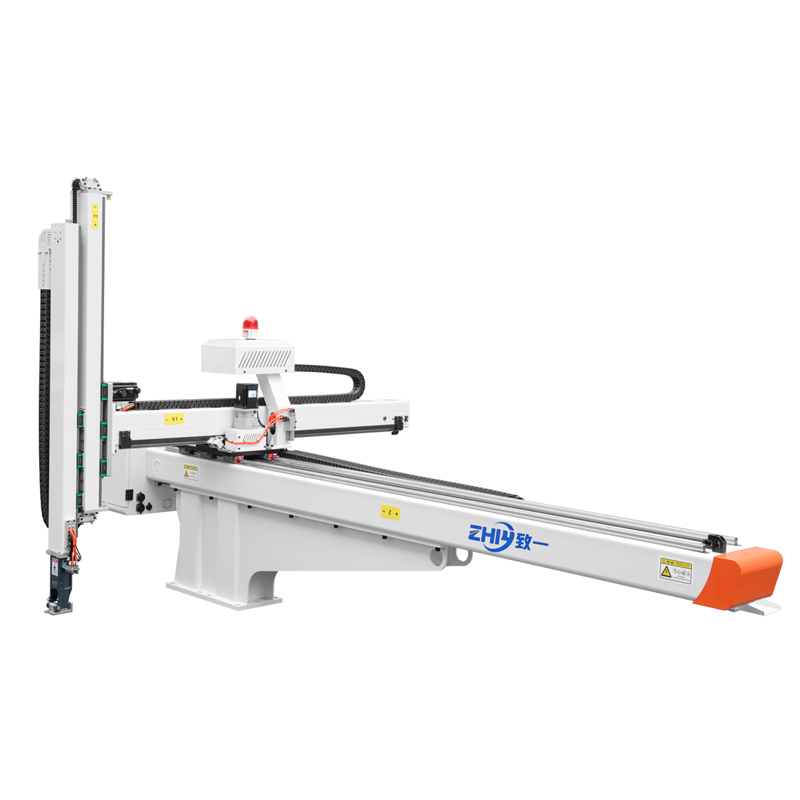
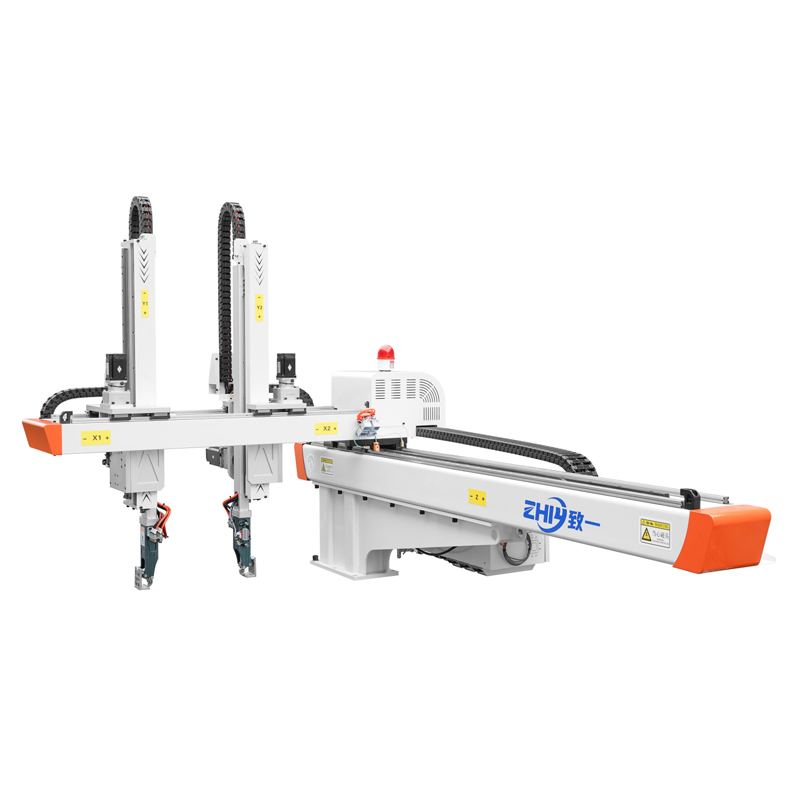
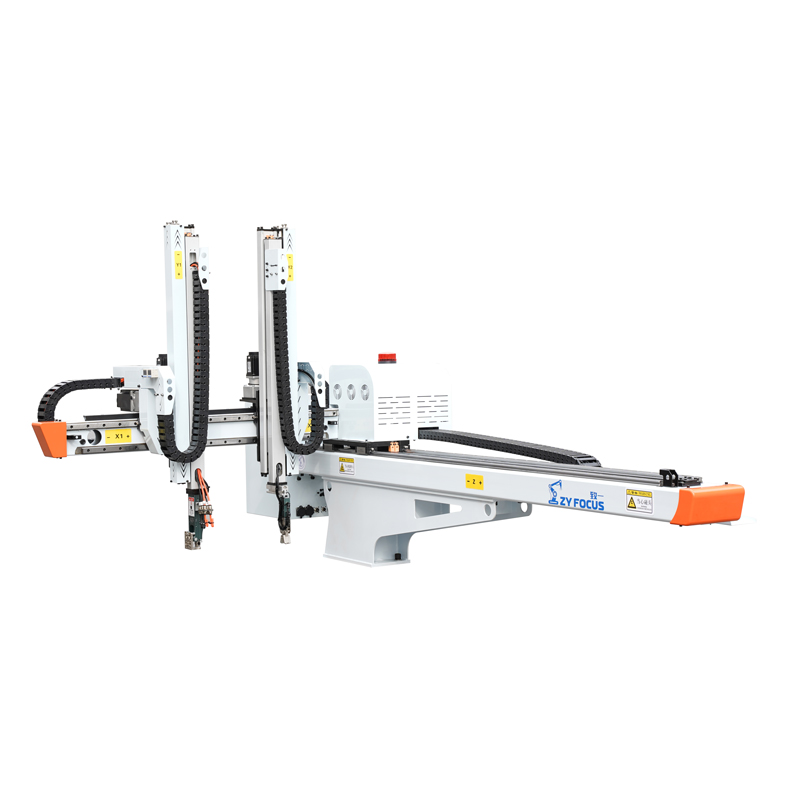
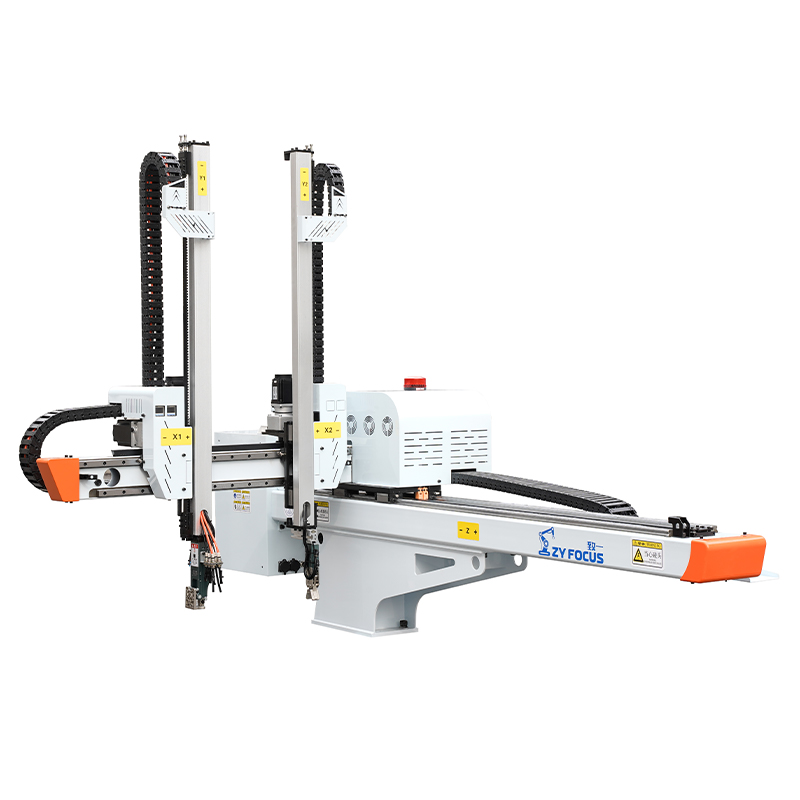
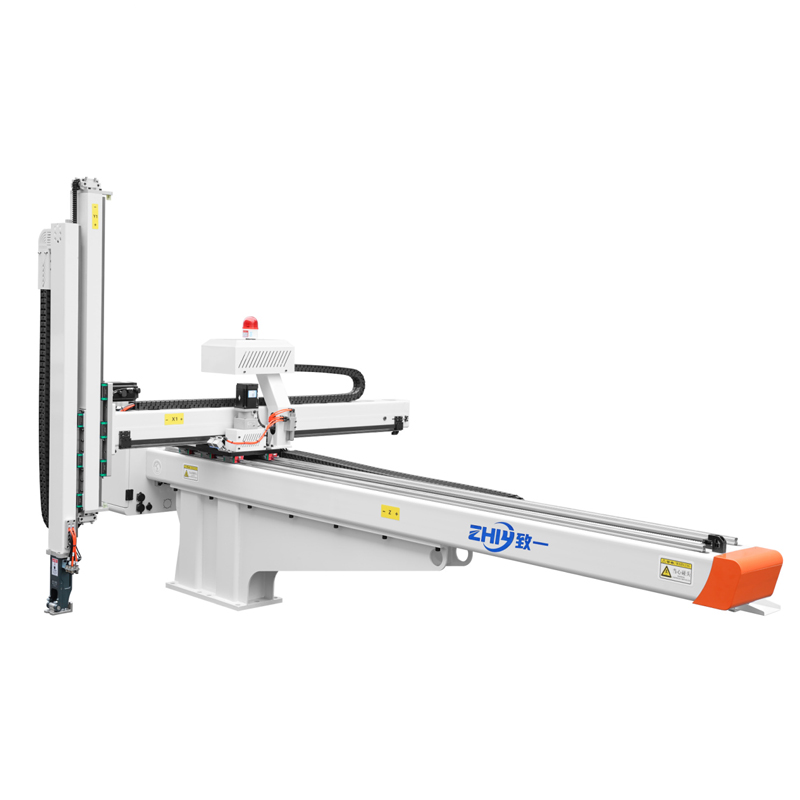
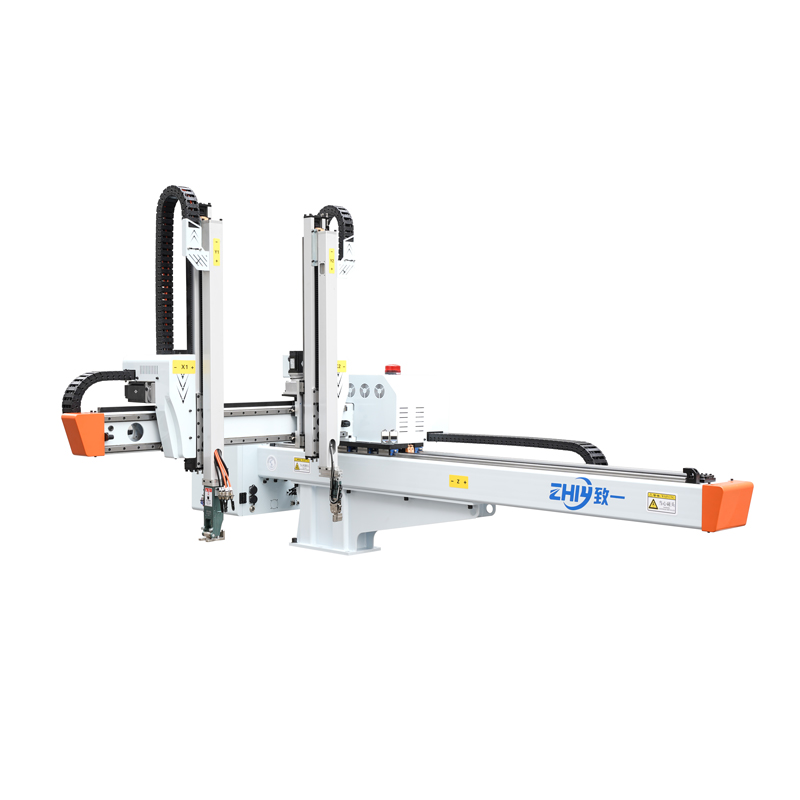
1.5 Cartesian/Gantry Robot Arms
Long linear travel with stable heavy payloads. Export demand comes from CNC machine loading, large-format printing, warehouse material handling and solar panel production. Fits large-scale factory layouts in North American and Middle Eastern industrial parks.
Step 2: Lock Down Core Technical Specs for Cross-Border Stable Operation
Technical parameters directly determine long-term running stability in overseas factories, and under-specification will trigger frequent breakdowns that damage your reputation as an importer. Three non-negotiable metrics to calculate accurately:
Payload Capacity
Always calculate total load including workpiece weight plus end-effector (gripper, vision camera, cutting tool) weight. Add a 20%–30% safety margin for long-cycle continuous operation. Running robot arms at full rated payload overseas accelerates reducer wear, leading to short service life and high maintenance costs for end clients.
- Light tasks (electronics sorting): 0.5kg–5kg payload
- Medium assembly & packaging: 6kg–20kg payload
- Heavy metal processing & palletizing: 30kg–300kg payload
Reach & Working Envelope
Measure the maximum distance between robot mounting base and the farthest processing station, including fixture offsets. Many overseas buyers face compact factory floor space; oversized arms waste workshop area, while undersized reach creates blind spots in production lines. Confirm floor-mounted, wall-mounted or overhead installation compatibility per end-user factory layout.
Repeatability & Cycle Time
- Precision assembly (medical, electronics): ±0.02mm–±0.05mm repeatability required
- Welding, polishing, palletizing: ±0.1mm–±0.5mm acceptable range Cycle time directly impacts factory throughput ROI. Delta robots deliver fastest pick-and-place speeds; articulated arms balance speed and complex motion paths. Collect end-user hourly output targets to match appropriate speed grades.
Step 3: Verify Global Compliance & Certifications for Smooth Customs Clearance
Certification is the biggest clearance threshold for exported robot arms. Missing regional mandatory marks will result in port detention, fines or returned shipments. Prioritize these credentials based on your target sales regions:
- CE Certification (EU, UK, Turkey, Middle East): Mandatory for all robot arm shipments to European markets, covering mechanical safety and electromagnetic compatibility (EMC). Collaborative cobots need additional safety category assessment per EN ISO 10218 standards.
- ISO 9001: Global universal quality management certification, required by most large factory buyers worldwide.
- IATF 16949: Critical credential if supplying automotive manufacturing clients, recognized by global auto OEMs and component suppliers.
- ATEX / IECEx: Mandatory for robot arms exported to chemical, oil, paint factory zones with explosive dust or gas environments.
- FDA / Food-Grade Certification: Required for food and pharmaceutical production lines in North America, EU and Australia, confirming safe contact with edible raw materials.
- Local regional standards: UL for North America, KC for South Korea, SAA for Australia.
Request full English certification documents, test reports and compliance manuals before placing bulk export orders. Avoid suppliers who only provide domestic local certifications without internationally recognized third-party audit files.
Step 4: Evaluate Environmental Adaptability for Different Regional Factories
Export robot arms operate in vastly different climate and workshop conditions across global markets; standard indoor models fail to perform in extreme environments:
- Tropical markets (Southeast Asia, Latin America): High temperature (35–45°C), high humidity, heavy dust. Select IP65 or higher protection rating, anti-corrosion coated body and dehumidified controller cabinets.
- Cold regions (Northern Europe, Canada): Low-temperature resistant lubricants and heating modules inside control cabinets to prevent gear oil solidification.
- Welding, cutting workshops: Oil mist, metal splash, smoke; IP67 rating and stainless steel outer casing recommended.
- Cleanroom sectors (medical, semiconductor): Special dust-free sealed models with low particle emission certification.
Never export standard indoor robot arms to tropical coastal factories without upgraded protection upgrades—early rust and electrical short circuits will generate heavy after-sales complaints.
Step 5: Check Control System Compatibility for Local Factory Integration
Overseas factories rely on regionally mainstream PLC and industrial communication protocols. Poor compatibility extends on-site integration cycles by weeks and increases system integration costs for end buyers. Confirm the robot controller supports these universal international protocols:
- EtherCAT, Profinet, Modbus TCP, OPC UA
- Compatibility with Siemens, Allen-Bradley, Mitsubishi, Omron PLC systems
Additional export-focused control requirements:
- Full multi-language HMI interface (English, Spanish, French, German, Vietnamese as core options)
- English operation manuals, maintenance guides and spare part catalogs in digital PDF format
- Remote cloud monitoring function, supporting cross-border fault diagnosis without local technician visits
- Offline programming software compatible with global mainstream industrial design platforms
Closed proprietary control systems limit secondary development for overseas system integrators and reduce your product competitiveness against international robot brands.
Step 6: Assess Global After-Sales & Supply Chain Support Capacity
Robot arms have a 10–15 year service lifespan. For cross-border importers, inaccessible spare parts and slow technical support become fatal sales drawbacks. Evaluate suppliers on three global service indicators before cooperation:
- Overseas spare parts warehouse layout: Local stock hubs in your target sales regions cut component delivery lead time from 4–8 weeks to 3–7 working days.
- Multilingual technical team: English-speaking engineers for remote video troubleshooting, overseas on-site training for local factory technicians.
- Global warranty policy: Clear international warranty terms covering core components (motors, reducers, controllers) with standardized replacement procedures for cross-border shipments.
Avoid manufacturers that only offer domestic after-sales support with no overseas logistics coordination for spare parts. End clients will refuse repeat orders if component replacement takes months.
Step 7: Calculate Total Cost of Ownership Instead of One-Time Purchase Price
Many international buyers focus solely on unit price and overlook long-term operating costs, which account for over 70% of total expenditure across the robot’s service life. Build a full cost model covering:
- Upfront cost: Robot arm unit price, end-effector tooling, vision system, packaging and ocean freight export fees
- Customs & tariff cost: Confirm tariff rates of target countries in advance; some regions offer automation equipment import tax reductions for manufacturing enterprises
- Installation & training cost: On-site technician travel fees or remote training packages
- Annual maintenance cost: Lubricants, wearing parts, regular calibration fees
- Energy consumption: Power efficiency of robot motors impacts monthly factory utility bills
Mid-range robot arms with stable global spare parts supply often deliver lower total ownership cost than ultra-low-cost models with short lifespans and unavailable replacement components.
Quick Reference Chart: Robot Arm Types & Ideal Export Application Scenarios
| Robot Arm Type | Core Strengths | Top Export Target Industries | Best Selling Global Regions |
|---|---|---|---|
| 6-Axis Articulated | Full motion flexibility, heavy payload | Automotive welding, metal processing, palletizing | EU, North America, Middle East |
| Collaborative Cobot | No safety fence, flexible mixed production | Electronics assembly, small batch packaging | All global light manufacturing zones |
| SCARA | Fast planar precision, compact size | PCB assembly, plastic component fitting | Southeast Asia, East Asia |
| Delta Parallel | Ultra-high speed light pick-and-place | Food packaging, pharmaceutical sorting | Latin America, Western Europe |
| Gantry Cartesian | Long linear travel, super heavy load | Solar production, CNC machine tending | North America, Australia |
Final Pre-Order Checklist for International Robot Arm Importers
Run through this checklist before confirming bulk export orders to eliminate cross-border risks:
- Confirm all required regional certification documents are complete and English versions available
- Match payload, reach and precision specs against end-user production workflow data
- Verify IP protection grade matches local factory temperature, humidity and dust levels
- Test controller compatibility with mainstream local PLC brands and communication protocols
- Confirm multi-language HMI and full English technical documentation packages
- Check supplier overseas spare parts warehouse locations and delivery lead times
- Clarify international warranty coverage, component replacement logistics and repair processes
- Calculate total cost of ownership including freight, tariff and annual maintenance expenses
- Confirm export packaging standards (shockproof wooden crates, moisture-proof film for ocean shipping)
- Request real overseas client case references from the same target industry and region
Frequently Asked Questions for Cross-Border Robot Arm Buyers
Q1: Are collaborative cobots more suitable for export than traditional 6-axis arms?
It depends on target market factory scale. Small and medium-sized factories in EU, Australia and Southeast Asia prefer cobots for low space investment and flexible mixed production. Large heavy manufacturing plants for automotive and metal processing still prioritize high-payload 6-axis articulated arms for continuous high-volume output.
Q2: What certification is non-negotiable for shipping robot arms to Europe?
CE marking complying with EN ISO 10218 robot safety standards and EMC electromagnetic compatibility tests are mandatory. Customs will seize shipments without valid third-party CE test reports.
Q3: How to reduce spare part supply risks for overseas end clients?
Select suppliers with regional spare parts warehouses in your primary sales countries. You can also order a set of core wearing components (reducer lubricants, motor cables, gripper accessories) alongside each bulk robot shipment as stock for local distribution.
Q4: Can one robot arm model cover multiple export regional markets?
Standard base models work globally, but you must adjust auxiliary configurations: protection rating upgrades for tropical zones, low-temperature kits for cold regions, regional certification attachments and localized language interfaces. A universal base unit with modular optional accessories balances inventory and regional demand.
Q5: How long is the typical warranty period for export robot arms?
Industry standard international warranty covers 12–24 months for core control and motor components. Reputable suppliers offer extended warranty packages for importers distributing to remote regions with limited local repair resources.
Closing Thoughts
Sourcing robot arms for global export is far more complex than local factory procurement, as every technical, compliance and service detail shapes your long-term cross-border business reputation. Prioritize alignment with end-user production demands, regional regulatory standards and global after-sales infrastructure over upfront low pricing. By following this structured selection workflow, you can source robot arms that clear customs smoothly, operate reliably in overseas factories and generate consistent repeat orders from international manufacturing buyers.