
Leave Your Message
0102030405
How to Choose Between Single-Arm and Double-Arm Injection Molding Robots
2026-08-05
How to Choose Between Single-Arm and Double-Arm Injection Molding Robots
Table of Contents
- Understanding Injection Molding Robot Arm Basics
- Core Differences Between Single-Arm & Double-Arm Robots
- Key Factors to Decide: Single or Double Arm
- Side-by-Side Comparison Table
- Typical Application Scenarios for Each Robot Type
- Common Selection Mistakes to Avoid
- Step-by-Step Quick Selection Checklist
- Frequently Asked Questions
- Final Conclusion
- Related Posts
Understanding Injection Molding Robot Arm Basics
For injection molding plant managers, procurement specialists and automation engineers, selecting the right robot arm structure directly impacts production cycle time, labor costs, floor space utilization and long-term return on investment. Single-arm and double-arm servo robots are the two most mainstream configurations for horizontal injection molding machines, widely paired with 3-axis and 5-axis servo drive systems across consumer electronics, automotive parts, medical components and daily packaging manufacturing.
At first glance, both robot types complete core tasks: removing finished plastic parts from molds, separating sprue waste, and transferring products to conveyors or stacking stations. However, their mechanical layout, simultaneous operation capacity and compatible mold types create clear boundaries for use cases. A wrong choice will either waste capital on redundant functions or create production bottlenecks that slow down your entire molding line.
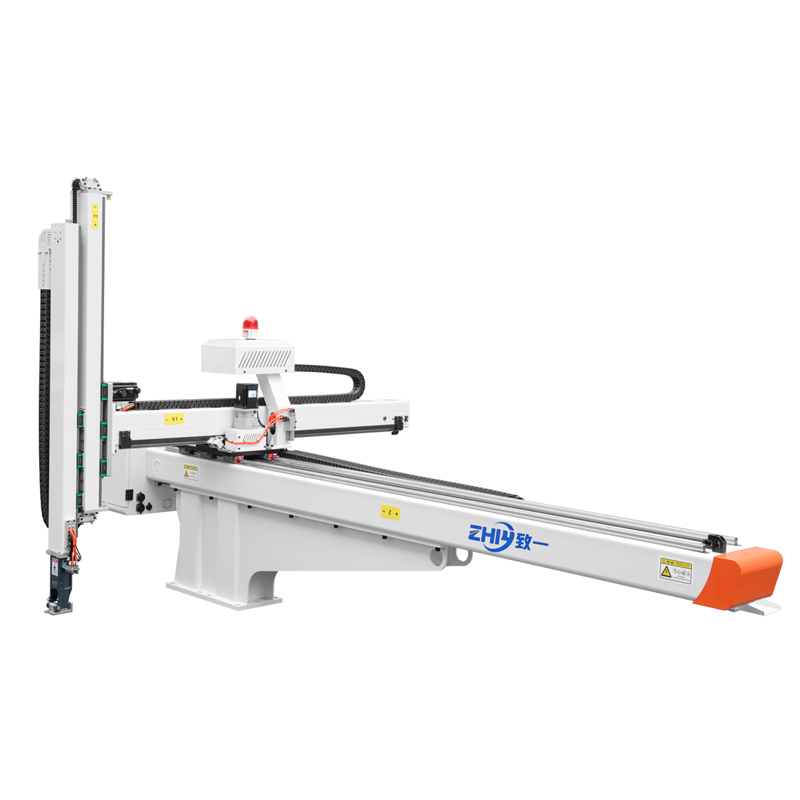
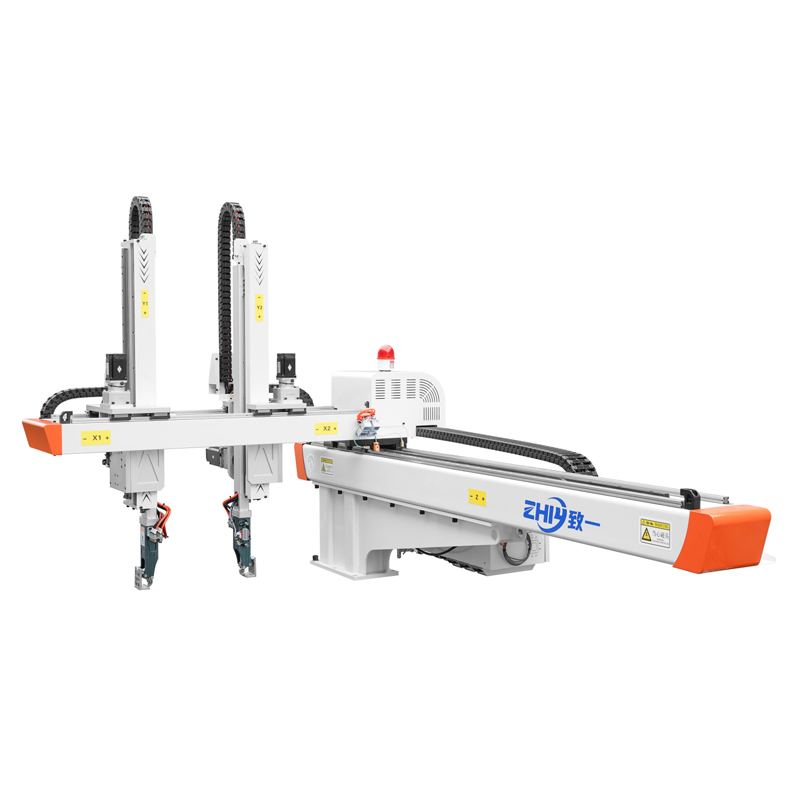
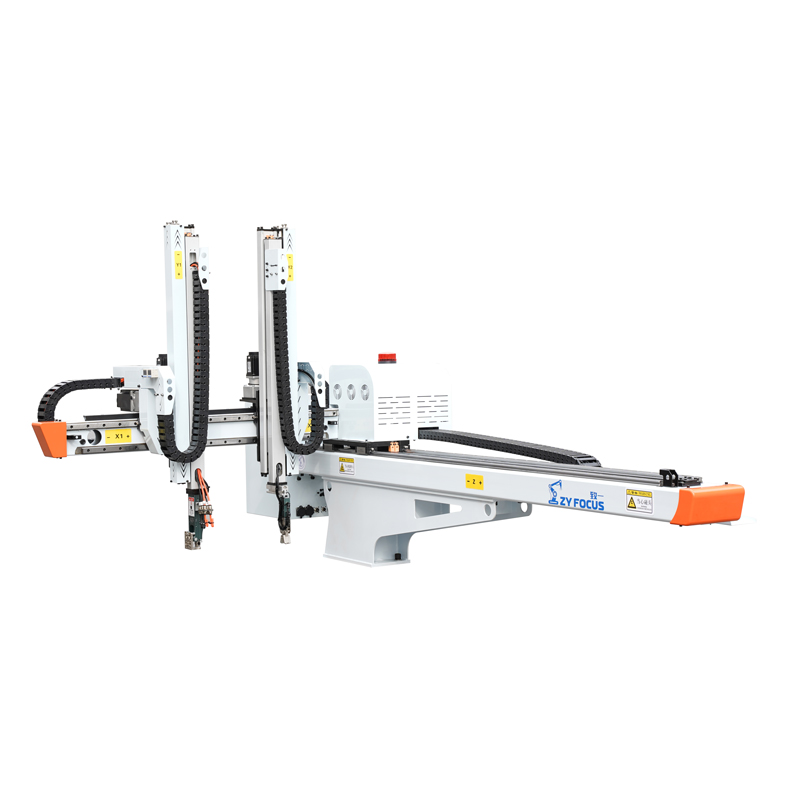
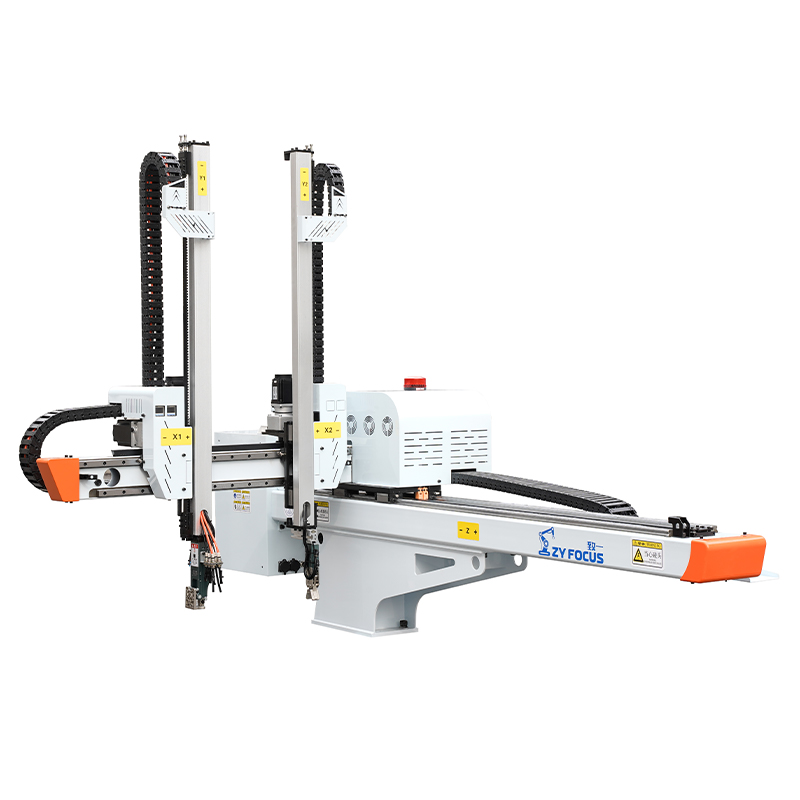
Single-arm robots feature one independent telescopic arm for all pick-and-place workflows. Double-arm robots integrate two coordinated arms (main arm + sub-arm) that can operate synchronously or independently to handle two separate tasks within one machine opening cycle. This fundamental structural gap is the root of all performance and cost differences we will break down below.
Core Differences Between Single-Arm & Double-Arm Robots
1. Mechanical Structure & Floor Footprint
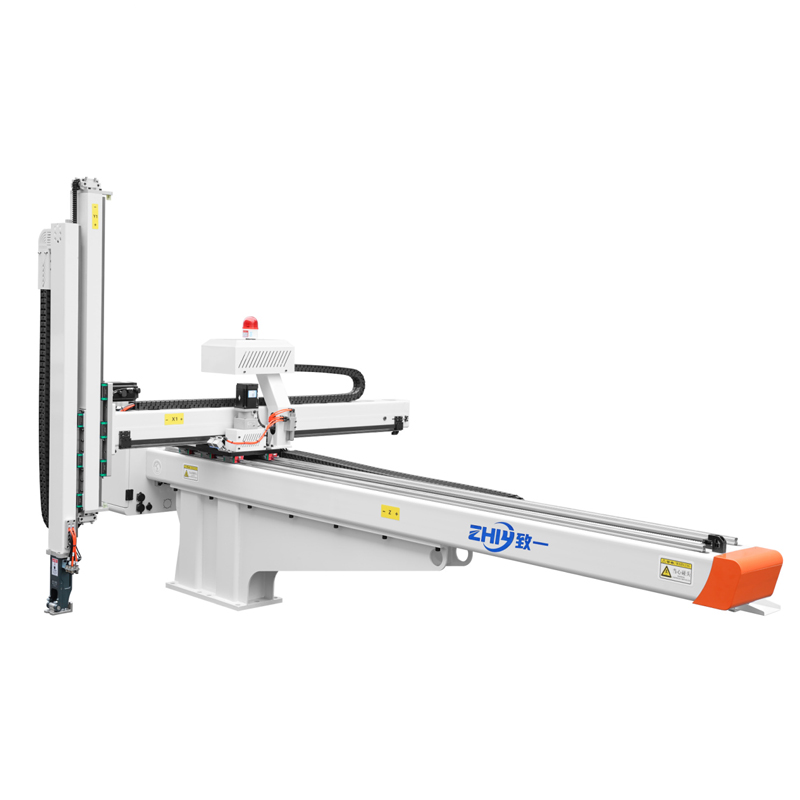
Single-arm robots adopt a compact monolithic design with only one vertical extraction arm. The overall machine width is narrower, requiring less overhead horizontal clearance above injection molding machines. They fit perfectly into production workshops with narrow aisles, low ceiling height or closely arranged molding equipment.
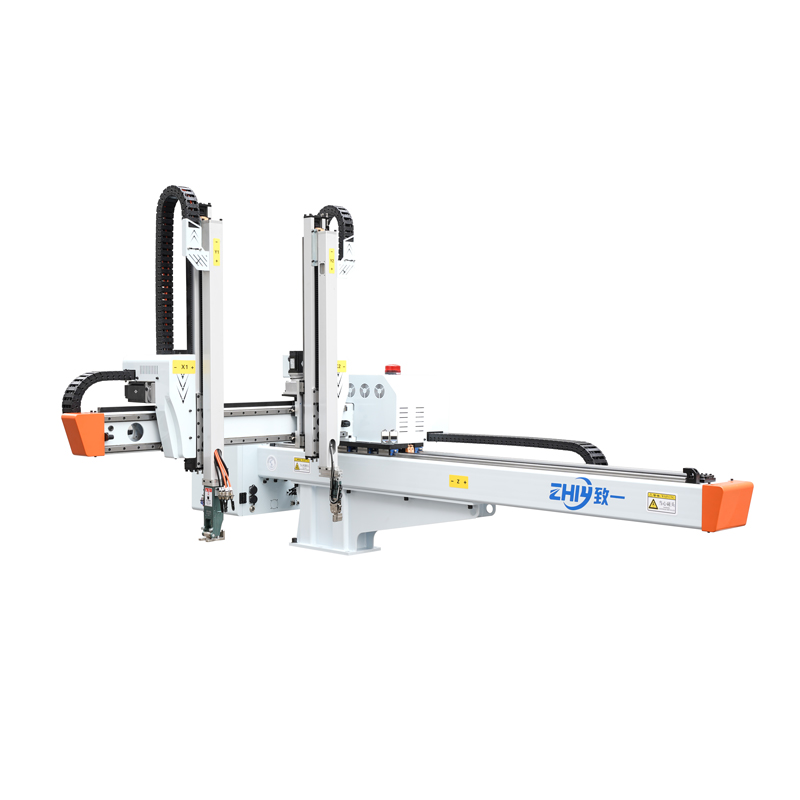
Double-arm robots carry dual vertical extraction arms mounted on the same cross beam. The wider body demands extra lateral space above the injection unit and safety gate. Modern double-arm models use optimized aluminum extrusion frames to control weight, but they still occupy 20–30% more installation space than equivalent single-arm variantsGuangdong ....
2. Working Efficiency & Cycle Performance
Single-arm robots can only execute one primary task per mold opening cycle: either grab finished products or cut sprue runners. Additional secondary steps (inserting metal inserts, stacking, labeling) must wait until the robot finishes its core pick-out action, extending total cycle time by 15–30% for multi-process production lines.
Double-arm robots deliver the biggest advantage in parallel processing. The main arm retrieves finished parts while the sub-arm simultaneously clips and disposes sprue waste during the same mold open window. For multi-cavity molds or production requiring in-mold insert loading, dual arms cut cycle delays entirely, boosting overall line throughput by 30–50% compared to single-arm setups under identical molding conditions.
3. Mold Compatibility
Single-arm robots are engineered for 2-plate molds and hot runner molds, where finished parts and sprue remain connected as one piece after ejection. They perform reliably for simple ejection layouts without separated runner waste cavities.
Double-arm robots are the standard match for 3-plate molds, stack molds and multi-color injection molds. In these mold designs, finished components and sprue material eject in separate positions; the dual-arm setup handles both materials without extra waiting time between mold closes. Double-arm structures also support in-mold metal insert placement, with one arm loading inserts and the other retrieving completed products in parallel.
4. Upfront & Long-Term Operating Cost
Single-arm robots feature fewer servo motors, guide rails and mechanical components, leading to lower initial purchase price, simpler installation and faster commissioning. Routine maintenance costs are reduced thanks to fewer wear parts, and replacement spare parts carry lower price tags for small and mid-size factories with limited automation budgets.
Double-arm robots require dual sets of drive and actuation hardware, increasing initial capital expenditure by 25–40% versus equivalent single-arm models. While daily maintenance complexity rises, the efficiency gains deliver faster ROI for high-volume mass production lines—typically recouping the extra investment within 12 to 24 months via increased output and eliminated manual secondary operations.
Key Factors to Decide: Single or Double Arm
When evaluating which robot arm configuration fits your facility, evaluate these six non-negotiable criteria first:
- Mold Structure Type
- Select single-arm: 2-plate molds, hot runner molds, single ejection layout
- Select double-arm: 3-plate molds, stack molds, multi-cavity separate sprue ejection, dual-component multi-color molds
- Target Production Throughput & Cycle Time
- Low to medium output, cycle time above 12 seconds: single-arm meets demand
- High-volume mass production, target cycle time below 8 seconds, multi-step post-mold handling: double-arm eliminates process bottlenecks
- Available Workshop Installation Space
- Narrow machine aisles, ceiling height restrictions, compact factory layout: single-arm compact design is mandatory
- Spacious molding workshop, wide overhead clearance above injection machines: double-arm can be deployed without layout modification
- Secondary Inline Processes
- Only basic part removal and conveyor transfer: single-arm fully sufficient
- Simultaneous sprue separation, in-mold insert feeding, product flipping/stacking, labeling: double-arm parallel workflow is required
- Product Weight & Payload Requirement
- Light to medium finished parts under 20kg: both configurations available; single-arm offers more cost savings
- Large heavy components up to 50kg with separate heavy sprue waste: heavy-duty double-arm models distribute load across two arms for stable operation
- Long-Term Production Flexibility Plans
- Fixed single-product lines with unchanged molds long-term: single-arm delivers stable low-cost operation
- Frequent mold switching, future expansion into multi-cavity/3-plate mold production: double-arm provides upgrade-ready automation flexibility
Side-by-Side Comparison Table
| Comparison Item | Single-Arm Injection Molding Robot | Double-Arm Injection Molding Robot |
|---|---|---|
| Core Operation Mode | Sequential single-task operation | Synchronous dual-task parallel operation |
| Mold Compatibility | 2-plate, hot runner molds | 3-plate, stack, multi-color, multi-cavity molds |
| Production Efficiency | Baseline standard throughput | +30%~50% higher output on matching molds |
| Installation Footprint | Compact, narrow horizontal space requirement | Wider cross beam, requires extra overhead clearance |
| Initial Equipment Cost | Low to mid-range investment | Mid to high upfront investment |
| Maintenance Complexity | Minimal wear components, simple daily inspection | Dual moving assemblies, more regular lubrication & inspection points |
| Ideal Production Scale | Small & medium batch, single fixed mold lines | High-volume mass production, mixed mold workshop |
| Supported Auxiliary Tasks | Basic pick-out, simple stacking | Simultaneous insert loading, sprue disposal, product flipping |
Typical Application Scenarios for Each Robot Type
When Single-Arm Robots Are the Better Choice
- Small-batch production of consumer electronics shells, phone accessories and small daily plastic goods using standard two-plate molds
- Compact molding workshops with tightly arranged injection machines and limited overhead installation space
- SMEs operating single-product fixed production lines with no plan to switch to three-plate or stack molds within 3–5 years
- Low-cycle-demand products like thick-wall household storage containers with cycle times exceeding 15 seconds
- Budget-restricted automation upgrades where only basic manual pick-out replacement is required, no secondary inline processing


Single-Arm 3-Axis Servo Robot
When Double-Arm Robots Are the Better Choice
- High-speed mass production of bottle caps, thin-wall food containers and disposable packaging with multi-cavity three-plate molds
- Automotive interior and exterior component manufacturing requiring in-mold metal nut insert placement
- Medical precision parts production with strict cycle consistency and simultaneous sprue waste removal
- Factories running mixed mold fleets that regularly switch between two-plate, three-plate and multi-color molds
- Fully unmanned lights-out molding workshops integrating inline stacking, visual inspection and automatic packaging

Double-Arm 5-Axis Servo Robot
Common Selection Mistakes to Avoid
Mistake 1: Only Compare Upfront Price Without Calculating Cycle Efficiency
Many procurement teams opt for cheaper single-arm robots for high-speed three-plate mold production. The sequential workflow creates constant line bottlenecks, reducing daily output and leading to larger long-term losses that far exceed the initial equipment savings. Always calculate ROI based on actual throughput improvement, not just purchase cost.
Mistake 2: Ignore Workshop Space Limitations When Ordering Double-Arm Models
Double-arm robots need additional horizontal clearance above the injection molding safety gate. Installing them in narrow aisles causes collision risks with overhead cranes, cooling pipes or adjacent machines, requiring costly factory layout rework post-installation.
Mistake 3: Match Double-Arm Robots to Simple Two-Plate Molds
For basic single-ejection two-plate mold production, dual-arm functionality remains unused. You will pay extra for redundant mechanical parts and increase routine maintenance frequency with zero efficiency return.
Mistake 4: Miscalculate Required Payload Safety Margin
Regardless of single or double arm selection, the rated payload must cover total weight of finished part + sprue + end-of-arm tool (EOAT) multiplied by a minimum 1.3 safety factor. Under-specifying payload shortens robot service life and triggers unstable pick-out movement that damages molds or products.
Mistake 5: Disregard Future Production Expansion Plans
If your factory roadmap includes adding three-plate or stack molds within 2–3 years, purchasing a single-arm robot will force a full equipment replacement later. Double-arm robots retain compatibility across nearly all mainstream mold types for long-term production flexibility.
Step-by-Step Quick Selection Checklist
Complete this checklist before finalizing your robot arm configuration order:
- Document all active mold types in production (2-plate / 3-plate / stack / multi-color)
- Measure overhead horizontal clearance and ceiling height above each injection molding machine
- Calculate maximum total weight of finished part + sprue + fixture for your largest product
- Record target production cycle time and required daily output volume
- List all required inline auxiliary processes (insert loading, sprue cutting, stacking, flipping)
- Confirm short-term and long-term mold switching and product expansion plans
- Cross-reference checklist results against the comparison table above to shortlist single or double-arm options
- Calculate full-lifecycle ROI including purchase cost, labor reduction, throughput gains and maintenance expense
Frequently Asked Questions
Q1: Can a single-arm robot be retrofitted into a double-arm robot later?
A: No. Single and double-arm robots feature entirely different cross beam, drive motor and control system designs. Retrofitting requires replacing over 60% of core mechanical and electrical components, which costs nearly as much as purchasing a brand-new double-arm robot. It is more cost-effective to select the correct configuration upfront.
Q2: Do double-arm robots always require a 5-axis servo system?
A: Not mandatory. Budget-focused three-axis double-arm robots with pneumatic sub-arms exist for standard three-plate mold production. Five-axis double-arm models are recommended only when complex rotation, side posture adjustment or in-mold insert placement is required for precision products.
Q3: Is a double-arm robot necessary for single-cavity three-plate molds?
A: Yes. Even single-cavity three-plate molds eject finished parts and sprue runners separately. A single-arm robot must complete two separate extraction passes, extending cycle time significantly. Double-arm parallel extraction eliminates this delay for consistent fast cycling.
Q4: Which arm configuration has a shorter maintenance downtime?
A: Single-arm robots require less frequent servicing and shorter maintenance windows due to fewer moving parts. Double-arm models need bi-weekly inspection for dual guide rails and servo drive systems, while single-arm units only need monthly routine checks under standard production loads.
Final Conclusion
There is no universal “better” robot arm structure; the optimal choice fully aligns with your mold design, production volume, workshop layout and long-term manufacturing goals.
Choose a single-arm servo robot if you operate simple two-plate/hot runner molds, have limited installation space, run medium-batch fixed product lines, and prioritize minimal upfront investment and low maintenance overhead.
Invest in a double-arm servo robot if your facility relies on three-plate, stack or multi-color molds, pursues maximum unmanned throughput, requires simultaneous inline auxiliary processes, or plans regular mold switching and production line expansion in the coming years.