
Leave Your Message
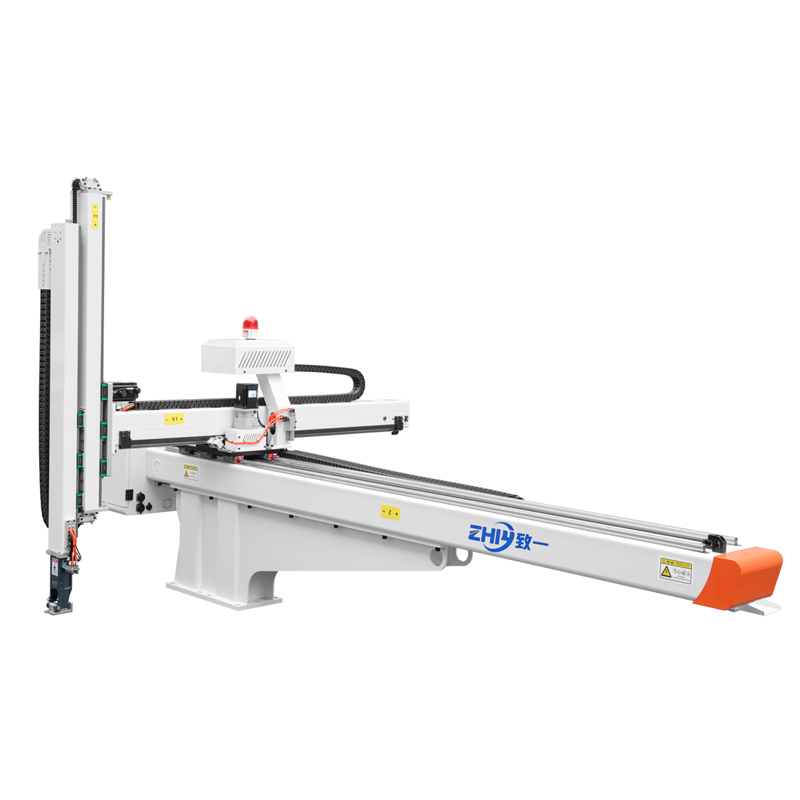
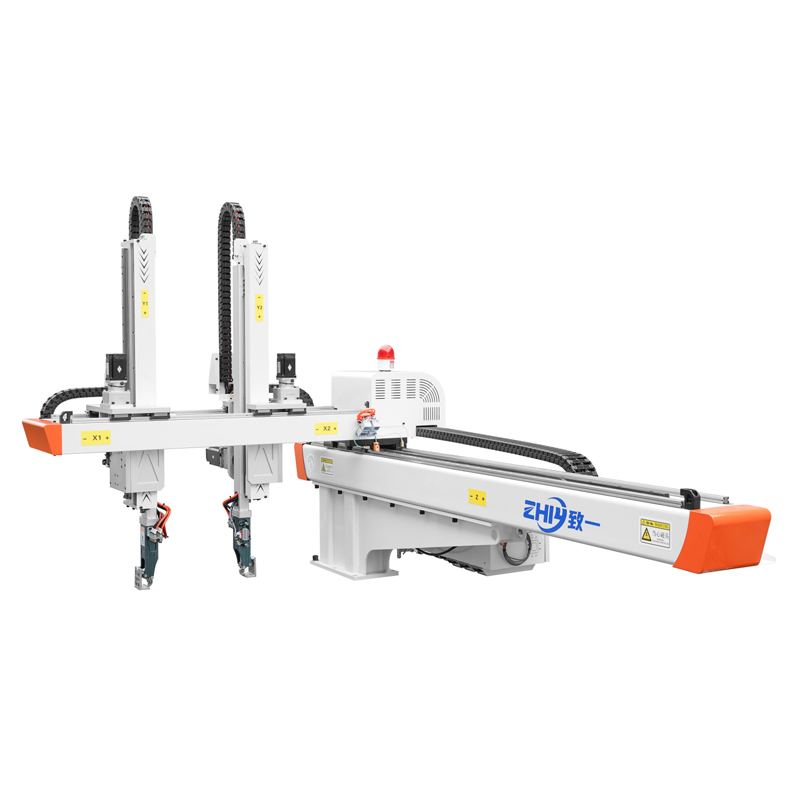
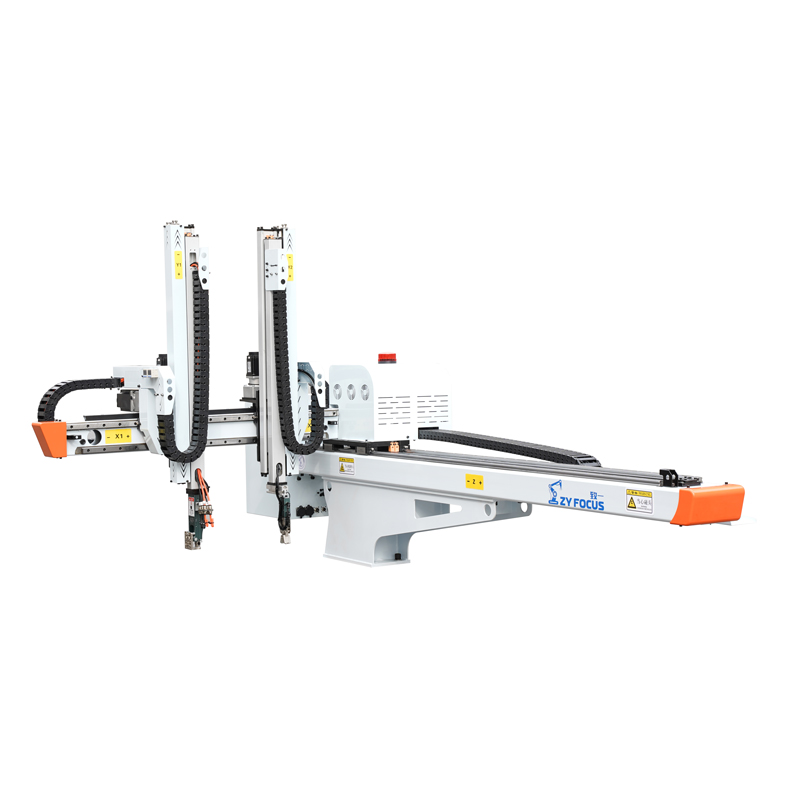
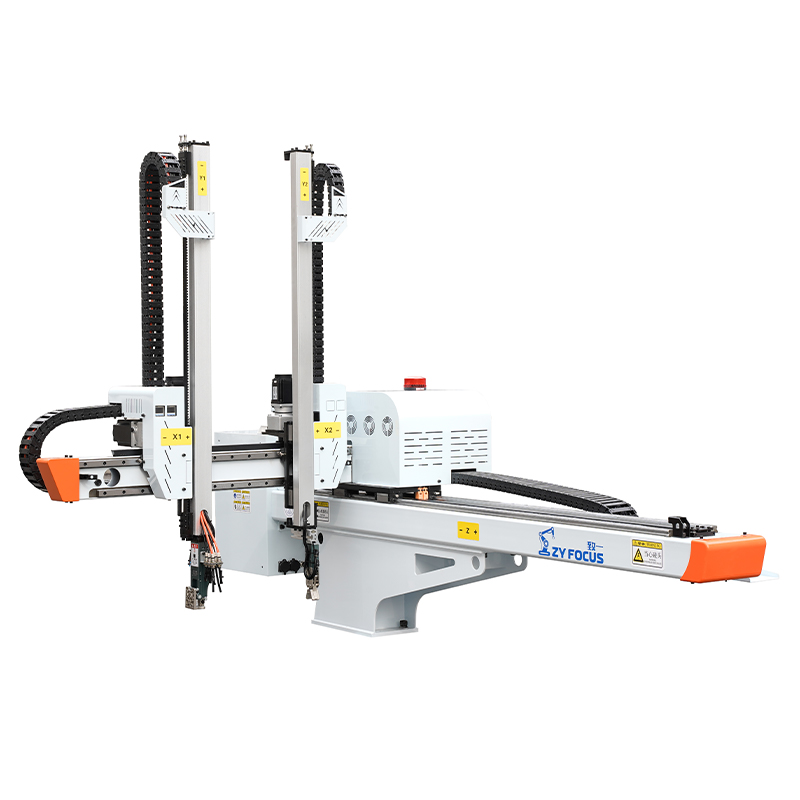
Five Axis Servo Double Arm Single Section Robot: Key Specifications
Five Axis Servo Double Arm Single Section Robot: Key Specifications
Table of Contents
- Understanding Five Axis Servo Double Arm Single Section Robot Basics
- Core Mechanical & Electrical Standard Specifications
- Breakdown of 5-Axis Servo Motion Performance Parameters
- Single Section Arm Design Advantages & Corresponding Spec Limits
- Double Arm Structure Functional Parameter Differences
- Certified Safety & Control System Specifications
- Matching Injection Molding Machine & Workshop Layout Reference
- How To Compare Specs For Your Production Demand
- Common Industry Application Spec Matching Cases
- Frequently Asked Questions About Robot Specifications
- Conclusion
Understanding Five Axis Servo Double Arm Single Section Robot Basics
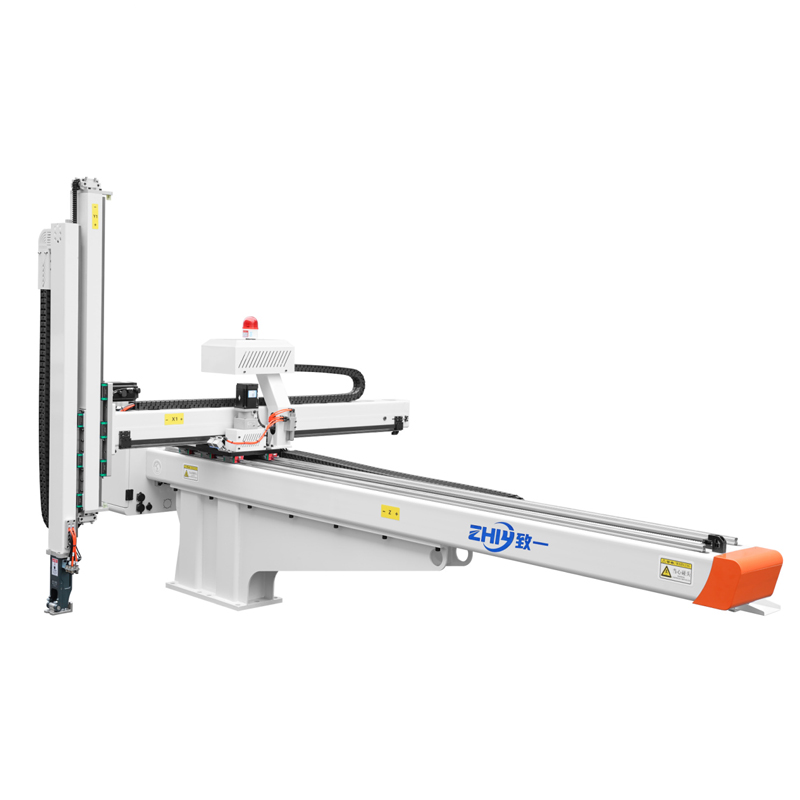
For injection molding manufacturers looking to upgrade automated workflows, five-axis servo double arm single section robots stand out as a flexible, space-efficient automation solution tailored for complex mold production. Unlike basic 3-axis manipulators limited to linear movement, the 5-axis full servo design adds independent servo-driven pitch and rotation axes, delivering multi-angle positioning for insert embedding, product flipping, stacking and multi-station sorting tasks.
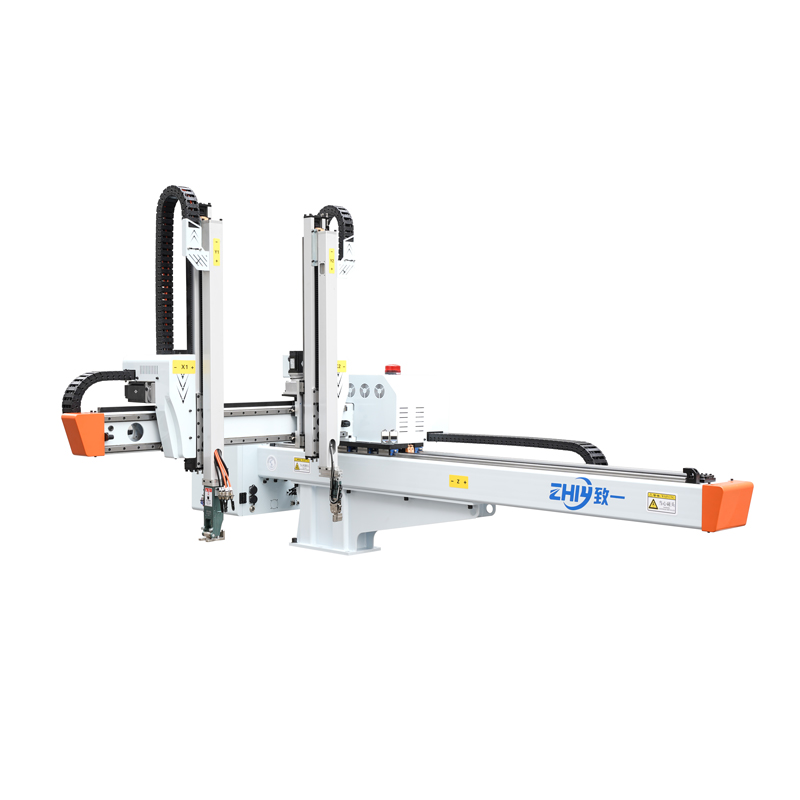
The robot integrates a double-arm (main arm + runner sub-arm) single-section vertical arm structure. Single-section arm layout distinguishes it from telescopic double-section robots: it features an integrated straight vertical beam instead of retractable dual-stage arms, prioritizing faster response speeds, simpler mechanical maintenance and stable horizontal installation for factories with sufficient overhead clearance.
All five motion axes—traverse, crosswise, vertical, servo side pitch (A-axis), servo rotation (C-axis)—adopt full AC servo motor drive, eliminating pneumatic cylinder positioning errors and delivering consistent precision during round-the-clock mass production. This robot model is widely adopted for 3C electronics, household appliances, medical plastic parts and automotive small component molding factories globally.
Core Mechanical & Electrical Standard Specifications
This section lists universal standard spec parameters for mainstream five-axis servo double arm single section robot models, serving as a direct reference for procurement engineers to match production requirements:
| Specification Item | Standard Parameter Range | Supplementary Explanation |
|---|---|---|
| Applicable Injection Molding Machine | 80T – 260T Horizontal IMM | Custom traverse stroke supports expansion to 320T machines |
| Max Payload (End Effector Included) | 3kg – 6kg | 3kg for micro precision parts; 5–6kg for medium-sized plastic housings |
| Traverse Horizontal Stroke | 1300mm – 1800mm | Modular customization by 100mm increments |
| Vertical Single Section Stroke | 700mm – 1000mm | Single fixed beam, no secondary retraction structure |
| Main/Sub Arm Crosswise Stroke | 370mm – 650mm | Synchronized servo drive for both arms |
| Rated Working Air Pressure | 4–6 bar | Stable air supply required for vacuum suction and gripper actuation |
| Single Cycle Air Consumption | 7–10 NL/cycle | Compatible with standard factory central air supply systems |
| Input Power Supply | Single Phase AC 220V 50/60Hz | Optional three-phase 380V configuration for heavy-load customized models |
| Rated Power Consumption | 2.8kVA – 3.5kVA | Lower energy loss vs dual-section five-axis robots |
| Net Machine Weight | 310kg – 360kg | Compact frame design, easy overhead installation on injection molding machines |
| International Compliance Certifications | ISO9001, CE | Control system supports Euromap 12 / Euromap 67 communication protocol |
Breakdown of 5-Axis Servo Motion Performance Parameters
Motion performance specs directly determine production cycle efficiency and product yield, which are core evaluation indicators for industrial procurement:
- Repeat Positioning Accuracy: ±0.02mm – ±0.05mm Full closed-loop servo control eliminates position drift, ideal for precision insert molding and thin-wall plastic parts that demand scratch-free surface output.
- Minimum Mold Pickout Time: 1.2s – 1.6s Single-section rigid beam reduces mechanical retraction delay, outperforming double-section telescopic robots in short-cycle small-part production.
- Dry Cycle Empty Running Time: 5.0s – 6.8s Synchronized servo control for five axes shortens idle movement intervals, effectively matching injection molding machine cycle times below 15s.
- A-Axis Servo Pitch Rotation Range: 0° – 90° Independent servo adjustment without cylinder travel limitation, supporting horizontal flipping of finished products for stacking or secondary processing.
- C-Axis Servo Full Rotation Range: 0° – 360° Free-angle rotation for complex mold undercut parts, eliminating manual secondary repositioning after product removal.
- Maximum Axis Instantaneous Speed:
- Traverse axis: 1.2m/s
- Vertical single-section axis: 1.0m/s
- Crosswise main/sub arm axis: 0.8m/s
Single Section Arm Design Advantages & Corresponding Spec Limits
The single-section vertical beam is the defining structural feature of this robot model, with clear performance strengths and applicable spec boundaries that buyers need to clarify before ordering:
Core Advantages Supported By Single Section Specs
- Higher structural rigidity: Integrated single beam reduces mechanical vibration during high-speed operation, stabilizing positioning accuracy under continuous 24-hour production.
- Lower maintenance threshold: Fewer sliding rail and transmission components vs dual-section arms; lubrication and wear part replacement cycles extend by 40%.
- Faster dynamic response: No secondary telescopic clearance gap, cutting pickout waiting time for high-speed thin-wall molding.
Spec Application Limits of Single Section Layout
- Overhead height requirement: Minimum factory ceiling clearance above injection molding machine needs to exceed vertical stroke + 300mm safety margin; for workshops with height below 2.6m, dual-section robot models are more suitable.
- Vertical stroke ceiling: Standard single-section vertical travel cannot exceed 1000mm; molds requiring vertical depth over 1000mm must select telescopic double-section variants.
- Load upper limit: Due to fixed beam bearing design, maximum payload cannot exceed 6kg; heavy products over 8kg require five-axis double-arm dual-section heavy-duty robots.
Double Arm Structure Functional Parameter Differences
The double arm setup (main finished product arm + runner sub-arm) carries independent spec configurations for separate production scenarios:
- Standard Synchronous Double Arm Spec (Three-Plate Mold Default)
- Main arm: Equipped with vacuum suction cup + mechanical gripper, full payload capacity, responsible for finished part extraction
- Sub arm: Smaller stroke and lightweight fixture, dedicated to separating runner waste, synchronized movement with main arm without extra cycle delay
- Optional Dual Main Arm Custom Spec (Stack Mold / Dual-Cavity Co-Production)
- Both arms adopt identical stroke and load parameters, supporting simultaneous removal of two finished products from stacked molds
- Dual independent C-axis rotation servo motors, enabling separate angle adjustment for two workpieces
- Pneumatic Auxiliary Sub-Arm Economy Spec (Cost-Sensitive Two-Plate Mold Lines)
- Main arm full five-axis servo drive; sub-arm partial pneumatic actuation, reducing total equipment investment for simple runner removal workflows
Certified Safety & Control System Specifications
Global manufacturers prioritize standardized safety and control specs to meet cross-border factory compliance requirements:
Control Hardware Specs
- 10-inch multi-language touchscreen controller: English, Spanish, Vietnamese, Thai pre-installed, supporting offline program editing
- Built-in 2000+ sets mold recipe storage space, one-click parameter recall for product switching
- Drive-integrated servo system: Simplified wiring, strong anti-interference performance for factory environments with high welding or frequency conversion equipment
Safety Protection Standard Specs
- Multi-layer hardware collision detection: Real-time current feedback for each servo axis, automatic power cut within 0.01s when abnormal resistance is detected
- Mold interlock signal output: Hard-wired safety signal linkage with injection molding machine, robot locked when mold is open abnormally
- Emergency stop circuit dual-channel design: Compliant with EU CE machinery safety standards
- Overload, overvoltage, overcurrent automatic protection program pre-installed in control system
Matching Injection Molding Machine & Workshop Layout Reference
Procurement teams can quickly complete model matching based on the following spec matching rules:
- Machine Tonnage Matching
- 80T–160T small IMM: Select vertical stroke 700mm, max payload 3kg single-section five-axis double arm robot
- 180T–260T medium IMM: Select vertical stroke 900–1000mm, max payload 5–6kg model
- Workshop Layout Matching
- Overhead clearance ≥ 3m: Single-section robot recommended for faster cycle and easier maintenance
- Overhead clearance < 2.6m: Switch to double-section five-axis robot series
- Production line with automated conveyor / packaging station: Reserve extra 200mm traverse stroke in advance during spec customization
- Mold Type Matching
- Three-plate mold: Standard main + runner sub double arm configuration
- Stack mold / dual-color mold: Custom dual-main arm equal load spec
- Insert molding process: Upgrade full 360° C-axis rotation servo as standard configuration
How To Compare Specs For Your Production Demand
When evaluating robot suppliers’ specification sheets, focus on these four core comparison dimensions to avoid mismatched equipment investment:
- Motion cycle indicators: Prioritize pickout time and dry cycle data; shorter cycle parameters directly lift daily production output
- Payload margin: Reserve 20% extra load capacity beyond actual workpiece + fixture weight to prevent long-term precision attenuation
- Axis configuration consistency: Confirm all five axes adopt independent AC servo drive, reject mixed servo-pneumatic schemes for complex molding processes
- Communication compatibility: Verify control system supports Euromap protocol to avoid signal connection barriers with imported injection molding machines
Common Industry Application Spec Matching Cases
Case 1: 3C Precision Connector Molding
- Matched Spec: 80T IMM, vertical stroke 700mm, max payload 3kg, repeat accuracy ±0.02mm, full 5-axis servo
- Core Spec Requirement: High positioning accuracy for metal pin insert embedding, 360° C-axis rotation for automatic product sorting
Case 2: Household Appliance Small Housing Production
- Matched Spec: 220T IMM, vertical stroke 900mm, max payload 5kg, synchronous main/sub double arm
- Core Spec Requirement: Simultaneous finished part and runner removal to shorten overall molding cycle
Case 3: Disposable Medical Plastic Parts
- Matched Spec: 160T IMM, food-grade aluminum alloy beam optional spec, CE full machinery certification
- Core Spec Requirement: Low vibration stable operation to avoid burrs on medical thin-wall products
Frequently Asked Questions About Robot Specifications
Q1: What is the core difference between single-section and double-section five-axis double arm robots in specs?
A: Single-section adopts an integrated fixed vertical beam with faster speed and lower maintenance cost, limited vertical stroke and factory height requirements. Double-section uses retractable two-stage arms, supporting longer vertical travel and low-ceiling workshops, with slightly longer pickout cycle time.
Q2: Can the maximum payload spec be upgraded after purchasing standard models?
A: Standard frame load structure cannot be modified post-delivery. If heavier workpieces are planned for future production, request upgraded 6kg payload spec during initial customization.
Q3: Does the five-axis robot’s control system support remote parameter adjustment?
A: Standard models reserve remote debugging interface spec; optional industrial network module enables overseas after-sales teams to remotely edit mold programs and troubleshoot without on-site visits.
Q4: What certification specs are mandatory for factory deployment in EU markets?
A: CE machinery safety certification is compulsory, and the control system must carry Euromap 12/67 communication function spec to connect mainstream European injection molding brands.
Conclusion
The five-axis servo double arm single section robot’s complete specification system covers mechanical structure, motion performance, control safety and scene matching data, forming the core standard for injection molding factory procurement evaluation. Its single-section rigid beam and full five-axis servo double arm layout balance production speed, positioning precision and daily maintenance costs, making it a cost-effective automation choice for 80T–260T horizontal injection molding lines with sufficient workshop overhead clearance.
Before finalizing orders, cross-check vertical stroke, payload, axis rotation range and communication protocol specs against mold size, workpiece weight, workshop space and target export market compliance standards to ensure the robot fully matches long-term mass production demands.