
Leave Your Message
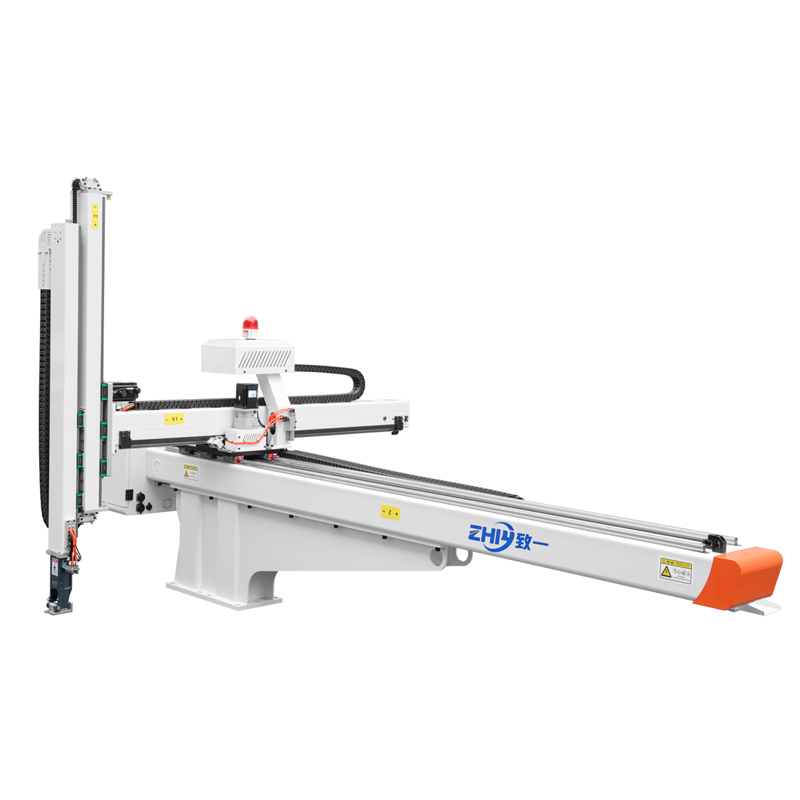
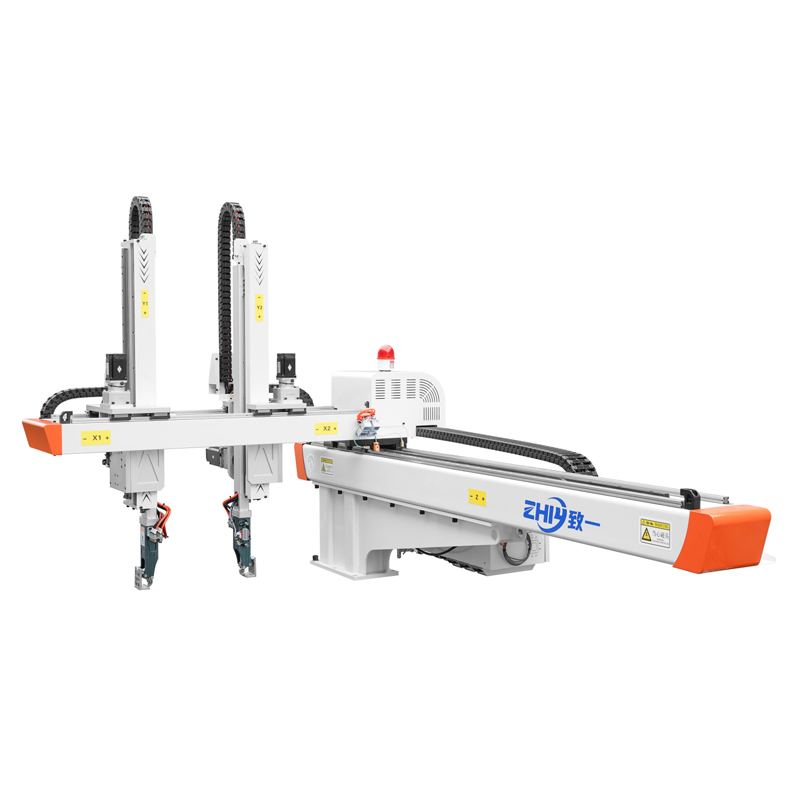
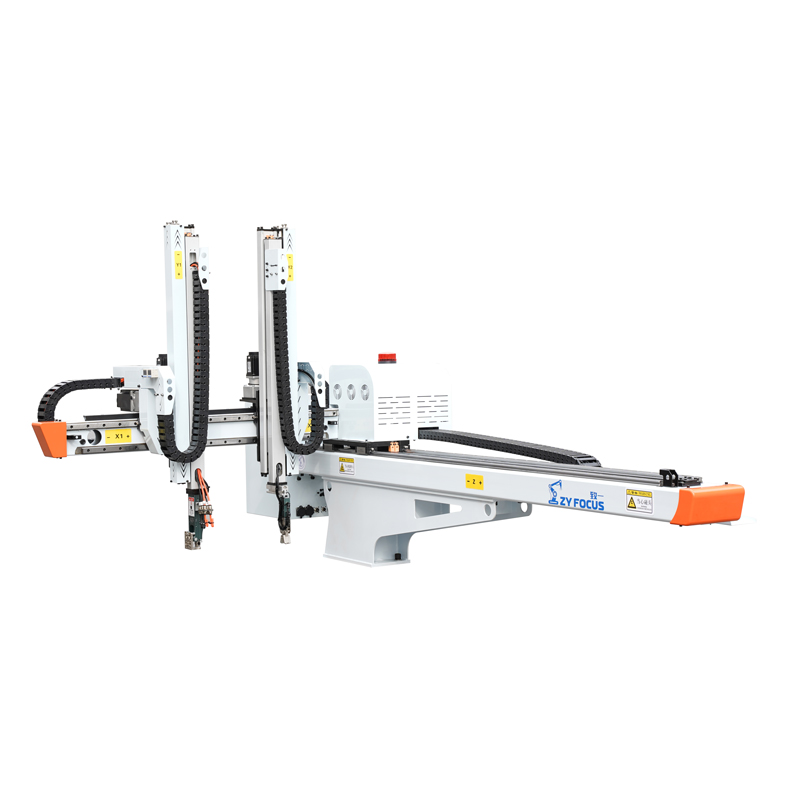
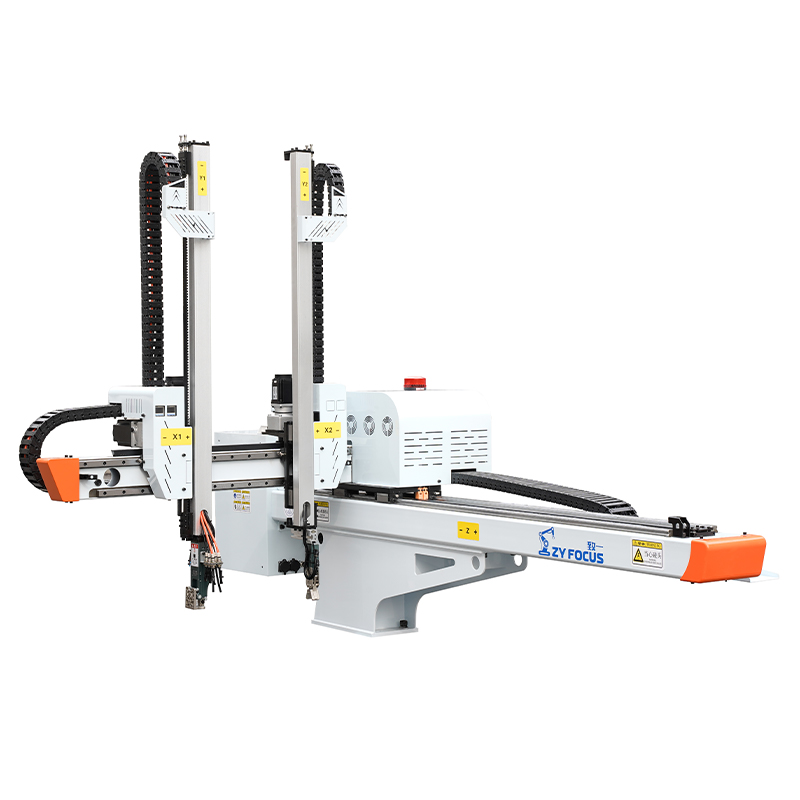
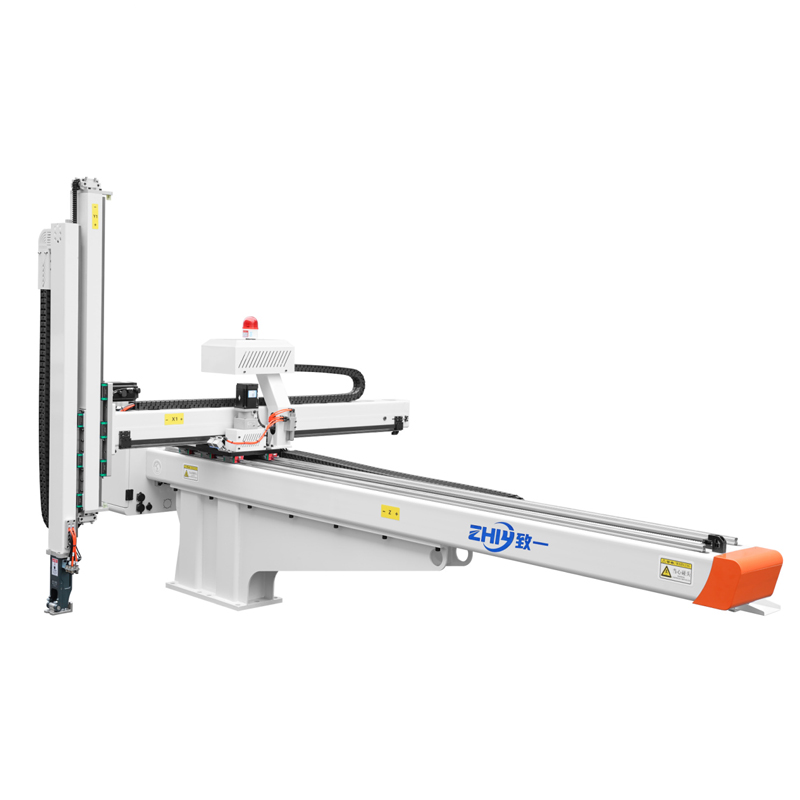
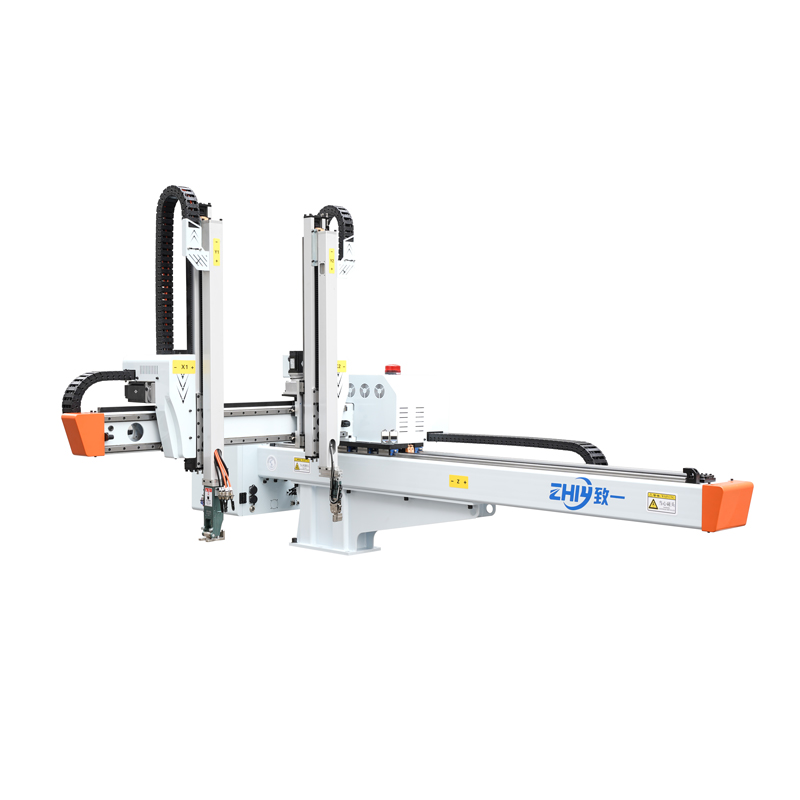
Five Axis Servo Double Arm for Industrial Equipment Housings
Five Axis Servo Double‑Arm for Industrial Equipment Housings
Producing high‑quality industrial equipment housings through injection molding brings a unique set of manufacturing challenges. These housings protect sensitive internal components, demand consistent surface quality, precise dimensional control, and stable cycle times across high‑volume production runs. Many manufacturers rely on traditional three‑axis robotic systems, yet these setups often struggle with complex geometries, multi‑step post‑molding tasks, and flexible part handling required for modern housing production. That is where five‑axis servo double‑arm robotic systems step in as a practical automation solution for injection‑molded industrial housing projects.
Industrial equipment housings cover a broad range of products: electrical enclosures, device outer shells, control unit casings, and protective covers for machinery. Most of these parts feature angled surfaces, undercuts, irregular contours, and strict cosmetic requirements. Even minor scratches, improper part orientation during ejection, or inconsistent demolding can create high scrap rates and raise overall production costs. For procurement specialists and plant managers evaluating automation upgrades, understanding how five‑axis double‑Arm Robots solve these real‑world pain points helps make better capital‑equipment decisions.
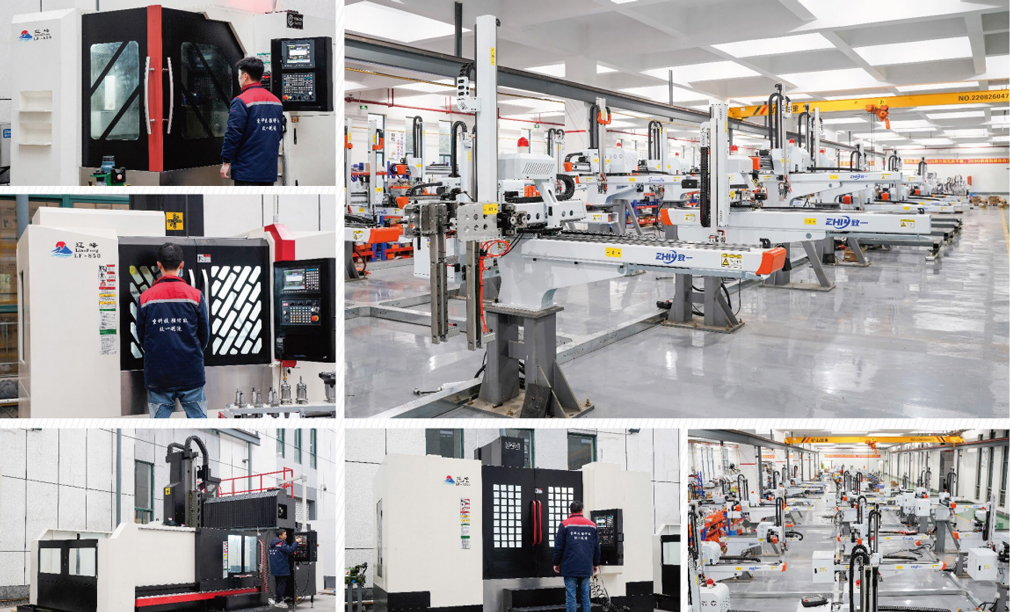
What Makes Five‑Axis Servo Double‑Arm Robots Different From Standard Three‑Axis Models
Standard three‑axis Injection Robots deliver reliable linear movement: horizontal travel, vertical lifting, and in‑out motion into the mold. They work well for simple flat‑shaped parts with straightforward demolding paths. But they lack rotational freedom at the wrist, creating hard limits when working with complex housings.
A five‑axis servo double‑arm system adds controlled rotational movement on top of linear axes, paired with two independently operable Robotic Arms. This design unlocks two major capabilities unavailable on basic single‑arm three‑axis units.
First, multi‑angle wrist rotation lets manufacturers tilt, spin, and orient finished housings while still inside the mold working envelope. For contoured or deeply recessed equipment housings, the robot can adjust angles during part extraction to clear mold inserts, preventing surface scuffs and part damage that would otherwise generate scrap.
Second, the dual‑arm configuration enables parallel task execution within one injection cycle. One arm can extract the finished housing component, while the second arm handles sprues removal, insert placement, or pre‑stacking of finished parts. Instead of completing actions sequentially, multiple workflow steps happen inside the same machine cycle window, shortening overall cycle time without modifying the injection molding machine itself.
This difference becomes especially visible with mid‑to‑large‑size industrial housings. Many housing projects combine moderate weight with complex shapes; rigid linear‑only robot paths increase collision risks with mold features. Five‑axis coordinated motion generates curved, adjustable travel paths that closely mimic carefully controlled manual handling, but with fully repeatable, 24‑hour consistent performance.
Key Benefits for Industrial Equipment Housing Manufacturing
Reduced Scrap From Surface Damage
Cosmetic and functional surfaces on equipment housings cannot tolerate scratches, dents, or deformation during demolding. Operators working manually can adjust angles intuitively, but human consistency drops across long shift hours. Three‑axis robots follow fixed straight paths, which may drag housing edges across mold surfaces on complex molds.
Five‑axis servo double‑arm robots calculate adjusted approach and exit angles for every production cycle. Housings rotate away from protruding mold features during extraction. For procurement teams, lower scrap directly improves overall part cost per unit, one of the most important KPIs for housing mass production.
Higher Throughput Through Parallel Cycle Work
When producing industrial housings, typical post‑molding tasks include removing runners, sorting finished parts, preparing inserts for the next shot, and placing components onto conveyors or stacking stations.
On single‑arm robots, these jobs queue up after part take‑out, adding seconds onto every cycle. With double‑arm five‑axis hardware, secondary operations run concurrently with part removal. Many production lines report cycle‑time reductions ranging from 20 % to 30 % on complex housing molds, without needing faster injection‑machine settings. For high‑volume housing orders, this throughput gain translates directly into higher daily output from existing molding presses.
Better Adaptability for Mixed‑Model Production
Many factories produce multiple variants of industrial equipment housings on shared injection presses. Different housing designs call for different gripping points, different take‑out angles, and varied post‑molding handling workflows.
Five‑axis double‑arm systems store multiple motion profiles. Operators can switch between housing part recipes through the teach pendant, adjusting rotation angles, gripper positions, and dual‑arm task allocation without major mechanical rework. This flexibility is valuable for facilities handling mixed‑batch orders, common among contract manufacturers building equipment housings for multiple OEM clients.
Stable Repeatability for Dimensional Consistency
Equipment housings often require tight tolerances for assembly fit: mounting bosses, sealing grooves, and connector cutouts must align correctly for later assembly steps. Poor robot repeatability can introduce position‑related stress during part removal, creating hidden warpage that only shows up during quality‑control checks.
Well‑engineered five‑axis servo double‑arm systems maintain tight repeat positioning accuracy across continuous shifts. Servo‑controlled rotational axes ensure identical orientation every time a housing is picked and placed, minimizing induced‑stress defects that cause post‑molding warping.
Real‑World Application Scenarios for Equipment Housings
Not every housing project requires five‑axis double‑arm automation. Understanding fit‑and‑mis‑fit use‑cases helps procurement teams avoid over‑specifying or under‑specifying robotic hardware.
Ideal Use‑Cases
- Contoured electrical enclosures with deep undercuts and angled side walls
- Mid‑to‑large device housings where both finished part and heavy sprue material need removal within one cycle
- Molds requiring metal insert placement before injection, paired with housing take‑out after molding completes
- High‑mix production lines running 2 or more distinct housing designs on the same injection‑molding cell
- Projects with strict cosmetic surface requirements where scratch‑related scrap creates high financial losses
Situations Where Simpler Robots May Suffice
For small‑sized, simple flat‑profile housings with uncomplicated straight‑path demolding, a standard three‑axis single‑arm robot often delivers sufficient performance at lower capital expenditure. When secondary tasks are minimal and scrap rates are already under tight control, upgrading to five‑axis double‑arm may not deliver sufficient ROI to justify investment.
Critical Specification Points to Review During Sourcing
When evaluating five‑axis servo double‑arm robots for housing production, procurement teams should focus on practical application‑oriented parameters rather than just marketing‑sheet headline numbers.
- Payload under dynamic motion Check rated working payload for each arm under moving conditions, not only static weight. Industrial housings plus gripper assemblies add combined mass; under‑specified payload causes vibration and positioning drift during high‑speed cycles.
- Wrist rotation range and synchronization performance Confirm the rotation range of servo wrist axes, and test how smoothly multi‑axis interpolation works. Jerky rotation can transmit stress onto newly molded, still‑warm housing parts. Smooth coordinated motion is far more important than maximum rotation‑angle numbers alone.
- Working stroke matching your injection‑press layout Horizontal reach, vertical stroke, and entry depth must match your mold opening dimensions and surrounding factory layout. Even high‑performance hardware delivers poor results if travel limits create hard constraints for your housing molds.
- Software usability for housing workflow programming Programming complex dual‑arm synchronized motion should not demand advanced robotics expertise. Look for intuitive teach‑pendant workflows, template functions for common housing‑production tasks, and offline simulation support. Off‑line simulation allows engineers to test take‑out paths for new housing designs without stopping live production lines.
- Certification and compliance documentation For cross‑border deployment, verify available compliance documentation such as CE and ISO 9001 certification. These documents support site safety audits and smooth customs clearance for equipment shipments.
- After‑sales support and spare‑part accessibility Complex multi‑axis robotic systems benefit greatly from accessible technical support. Evaluate availability of remote diagnostic access, training resources for in‑house technicians, and lead‑times for critical spare‑parts. Long‑term operational cost depends heavily on service structures, not only upfront purchase price.
ROI Considerations for Procurement Teams
Calculating return‑on‑investment for five‑axis double‑arm robots for equipment housings should weigh several tangible factors: scrap‑rate reduction, cycle‑time improvement, labor savings from eliminating manual part‑tending, and ability to take on more complex housing orders that competitors cannot handle with older automation.
Upfront purchase cost for five‑axis double‑arm systems sits higher than three‑axis alternatives. However, for manufacturers regularly producing complex, high‑margin industrial housings, reductions in scrap and higher line utilization often shorten pay‑back periods significantly. Procurement teams should build business‑case projections based on their actual housing part specifications, typical scrap rates, and operating shift schedules, rather than relying on generalized vendor ROI estimates.
Final Thoughts
Five‑axis servo double‑arm robotic systems are not universal one‑size‑fits‑all automation, but they deliver distinct advantages for injection‑molded industrial‑equipment‑housing production. Where housings feature complex contours, cosmetic‑critical surfaces, or demand multiple concurrent in‑cycle tasks, these robots solve real pain points that limit older three‑axis robotic hardware.
For procurement and engineering teams, the best approach is to map your actual housing portfolio first. Document part geometries, existing scrap causes, cycle‑time bottlenecks, and mix‑volume requirements. Compare those requirements side‑by‑side against robot capabilities. When application needs align, five‑axis double‑arm automation becomes a powerful tool to stabilize quality, boost output, and expand the range of housing projects your production facility can competitively deliver.