
Leave Your Message
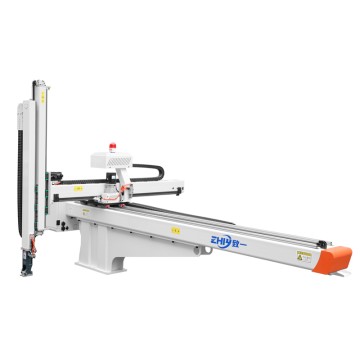
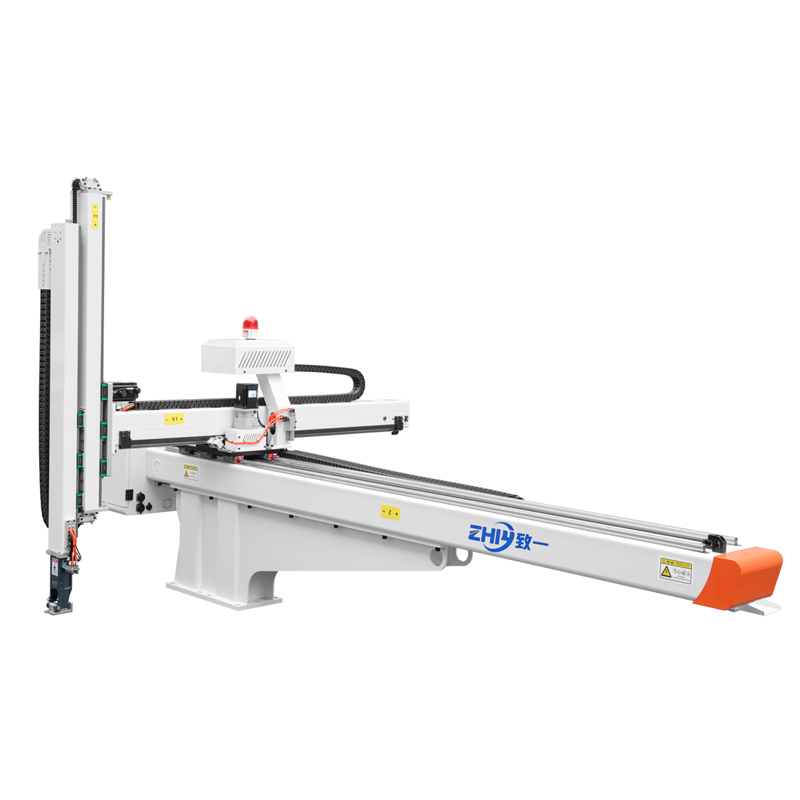
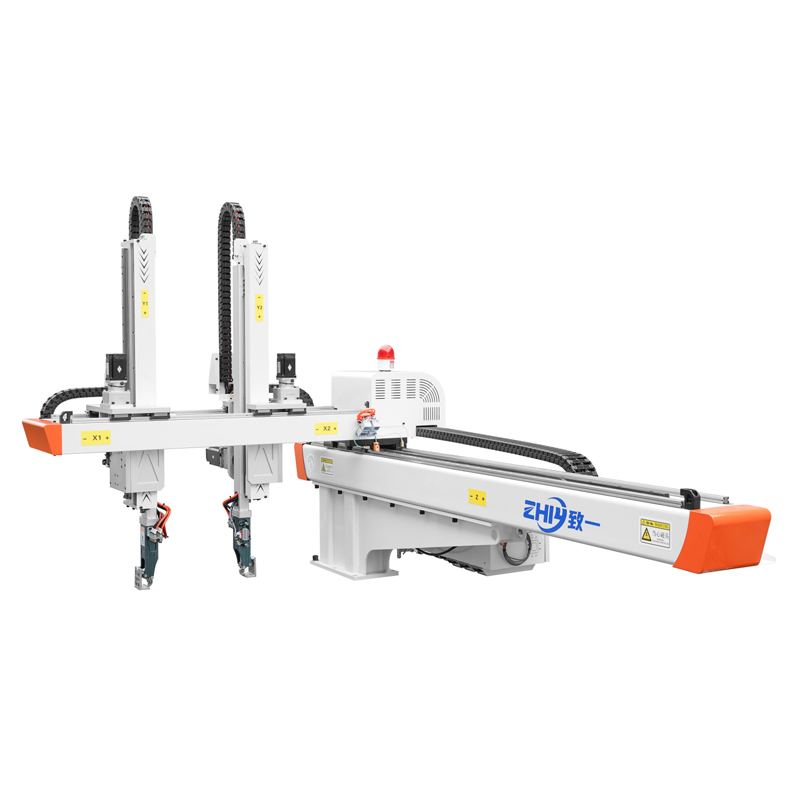
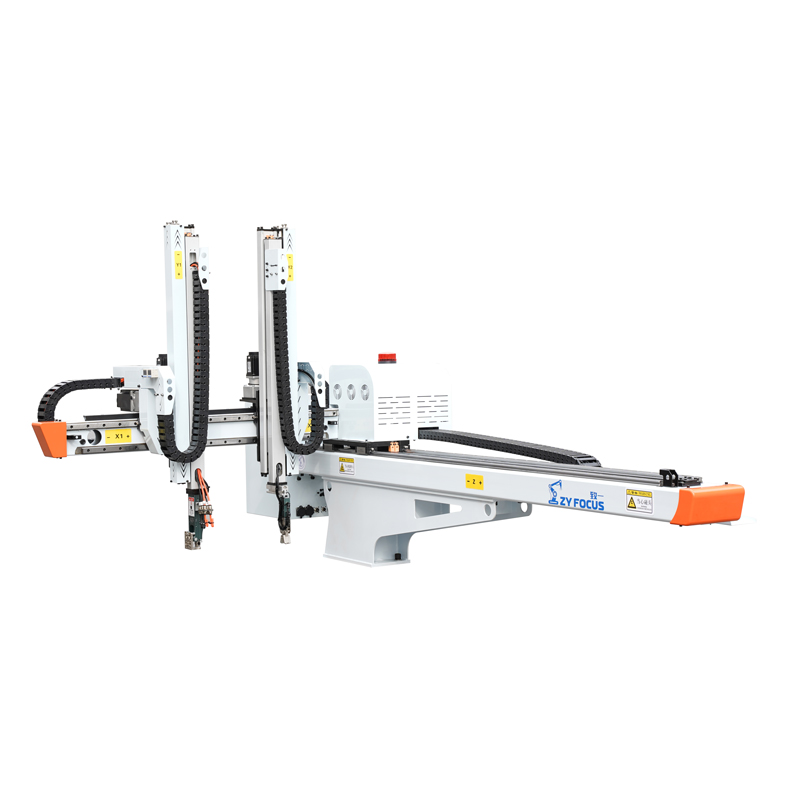
Five Axis Servo Double Arm for Automotive Lighting Components
Five‑Axis Servo Double‑Arm Robots for Automotive Lighting Components
Meta description:Automotive lighting molding faces strict cosmetic, cycle‑time and tolerance demands. Explore how five‑axis servo double‑arm robots resolve real‑world production pain points for lens, housing and lamp‑assembly manufacturing.
Table of Contents
- Understanding Unique Production Challenges of Automotive Lighting Components
- What Makes Five‑Axis Servo Double‑Arm Robots Stand Apart for Light‑Part Molding
- Core Operational Benefits in Automotive Light Manufacturing Workflows
- Typical Application Scenarios for Automotive Lighting Production
- Key Technical Criteria for Buyer Evaluation
- Common Integration Pitfalls to Avoid
- Real‑World Performance Benchmarks from Production Floors
- Frequently Asked Questions
- Conclusion
Understanding Unique Production Challenges of Automotive Lighting Components
Automotive lighting parts, including optical lenses, lamp housings, bezel trims and multi‑material over‑molded assemblies, belong to one of the most demanding segments within injection‑molding manufacturing. Unlike general plastic goods, these components must satisfy dual requirements of strict optical surface quality and rigid dimensional tolerances set by automotive OEM specifications.
Optical lenses are commonly produced from PMMA, PC and other transparent engineering polymers. Even minor scratches, indentations or residual stress marks created during part removal will render finished units defective. Many lamp molds use multi‑cavity layouts, three‑plate structures or insert‑over‑molding workflows. Traditional automation often struggles to handle simultaneous part extraction, sprue separation and insert placement without extending overall cycle time.
Production teams regularly face these practical pain points:
- Fragile transparent optics are easily marred by improper gripping or awkward robot trajectories.
- Separate handling of finished parts and sprues creates extra steps that stretch molding cycle times.
- Multi‑angle reorientation is needed post‑molding for cooling staging, visual pre‑inspection or downstream feeding.
- Frequent product‑family change‑outs demand flexible reprogramming instead of hardware‑heavy retooling.
- Long‑run mass production requires stable repeatability across millions of shots to keep scrap rates low.
Standard three‑axis single‑arm robots can complete basic pick‑and‑drop tasks, yet they lack sufficient degrees of freedom for complex rotating, flipping and dual‑task synchronous operations required by modern automotive lighting production.
What Makes Five‑Axis Servo Double‑Arm Robots Stand Apart for Light‑Part Molding
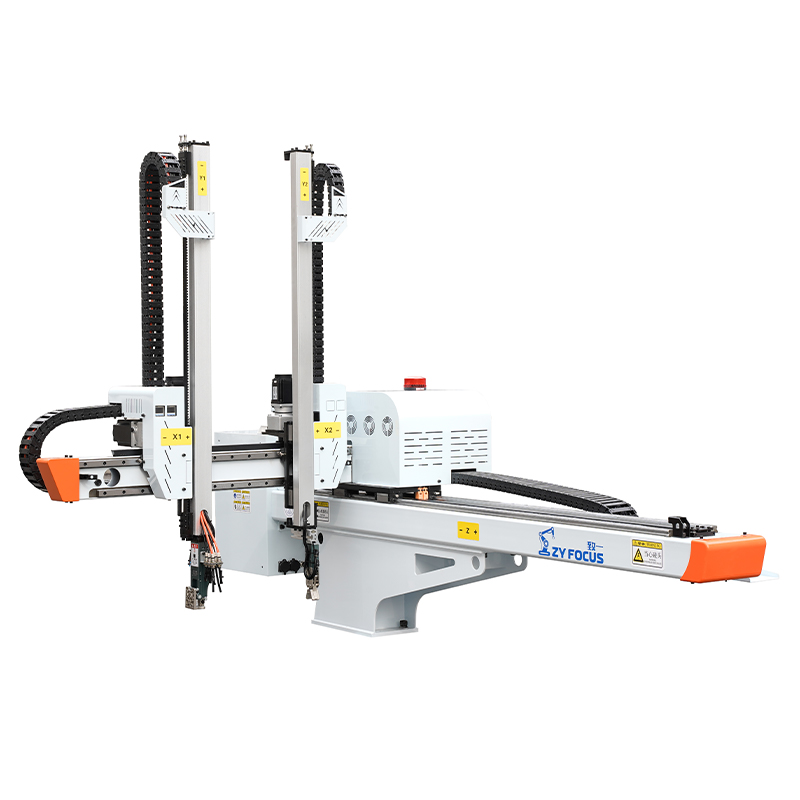
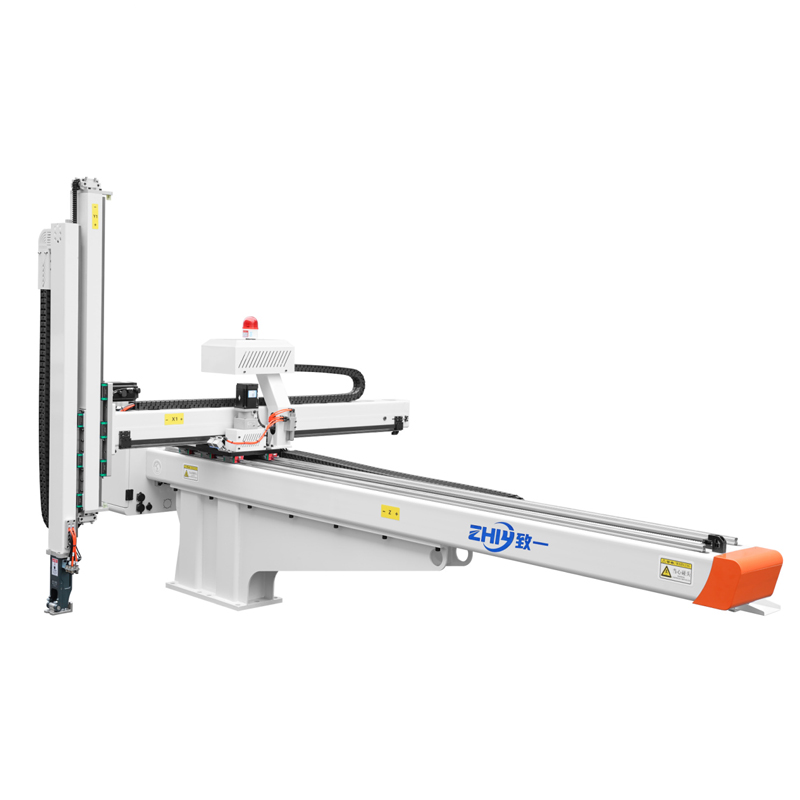
A five‑axis servo double‑arm Robot Builds upon three‑axis linear movement and adds two extra servo‑driven rotational axes. The dual independent arms operate under one unified machine frame, rather than two separate robotic units. This mechanical layout delivers two critical capabilities for lighting production: multi‑angle posture adjustment and parallel task execution inside one mold opening window.
Single‑arm three‑axis solutions can only follow straight‑line movement paths. When dealing with contoured lamp lenses or deep‑cavity lamp housings, they may require extra mold‑opening distance or risk surface contact. Five‑axis servo control allows end‑of‑arm tooling to rotate and tilt along custom trajectories. The Robot Can navigate narrow mold spaces, pull optical parts out at optimized angles, and avoid scraping high‑gloss cosmetic surfaces.
The double‑arm configuration enables each arm to carry dedicated end‑of‑arm tooling. One arm can gently extract finished lighting components with vacuum suction tools built for transparent optics, while the second arm simultaneously removes sprues and runners. Both actions complete within the same mold‑open interval, eliminating extra waiting periods that add to cycle duration.
All axes run by full servo drive, rather than mixed pneumatic‑servo combinations. Servo control delivers adjustable acceleration, deceleration and motion profiles. Operators can tune movement speed to match brittle optical materials, reducing vibration‑induced micro‑cracks on lens surfaces.
Core Operational Benefits in Automotive Light Manufacturing Workflows
Higher Overall Equipment Efficiency without Sacrificing Part Quality
In automotive lighting molding, every second saved during mold‑open sequences directly lifts overall equipment effectiveness (OEE). With dual‑arm parallel workflows, part removal and sprue handling happen concurrently. Factories report cycle‑time reduction ranging from 8%‑18% on multi‑cavity lamp molds compared to sequential single‑arm setups.
Since vacuum suction end‑effectors can be precisely controlled through servo motion, contact pressure on delicate transparent surfaces stays consistent. This helps lower cosmetic‑related reject rates, which is extremely valuable for high‑cost optical polymer workpieces.
Flexible Process Expansion for Complex Molding Processes
Beyond basic take‑out jobs, five‑axis double‑arm platforms support value‑added steps right at the molding cell. Common extended workflows include:
- Pre‑loaded metal or plastic insert placement before mold closure for composite lamp assemblies.
- Post‑mold flipping and orientation for controlled stress‑relief cooling trays.
- Direct hand‑off of finished parts to vision‑inspection stations immediately after extraction.
Instead of installing multiple standalone automation devices, manufacturers can implement these tasks through robot programming adjustments. This improves floor‑space utilization, especially for retrofitted production lines with limited available area.
Stable Repeatability for Long‑Run Automotive‑Grade Production
Automotive component projects typically run high volumes across multiple production shifts over several years. Repeat positioning accuracy directly governs consistency of insert placement and part handling. Five‑axis servo double‑arm systems maintain tight positioning repeatability over millions of operating cycles, helping production stay within OEM dimensional‑acceptance windows.
Servo‑based motion also delivers predictable wear patterns. Maintenance teams can schedule preventative service according to runtime metrics instead of reacting to unexpected breakdowns that halt automotive‑supply deliveries.
Improved Workplace Safety and Labor Allocation
Manual demolding of hot lamp components carries burn risk, while transparent lens handling demands very careful operator attention. Deploying automated take‑out removes operators from high‑risk zones. Existing staff can shift toward higher‑value responsibilities: process monitoring, quality sampling and tooling change‑over management.
Typical Application Scenarios for Automotive Lighting Production
Multi‑cavity Lens and Lamp‑Housing Mass Production
For high‑volume series production of headlight lenses, taillight housings and signal‑lamp bezels, the double‑arm executes finished‑part removal and sprue stripping in one mold‑open window. This fits most standard horizontal injection‑molding machines used within automotive tier‑supplier workshops.
Insert Over‑molding for Hybrid Lamp Components
Many modern lamp units combine plastic housing with metal contact brackets or light‑guide inserts. One robotic arm precisely positions inserts into mold cavities, while the other handles completed molded assemblies after each shot. This integrated sequence removes separate manual insert‑loading stations from the cell layout.
Post‑mold Thermal‑Stabilization Handling for Thick‑Wall Optics
Thick PMMA optical lenses retain significant internal heat right after ejection. Improper stacking can introduce warpage. The five‑axis rotational capability lets the robot orient freshly‑molded lenses and gently set them onto temperature‑controlled cooling racks, without introducing surface marks from mechanical clamping jaws.
Small‑batch Mixed‑model Lamp‑Part Manufacturing
When production runs mix several lamp‑part variants for different vehicle platforms, operators switch stored robot programs instead of undertaking major mechanical rework. End‑of‑arm tooling can use quick‑change interfaces. This supports the mixed‑model production modes common among automotive component subcontractors.
Key Technical Criteria for Buyer Evaluation
When assessing five‑axis servo double‑arm robot options for automotive lighting projects, procurement teams should focus on these practical evaluation points:
- Repeat positioning accuracy: For optical lighting workpieces, look for documented repeatability performance data. Surface‑sensitive lens applications demand stable precision to avoid insert mis‑alignment or accidental tool‑part collision.
- Payload matching: Calculate total weight including finished part, sprue material and full end‑of‑arm tool assembly. Select robot payload with at least 20‑30% safety margin above maximum working load.
- Motion‑profile configurability: Confirm the controller supports adjustable acceleration‑deceleration tuning. Gentle, low‑shock movement profiles are essential for scratch‑free transparent‑part handling.
- Molding‑machine communication compatibility: Verify native support for Euromap‑standard signal interfaces. Reliable handshake signals between robot and injection press prevent collisions caused by mis‑timed motion.
- End‑of‑arm tooling adaptability: Confirm whether suppliers can collaborate on custom vacuum‑based gripping tooling optimized for fragile optical surfaces. Generic mechanical clamps frequently create cosmetic defects on lamp lenses.
- Certification and documentation: Check for internationally‑recognized equipment certification and complete operation, maintenance and spare‑part documentation, important for automotive‑supplier quality‑audit requirements.
- After‑sales support accessibility: Spare‑part lead‑times, remote‑diagnosis capacity and application‑engineering assistance should factor into purchasing decisions, given automotive‑supply delivery commitments.
Common Integration Pitfalls to Avoid
Even well‑specified five‑axis double‑arm robots can under‑perform when integration planning overlooks lighting‑specific details. Watch for these frequent mistakes:
Mismatched end‑of‑arm tooling Selecting standard mechanical clamping grippers for transparent PMMA or PC lenses almost guarantees surface scratches. Always prioritize vacuum‑based non‑marking suction layouts, and involve automation suppliers in early tooling‑design discussions.
Insufficient simulation and real‑mold trial validation Virtual 3D path simulation alone cannot catch every potential mold‑interference scenario. Whenever feasible, run actual part‑molding trials using representative molds before final order confirmation. Complex lamp molds often contain protruding slide pins that can collide with robot arms under specific operating conditions.
Ignoring signal‑handshake testing Faulty signal communication between robot controller and injection‑molding machine can trigger unsafe operating states. Validate all interlock signals during commissioning to ensure robot movement only activates after full mold‑open confirmation.
Under‑planning for maintenance access During layout design, preserve service clearance around robot axes and servo components. Tight installation without maintenance room raises long‑term service difficulty and extends unplanned downtime.
Real‑World Performance Benchmarks from Production Floors
Across multiple automotive‑lighting molding installations, five‑axis servo double‑arm robot deployments show consistent real‑world outcomes:
- For multi‑cavity taillight‑housing molds, simultaneous part‑and‑sprue handling cuts mold‑open‑phase duration by 10‑14% versus sequential single‑arm workflows.
- On thick‑wall PMMA lens jobs, properly tuned servo motion profiles reduce cosmetic‑related scrap by roughly 20‑35% compared with older pneumatic‑hybrid automation.
- Insert‑over‑molding lamp‑assembly cells achieve insert‑placement repeatability sufficient to meet typical automotive‑tier‑1 quality standards, eliminating manual insert‑loading stations.
- Program change‑over between different lamp‑part families can complete within minutes when paired with quick‑change end‑of‑arm tooling.
These benchmarks are based on real‑world shop‑floor operation, not ideal lab‑environment conditions. Actual results will shift according to mold layout, material choice, existing injection‑machine performance and end‑tooling design.
Frequently Asked Questions
Q1: Is a five‑axis double‑arm robot over‑investment for simpler two‑cavity lamp‑part molds?
A1: Evaluate according to total cycle‑time pressure and reject‑rate targets. If your primary bottleneck comes from separate sprue‑removal steps or you plan future process expansion (insert loading, vision hand‑off), the dual‑arm five‑axis platform delivers tangible return. For very simple low‑volume jobs, alternative automation options may prove more cost‑effective.
Q2: Can five‑axis double‑arm robots work with already‑installed older‑generation injection‑molding machines?
A2: In most situations yes. The key requirement is proper signal‑interface adaptation. Older presses without Euromap native interfaces can use discrete‑signal conversion modules. Application engineers should conduct site surveys to assess existing machine‑control capability before purchase.
Q3: What kind of operator training is required for automotive‑lighting‑specific workflows?
A3: Basic robot programming knowledge covers standard pick‑and‑sprue‑removal cycles. For complex lens‑orientation or insert‑placement sequences, application‑specific training for motion‑profile tuning and vacuum‑tool parameter adjustment is highly recommended.
Q4: How do I calculate expected return‑on‑investment for this automation upgrade?
A4: Focus your calculation on three measurable factors: reduction of cosmetic scrap value, labor‑hour savings for demolding tasks, and output gain from shortened molding cycles. Include projected preventative‑maintenance expense over the equipment service life.
Conclusion
Automotive lighting‑component manufacturing sits at the intersection of high cosmetic expectations, tight dimensional tolerances and high‑volume production pressure. Five‑axis servo double‑arm robots solve many long‑standing real‑world pain points by combining rotational multi‑axis flexibility and dual‑arm parallel task capability within one compact automation unit.
When correctly matched with application‑optimized end‑of‑arm vacuum tooling and properly integrated with molding equipment, these systems improve cycle efficiency, lower cosmetic‑defect scrap and enable expanded processes such as insert over‑molding and post‑mold thermal handling.
For procurement decision‑makers, technical evaluation should go beyond datasheet parameters. Give sufficient weight to real‑mold trial opportunities, tooling‑collaboration capacity, interface compatibility and accessible after‑sales support. All these elements determine long‑term success inside automotive‑supply production environments.