
Leave Your Message
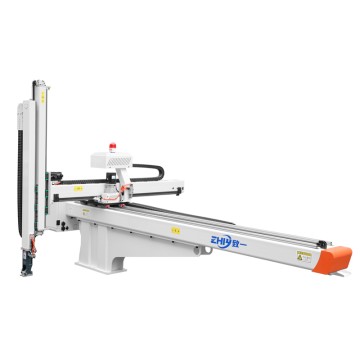
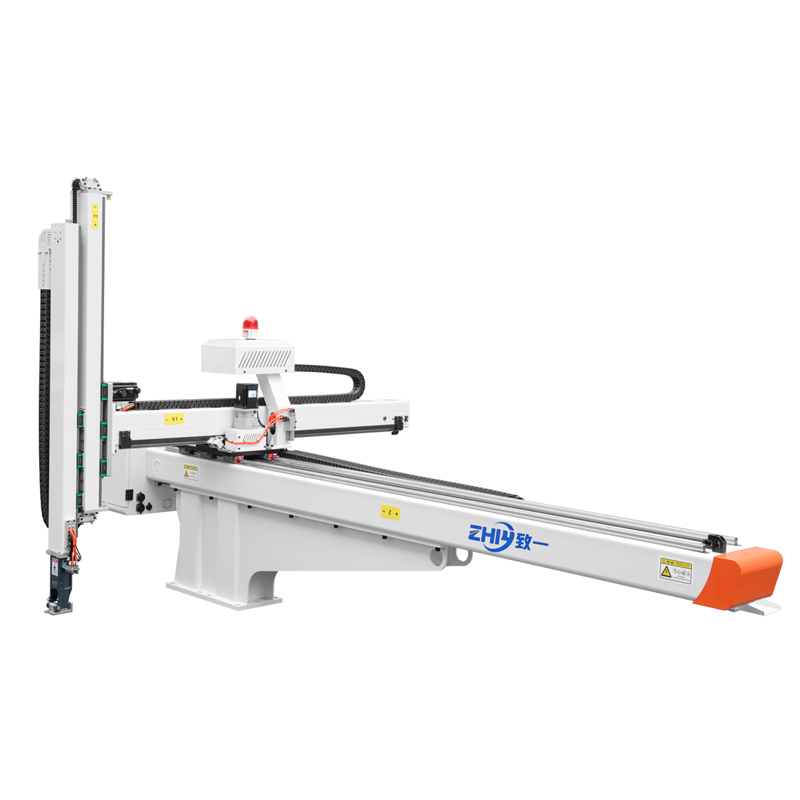
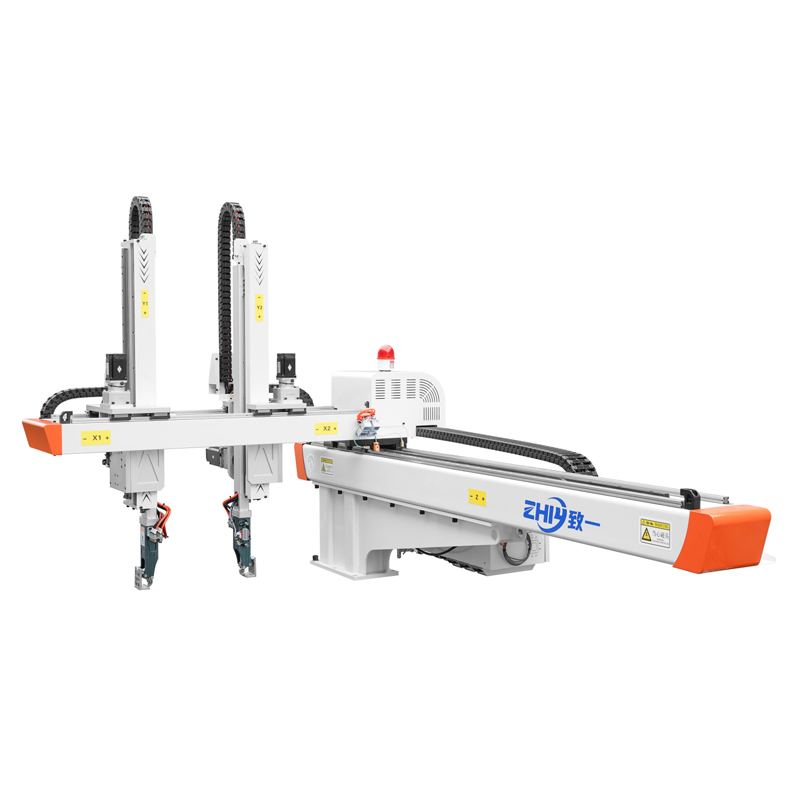
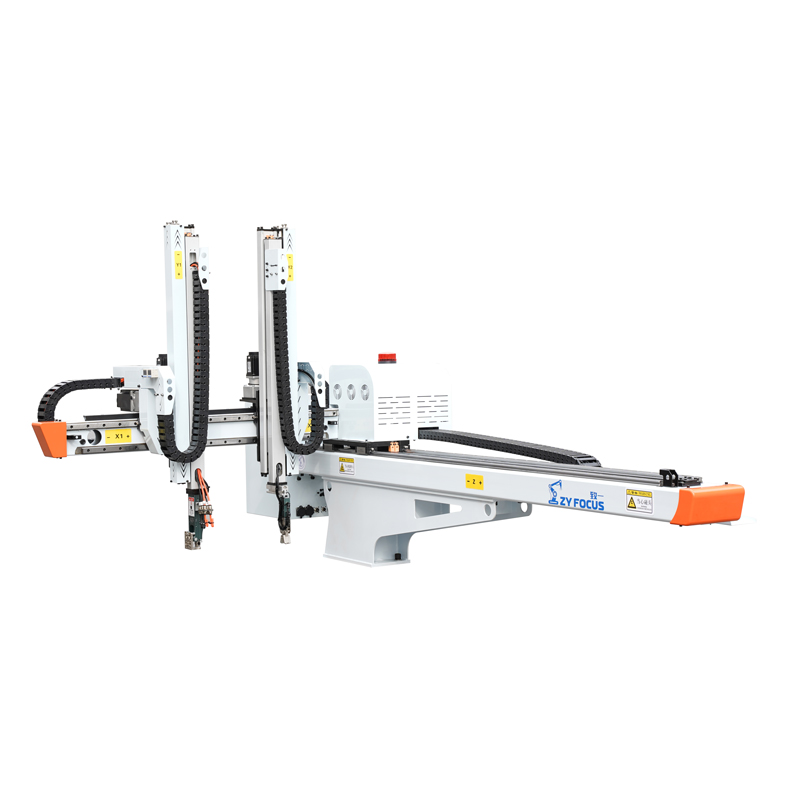
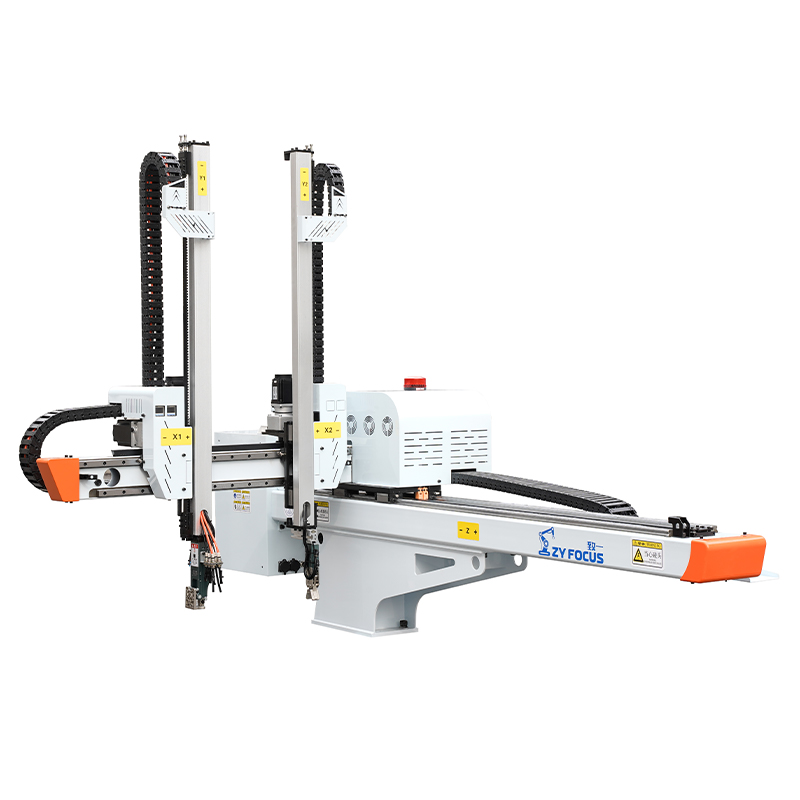
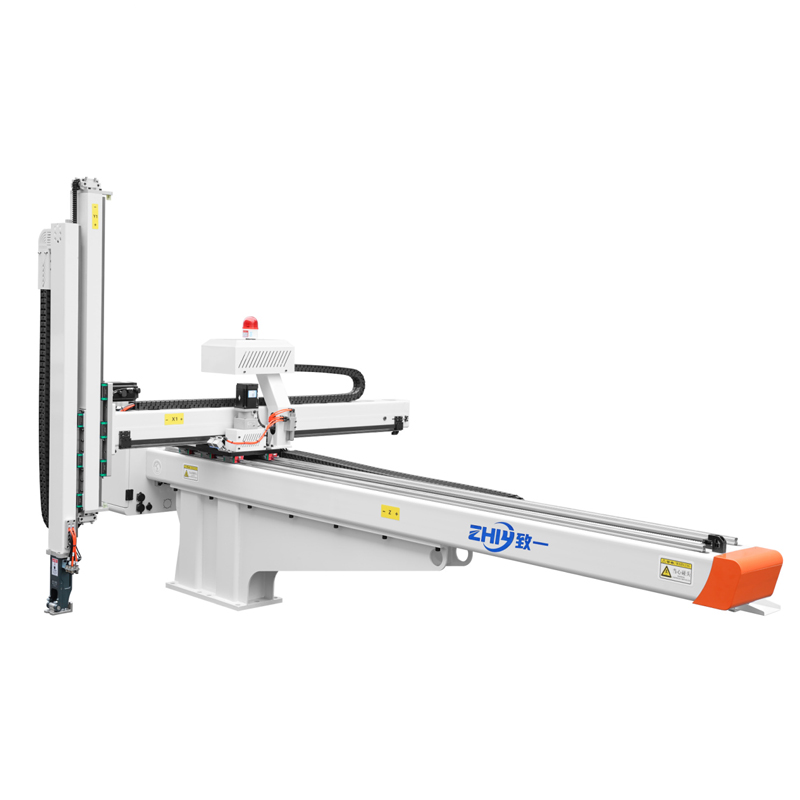
Double-Section Robotic Arm for Deep-Draw Molding Applications
Double‑Section Robotic Arm for Deep‑Draw Molding Applications
Deep‑draw molded components present one of the trickiest handling challenges within injection‑molding workflows. These deep‑cavity parts, ranging from large container housings and automotive inner shells to thick‑walled consumer enclosures, feature substantial depth dimensions. Standard single‑section robotic arms frequently struggle to reach fully into deep mold cavities, risk surface scratching on drawn‑form surfaces, or require impractical overhead clearance inside production facilities. Many production teams face repeated part drop‑offs, extended cycle times, and higher reject rates when relying on conventional robot designs for deep‑draw molding tasks.
A double‑section telescopic robotic armaddresses these exact pain‑points. Built with a two‑stage telescoping vertical structure driven by servo‑controlled speed‑multiplication transmission systems, this Robot Configuration delivers extended in‑mold reach without demanding excessive ceiling height above your injection‑molding machines. For procurement managers and production engineers evaluating automation upgrades for deep‑draw molding lines, understanding how double‑section arms perform, their core advantages, critical selection criteria, and real‑world use‑cases will support better‑informed capital‑equipment decisions.
What Makes Deep‑Draw Molding Handling Unique?
Before evaluating robotic hardware, it helps to outline what sets deep‑draw molded workpieces apart from standard injection‑molded goods. Deep‑draw parts have a large depth‑to‑opening ratio. When molds open, the finished component sits recessed deep within the mold half.
Common operational obstacles teams encounter:
- Limited in‑mold access: Single‑section arms either lack sufficient vertical stroke, or demand very high overhead space to reach deep inside opened molds.
- Surface‑damage risks: Long overhangs from single‑stage arms introduce mechanical deflection during high‑speed extraction. Minor vibration can scuff polished or textured inner surfaces of deep‑drawn parts.
- Cycle‑time penalties: Slower, more‑cautious movement is required to avoid part collision, directly lowering output volume for each molding cell.
- Workshop‑height constraints: Many existing molding plants were not originally built for the tall clearances single‑section long‑stroke manipulators require. Retrofitting building infrastructure is rarely economically feasible.
Not all deep‑draw applications are identical. Part weight, cavity depth, mold‑plate layout, existing injection‑machine tonnage, and available overhead room all shift your automation requirements. Double‑section robotic arms do not represent a universal fix, but they solve a distinct set of these recurring bottlenecks.
Core Advantages of Double‑Section Robotic Arms in Deep‑Draw Molding
The double‑section design’s greatest strength lies in its telescopic two‑stage vertical arm. A built‑in speed‑multiplication belt mechanism enables the inner arm segment to travel twice the displacement of the outer segment. This mechanical principle delivers several practical production‑floor benefits for deep‑draw molding operations.
Extended Reach with Reduced Overall Machine Height
This is the primary benefit for deep‑draw tasks. When fully retracted, the double‑section arm maintains a compact physical profile. When extended, it achieves a far deeper penetration into open mold cavities than single‑section alternatives occupying the same installation height. For facilities with low‑ceiling workshops, this removes the need for costly building modifications when automating deep‑cavity molds matched to mid‑to‑large tonnage injection machines.
Improved Motion Stability and Reduced Part Defects
High‑quality double‑section manipulators use reinforced high‑rigidity extruded‑aluminum beam sections paired with precision linear guide rails. Compared to an equivalent long single‑section arm, the telescopic layout lowers cantilever deflection during part extraction. Less flex translates to steadier movement when retrieving deep‑draw components, lowering scrap rates caused by surface scuffs, part slipping, or improper gripper alignment inside the mold cavity.
Optimized Production Cycle Times
The speed‑multiplication transmission allows the vertical axis to complete full extend‑and‑retract movements quickly. Instead of slowing down to compensate for arm flexing, the Robot Maintains consistent velocity through the extraction sequence. On well‑tuned deep‑draw molding cells, double‑section arms can cut several seconds off each complete robot cycle, compounding into meaningful total output improvements across thousands of daily molding shots.
Application Flexibility Across Diverse Mold Set‑Ups
Beyond deep‑draw part extraction, double‑section robotic arms support additional downstream automation workflows. Depending on arm axis configuration, systems can handle in‑mold insert placement, post‑mold part rotation, part stacking, and hand‑off to secondary stations such as cooling jigs or trimming fixtures. This flexibility makes the hardware suitable for high‑mix production environments where deep‑draw molds run alongside conventional shallow‑cavity tooling.
Typical Real‑World Application Scenarios
Double‑section robotic arms are widely deployed across multiple industry segments running deep‑draw molding processes.
Automotive Component Manufacturing Deep‑drawn interior housing parts, battery‑module casings, and large plastic ductwork often feature significant cavity depth. Double‑section arms safely extract these relatively heavy components while preserving cosmetic and functional surfaces, supporting high‑volume OEM and tier‑supplier production schedules.
Household Goods & Large Container Production Plastic basins, storage bins, and appliance inner liners are classic deep‑draw molded articles. Their deep geometry creates challenging reach conditions inside molds. Telescopic double‑section arms reliably remove these large parts without bumping mold cores.
Industrial & Technical Plastic Parts Deep‑shell electronic enclosures, filter housings, and technical protective covers frequently combine deep draw depth with strict dimensional‑consistency requirements. The arm’s stable positioning helps maintain repeatable gripper placement, lowering the risk of part deformation during demolding.
Retrofit Projects on Existing Molding Cells Many established factories operate older injection‑molding machines within buildings with fixed, limited ceiling height. Double‑section robotic arms allow teams to automate deep‑draw molds without reconstructing workshop roofs or relocating production equipment.
Key Buying & Evaluation Checklist for Procurement Teams
When you compare double‑section robotic arm proposals for deep‑draw molding work, focus your technical assessment on these practical buying criteria:
- Effective telescopic stroke: Confirm the fully‑extended working stroke can comfortably reach the full depth of your deepest mold cavity, while keeping adequate safety clearance inside the mold. Do not rely purely on catalog headline numbers; cross‑reference against your actual mold opening dimensions.
- Payload with safety margin: Calculate total weight including finished part plus gripper, fixture hardware, and any attached vacuum assemblies. Always select an arm rated for significantly higher payload than your maximum working load, to preserve long‑term positioning accuracy under repetitive cycling.
- Mechanical rigidity and guide‑rail specifications: Look for heavy‑duty linear guide assemblies. Light‑weight low‑cost double‑section arms can develop increasing vibration and positioning drift after extended continuous operation, creating rising reject rates over time.
- Workshop height validation: Measure available overhead clearance at your machine installation position. Compare against the robot’s fully‑retracted overall height, not only its extended stroke value.
- Controller compatibility: Verify robot control systems can seamlessly interface with your existing injection‑molding machine brands. Support for custom teach‑programs enables fine‑tuned slow‑approach movements for fragile deep‑draw molded surfaces.
- Environmental protection rating: Molding workshops contain oil mist and fine plastic dust. Minimum IP54 component shielding protects telescopic axis moving parts from contamination and reduces maintenance frequency.
- After‑sales and spare‑part accessibility: Evaluate local technical support availability, service response times, and component lead‑times. Downtime on deep‑draw molding cells can create severe order‑fulfillment pressure.
When Double‑Section Arms Are Not the Best Choice
Double‑section telescopic arms are purpose‑built for specific challenges, but they are not always the optimal selection.
For shallow‑cavity small‑part molding, a simpler single‑section robotic arm will deliver sufficient performance at lower capital investment. If nearly all your molds have minimal draw‑depth, the added mechanical complexity of a two‑stage telescopic arm offers little practical return.
For ultra‑light‑weight shallow components where overhead height is ample, single‑section designs often prove more cost‑effective with fewer moving telescopic components to service over the equipment lifecycle.
Final Thoughts
Deep‑draw molding continues to expand as manufacturers produce larger, more complex plastic components. The unique geometry of deep‑cavity molds creates genuine automation hurdles that generic robotic hardware cannot always overcome.
Double‑section robotic arms solve a well‑defined set of those challenges: delivering deep mold‑cavity reach, stable high‑speed extraction, and compatibility with limited‑height production facilities. For buyers, successful deployment hinges on matching stroke, payload, mechanical build‑quality, and controller features directly to your actual mold portfolio and site conditions. Taking time to audit your deepest‑draw molds and workshop physical constraints before final equipment selection will maximize your return on automation investment.
Frequently Asked Questions
Q: Will double‑section arms operate slower than single‑section robot designs? A: Properly‑specified double‑section units with servo‑driven speed‑multiplication mechanics can match or even beat single‑section cycle times for deep‑draw tasks. Real‑world speed depends on stroke length, payload weight, and controller tuning. Poor‑quality hardware may exhibit slower performance.
Q: Does a double‑section arm require significantly more routine maintenance? A: The telescopic mechanism adds a small number of moving parts. With adequate environmental sealing and scheduled lubrication, well‑built double‑section manipulators deliver multi‑year service life comparable to single‑section alternatives in molding‑plant environments.
Q: Can I retrofit a double‑section arm onto my existing injection‑molding machines? A: Most modern injection‑molding equipment supports robot retrofits. You must validate mounting space, overhead clearance, machine I/O interface compatibility, and safety‑gate interlock functionality before installation.