
Leave Your Message
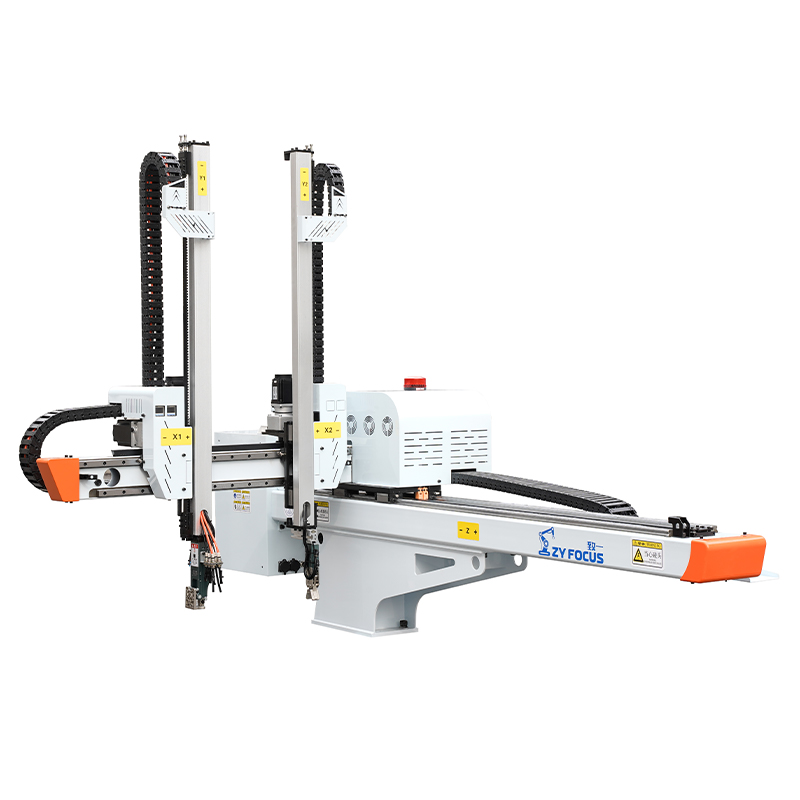
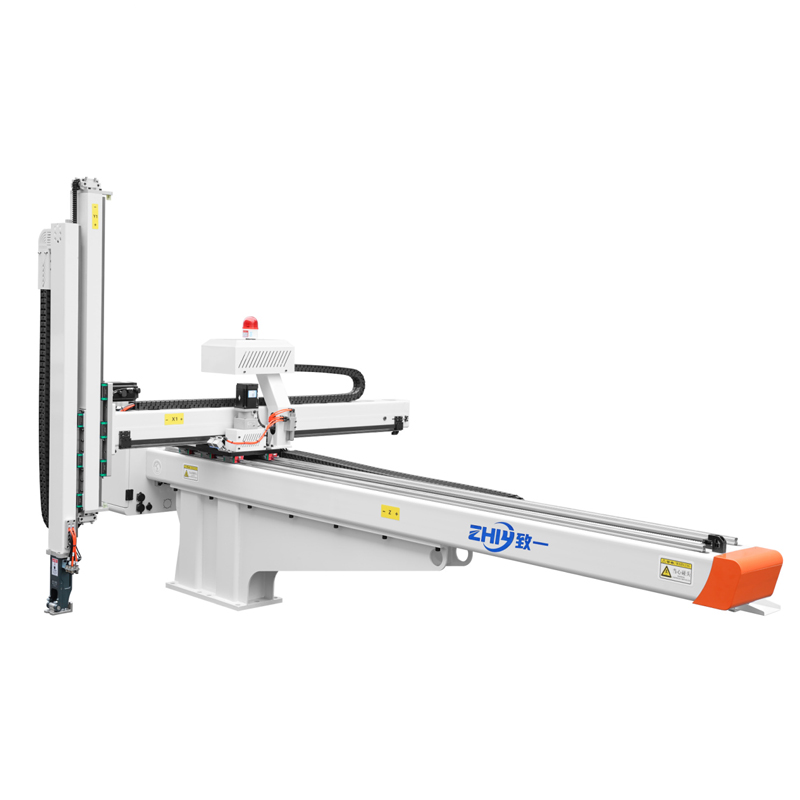
Double Arm Robot: Collision Detection and Safety Features
Double Arm Robot: Collision Detection and Safety Features
Table of Contents
- Understanding Why Safety Matters for Double‑Arm Robots
- Core Principles Behind Robot Collision Detection
- Key Safety Features of Industrial Double‑Arm Robots
- Passive Versus Active Collision Protection Systems
- How Safety Functions Influence Equipment Selection for Buyers
- Common Safety‑Related Misconceptions for Double‑Arm Robots
- Practical Tips to Maximize Safety in Real‑World Production
- FAQS
- Conclusion
Factory operators and procurement specialists often prioritize cycle speed, payload capacity and working stroke when comparing double‑arm robots. Even with impressive performance specifications, overlooking built‑in safety mechanisms can lead to unexpected equipment damage, unplanned downtime, and potential workplace injury. Understanding collision detection and integrated safety features helps buyers evaluate total cost of ownership rather than focusing only on upfront hardware price. Every production environment carries unique hazards, so safety capability should rank high on yOur Robot‑selection checklist.
Understanding Why Safety Matters for Double‑Arm Robots
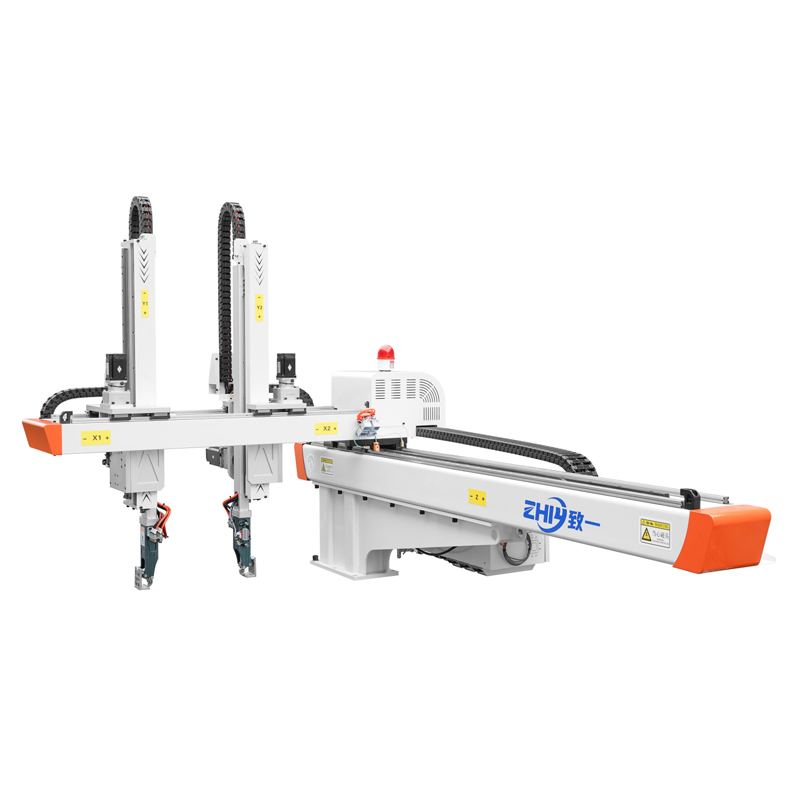
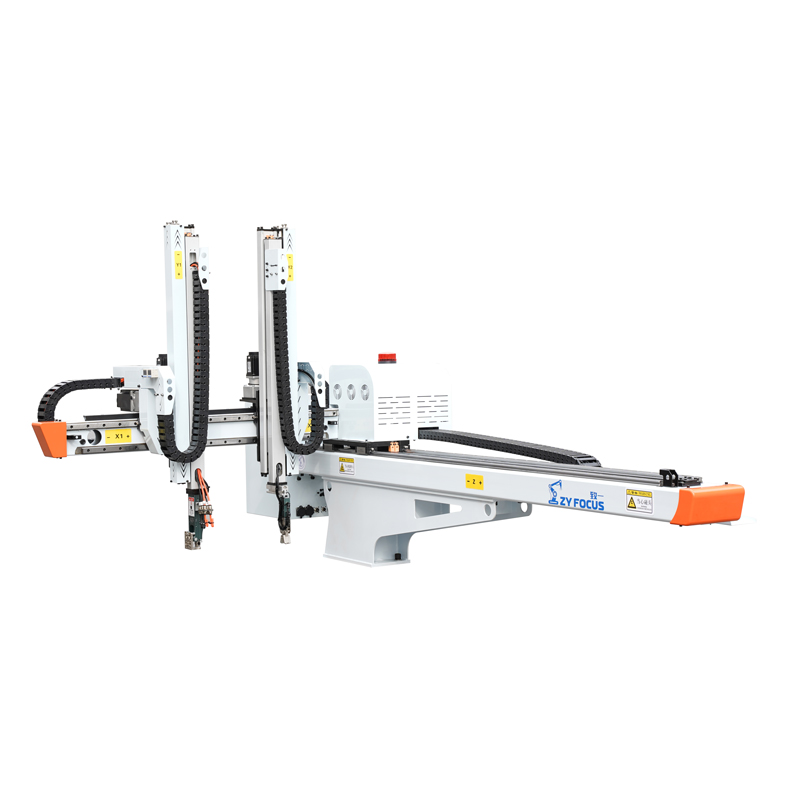
Double‑arm robots deliver major advantages for injection molding and automated assembly workflows. Two manipulators operate simultaneously to complete tasks such as part removal, insert loading, and finished‑product sorting within one machine cycle. While dual‑arm operation boosts throughput, it also introduces extra risk points. The two arms move across overlapping working zones, creating risk of self‑collision between arms, impact with surrounding tooling, fixtures, moulds, or nearby shop‑floor staff.
When collision protection performs poorly, several negative outcomes appear. Hard impacts can crack mechanical components, bend arm sections, or destroy expensive end‑of‑arm tooling. Repairs require spare‑part expenses and long production stops. Worse, unregulated movement creates safety risks for technicians performing mold adjustments, quality inspection, or on‑site maintenance. Many manufacturing facilities must satisfy international equipment‑safety standards before new automation can go online, so inadequate safety functions may block project approval entirely.
Many buyers have learned from experience: robot systems with comprehensive safety architecture reduce long‑term operational stress. Instead of treating safety as an optional extra, experienced procurement teams treat collision‑handling performance as one of their core evaluation criteria.
Core Principles Behind Robot Collision Detection
Collision‑detection systems identify unexpected physical contact between robot hardware and surrounding objects, then trigger predefined protective responses. There are two broad scenarios that double‑arm robot systems must manage: self‑collision between the two robot arms, and external collision with moulds, fixed frames, workpieces or human operators nearby.
Modern detection approaches fall into two primary categories: contact‑based reaction and predictive non‑contact monitoring.
Contact‑based detection works by continuously tracking motor current and joint torque values across each axis. When an unplanned obstacle blocks arm motion, joint resistance rises quickly. Once measured torque exceeds configurable safety thresholds, the controller activates protective actions such as immediate safe stop, slow retraction or motion pause. This approach reacts after physical contact occurs, so response speed is critical for limiting damage severity.
Predictive non‑contact detection relies on pre‑calculated kinematic models plus optional external sensors. System software calculates real‑time distance between arm segments. When arms or tooling approach one another and drop below a configured safety gap, the robot reduces travel speed or modifies trajectory before actual contact takes place. This pre‑emptive mechanism is especially valuable for preventing arm‑to‑arm self‑collision during complex synchronized movements.
Well‑engineered double‑arm robots combine both strategies. Predictive algorithms prevent most foreseeable interference, while torque‑based contact detection serves as a final safety backup for unforeseen obstructions in dynamic shop‑floor conditions.
Key Safety Features of Industrial Double‑Arm Robots
A full‑featured double‑arm robot integrates multiple safety layers rather than relying on one single function. Below are essential safety components procurement buyers should verify during technical review.
| Safety Feature | Primary Function | Practical Production Benefit |
|---|---|---|
| Joint Torque Monitoring | Detects abnormal resistance at each robotic joint upon physical contact | Fast reaction reduces mechanical damage during unexpected collisions |
| Self‑Collision Interference Check | Real‑time distance calculation between two moving arms | Prevents arm‑on‑arm impact during synchronized dual‑arm tasks |
| Configurable Safety Stop Response | Selectable behaviour: instant stop, controlled retract or decelerated pause | Match reaction behaviour according to task and risk level |
| Multi‑Point Emergency Stop Circuit | Physical emergency‑stop buttons on robot body, teaching pendant and control cabinet | Manual immediate power cut for urgent hazard situations |
| Software‑Defined Working Boundaries | Virtual limits restricting robot movement within allowed spatial zones | Restrict arms from travelling toward unprotected high‑risk areas |
| Overspeed & Overload Protection | Monitor travel velocity and actual payload against rated specifications | Avoid dangerous operation beyond published machine limits |
Joint torque monitoring forms the foundation of collision‑response performance. Adjustable sensitivity settings allow plant engineers to tune detection thresholds. Heavy‑payload applications use higher thresholds to ignore normal process resistance, while delicate mould‑handling workflows use more sensitive settings to protect costly tooling.
Self‑collision interference checking is uniquely important for double‑arm configurations. Single‑arm robots do not face internal arm‑to‑arm interference risks. Without this function, complex coordinated motion programming carries high risk of expensive mutual impact between manipulators.
Configurable safety‑stop responses deliver operational flexibility. Some production scenarios benefit from instant full stop. Other processes perform better with short controlled retraction, so operators can quickly clear obstructions and resume production without full program reset.
Virtual software boundaries complement physical safety fences. You can set virtual forbidden zones around expensive mould assemblies. Even in programming‑error situations, robot axes cannot enter these restricted spaces.
Passive Versus Active Collision Protection Systems
Buyers frequently confuse passive protection and active collision‑detection functions. Understanding their differences helps you avoid incorrect expectations during product comparison.
Passive collision protection refers to mechanical design choices built into robot hardware. Rounded‑profile arm castings, built‑in mechanical overload clutches and flexible shock‑absorbing structures reduce damage energy once impact already happens. Passive features soften consequences of collisions, but cannot stop collisions from occurring in the first place. Passive mechanisms act after impact, limiting severity but not preventing the event itself.
Active collision‑protection covers sensor‑driven software systems that detect risks either before or the instant contact begins. Torque monitoring, self‑interference algorithms and optional external safety sensors (such as safety light curtains) belong to this category. Active systems detect risk triggers and modify robot motion before heavy impact develops.
The most reliable double‑arm robot installations combine both approaches. Active safety systems prevent most collision events, while passive mechanical structures offer backup mitigation in cases where active detection misses an unexpected event. Relying exclusively on passive mechanical protection is not sufficient for modern manufacturing risk‑reduction goals. Similarly, depending entirely on software active protection without mechanical overload safeguards leaves hardware vulnerable in edge‑case failure scenarios.
When you evaluate robot quotations, clarify exactly which safety layers are included as standard equipment and which represent paid optional add‑ons. Some suppliers market basic torque‑sensing as full collision‑safety, while omitting self‑collision‑check algorithms for dual‑arm movement.
How Safety Functions Influence Equipment Selection for Buyers
For procurement and engineering teams, safety performance directly shapes total‑cost‑of‑ownership calculations. Many purchasing teams fixate purely on purchase price, but collision‑related repair bills and repeated production stops can quickly erase initial hardware‑cost savings.
First, clarify your typical operating conditions. Facilities handling large, expensive mould inserts or high‑value finished plastic components need highly responsive collision‑detection settings. Workshops with frequent operator interaction near robot motion zones demand robust safety‑stop logic compliant with international industrial‑robot safety standards.
Review adjustability of safety parameters. Good‑quality double‑arm robots allow technicians to tune detection sensitivity according to individual production jobs. Fixed, non‑configurable collision thresholds create practical headaches: overly sensitive settings trigger frequent false stops that kill productivity; overly insensitive settings let collisions happen without timely reaction.
Confirm documentation and compliance records. Reputable robot manufacturers provide test records and certification evidence for safety‑related subsystems. This documentation simplifies your internal‑facility safety audit processes and supports compliance requirements for your region.
Also evaluate service‑support aspects for safety functions. Ask whether local support technicians can perform on‑site safety‑parameter validation after installation, or following mechanical‑component replacement after impact incidents. Safety performance can shift slightly after part replacements, so on‑site validation capability matters for long‑term stable operation.
Common Safety‑Related Misconceptions for Double‑Arm Robots
Several widespread misunderstandings create risk for buyers when assessing dual‑arm robot safety. Clearing these misconceptions supports more informed technical evaluation.
Misconception 1: External safety light curtains can fully compensate for weak robot‑built‑in collision detection. Safety light curtains protect human access into working zones, but cannot detect collisions between robot arms, or collisions between robot and stationary tooling. Light curtains stop robot motion when people cross optical beams, yet offer zero protection for robot‑to‑mould or arm‑against‑arm impacts. They serve as supplementary personnel‑safety equipment, not a replacement for native robot collision‑detection capabilities.
Misconception 2: Since I will use safety fences, built‑in collision detection is not important. Physical safety fences protect personnel, yet they do nothing to stop robot‑on‑tooling collisions caused by programming errors, sensor drift or unexpected workpiece positioning shifts. Even fully‑fenced robot cells can suffer expensive mechanical damage from internal collisions.
Misconception 3: All double‑arm robots automatically include self‑collision‑check logic. Self‑collision‑interference checking requires specialized kinematic calculation software. Some entry‑level dual‑arm robot models do not ship with this function as standard. Operators must manually program distance‑limit logic for every movement sequence. This creates heavy programming workload and raises human‑error risk. Always explicitly confirm whether self‑collision checking is included.
Misconception 4: Collision‑detection sensitivity should always be set to maximum. Maximum sensitivity increases false‑stop frequency in normal production. Vibration from injection‑moulding machine clamping cycles or heavy part weight variation can trigger unnecessary alarms. Best practice is tuning sensitivity for each specific production application rather than running maximum sensitivity universally.
Practical Tips to Maximize Safety in Real‑World Production
Even robots with excellent native safety features require proper setup and maintenance to deliver full protective value. These practical recommendations apply for plant engineers and maintenance teams deploying double‑arm robotic systems.
Carry out safety‑function verification during commissioning. Perform controlled test collisions with non‑risk dummy obstacles to validate stop‑response behaviour, before running full‑speed production cycles with real moulds and parts. Document test results for your site‑safety records.
Review and fine‑tune collision‑detection thresholds for every new product job. Pay special attention when payload or end‑of‑arm tooling changes. Modifying gripper mass alters joint‑torque readings; unchanged sensitivity settings may produce excessive false stops or reduce actual collision‑protection performance.
Keep software firmware updated. Robot‑controller firmware updates often include refinements for safety‑algorithm behaviour. Follow the equipment‑supplier’s recommended maintenance schedule for controller‑software upgrades. Always perform full safety‑function re‑verification after firmware updates.
Train programming and maintenance‑staff on safety‑system operation. Many collision‑related incidents stem from operator lack of familiarity with safety‑configuration parameters. Ensure your team understands what each safety setting does, and the risks when parameters are mis‑adjusted.
Inspect mechanical components periodically. After any collision incident, do not simply reset alarms and resume production immediately. Check arm castings, joint assemblies and end‑of‑arm tooling for subtle deformation. Hidden mechanical distortion can degrade safety‑sensor calibration over time.
FAQS
How fast should collision‑detection respond when contact occurs?
For most industrial double‑arm robot applications, total response times under 100 milliseconds are typical. Shorter response times minimise impact force transferred to tooling and robot hardware. Keep in mind response performance depends both on robot‑controller hardware and selected sensitivity settings.
Can collision‑detection completely eliminate robot‑caused equipment damage?
No safety system offers absolute zero‑risk guarantee. Collision‑detection greatly reduces probability and severity of impact damage, but cannot compensate for extreme programming errors or severely incorrect mechanical setup. It forms one critical layer within your complete site‑safety strategy.
Is self‑collision‑checking always required for double‑arm robots?
If both arms never move simultaneously across overlapping spatial zones, manual programming‑based safeguards might suffice. For most real‑world injection‑molding tasks where arms move in coordinated overlapping paths, native automatic self‑collision checking is strongly recommended to lower programming workload and human‑error risk.
What is the difference between safe‑torque‑off emergency‑stop and collision‑detected stop?
Safe‑torque‑off emergency‑stop cuts motor power immediately for urgent personnel‑hazard events. Collision‑detected stop is a controlled protective reaction triggered by contact‑detection algorithms, and may include configurable deceleration or retract movement before motor shutdown, subject to machine configuration.
Do safety‑certified robots still need on‑site risk assessment after installation?
Yes. Product‑level certification validates robot hardware‑design safety. Every unique factory layout, tooling setup and workflow introduces site‑specific risks. Site‑level risk assessment remains mandatory according to widely‑accepted international industrial‑robot safety standards.
Will high‑sensitivity collision‑detection create too many false production stops?
It can, if applied without tuning. Sensitivity should match payload, tooling weight and process‑vibration characteristics. Tuning thresholds for each job balances real‑collision protection against nuisance‑alarm frequency.
Conclusion
The value of double‑arm robots comes from improved cycle efficiency and multi‑task capability. Collision‑detection and integrated safety features protect your investment in this automation hardware, while supporting workplace‑safety compliance requirements.
Effective safety design combines predictive self‑collision algorithms, joint‑torque‑based contact reaction, configurable stop‑response behaviour, virtual working‑zone limits, plus passive mechanical overload safeguards. Neither external safety barriers nor passive mechanical shock‑absorption can substitute for the robot’s native active collision‑detection system.
For procurement specialists, safety‑feature evaluation belongs alongside payload, stroke length and cycle‑speed comparison. Clarify which safety functions come standard, which represent optional extras, and what documentation and local‑support services are available. Proper commissioning, job‑specific parameter tuning, firmware maintenance and staff training allow safety‑related features to deliver their full protective potential day‑to‑day on your production floor. When safety capability receives appropriate focus during selection and deployment, double‑arm robotic systems deliver reliable high‑throughput performance with reduced risk of costly downtime.