
Leave Your Message
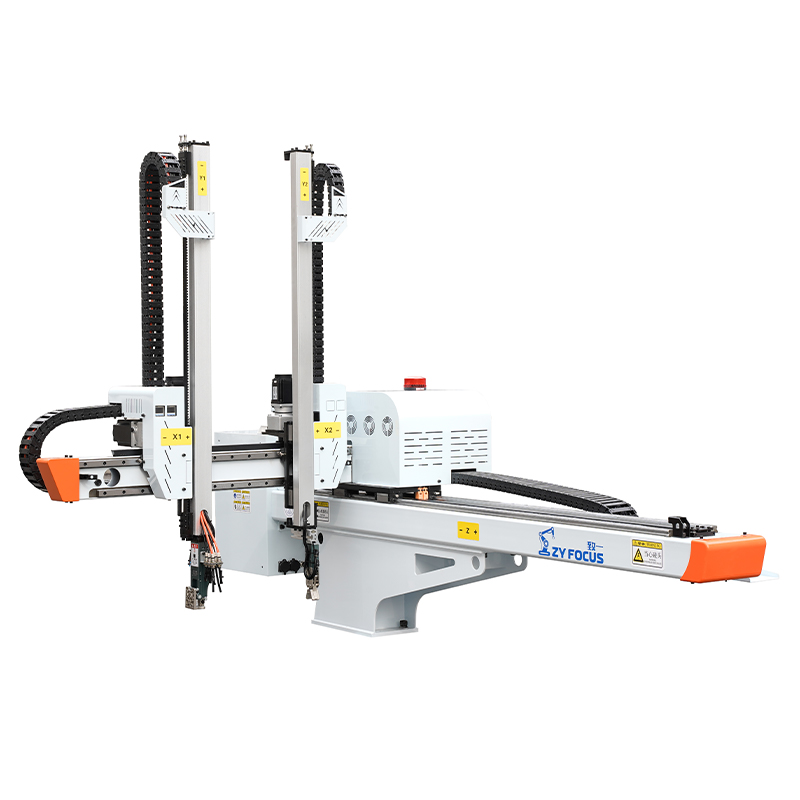
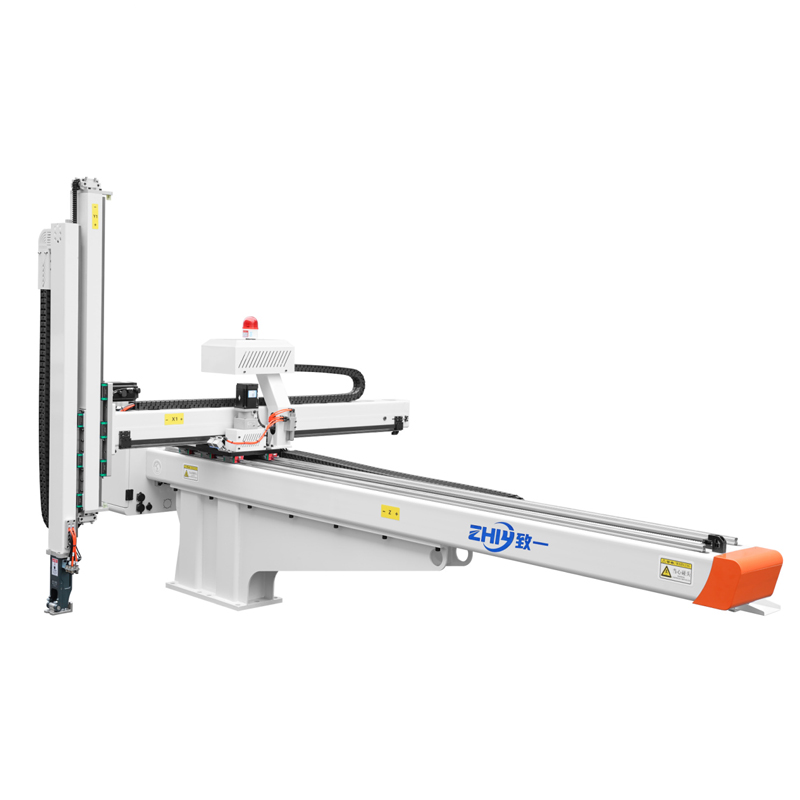
Buying Used vs. New Injection Molding Servo Robots: A TCO and Risk Guide for Plant Buyers
Why a Secondary Market for Servo Take-Out Robots Exists
Plant buyers evaluating take-out automation for injection molding will eventually encounter the used equipment market. A healthy secondary market for three-axis and five-axis servo robots has developed over the past decade because injection molding operations are constantly in motion. Factories relocate to lower-cost regions, product lines are discontinued, and entire cells are retired when a molding shop shifts from one material family to another. When a contract manufacturer loses a major program, the servo robots that were dedicated to that program often come up for sale within months.
Another driver is technology refresh. A molder running a fleet of ten machines may standardize on a newer control platform and sell the older units as a batch. This creates a supply of machines that are mechanically sound but no longer match the buyer's preferred architecture. Regional differences also matter: a robot that was perfectly serviceable in one market can be surplus in another where labor costs or production volumes changed. For a procurement manager, the appeal is obvious. A used servo Robot Can appear at thirty to fifty percent of the list price of a comparable new unit, and for a buyer under a tight capital budget that discount is hard to ignore.
However, the lower sticker price hides a different cost structure. The secondary market is fragmented, with brokers, auction houses, and direct plant-to-plant sales all operating under different disclosure standards. Unlike a new machine backed by a manufacturer's warranty and documented commissioning, a used robot arrives with an unknown operating history. Understanding that history is the single most important step a buyer can take before signing anything. A disciplined evaluation process turns a risky purchase into a calculated one.
Definitions and Price Gradients: Used, Refurbished, New
Before comparing options, buyers should agree on what the words actually mean, because sellers use them loosely. A used machine is sold as-is, typically with no rebuild and no warranty beyond a short return window if the unit is dead on arrival. A refurbished machine has been partially or fully rebuilt by a third party or the original manufacturer: worn components replaced, paint touched up, control software reloaded, and a limited warranty applied. A new machine is factory-fresh with full documentation, current firmware, and a standard manufacturer warranty.
The price gradient between these three categories is wide. A used three-axis servo robot might trade at roughly a quarter to a half of the new list price depending on age and condition. A manufacturer-refurbished unit typically sits between fifty and seventy percent of new, reflecting the labor and parts invested in the rebuild plus a warranty. A brand-new five-axis dual-arm cell can cost two to three times what a comparable used unit would, but it includes the latest control protocol, energy-efficient servo drives, and remote diagnostics capability.
The gap is not only about money. It is about predictability. With a new machine the buyer knows the wear state is zero, the firmware is current, and the support channel is open. With a used machine the buyer inherits whatever the previous owner did or did not do. Refurbished units sit in the middle, and their value depends entirely on the reputation of the refurbisher and the scope of the work performed. A buyer should always request a written scope of what was replaced and tested.
What to Inspect on a Used Servo Robot
When a used servo robot is on the table, the evaluation has to go deeper than a visual walk-around. The most expensive components are the servo motors and their drives, and these wear in ways that are not visible from the outside. A motor that runs cleanly during a five-minute demo may still have degraded bearings that will fail within a few hundred operating hours. Request the actual running hours from the controller's internal counter, not the number the seller quotes verbally, and compare it against the expected life of the specific motor model.
Mechanical wear concentrates in the linear guides and bearings that carry the vertical and traverse axes. Check for play in the guide rails, listen for grinding during high-speed traverse, and verify that the take-out motion is smooth at both ends of travel. The gripper mounting interface and the end-of-arm tooling plate should be inspected for cracks or repeated repair welds. Hydraulic or pneumatic assist cylinders, if present, should be checked for leakage and seal condition.
Document everything with photos and, where possible, a short video of a full cycle. Ask for the previous maintenance log. A machine with a consistent service history is worth a meaningful premium over an identical unit with no records, because the records let you forecast the next failure point. Finally, confirm the machine's physical compatibility with your platen and tie-bar spacing, because a robot that does not fit your press is worthless regardless of price.
Control System Obsolescence Risks
The control system is where used equipment quietly becomes a liability. Older servo robots were often built around controllers that the original manufacturer has since discontinued. When a controller generation reaches end-of-life status, spare boards and power modules become scarce, and prices for the few remaining units spike. A buyer who saves money on the robot can end up paying more for a single replacement drive than the entire machine was worth.
Integration is the second problem. Modern Injection Molding Machines communicate over Ethernet-based protocols and expect the robot to handshake through standardized signals. A legacy controller may only support older fieldbus interfaces, forcing the buyer to install protocol converters or to run the robot in a semi-manual mode that undermines the labor savings the automation was meant to deliver. Worse, some discontinued controllers cannot accept firmware updates, which means they will never integrate cleanly with a new press.
Software support is the third risk. Programming environments, backup tools, and diagnostic utilities for obsolete controllers eventually disappear from vendor websites. When your maintenance team cannot even load a backup onto a replacement controller, the machine becomes unserviceable. For a plant that runs twenty-four-hour shifts, this is not a theoretical concern. It is a question of whether production stops for a week while a discontinued part is sourced from a foreign surplus dealer.
Safety Compliance Gaps on Older Machines
Safety standards evolve, and a robot that was compliant when manufactured may no longer meet current expectations. Modern requirements for industrial robots, including the relevant clauses of ISO 10218 and the CE machinery directive, demand documented risk assessment, protective guarding, and validated safety circuits. Older machines frequently lack the dual-channel safety interfaces, light curtains, or interlock logic that a current audit expects.
For a buyer, the gap has two consequences. First, the machine may not pass a customer or insurer safety audit, which can block its use on a given production line. Second, retrofitting safety after the fact is expensive and sometimes impossible without replacing the controller. A used robot that looks like a bargain can become a compliance project that consumes the savings and delays startup by months.
Buyers in regulated industries, such as medical or food-contact molding, should be especially cautious. Auditors increasingly expect current documentation, and a machine with an undocumented safety history is a red flag. Always ask for the original CE declaration and the risk assessment file, and verify that the guarding matches what the documentation describes. If those documents are missing, treat the machine as non-compliant until proven otherwise.
Why a New Machine Pays Off
A new servo robot is not merely a newer version of the same device. It brings capabilities that directly affect throughput and operating cost. Current control platforms support the latest Ethernet protocols natively, which means clean integration with new presses and with plant-level monitoring systems. Energy-efficient servo drives reduce power draw per cycle, and on a line running millions of cycles per year that saving is measurable on the utility bill.
Warranty coverage is the most immediate benefit. A standard manufacturer warranty transfers the risk of early failure from the buyer to the supplier, and it typically includes on-site service or at least expedited parts. New machines also ship with current firmware, full spare-parts availability, and access to remote diagnostics that let a supplier's engineer troubleshoot the cell without a site visit. For plants where unplanned downtime costs more per hour than the robot itself, that support channel is worth a premium.
There is also the question of residual value. A new machine depreciates, but it depreciates from a known baseline and retains a predictable secondary-market value. A used machine bought cheap has almost no further resale floor, because the next buyer faces the same unknowns you did. Over a five-year horizon, the total cost gap between new and used often narrows substantially once support, downtime, and residual value are counted.
A TCO Comparison Framework
To make a rational decision, build a total cost of ownership model rather than comparing sticker prices. Start with the acquisition cost: purchase price plus freight, installation, and any import duties. For a used machine, add the refurbishment or retrofit cost required to make it production-ready and compliant. For a new machine, the acquisition line is usually the full quoted price including commissioning.
Next, model the operating costs over the ownership period. Include energy consumption per cycle, expected maintenance, and the cost of spare parts, which will be higher and more volatile for discontinued components. Then assign a probability-weighted downtime cost. A used machine with an unknown failure history carries a higher expected downtime than a new unit under warranty. Multiply the probability of failure by your hourly downtime cost to get an expected annual penalty.
Finally, factor in residual value at the end of the planning horizon and any compliance upgrade cost. When all lines are summed, many buyers find that a used robot saving forty percent upfront ends up costing more over five years than a new machine, once refurbishment, spare-parts risk, and downtime are included. The TCO model makes that trade-off visible and defensible to finance.
When Buying Used Makes Sense
The used market is not a trap; it is a tool that fits specific situations. A short-term production contract with a defined end date is a classic case. If you need a robot for eighteen months and then plan to redeploy or retire it, the depreciation hit of a new machine may not be justified, and a used unit at a steep discount is rational. The key is that the contract timeline is fixed and the robot's duty cycle is modest.
Backup and redundancy is another valid use. A plant that already runs a fleet of identical servo robots can buy a used spare of the same model, knowing that its existing spare-parts inventory and maintenance knowledge apply directly. In this case the buyer is not betting on an unknown platform; they are extending a known one. The compatibility dramatically lowers the integration and support risk.
Budget-constrained startups also turn to used equipment to get into automation at all. The caution here is to buy the newest, best-documented unit available rather than the cheapest. A unit with low hours, a known service history, and a current controller is far safer than a bargain basement machine of unknown provenance. Set a hard limit on how much you will invest in refurbishment after purchase, and walk away if the seller cannot provide records.
Contract Terms That Protect the Buyer
Whatever you buy, the contract is where risk is allocated. Insist on a documented factory acceptance test performed before payment is released, with the robot running the actual cycle and payload it will see in your plant. The acceptance criteria should be written into the contract, not left verbal, and should include cycle time, positioning repeatability, and a clean fault log over a defined run length.
Return and exchange clauses matter more for used equipment than for new. Specify a window during which the buyer can reject the machine if it fails to meet the agreed specification, and define who pays freight in that event. For refurbished units, negotiate a warranty period of at least six to twelve months on the rebuilt components, with clear remedy terms if the supplier cannot repair in a reasonable time.
A defined spare-parts package should be part of the deal, especially for used machines with aging components. Buying a small set of high-wear items at the time of purchase locks in availability and price, and it shortens any future repair. Require the seller to provide all documentation: original manuals, electrical schematics, firmware backups, and the CE or safety file. Without these, even a mechanically sound robot becomes difficult to support.
On-Site Inspection Checklist
When you travel to inspect a used servo robot, arrive with a written checklist and the discipline to use it. Run the machine through a full production cycle with the heaviest payload it will carry, and watch for vibration, audible bearing noise, and inconsistent take-out timing. Verify the controller's actual operating hours and compare them against the service records provided.
Test every axis through its full range at both low and high speed, and confirm that the safety interlocks engage correctly when a guard is opened. Check the condition of the servo drives for burnt components or corrosion, and inspect the cabling for fatigue at the flex points where it moves with the arm. Confirm that the robot can communicate with the injection molding machine it will be paired with, using the same protocol your plant uses.
Measure positioning repeatability with a simple dial indicator or the controller's own diagnostics, and confirm it still meets the original specification. Photograph the nameplate data, serial numbers, and any repair labels. Ask the seller to demonstrate a full backup and restore of the control program, because if they cannot, your maintenance team will struggle to do so later. Only after all items pass should you consider release of funds.
FAQ
How do I estimate the remaining useful life of a used servo robot?
Start with the controller's recorded operating hours and the manufacturer's rated life for the servo motors and guide rails. A unit with under ten thousand hours on a platform rated for tens of thousands is generally a safer bet than one near its rated limit. Combine the hour count with the service history: regular lubrication and bearing replacement extend life, while neglect compresses it. A qualified technician can also measure motor winding resistance and bearing condition to produce a more precise estimate before purchase.
Is a manufacturer-refurbished unit safer than a third-party refurbished one?
Usually yes, because the original manufacturer has access to correct parts, firmware, and test procedures, and they stand behind the rebuild with their own name. Third-party refurbishers vary widely; some do excellent work, others merely clean and repaint. The differentiator is documentation and warranty. Always request the written scope of work and verify that the refurbisher can supply ongoing support for the components they replaced.
Can an old servo robot be upgraded to meet current safety standards?
Sometimes, but it depends on the controller. If the controller supports dual-channel safety inputs and modern interlocks, a competent integrator can add guarding, light curtains, and validated safety logic to bring it closer to compliance. If the controller lacks those capabilities, a full control retrofit may be required, which can cost as much as a significant fraction of a new machine. Evaluate the upgrade cost inside your TCO model before deciding.
What hidden costs surprise first-time used-equipment buyers?
The most common surprises are freight and rigging, which sellers often quote separately or omit; import duties and local compliance work; and the cost of missing documentation, which forces the buyer to reverse-engineer the cell. Discontinued spare parts and the need for a protocol converter to talk to a modern press are also frequent. Building these into the TCO up front removes the surprise.
Should I buy used if my plant runs twenty-four-hour shifts?
Only with strong justification. Continuous duty accelerates wear and magnifies the cost of any downtime, so the risk profile of unknown used equipment is highest in this scenario. If you do buy used for continuous operation, choose the newest, lowest-hour unit with a documented history and a robust spare-parts plan, and budget for a faster refurbishment or replacement path than you would for a new machine.
How much warranty should I expect on a refurbished robot?
A reputable refurbisher typically offers six to twelve months on the rebuilt components, sometimes extendable. For a used-as-is machine, expect little or no warranty beyond a dead-on-arrival return. Treat any warranty shorter than six months on a refurbished unit as a signal to scrutinize the rebuild scope more closely, and negotiate the remedy terms in writing before payment.
Related Pages
- 3-Axis Servo Robots for Food-Grade Silicone Molding
- 3-Axis Silicone Servo Robot for Kitchenware Manufacturing
- Five-Axis Servo Double Arm for Industrial Equipment Housings
- Automotive Parts Molding with 3-Axis Servo Robotic Arm
Ready to build a TCO model for your next servo robot purchase and compare used against new with confidence?
Tip: always release payment only after a documented factory acceptance test proves the used robot meets your real cycle, payload, and safety requirements on site.