
Leave Your Message
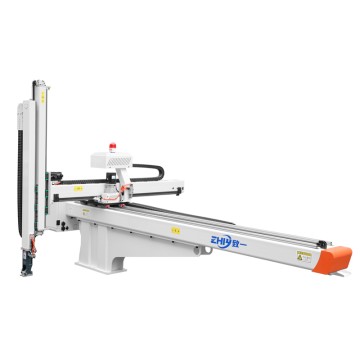
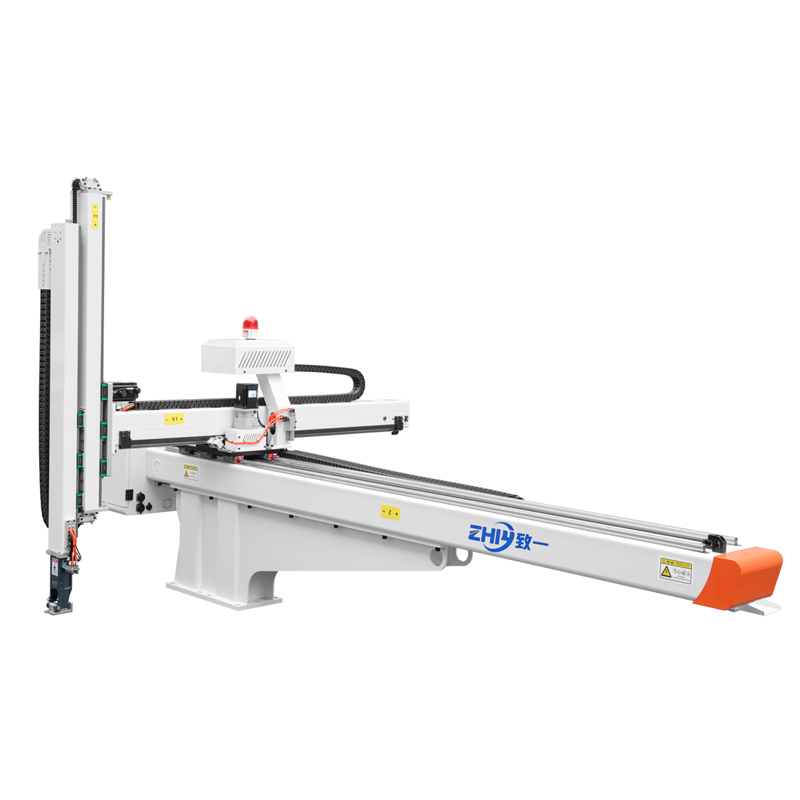
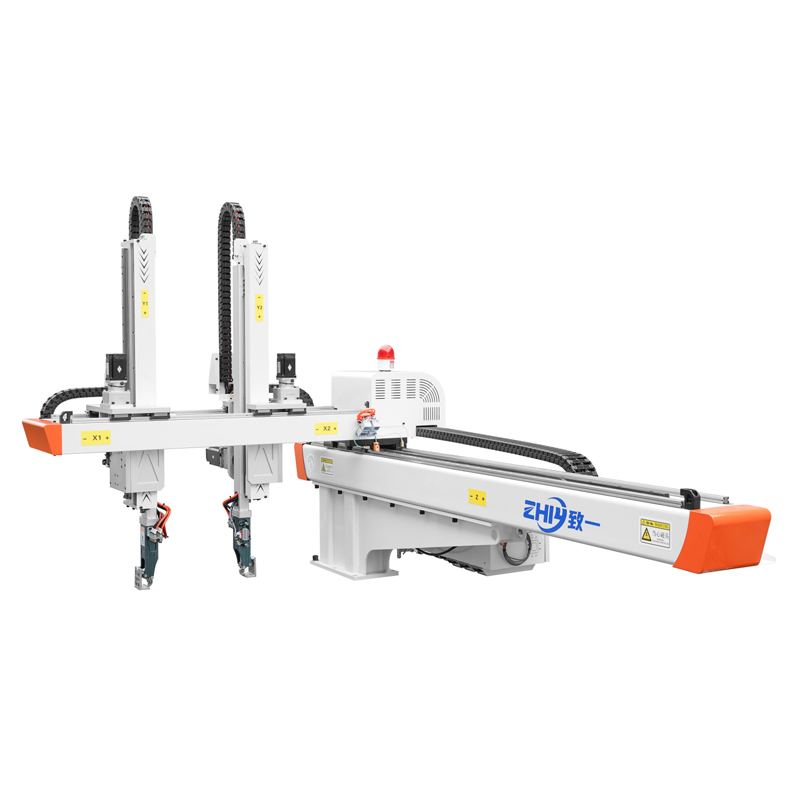
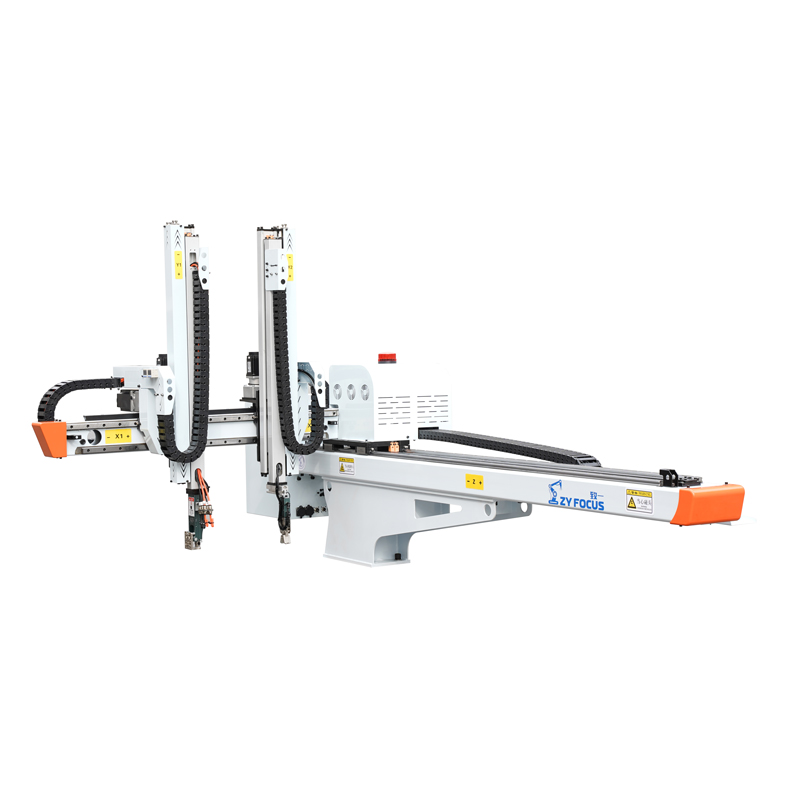
Bull Head Robot Arm in Telecommunications Equipment Molding
Bull‑Head Robot Arm in Telecommunications Equipment Molding
Modern telecommunications manufacturing demands consistent quality, tight dimensional tolerances, and reliable throughput for molded components. Network cabinet housings, signal base station parts, connector enclosures, and antenna accessories all rely on injection molding to deliver durable plastic assemblies. Yet many molders struggle with unstable part pickup, mold collision risks, high scrap rates, and limited capacity for large‑size telecom parts. This article breaks down how bull‑head three‑axis servo robot arms address these real‑world production challenges, key performance criteria for telecom molding, and practical considerations for your next equipment investment.
Unique challenges in telecommunications equipment injection molding
Telecom molded parts sit at an intersection of large physical dimensions and strict precision requirements, creating pain points that Standard Robotic systems often fail to resolve.
Many base station housings and cabinet components are large, heavy molded outputs produced on high‑tonnage Injection Molding Machines. Conventional robot arms can suffer from structural flex under load during long‑stroke movements. Even minor flex translates to positioning drift, which can scratch finished cosmetic surfaces or risk impact with expensive production molds.
Additionally, telecom hardware requires strict repeatability. Connector housings, sealing frames and internal support brackets must hold narrow tolerance ranges. Any inconsistency in part removal can create burrs, deformation or hidden assembly defects that only surface during final product testing. Manual or semi‑automated removal cannot maintain uniform handling across thousands of production cycles.
Production environments add further pressure. Most telecom component factories run multi‑shift, round‑the‑clock schedules. Unplanned downtime caused by robot vibration, misalignment or premature mechanical wear creates expensive production bottlenecks. Tooling change‑over for mixed part families also eats into available output time when automation lacks flexible programming capability.
- Large‑size telecom parts demand high rigidity during long‑stroke extraction
- Cosmetic surfaces are easily scratched by unstable end‑of‑arm handling
- Tight assembly tolerances require consistent repeat positioning cycle after cycle
- Continuous multi‑shift operation calls for robust mechanical wear resistance
- Frequent mold and product change‑overs require flexible, fast‑reprogrammable automation
Why bull‑head robot arms fit telecom molding workflows
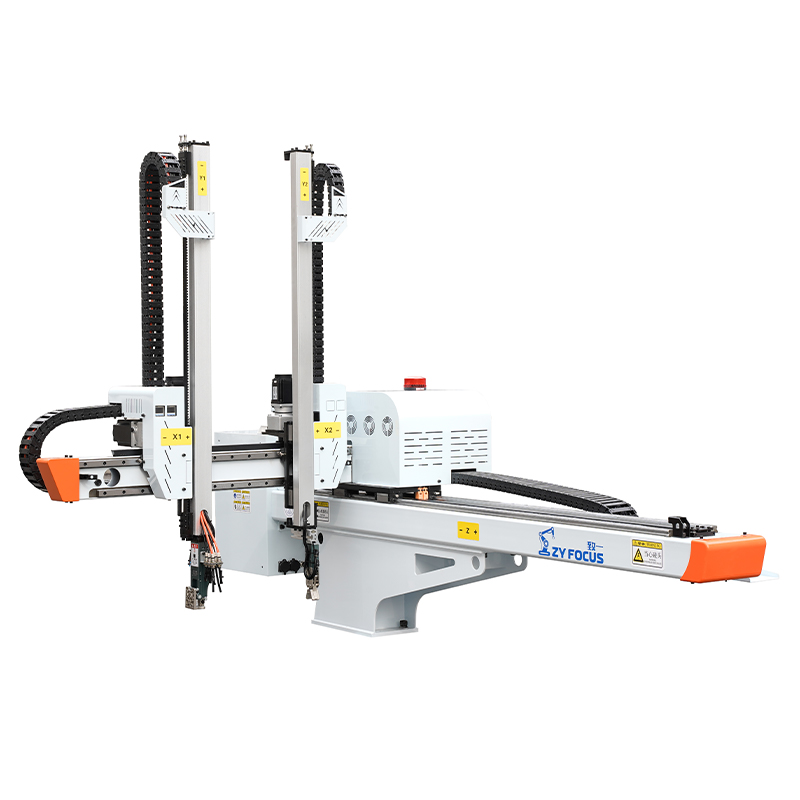
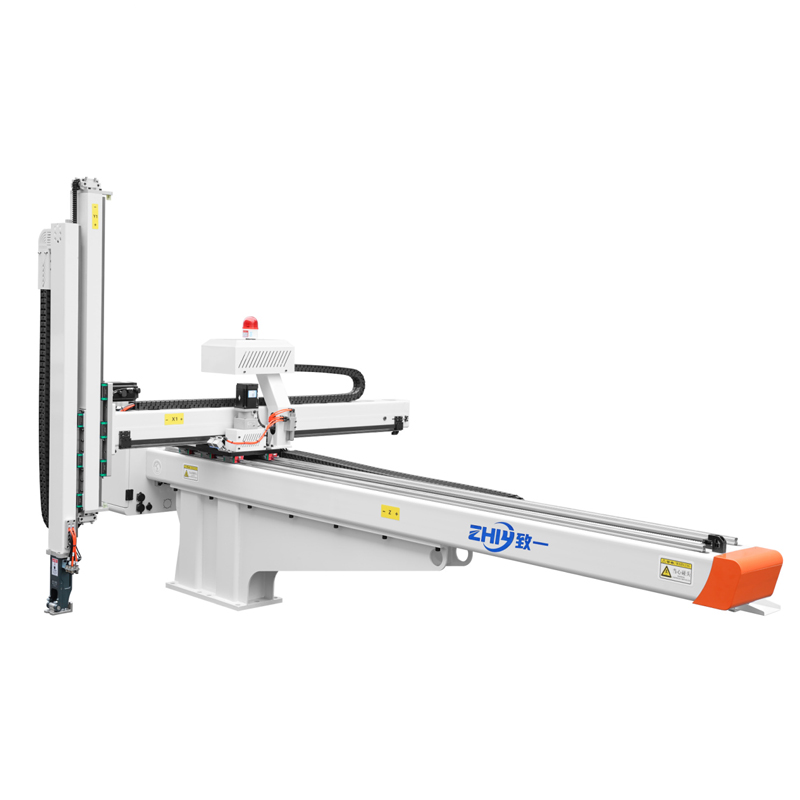
The bull‑head (bull‑head type) three‑axis servo robot design was built specifically for heavy‑load, long‑stroke injection‑molding environments, making it naturally suited for telecommunications component production.
The reinforced bull‑head main frame delivers enhanced structural rigidity. Compared with traditional cantilever structures, this design minimizes arm deflection when retrieving heavy, oversized telecom plastic parts. Even at maximum extension strokes, movement stays stable, protecting both high‑value molds and finished telecom component surfaces from impact or scraping damage.
Full three‑axis servo drive brings precise, controllable motion across all axes. Repeat positioning accuracy supports the tight tolerances required for telecom assemblies. Operators can fine‑tune speed, acceleration and deceleration profiles for each movement segment: slow, gentle approach near the mold, fast traverse for part transport, and soft placement onto conveyors or workstations. This adjustable motion profile is critical for parts combining large size with delicate sealing or snap‑fit features.
High payload capacity handles the heavier end‑of‑arm tooling frequently used in telecom molding. Custom vacuum fixtures, multi‑grip pneumatic grippers and auxiliary attachments for gate trimming or part sorting can be fitted without sacrificing overall system stability. This supports integrated workflows: part extraction, sprue separation, visual inspection station hand‑off, and stacking, all within one robotic cycle.
These robot arms are engineered to pair with high‑tonnage injection molding machines commonly deployed for network infrastructure parts. Installation footprint is optimized for typical factory layouts, so retrofitting onto existing molding lines avoids extensive facility modification.
Core strengths for telecom equipment molding
- Reinforced bull‑head mechanical structure reduces deflection during long‑stroke, heavy‑part extraction
- Tunable servo motion profiles protect cosmetic surfaces and delicate sealing features
- High payload rating supports complex custom end‑of‑arm tooling for multi‑task workflows
- Excellent repeat positioning maintains part consistency across high‑volume production runs
- Compatible with large tonnage molding machines typical for telecom infrastructure components
Real‑world application examples for telecommunications molding
In actual telecom manufacturing workshops, bull‑head robot arms handle several common component families.
Large outdoor base‑station housing molding is one typical use case. These bulky plastic enclosures demand stable extraction to avoid warping hot parts right after mold opening. The robot retrieves complete housings, separates sprues automatically, and transfers finished units to cooling jigs or outbound conveyor systems. Stable motion reduces scrap caused by bending or surface marring on large thin‑wall sections.
Connector and junction box enclosures represent another major application. Though individual parts can be lighter, multi‑cavity molds produce multiple units in each shot. Custom end‑of‑arm tooling picks all cavities simultaneously. Consistent pickup minimizes stress on small snap‑fit structures, lowering failure rates during downstream assembly.
Some production lines integrate additional steps with the bull‑head robot workflow. After extracting telecom components, the arm can deliver parts to offline stations for gate cutting, part marking, or pre‑assembly preparation. This reduces manual handling steps between molding and secondary operations and keeps the full process synchronized to injection‑machine cycle times.
Key specifications to evaluate when selecting a bull‑head robot arm for telecom molding
Not every bull‑head robot performs equally for telecommunications production. When comparing options, focus on these practical, application‑oriented criteria rather than only reviewing datasheet headline numbers.
Structural rigidity under full‑stroke load Look for test data showing positioning performance at maximum stroke with full rated payload. Many robots list accuracy figures under light‑load, short‑stroke lab conditions. In telecom molding, performance when the arm is fully extended matters most, as this is when structural deflection most often occurs.
Repeat positioning accuracy For telecom components, stable repeatability directly impacts assembly quality. Confirm real‑world cycle‑test results rather than nominal specifications. Continuous multi‑shift operation will gradually expose any drift in positioning performance over thousands of cycles.
Payload capacity including end‑of‑arm tool weight Remember to include grippers, vacuum assemblies and fixture hardware when calculating required payload. Many buyers only consider the weight of molded telecom parts and underestimate total load, leading to degraded stability in daily operation.
Control system flexibility Telecom factories frequently switch between different part families. The controller should support simple program storage, fast recipe switching, and straightforward modification of motion paths. Compatibility to communicate with injection‑molding machines and factory MES systems adds value for smart‑factory deployments.
Certification and long‑term reliability testing Prioritize systems that complete full‑load aging testing before factory delivery. Relevant certifications support compliance requirements for global manufacturing sites. Service documentation, spare‑part availability and remote diagnostic capability will reduce long‑term operational risk.
Expected operational benefits for your telecom molding line
When properly matched to your telecom molding application, a bull‑head robot arm delivers measurable operational improvements across multiple production metrics.
Consistent automated part handling lowers scrap rates caused by part deformation, surface scratches or mishandling. For high‑value telecom plastic components, even a small reduction in reject percentage delivers meaningful cost savings over large production volumes.
Cycle‑time optimization brings stable output. The robot maintains uniform cycle performance shift after shift, removing variability introduced by human operators. Factories gain more predictable daily output and better ability to fulfill fixed‑delivery‑date orders for network‑equipment clients.
Labor dependency drops for repetitive, high‑temperature mold‑side tasks. Operators can shift focus to mold setup, quality oversight and process tuning rather than part retrieval. This improves workplace safety and reduces staffing pressure for multi‑shift manufacturing schedules.
Over the asset lifetime, reduced mold damage risk delivers substantial indirect savings. Collision events can create very expensive mold repair or replacement costs. The rigid bull‑head design paired with servo motion control lowers the probability of accidental mold contact during part extraction.
Final thoughts
Telecommunications equipment injection molding balances competing requirements: large component dimensions, cosmetic surface standards, tight assembly tolerances, and non‑stop high‑volume production. Bull‑head three‑axis servo robot arms are purpose‑built to meet these exact challenges.
Success depends not only on robot hardware selection but also on properly sizing payloads for your end‑of‑arm tooling, verifying real‑world performance under full‑stroke operating conditions, and confirming control‑system flexibility for your mix of telecom part families. When selected thoughtfully, these robotic systems become a stable foundation for scaling telecom component output while holding consistent product quality.
If you are evaluating automation upgrades for large or complex molded telecom parts, review how candidate robot systems perform under conditions matching your actual molds, cycle times and factory operating environment. Real‑world operational testing offers far more insight than specification sheets alone.