
Leave Your Message
0102030405
Best Servo Robot Arm for Injection Molding
2026-07-16
Best Servo Robot Arm for Injection Molding: A Complete Buyer’s Guide for Manufacturers
Table of Contents
- Introduction: Why Servo Robot Arms Replace Pneumatic Solutions in Molding
- Core Advantages of Full Servo Robot Arms for Injection Molding Operations
- Key Types of Servo Robot Arms for Different Molding Production Scenarios
- Critical Evaluation Criteria for Procuring Injection Molding Servo Robots
- Industry-Specific Matching: Which Servo Robot Fits Your Production Line
- Total Cost of Ownership: Servo Robot Long-Term ROI Breakdown
- Common Buyer Mistakes When Selecting Injection Molding Robots
- Final Checklist to Confirm Your Ideal Servo Robot Arm
- Frequently Asked Questions From Global Molding Procurement Teams
1. Introduction: Why Servo Robot Arms Replace Pneumatic Solutions in Molding
Every injection molding plant faces consistent operational pain points: inconsistent part quality from manual extraction, slow cycle times, high compressed air consumption, frequent downtime for pneumatic equipment, and rising labor overhead for repetitive take-out tasks. For procurement managers and production engineers sourcing automation hardware, full servo-driven robot arms have become the gold standard to resolve these long-standing bottlenecks.
Unlike basic pneumatic manipulators that rely on air pressure for rigid, jerky movement, servo robot arms use closed-loop AC servo motor control for fully programmable, smooth motion across all axes. This technology delivers repeatable precision, faster cycle speeds, lower energy waste, and flexible adaptability across small precision electronics molds up to heavy automotive component presses.
This guide is built exclusively for global molding factory procurement teams, production supervisors, and plant managers. It breaks down every critical factor to compare, test, and select the best servo robot arm without bias toward regional manufacturers, focusing purely on production performance, compatibility, durability, and long-term operational value. Whether you operate a small batch consumer goods workshop or a high-volume Tier 1 automotive molding facility, this framework will streamline your vendor comparison and purchasing decision-making.
2. Core Advantages of Full Servo Robot Arms for Injection Molding Operations
Before diving into model selection, it’s vital to quantify the tangible production benefits that separate full servo robots from half-servo or pneumatic alternatives. These value points are the primary metrics global buyers prioritize during factory audits and technical tender reviews.
Consistent Micron-Level Precision
Full servo systems integrate high-resolution absolute encoders on every motion axis, delivering repeat positioning accuracy within ±0.02mm to ±0.1mm. For thin-wall packaging, medical device components, and in-mold labeling (IML) processes, this eliminates part scratching, misaligned inserts, and defective finished goods. Manual or pneumatic handling typically creates a 2–4% scrap rate from inconsistent grip and mold entry angles; servo automation cuts this waste by over 70% in mass production lines.
Optimized Cycle Time & Higher Throughput
Independent axis servo control allows separate speed, acceleration, and deceleration tuning for traverse, vertical, and crosswise movement. Top-tier full servo models achieve take-out times under 1 second for mid-tonnage injection machines, with optimized motion paths that avoid sudden stops or collisions with mold cores. Many manufacturers report 15–35% higher daily output after replacing legacy pneumatic robots with full servo units, with stable cycle speeds across 24-hour continuous production shifts.
Significant Long-Term Energy Savings
Pneumatic manipulators require constant air compressor operation, generating steady power draw and air leakage losses. AC servo motors only consume power during active movement and automatically enter low-power standby mode when idle. Field data from international molding facilities confirms full servo robots reduce electrical energy consumption by 20–30% compared to equivalent pneumatic equipment, eliminating recurring monthly air compressor maintenance and utility expenses.
Flexible Multi-Task Programming
Servo robot controllers store hundreds of mold preset programs, supporting complex secondary workflows beyond simple part take-out: automatic sprue separation, insert metal nut loading, post-mold trimming, part stacking, and automated packaging. Operators can switch between product molds in minutes via a touchscreen HMI, making servo arms ideal for mixed-batch production with frequent product changeovers. Most systems support multi-language operation without complex coding training for on-site technicians.
Superior Durability for Harsh Molding Environments
Standard servo robot frames use high-rigidity alloy beams and fully enclosed cable chains, with IP65 base protection as a baseline specification. The linear guide rails and drive belts adopt wear-resistant surface treatment to withstand continuous exposure to mold oil, plastic dust, and fluctuating workshop temperatures (10°C to 45°C). Well-maintained full servo units deliver 8–10 years of stable service life, far exceeding the 3–5 year average lifespan of pneumatic manipulators with air cylinder wear issuesMade-in-Ch....
Built-In Safety & Remote Diagnostics
Modern servo robot platforms integrate collision detection, soft limit positioning, and emergency stop interlocks synchronized with injection molding machine safety circuits. Many systems support remote monitoring and fault data logging, enabling maintenance teams to diagnose abnormal vibration or motor overload without full production line shutdown, drastically cutting unplanned downtime.
3. Key Types of Servo Robot Arms for Different Molding Production Scenarios
Procurement teams must first match robot architecture to their injection machine tonnage, product weight, and required secondary automation tasks. Three mainstream servo robot configurations dominate global molding workshops, each with clear ideal use cases:
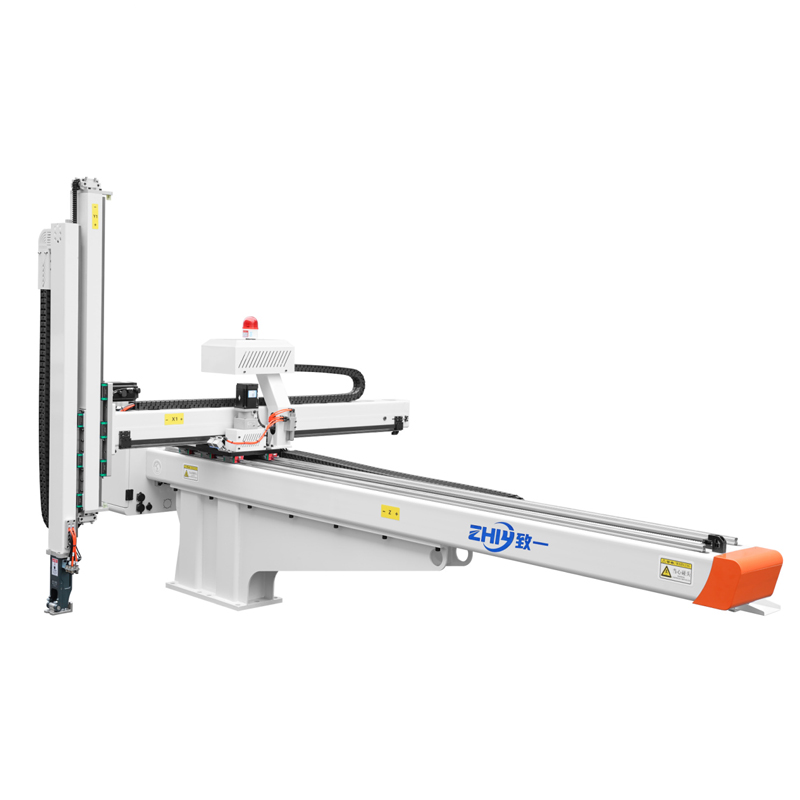
3-Axis Full Servo Telescopic Robot Arms
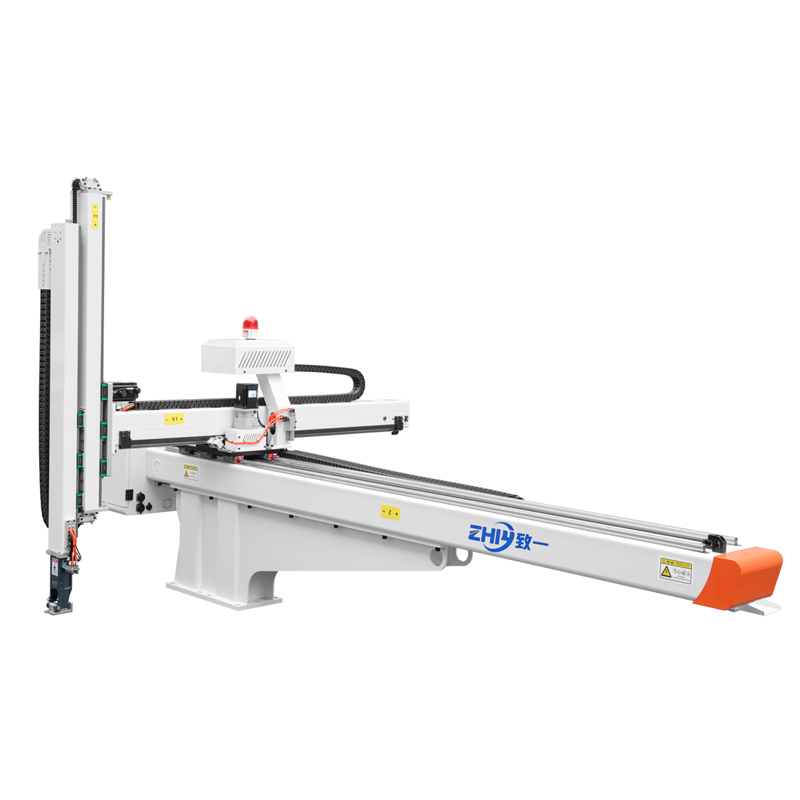
Core Structure: Full servo drive for traverse (X), crosswise extraction (Y), and vertical Z-axis movement; single telescopic vertical beam design. Best For: Small-to-medium tonnage injection machines (50T–550T), single-cavity molds, basic take-out and sprue removal for consumer electronics, household plastic parts, and cosmetic packaging. Buyer Fit: Facilities with limited overhead ceiling height, standardized single-product mass production, and limited secondary post-mold processing needs. Low upfront investment while retaining full servo speed and precision benefits.
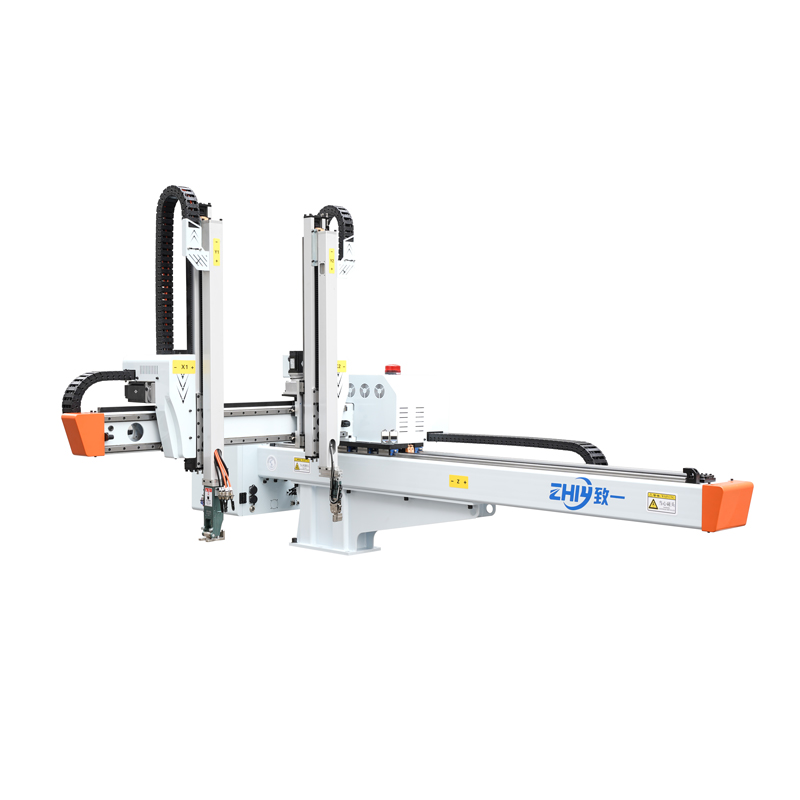
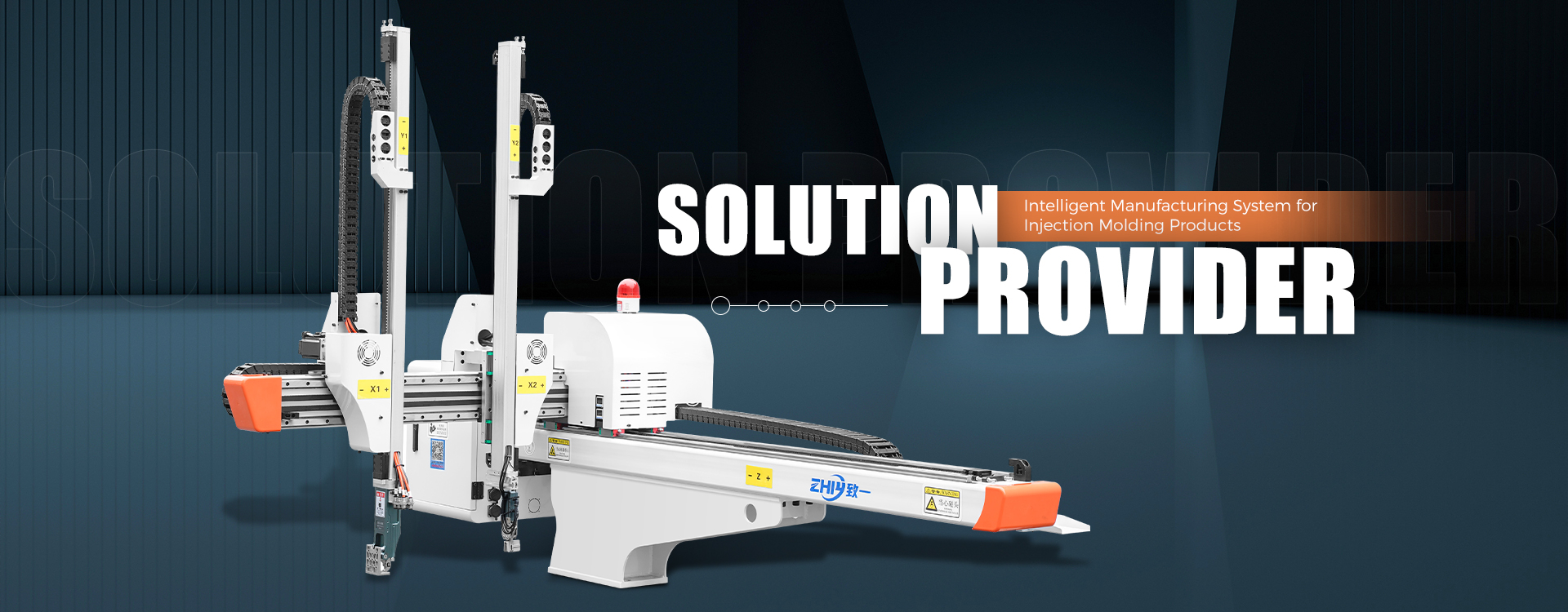
5-Axis Dual Vertical Full Servo Robot Arms
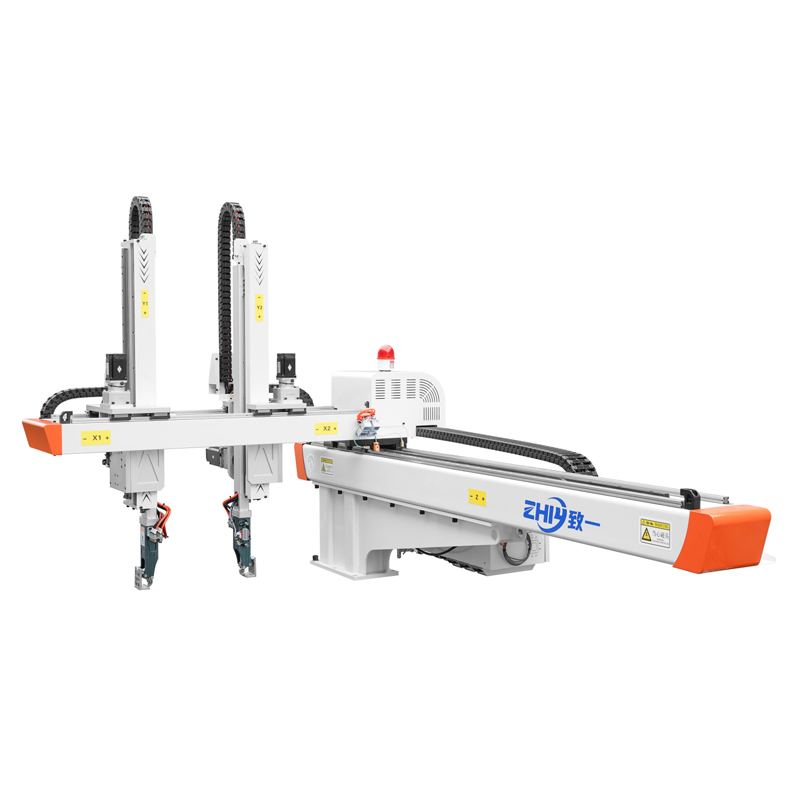
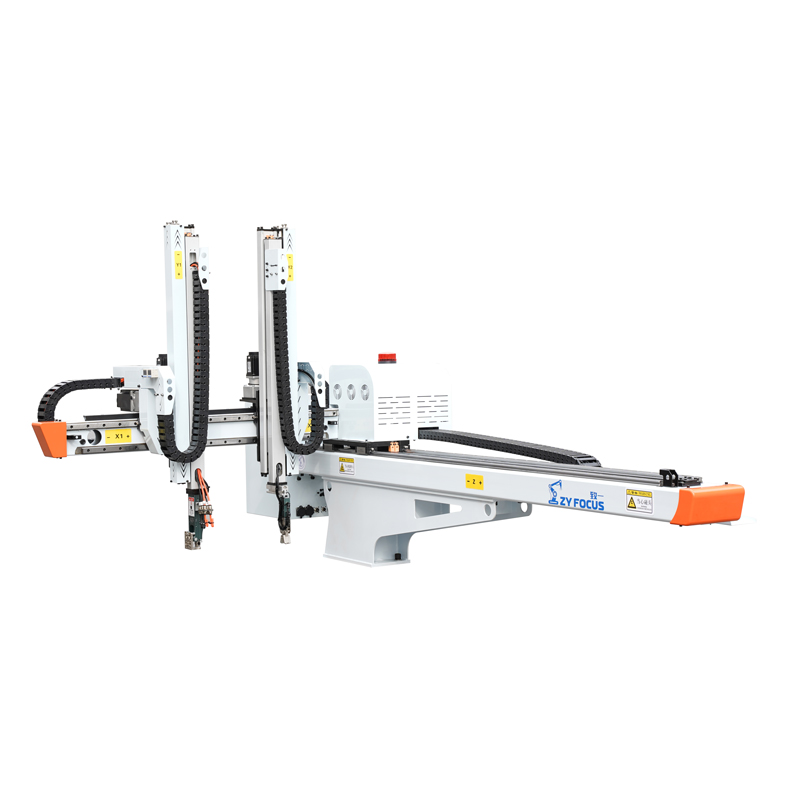
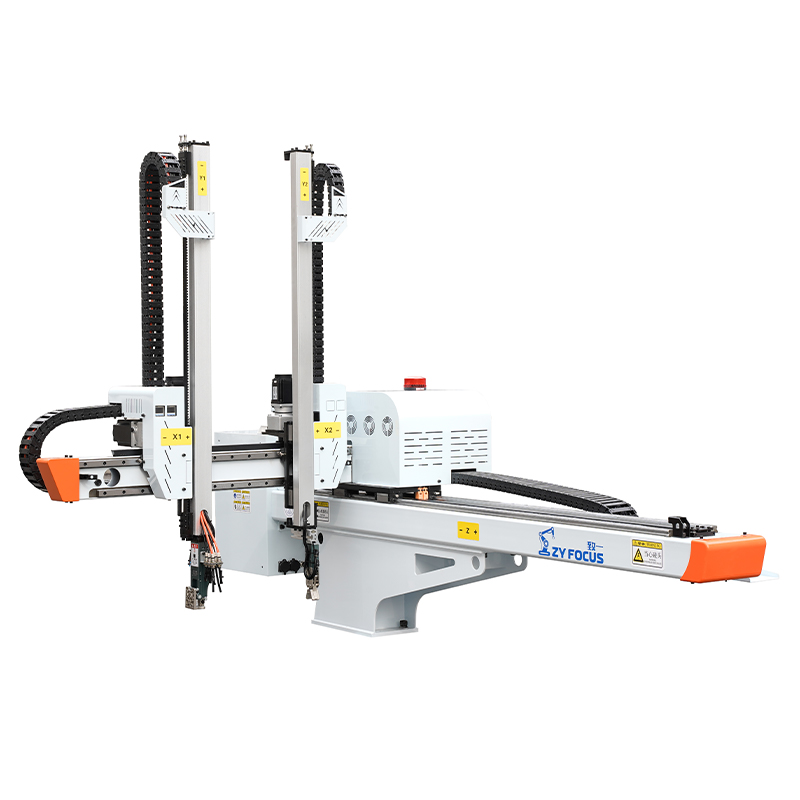
Core Structure: Independent servo control for X/Y main axes plus dual vertical Z1/Z2 sub-arms, with programmable tilt rotation on the extraction end effector. Best For: Multi-cavity molds, IML in-mold labeling, metal insert overmolding, simultaneous finished part and runner sprue removal, automotive small plastic components, and medical precision molded goods. Buyer Fit: High-mix production lines requiring two parallel handling tasks, manufacturers targeting zero manual intervention between mold ejection and finished part sorting. The dual-arm design cuts cycle time by eliminating sequential pick-and-place steps.
Multi-Joint 6-Axis Servo Robot Arms
Core Structure: Articulated jointed servo arm with full 360° flexible rotation across all axes, compatible with standalone or side-mounted injection molding setups. Best For: Heavy large-format molded components (automotive bumpers, appliance housings), complex post-mold assembly, off-mold secondary operations, and custom automated production cells combining molding, testing, and packaging. Buyer Fit: Large-scale Tier 1 automotive suppliers, industrial plastic component manufacturers, and factories building fully unmanned dark production workshops. Higher payload capacity (up to 15kg) and unrestricted movement flexibility offset higher initial procurement costs.
4. Critical Evaluation Criteria for Procuring Injection Molding Servo Robots
When comparing vendor quotations and technical datasheets, global procurement teams should score every candidate servo robot against these non-negotiable evaluation benchmarks:
1. Payload & Stroke Compatibility
Match maximum rated payload to your heaviest molded finished part plus sprue weight; overloading servo motors creates premature wear and inconsistent positioning. Confirm vertical telescopic stroke length aligns with your mold opening height, and horizontal traverse stroke covers the full width of your injection machine platen. Overspecifying stroke wastes factory floor space, while undersizing restricts mold compatibility for future product expansion.
2. Servo Motor & Encoder Grade
Prioritize robots fitted with brushless AC servo motors paired with 17-bit or higher absolute encoders. Lower-resolution encoders produce positioning drift during long shifts, which leads to damaged thin-wall or cosmetic-critical parts. Request vendors to provide motor brand specifications and continuous duty cycle testing reports for 24-hour operation validation.
3. Environmental Protection Rating
Minimum acceptable rating for standard molding workshops is IP65 for all moving axis components. Facilities operating with high-temperature mold release agents, heavy oil mist, or outdoor auxiliary molding lines should upgrade to IP67-rated servo units to avoid frequent electrical component failures.
4. Controller & Integration Compatibility
Verify the robot control system supports standard industrial communication protocols (Modbus RTU, OPC UA) to sync with your existing injection molding machines, conveyor belts, and downstream inspection equipment. Closed proprietary control systems create costly integration barriers if you plan to expand automation lines later. Touchscreen HMI with multi-language operation reduces technician training time for multi-national factory teams.
5. End Effector Customization Support
Confirm the robot arm’s flange mount supports quick swap of vacuum suction cups, pneumatic grippers, force-sensing clamps, and IML labeling fixtures. Vendors offering modular end-of-arm tooling kits reduce custom modification costs for mixed product molding schedules.
6. Compliance & Global Certifications
For cross-border production and supply chain qualification, confirm the robot carries CE safety certification, ISO 9001 manufacturing certification, and regional electrical compliance matching your facility’s power grid standards (single/three-phase voltage options). Automotive and medical component buyers will require additional third-party performance audit documentation.
7. Global After-Sales Service Network
Servo robots represent long-term capital equipment; local service support directly impacts production uptime. Evaluate vendor lead times for spare parts (servo motors, guide rails, belts) and on-site technician response windows. Suppliers with regional service hubs eliminate multi-week downtime delays common with remote-only support teams.
5. Industry-Specific Matching: Which Servo Robot Fits Your Production Line
Different vertical manufacturing sectors carry unique molding requirements that narrow down optimal servo robot selection:
Consumer Electronics & Precision 3C Molding
Core demands: Ultra-high precision, low payload (0.5–3kg), clean operation for thin shell components, IML label placement. Recommended robot: 5-axis full servo dual vertical arm, ±0.02mm repeatability, compact frame design to fit narrow injection machine layouts. Eliminates micro-scratches on polished plastic housings for phones, earbuds, and connectors.
Automotive Component Molding
Core demands: High payload, heavy-duty continuous operation, compatibility with large tonnage presses (800T–4500T), insert metal nut loading, multi-cavity mold handling. Recommended robot: 5-axis heavy telescopic servo arm for mid-size interior trim parts; 6-axis articulated servo robot for large bumpers, instrument panels, and exterior body components. Collision force sensing protects expensive automotive molds during automated extraction.
Medical Disposable & Medical Device Molding
Core demands: Dust-free operation, consistent dimensional accuracy, low vibration to avoid micro-defects, compliance with cleanroom workshop standards. Recommended robot: Sealed frame 3 or 5-axis full servo arm with stainless steel guide rail covers, smooth low-vibration servo motion profiles to meet strict medical plastic quality tolerances.
Food Packaging & Thin-Wall Container Molding
Core demands: Ultra-fast take-out cycle times, lightweight part handling, high daily throughput for mass disposable cup, container, and lid production. Recommended robot: Lightweight 3-axis high-speed servo telescopic model, optimized short-stroke motion profiles achieving sub-1-second extraction cycles to match fast thin-wall molding machine throughput.
Household Goods & General Consumer Plastic Molding
Core demands: Cost-effective automation, flexible mold program switching, mixed small and medium part production. Recommended robot: Standard 3-axis full servo arm, balanced performance and upfront investment, ideal for small-to-mid volume molding facilities with frequent product changeovers.
6. Total Cost of Ownership: Servo Robot Long-Term ROI Breakdown
Many procurement teams focus solely on upfront purchase price, ignoring recurring operational costs that dominate total expenditure over the robot’s service life. When calculating ROI for servo automation, include these key financial factors:
Upfront Capital Costs
Base robot unit, custom end effector tooling, installation commissioning, factory integration wiring, and technician training fees. Full servo robots carry a higher initial ticket price than half-servo or pneumatic alternatives, but the gap is offset within 12–24 months of operation for most production lines.
Recurring Operational Savings
- Labor reduction: Single servo robot replaces 1–2 full-time operators per injection machine, eliminating hourly wages, shift allowances, and staff turnover costs.
- Scrap reduction: Consistent precision cuts defective part waste, lowering raw plastic resin consumption and rework labor hours.
- Energy cost cuts: 20–30% lower electricity draw versus pneumatic manipulators, with no continuous air compressor running overhead.
- Mold maintenance savings: Smooth servo-controlled mold entry reduces accidental mold impact damage, extending mold service life and cutting repair expenditures.
Annual Maintenance Expenses
Servo robots only require scheduled lubrication of guide rails and periodic belt tension checks, with standardized, widely available spare parts. Pneumatic systems require monthly air cylinder seal replacements, air filter maintenance, and compressor servicing, creating higher annual maintenance overhead.
Typical ROI Timeline
- High-volume automotive/electronics mass production: 10–16 month full return on investment
- Medium-batch household goods molding: 18–24 month ROI
- Small-batch custom medical/industrial component workshops: 24–30 month ROI
7. Common Buyer Mistakes When Selecting Injection Molding Robots
Decades of global molding automation procurement data highlight recurring missteps that lead to underperforming robot installations. Avoid these critical errors during your vendor evaluation phase:
- Choosing pneumatic robots to cut initial budget: Short-term savings create far higher long-term utility, scrap, and labor costs, with limited scalability for future production upgrades.
- Under-sizing payload or stroke to reduce purchase cost: Overloaded servo motors degrade rapidly, while insufficient stroke restricts mold compatibility for new product launches.
- Ignoring workshop environmental conditions: Selecting standard IP54 robots for high-oil, high-dust molding lines leads to frequent electrical breakdowns and unplanned downtime.
- Overlooking integration compatibility: Proprietary closed control systems prevent syncing with new injection machines, conveyors, and quality inspection equipment as lines expand.
- Neglecting after-sales support network: Low-cost offshore robot suppliers without regional service hubs create multi-week production shutdowns when spare parts or on-site repairs are required.
- Prioritizing maximum speed over motion stability: Unregulated high-speed servo movement causes thin-wall part deformation, offsetting throughput gains with elevated scrap rates.
8. Final Checklist to Confirm Your Ideal Servo Robot Arm
Use this standardized procurement checklist to cross-verify every candidate robot before finalizing purchase orders:
- Payload rating exceeds maximum finished part + sprue weight by 20% safety margin
- Vertical traverse stroke matches mold opening height and factory ceiling limits
- Full AC servo drive on all required axes (3/5/6 axis matching production tasks)
- Minimum IP65 environmental protection rating for all moving components
- Position repeatability ≤0.1mm (≤0.02mm for medical/electronics precision parts)
- Multi-language touchscreen HMI with 100+ mold program storage capacity
- Open industrial communication protocols for injection machine integration
- CE and ISO manufacturing certification documentation provided
- Modular end effector mounting for vacuum/gripper tool swaps
- Local spare parts stock and defined on-site technician response time
- Vendor provides full cycle speed and scrap reduction performance test reports
- Total cost of ownership calculation including energy, labor, and maintenance savings
9. Frequently Asked Questions From Global Molding Procurement Teams
Q1: What is the difference between half-servo and full servo injection molding robot arms?
Half-servo robots only install servo motors on select axes, relying on pneumatic drive for remaining movement. They offer limited precision, slower cycle speeds, and higher air consumption. Full servo units equip independent servo motors for every motion axis, delivering fully programmable smooth movement, consistent accuracy, and maximum energy efficiency, making them the preferred choice for long-term production automation.
Q2: Can servo robot arms work with all existing injection molding machine brands?
Nearly all modern full servo robot controllers support universal signal synchronization with global injection machine manufacturers via standard digital communication ports. Older analog press models may require simple signal adapter kits for seamless integration, which most robot vendors supply as optional add-ons.
Q3: How much floor overhead clearance is required to install a telescopic servo robot arm?
Standard 3/5-axis telescopic servo robots need 2.8–3.5 meters of ceiling height above the injection machine platen. Compact low-height modified models are available for facilities with restricted overhead space, with reduced vertical stroke specifications for smaller mold setups.
Q4: Is remote monitoring standard on new servo robot systems?
Mid-to-high tier full servo robot platforms include built-in remote diagnostic and data logging functionality as standard. Entry-level base models may offer remote connectivity as an optional upgrade, which is highly recommended for multi-line unmanned production workshops to reduce on-site maintenance labor.
Q5: How often do servo robot arms require scheduled maintenance?
Light-to-medium production lines (1–2 daily shifts) require minor quarterly maintenance (rail lubrication, belt tension inspection). 24-hour continuous mass production facilities need monthly routine checks. Major component replacement (servo belts, linear guides) is only required every 4–6 years with proper scheduled care.
Conclusion
For injection molding facilities aiming to boost output, stabilize product quality, and cut long-term operational overhead, full servo robot arms represent the most impactful automation investment available today. The optimal servo robot solution is not defined by maximum speed or lowest upfront price alone—it is the model perfectly matched to your injection machine tonnage, molded product type, workshop environment, and long-term production expansion plans.