
Leave Your Message
3-Axis vs 5-Axis Servo Robots for Injection Molding: A B2B Buyer's Decision Framework
Introduction: Two Robots, One Injection Molding Cell
Most factory buyers shopping for an injection molding servo robot start with the wrong question. They ask "which brand is cheapest" instead of "how many degrees of freedom does my part actually require." The gap between a 3-axis servo robot and a 5-axis servo robot is not just two extra motors. It is a fundamentally different approach to part removal, insert loading, and downstream automation. For B2B procurement teams specifying equipment across multiple production lines, getting this decision right protects throughput, protects operators, and protects the capital budget for years.
This guide is written for plant managers, automation engineers, and purchasing leads who need a repeatable framework rather than a sales pitch. We will break down the mechanical difference, the cost of ownership, real application cases from food-grade silicone to automotive parts, and the integration traps that quietly inflate project timelines.
What "Axis" Actually Means on a Molding Robot
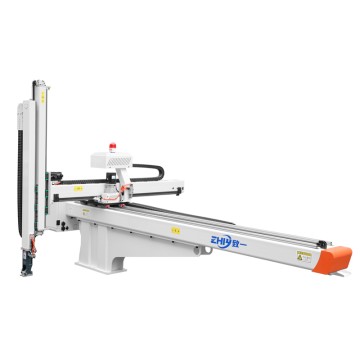
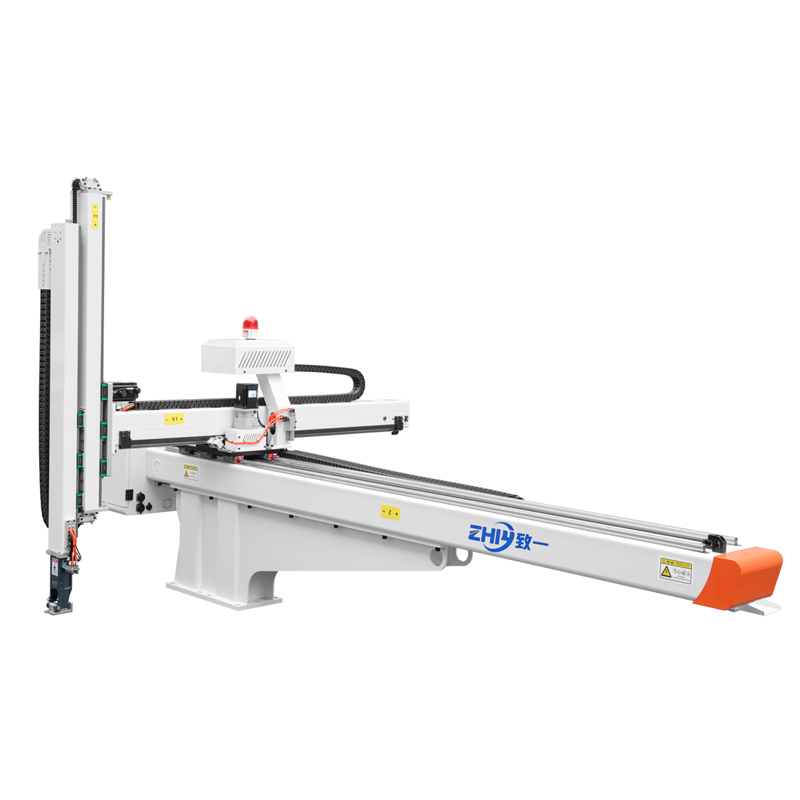
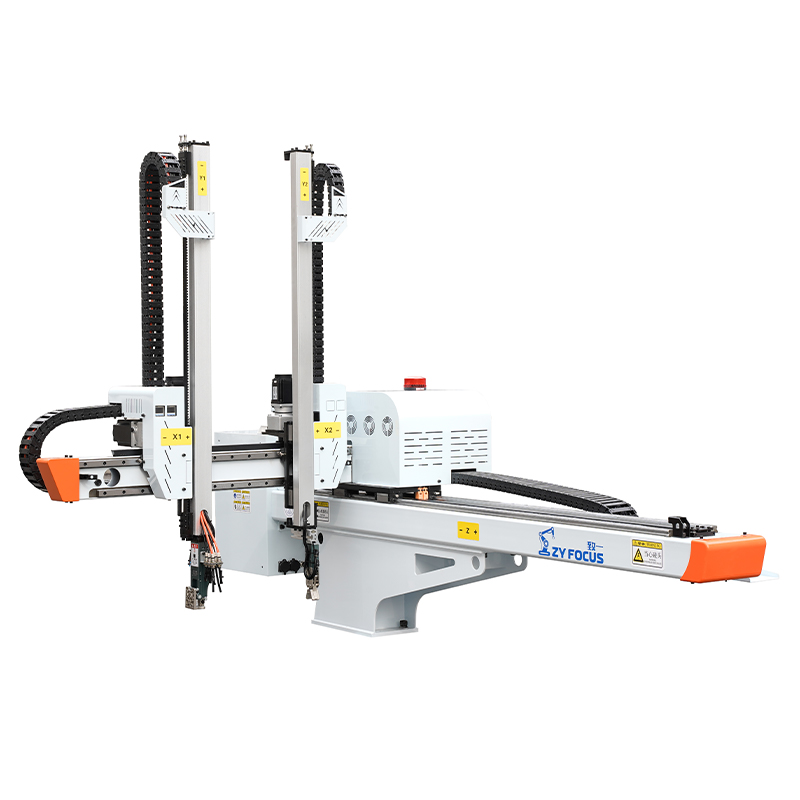
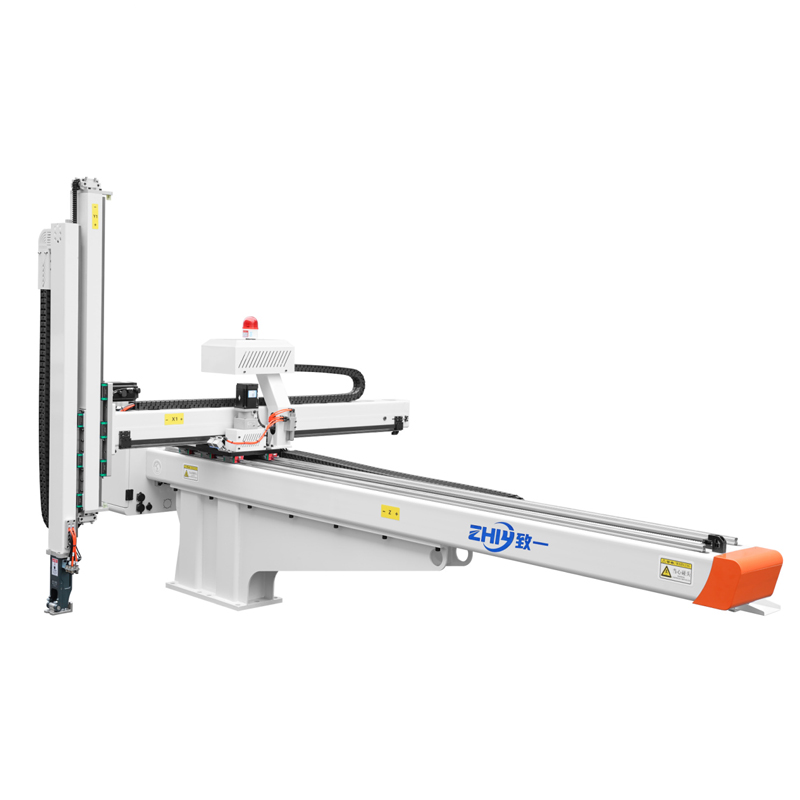
An axis is a single, independent direction of motion. A standard 3-axis servo robot moves on three linear paths: traverse (across the machine platen), vertical (up and down for take-out), and crosswise (side to side for stacking or placement). Every motion is a straight line. This is exactly what most sprue-puller and part-removal jobs need.
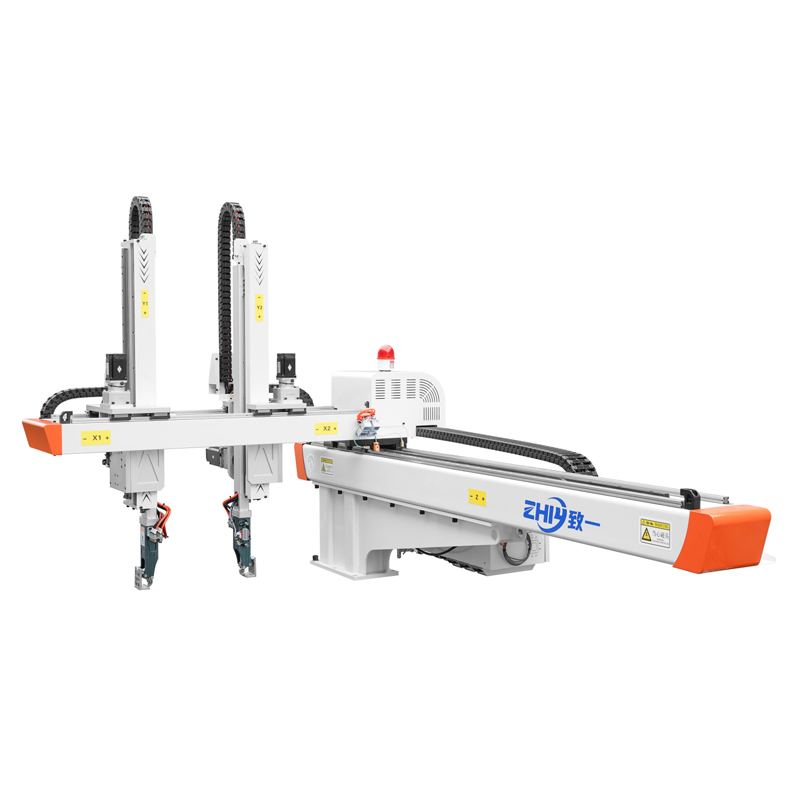
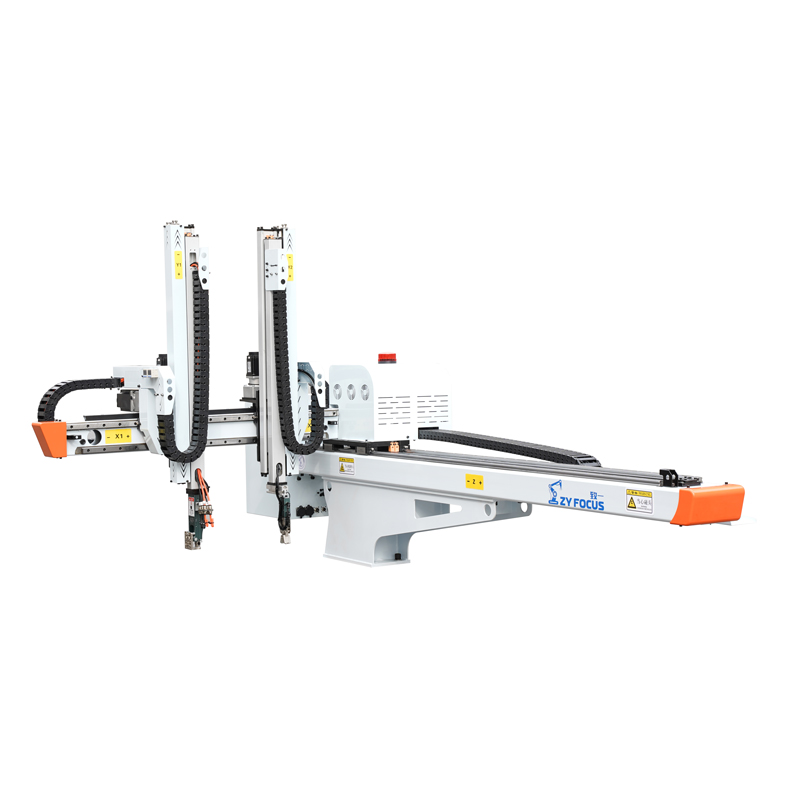
A 5-axis servo robot keeps those three linear axes and adds two rotational axes, typically a wrist roll and a forearm pitch or a double-arm configuration. Those rotations let the end-of-arm tooling approach a part from an angle, flip it, or present it to a secondary station without a human touch or a separate indexing table. The extra axes are not about speed. They are about orientation.
The Mechanical Trade-Off in Plain Terms
- 3-axis: simpler kinematics, fewer failure points, faster tuning, lower price.
- 5-axis: complex motion, smarter controller, higher price, more programming effort.
- 3-axis: ideal when the part drops or stacks in a predictable straight path.
- 5-axis: ideal when the part must be rotated, inserted, or oriented mid-air.
When a 3-Axis Servo Robot Is the Right Choice
For the majority of injection molding plants, the 3-axis servo robot is the correct default. Recurring, high-volume parts with a simple take-out path do not need rotational freedom. The servo drive gives you precise, repeatable acceleration control that outperforms Pneumatic Robots on delicate or tightly toleranced parts.
Choose 3-axis when your application looks like this:
- Flat or symmetric parts that release straight out of the mold.
- Single-cavity or multi-cavity jobs with consistent demold geometry.
- Stacking, boxing, or conveyor drop in a straight line.
- Tight capital budget across many machines needing retrofits.
- Operators who need a simple, teachable interface with minimal training.
A 3-axis servo robot typically pays for itself faster because the engineering and commissioning cost is lower, and spare parts inventory stays small. For SMEs running 10 to 50 ton machines, this is the workhorse that keeps labor cost per part down.
When You Should Step Up to a 5-Axis Servo Robot
The 5-axis servo robot earns its cost when the part or the process demands orientation that a straight-line robot cannot deliver. Complex housings, inserts that must be placed at an angle, or downstream assembly that needs a flipped or rotated part are classic triggers.
Upgrade to 5-axis when you see these signals:
- The part must be inserted back into the mold at a non-vertical angle.
- Secondary operations (deburring, labeling, assembly) need a specific face up.
- You are handling fragile or asymmetric components that cannot be dropped.
- A double-arm layout is required to load and unload in the same cycle.
- Yield loss from manual re-orientation exceeds the robot premium.
The five-axis servo double-arm configuration is especially powerful for industrial equipment housings, where a single cell must remove a molded shell and place an insert in the same beat without a human hand.
Total Cost of Ownership: Looking Past the Sticker Price
B2B buyers are judged on total cost of ownership, not purchase price. The robot is a small fraction of the lifetime bill. Consider the full picture before you lock a specification.
- Acquisition: 5-axis units cost more in hardware and controller software.
- Integration: 5-axis needs more engineering hours to program and validate.
- Spares: more axes mean more cables, bearings, and encoder components.
- Training: operators need deeper know-how for rotational path teaching.
- Throughput: 5-axis can eliminate a separate re-orientation station, saving floor space.
- Uptime: simpler 3-axis trains are easier for your maintenance team to keep running.
A useful rule of thumb: only pay for the fifth and sixth axis if they remove a manual step or a separate machine. If the rotational motion adds no process value, a 3-axis robot is the financially disciplined choice.
Application Scenarios from Real Production Lines
Theory is easy. The best way to choose is to map your part to a proven case. Four real-world examples show how the axis count followed the application, not the other way around.
Food-Grade Silicone Molding
In food-grade silicone production, contamination control and gentle demolding dominate the specification. A 3-axis servo robot for food-grade silicone molding delivers the straight, repeatable take-out path that cleanrooms prefer, with servo control protecting soft silicone edges from shear. The article 3-Axis Servo Robots for Food-Grade Silicone Molding walks through the practical specification checklist buyers should bring to a supplier.
Kitchenware Manufacturing
Kitchenware often combines silicone and rigid plastics in one cell. A 3-axis silicone servo robot for kitchenware manufacturing handles the high-cavity, high-cycle take-out while keeping the line compact. Details are covered in 3-Axis Silicone Servo Robot for Kitchenware Manufacturing, which shows how one robot supports multiple mold families.
Industrial Equipment Housings
Large, asymmetric housings are where 5-axis earns its place. The five-axis servo double-arm system for industrial equipment housings removes the shell and handles insert placement in a single synchronized motion. Read the breakdown at Five-Axis Servo Double Arm for Industrial Equipment Housings.
Automotive Parts
Automotive suppliers live on tolerance and traceability. A 3-axis servo robotic arm for automotive parts molding gives the repeatable, documentable cycle that tier suppliers require, often without the cost of rotational axes. The case study Automotive Parts Molding with 3-Axis Servo Robotic Arm explains the validation approach.
Common Pitfalls B2B Buyers Make
Even experienced procurement teams repeat the same mistakes. Avoid these four traps when you write the specification.
- Over-buying axes: specifying 5-axis for a job a 3-axis handles perfectly.
- Under-buying axes: forcing a 3-axis robot into an angled-insert application and adding a manual step.
- Ignoring controller compatibility with your existing injection machine brand.
- Forgetting to budget for end-of-arm tooling changes across mold families.
Tip: Before requesting a quote, record 30 seconds of your current manual or pneumatic take-out cycle and list every re-orientation a human hand performs. Each re-orientation is a candidate axis. If you have zero, a 3-axis servo robot is almost certainly enough.
Integration and Programming Considerations
The hidden cost of any robot is the integration week. A 3-axis servo robot usually commissions in a day or two because the motion is linear and the teach pendant logic is simple. A 5-axis unit needs path planning for the rotational axes, collision checks, and often a simulation pass before go-live.
For B2B buyers managing multiple lines, standardize on one controller platform where possible. Sharing programming logic and spare modules across machines reduces training overhead and shortens every future retrofit. Ask your supplier whether the same teach pendant and software license covers both 3-axis and 5-axis models in their range.
Safety, Compliance, and Operator Protection
Robots sit beside people. For export-oriented factories, compliance with CE and UL safety standards is not optional. Confirm that the robot ships with the required emergency-stop architecture, light curtains or interlocking where mandated, and documented risk assessment for your cell layout.
- Verify the servo drive has safe-torque-off certification for your market.
- Define the collaborative zone if operators enter the cell for changeovers.
- Require wiring diagrams and safety manuals in your procurement contract.
- Train at least two internal technicians on lockout-tagout procedures.
A Practical Decision Checklist
Use this checklist at the specification stage. Count the "yes" answers for 5-axis triggers.
- Does the part need to be rotated or flipped before placement? (Yes favors 5-axis)
- Is there an angled insert load back into the mold? (Yes favors 5-axis)
- Can the part release and stack in a straight line? (Yes favors 3-axis)
- Is budget the primary constraint across many machines? (Yes favors 3-axis)
- Will a 5-axis robot replace a separate downstream station? (Yes favors 5-axis)
If you score mostly 3-axis signals, standardize on a 3-axis servo robot fleet and reserve 5-axis for one or two specialized cells. If you score mostly 5-axis signals, invest in the double-arm servo system and budget the extra integration time up front.
Why Source From a Specialized Servo Robot Manufacturer
Choosing between 3-axis and 5-axis is only half the project. The other half is the supplier's ability to deliver consistent mechanics, responsive spare parts, and application engineering that understands injection molding rather than generic industrial robotics. A manufacturer focused on injection molding servo robots and industrial robots will typically offer better mold-compatible mounting, faster EOAT design turnaround, and retrofit kits sized for your exact machine tonnage.
For B2B brands, OEM and ODM options matter. If you private-label equipment or need a robot branded for your own automation line, confirm the supplier supports custom controller branding, documentation localization, and volume pricing before you commit.
Related Pages
- 3-Axis Servo Robots for Food-Grade Silicone Molding
- Five-Axis Servo Double Arm for Industrial Equipment Housings
- Automotive Parts Molding with 3-Axis Servo Robotic Arm
- 3-Axis Silicone Servo Robot for Kitchenware Manufacturing
Ready to source the right 3-axis or 5-axis servo robot for your injection molding line? Contact Zhiyi Robotics at https://www.zhiyirobotics.com for a tailored specification and quote.