In today’s fast-changing world of automation, you can’t ignore the rise of the Single Arm Robot. According to Dr. Emily Chen from Robotics Innovations, these robots really bring a lot of flexibility and efficiency to different industries. That quote pretty much sums up their real impact. But it’s not just about what these machines can do—it's also about how smoothly they fit into daily workflows.
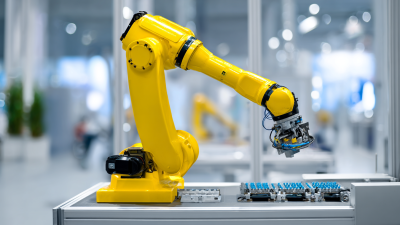
A bunch of companies are jumping on the bandwagon with Single Arm Robot Tech. Take Universal Robots, for example—they’re really shaking up assembly lines. These robots can handle tasks like picking up and placing items with pretty incredible precision. Still, it’s not all smooth sailing. Some jobs just aren’t suited for a single arm robot. And in certain situations, humans still gotta step in. This definitely raises questions about job security and what the future holds for humans and robots working together.
As we check out the top 10 Single Arm Robots, it’s important to recognize both their strengths and weaknesses. Every model has its own unique features—some are super fast, while others are all about flexibility. Knowing these differences is key if you wanna make the most out of them in different fields. The Arm Single-Arm Robot Cut isn’t just a passing trend; it’s part of a bigger change in how we view work and technology. The journey ahead is full of possibilities, but also some hurdles we need to think about carefully.
Overview of Single Arm Robots and Their Applications
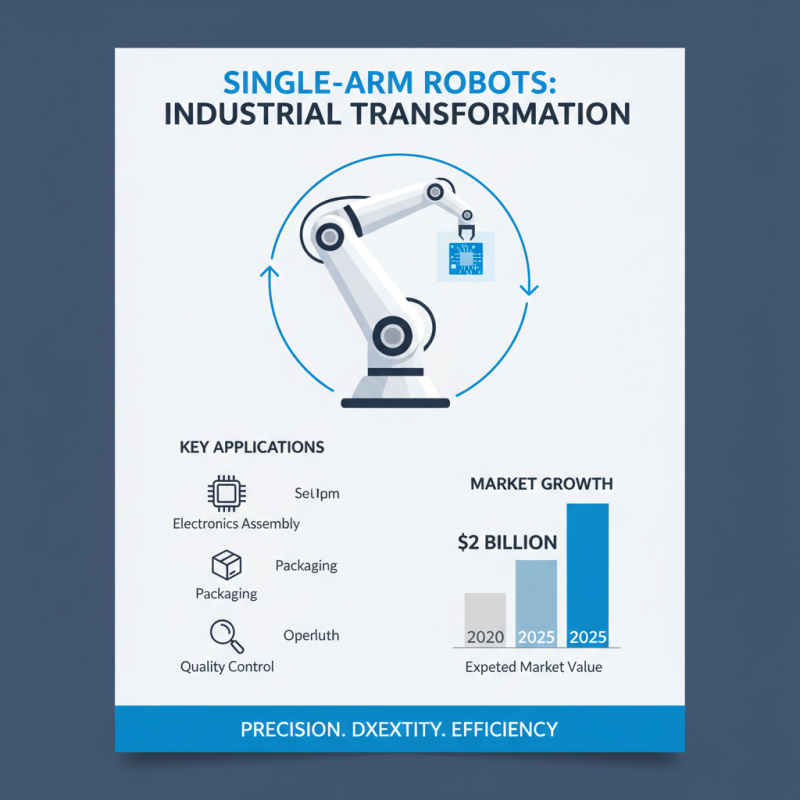
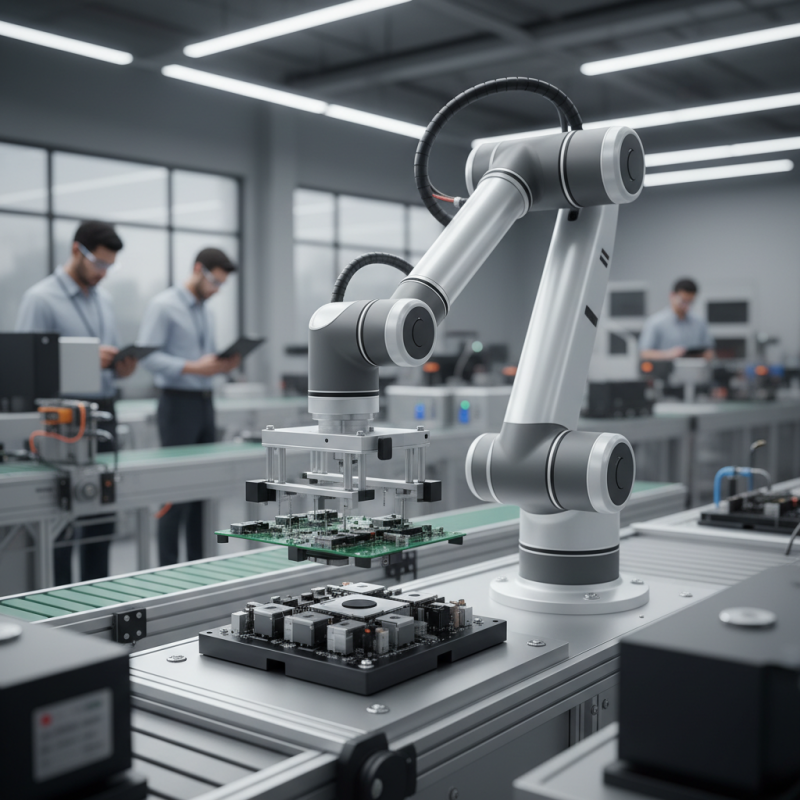
Single Arm Robots have transformed various industries. These robots excel in tasks requiring precision and dexterity. They are particularly effective in electronics assembly, packaging, and quality control. In fact, according to a recent report, the market for single-arm robotics is expected to grow significantly, reaching $2 billion by 2025.
Their design allows for flexibility and compactness. Many workplaces benefit from these robots, especially in tight spaces. In assembly lines, they perform repetitive tasks efficiently, reducing human error. Yet, challenges exist. Programming these robots can be complex. Users often need extensive training and support. The learning curve can deter some potential adopters.
Data suggests that as of 2022, around 30% of companies have integrated robotic solutions, highlighting a need for further adoption. Businesses sometimes struggle with the integration of single arm robots into existing workflows. While they promise profitability and increased productivity, initial costs and maintenance can be obstacles. Adjusting to their presence may take time and reflection.
Key Features that Make Single Arm Robots Unique
Single arm robots are revolutionizing automation. Their design allows for versatility and efficiency in various tasks. These robots are compact, making them suitable for space-constrained environments. With a Single Axis Robot Arm, tasks like assembly and packaging become seamless. They can be programmed for precision, enhancing production quality.
Key features that set single arm robots apart include their adaptability. They quickly switch between tasks, reducing downtime. Many come equipped with sensors, which enhance their interaction with objects. This ensures accuracy in operations. However, not all single arm robots have advanced sensor systems. This can lead to occasional errors, necessitating manual corrections. The learning curve can also be steep, especially for businesses new to automation.
Ease of use is another advantage of single arm robots. They often have user-friendly interfaces. This aspect is crucial for staff training, yet some operators might find them challenging initially. Additionally, maintenance can be a consideration. Regular checks are needed to ensure optimal performance. While single arm robots offer great potential, users must remain aware of their limitations and be prepared to adapt.
Top 10 Single Arm Robots - Key Features Comparison
Top 10 Single Arm Robots in the Market Today
The landscape of automation has been transforming rapidly, particularly with single arm robots. According to a recent industry report, the single arm robotic market is projected to grow at a compound annual growth rate (CAGR) of around 10% over the next five years. This growth reflects increased adoption across various sectors, including manufacturing and healthcare. The versatility of these robots allows them to perform tasks efficiently and accurately, from assembly lines to surgical assistance.
Many Single Robots stand out due to their advanced capabilities. For example, some models feature intuitive programming and allow for easy integration with existing systems. Data from industry experts highlight that these robots can reduce operational costs by up to 30%. That’s quite significant. However, there is a challenge regarding their flexibility. Some single arm robots can be limited in multitasking abilities compared to their more complex counterparts. This presents a scenario where companies must balance efficiency and versatility.
Furthermore, safety remains a concern. As single arm robots work alongside humans, the potential for accidents exists. Statistics show that nearly 50% of operational incidents in robotics arise from human interaction. Continuous improvement in safety features is crucial as the market evolves. The future of single arm robots hinges on addressing these limitations while enhancing their unique strengths in a rapidly changing technological environment.
Comparison of Performance and Efficiency Among Leading Models
Single arm robots have seen a surge in popularity. Their simplicity and versatility make them attractive for various applications. In many sectors, efficiency is key. According to recent industry reports, single arm robots can increase productivity by up to 40%. This improvement is essential in today's fast-paced manufacturing environment.
Key performance metrics often include speed and accuracy. Some models boast a positional accuracy of ±0.02 mm. This precision is crucial for tasks like assembly and sorting. However, not all models meet these standards. A recent analysis highlighted that some robots struggle with heavier payloads, affecting their reliability.
Energy consumption is another critical factor. Many single arm robots consume around 0.5 kWh per hour. While some models optimize energy use, others fall short. Companies must consider longevity and total cost of ownership. Not all high-performance models translate to low operational costs. This mismatch can lead to disillusionment when evaluating potential investments.
Top 10 Single Arm Robots - Comparison of Performance and Efficiency Among Leading Models
| Model | Payload Capacity (kg) | Reach (mm) | Speed (m/s) | Repeatability (mm) | Energy Efficiency (kWh) |
| Model A | 5 | 800 | 1.5 | 0.1 | 0.8 |
| Model B | 8 | 900 | 1.8 | 0.05 | 0.5 |
| Model C | 10 | 1100 | 2.0 | 0.08 | 0.7 |
| Model D | 6 | 850 | 1.6 | 0.12 | 0.9 |
| Model E | 7 | 950 | 1.7 | 0.09 | 0.6 |
| Model F | 9 | 1050 | 2.1 | 0.07 | 0.4 |
| Model G | 8 | 900 | 1.3 | 0.11 | 0.65 |
| Model H | 4 | 750 | 1.4 | 0.15 | 0.75 |
Technological Innovations Driving Single Arm Robot Development
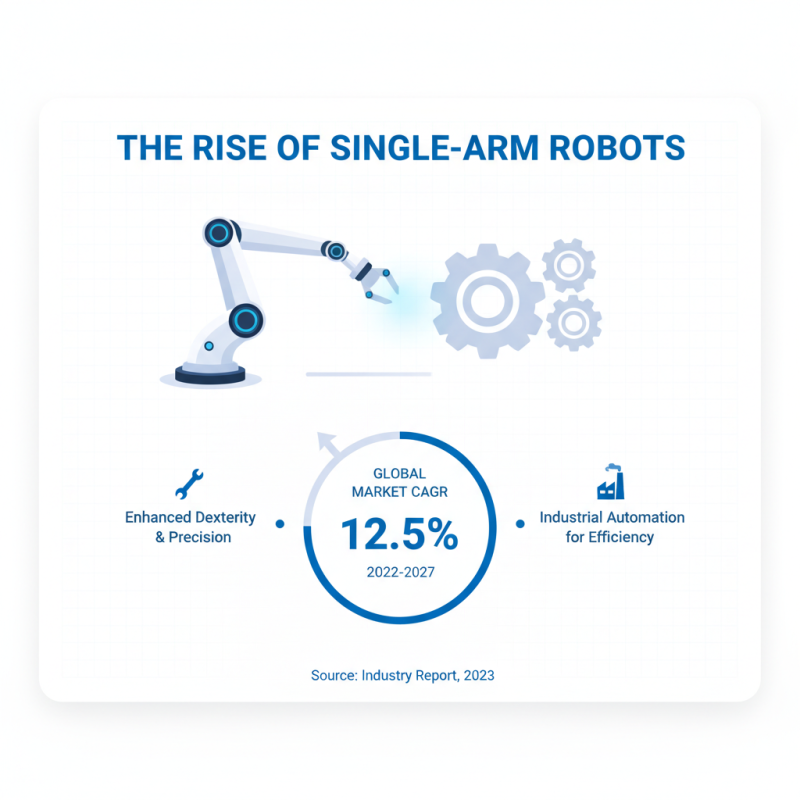
In recent years, single arm robots have gained significant traction across various industries. Their design is minimalist yet effective. The focus on technological innovations has led to enhanced dexterity and precision. According to a recent industry report, the global market for single arm robots is projected to grow at a compound annual growth rate (CAGR) of 12.5% from 2022 to 2027. This surge reflects businesses’ increasing reliance on automation for efficiency.
Key advancements include improved artificial intelligence and machine learning algorithms. These innovations allow robots to adapt to new tasks quickly. For instance, they can recognize objects and manipulate them with high accuracy. In a detailed survey, 70% of manufacturers noted that deploying single arm robots improved productivity. Yet, some challenges remain. The integration of these robots into existing processes can still be inconsistent.
Additionally, safety protocols are a concern. As single arm robots become more prevalent, ensuring worker safety is essential. A growing number of organizations are investing in training programs focusing on safe interactions with robots. The need for better security measures reflects the ongoing evolution of this technology. As companies continue to innovate, they must also address these imperfections to maximize the potential of single arm robots.
Factors to Consider When Choosing a Single Arm Robot
When selecting a single arm robot, various factors should be considered. Payload capacity is crucial. Many industrial applications require robots to lift significant weights. According to industry reports, the average payload for single arm robots has increased by 25%. This reflects growing demands in warehouses and manufacturing.
Another important aspect is precision and repeatability. Research indicates that robots in high-precision tasks offer repeatability within ±0.1 mm. This is vital in applications like electronics assembly. Lack of precision can lead to costly errors. Evaluate the robot’s specifications carefully.
Integration with existing systems is often overlooked. Compatibility with current automation solutions can save time and resources. Moreover, usability is essential. A user-friendly interface reduces training time for operators. A study showed that intuitive controls can improve productivity by 15%. Balancing features with an understanding of your specific needs is key to making a sound investment.
Future Trends in Single Arm Robot Technology and Usage
Single arm robots are gaining traction in various industries. They excel in tasks like assembly and packaging. Their lightweight designs allow for easy integration into existing setups. Yet, there are challenges. Their limited reach can hinder complex operations. It’s essential to evaluate their workspace before deployment.
Future trends in Robot Single technology point toward greater flexibility and intelligence. Advances in AI will enable these robots to learn from their environments. This could lead to more adept navigation and task execution. However, the reliance on technology raises concerns about job displacement. Many workers may need retraining to adapt.
Moreover, ethical implications are often overlooked. As Robot Single applications expand, regulatory frameworks will need updating. It’s vital to ensure safety and accountability in their usage. Balancing innovation with responsibility remains a pressing issue. The path ahead is complex but filled with potential.
Exploring the Versatility and Applications of the Three-Axis Single-Arm Single-Section Robotic Arm in Modern Automation
The versatility and efficiency of single-arm robotic arms, particularly the three-axis single-arm single-section configuration, have transformed automation in various industries. With applications ranging from assembly to material handling, these robotic arms are becoming essential in modern manufacturing processes. According to a report from the International Federation of Robotics, the demand for industrial robots, particularly in injection molding, is expected to grow at an annual rate of 14% over the next five years. This surge is driven by the need for increased productivity and the reduction of operational costs within manufacturing settings.
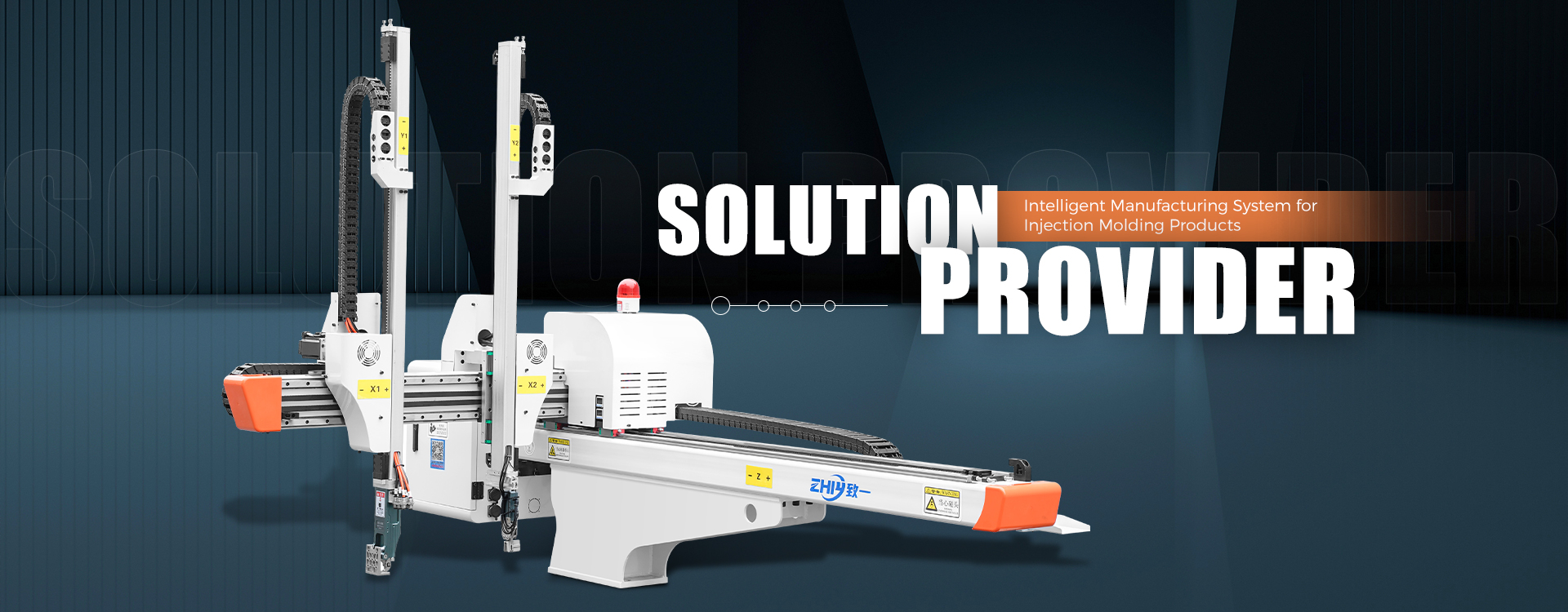
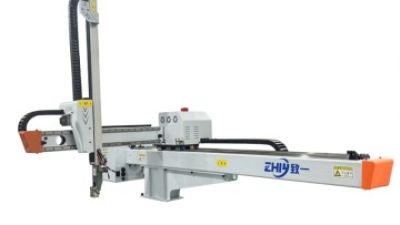
The three-axis single-arm robotic arm offers a compact design, making it ideal for injection molding machine automation. Engineered to work seamlessly with machines ranging from 150 to 250 tons, this robotic arm exemplifies precise motion control and a strong load capacity, which enhances production efficiency. The use of high-strength aluminum alloy ensures stability and longevity, while features like low noise levels and energy consumption cater to contemporary environmental standards—a growing concern in the industrial sector as highlighted by data from the World Economic Forum.
As industries increasingly adopt automation technologies, the WKG-1000 model stands out for its adaptability and effectiveness across diverse market segments, including Europe, America, Southeast Asia, and the Middle East. This adaptability aligns with industry reports indicating that manufacturers are prioritizing automation to stay competitive. As businesses look for reliable and economical automation solutions, the three-axis single-arm robotic arm will play a critical role in meeting these evolving needs.
FAQS
: A variety of categories are offered. You can find electronics, clothing, and home goods.
Yes, you can return items within a specified period. Always check the exact time frame for returns.
After placing an order, you will receive a tracking number. Use it on the website to find your shipment.
Shipping fees may apply based on your location. Often, orders over a certain amount ship for free.
Modifying an order can be tricky. Act fast if you need to make a change.
Report any damage immediately. Customer service may assist you in resolving the issue.
You can reach customer service through email or live chat. They are usually quite responsive.
Promotions may vary. Keep an eye on the website for the latest deals or sign up for alerts.
Various payment methods are available. This typically includes credit cards and online payment systems.
Security measures are in place to protect your data. Yet, always be cautious about sharing personal details online.
Conclusion
Single Arm Robots have become increasingly popular due to their versatility and efficiency in various applications, ranging from automation in manufacturing to assistance in healthcare. These robots are designed to perform tasks that require precision and dexterity, allowing businesses to enhance productivity and reduce labor costs. Key features, such as advanced sensors, intuitive programming, and flexible end-effectors, contribute to their unique capabilities, making them indispensable tools in numerous industries.
In evaluating the landscape of Single Arm Robots, it is essential to consider factors like performance, efficiency, and technological advancements driving their development. The market showcases a range of models that excel in different domains, each offering distinctive strengths. As technology evolves, future trends indicate an increase in collaborative robots that work alongside humans, further broadening the applications of Single Arm Robots and shaping the future of automation.