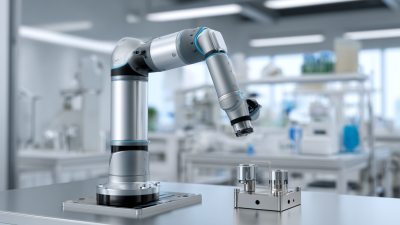
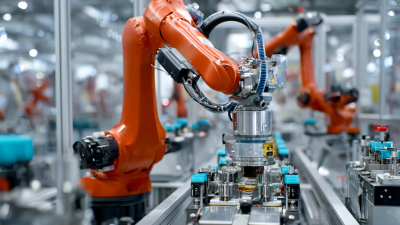
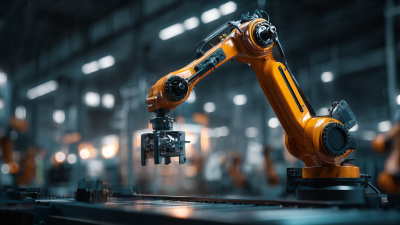
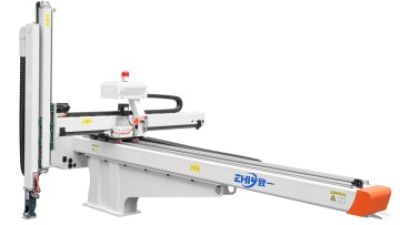
When it comes to automation, the Single Axis Robot really catches the eye. Basically, it's built to move back and forth along a single path, making tasks like pick-and-place a breeze. You’ll find these robots in many industries because they’re simple, reliable, and get the job done fast.
They can give a real boost to productivity on factory floors, no doubt. But, of course, they’re not perfect — they’re a bit limited since they only do what can be done along that straight line. Big names like FANUC and KUKA have already made good use of these robots in their lines. Still, relying too much on Single Axis Robots might make things tricky if you need your machines to adapt to more complex tasks.
All in all, the Single Axis Robot plays a pretty important role. It’s great for specific jobs that don’t require fancy moves, but it might fall short if your operations get more complicated. As more companies jump into automation, understanding what these machines can—and can’t—do is pretty essential. They definitely represent innovation, but you’ve got to think carefully about how to use them effectively.
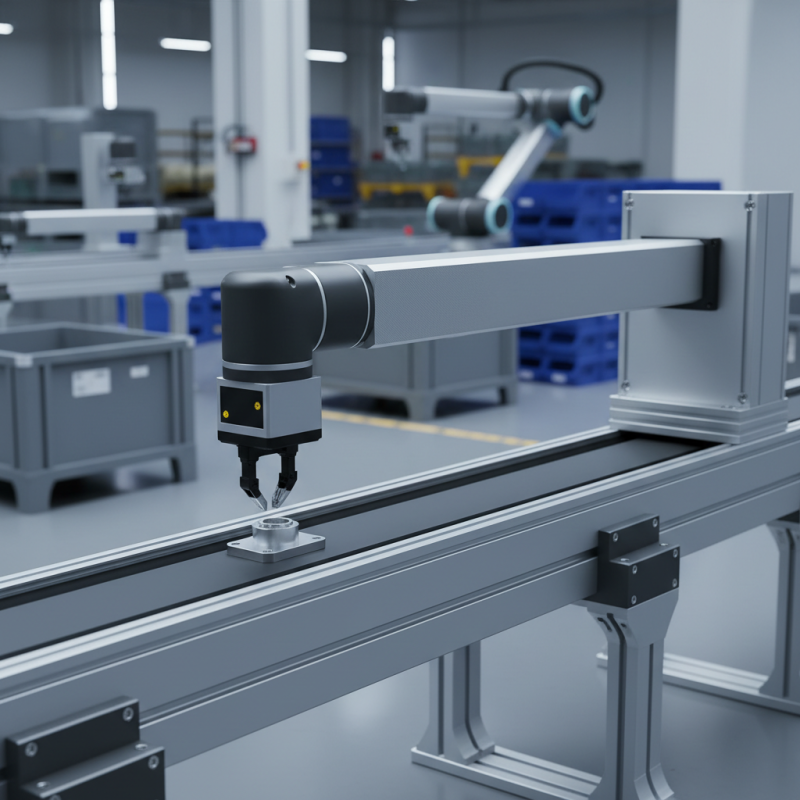
What is a Single Axis Robot?
A single axis robot is a type of robotic system that moves along one linear path. It can extend or retract, allowing precise positioning in industrial applications. These robots are common in assembly lines. They perform tasks like loading and unloading, or simple material handling. According to a recent industry report, the global market for single axis robots is expected to grow significantly. This growth highlights their value in automation.
Single axis robots often integrate with other equipment. They simplify workflows and reduce manual labor. However, they have limitations, such as lack of flexibility in movement. They can only operate along one axis. This can hinder their application in complex tasks. Automation experts suggest that while useful, their capabilities are not enough for every scenario.
The efficiency of single axis robots is notable. They can increase production rates and enhance precision. Reports indicate that companies utilizing these robots can achieve up to 30% higher throughput. However, not all tasks are suitable for this type of robot. Evaluating an application’s needs is crucial. Ultimately, businesses must reflect on whether single axis robots fit their goals.
Key Components of a Single Axis Robot
A Single Axis Robot is a mechanical device designed for tasks along a single path. It consists of several key components that work together seamlessly. The primary element is the actuator. Actuators enable movement, often through motors or pneumatic systems. They provide the necessary force to move the Robot Arm back and forth.
Another essential component is the guide rail, which directs the arm's motion. The stability of the guide rail impacts precision. If the rail is not aligned properly, the movements can be inaccurate. This can lead to flawed operations, especially in precise applications.
Control systems are also vital for a Single Axis Robot Arm. They interpret signals from sensors and control the actuator's movement. Issues in programming can cause delays or erratic movements. Lastly, sensors help monitor the position and speed. Without reliable sensors, the entire operation can be compromised. Each component needs careful consideration to function properly.
How Single Axis Robots Operate
Single axis robots are designed for precision and efficiency. These robots operate on a single line of movement. They can execute tasks such as pick-and-place, assembly, or packaging. The simplicity of movement allows for quick adjustments and high-speed operations. A motor typically drives the movement along this axis, offering controlled force and speed. Various sensors help monitor the position throughout the operation.
In practice, the operation of a single axis robot involves several components. Actuators convert electrical signals to mechanical motion. This enables smooth and accurate movements. Controllers interpret the instructions, providing seamless coordination. The setup can be adjusted to tackle different tasks, but it requires meticulous planning.
However, there are challenges. Single axis robots may lack flexibility. They cannot handle complex paths like multi-axis robots. This can limit their applications in some environments. Users must consider these limitations when planning their automation solutions. While they are efficient, they may not be the best choice for every scenario. Reflecting on the usage of single axis robots can help teams optimize their production lines.
Applications of Single Axis Robots in Industry
Single axis robots are critical in various industrial applications. They excel in tasks requiring repetitive motion along a single path. Their simplicity and cost-effectiveness make them essential in sectors like manufacturing and assembly. According to a recent report by the International Federation of Robotics, single axis robots account for about 25% of all robotic systems in use today.
These robots find extensive applications in pick-and-place tasks. Factories use them to move items from one location to another efficiently. In packaging, they streamline workflows by transferring products to packaging stations. A study revealed that employing single axis robots can increase productivity by up to 30%. However, companies must consider maintenance costs. While these robots are reliable, wear and tear can lead to increased downtime.
**Tips:** Ensure proper calibration of single axis robots. This can maximize their performance and lifespan. Regular inspection is essential. Unexpected failures can disrupt entire production lines. Also, training staff on these robots is crucial. A well-informed team will operate them more efficiently, allowing for better outcomes.
Advantages of Using Single Axis Robots
Single Axis Robots stand out for their simplicity and efficiency. These robots are designed to move in one direction, making them ideal for repetitive tasks. For instance, manufacturing lines often use Single Robots to handle heavy materials. They can lift, push, and transport items with precision. This capability reduces the likelihood of human error, which can be costly in industrial settings.
The advantages of using Single Axis Robots are numerous. They are relatively easy to program and require less maintenance than more complex robotic systems. This simplicity can lead to faster deployment times in production environments. Additionally, the lower operational costs are appealing for small to medium-sized businesses.
However, it is essential to address the limitations of a Single Robot. Their restricted movement range may not suit all applications. Companies must evaluate their specific needs carefully before implementation.
Limitations and Challenges of Single Axis Robots
Single Axis Robots have several limitations that users must consider. They primarily move along one axis. This reduces flexibility in tasks requiring complex movements. Any operation needing multiple dimensions will be challenging for a Robot Single setup. For instance, picking and placing items in various orientations can quickly become complicated.
Another challenge is the load capacity. Single Axis Robots often struggle with heavier items. They may not provide the strength required for specific industrial tasks. This limitation can hinder overall efficiency. Users might find it frustrating when the robot cannot meet their demands, leading to delays and suboptimal performance.
**Tip:** Evaluate your needs before selecting a robot. Understand the tasks you want to automate. This can help avoid costly mistakes.
Programming and maintenance are also areas to think about. Many users face difficulties with complex programming. Even simple tasks can turn cumbersome if the setup isn’t intuitive. Additionally, maintenance can be intricate. Small issues may require a complete overhaul, disrupting workflow.
**Tip:** Regularly check for updates. Staying informed can help optimize performance. Simple adjustments may boost a Robot Single’s capabilities without extra costs.
Future Trends in Single Axis Robot Technology
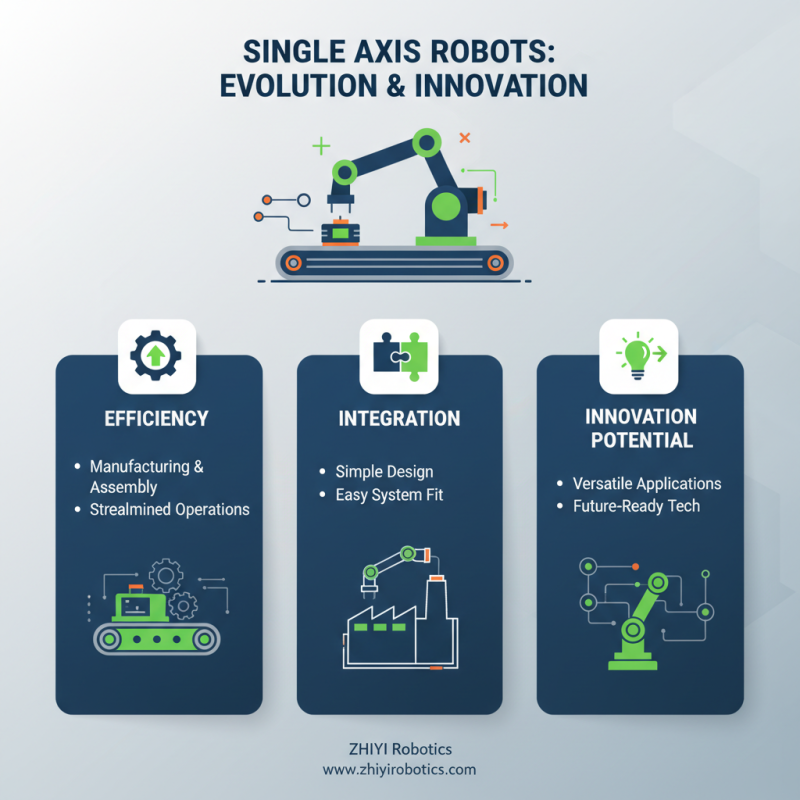
Single Axis Robots, often termed Single Arm Robots, are evolving rapidly. These robots provide efficiency in various applications, including manufacturing and assembly tasks. Their simplicity makes them easy to integrate into existing systems. However, while their design allows for straightforward operations, the potential for innovation is vast.
Looking ahead, there are emerging trends in Single Axis Robot technology. Advanced sensors and AI will enhance their autonomy. These robots may soon perform complex tasks with minimal human intervention. Additionally, collaborative robots, or cobots, will work alongside humans more effectively. However, challenges remain in ensuring safety and compatibility. It is vital to address these issues as technology advances.
Moreover, sustainable practices are becoming a priority. Future Single Arm Robots must be energy-efficient and eco-friendly. manufacturers need to commit to designing robots with a lower carbon footprint. As companies adopt these practices, it’s crucial to reflect on the impact of automation on the workforce. Continuous improvement and adaptation will be key to ensuring that Single Axis Robots benefit both industry and society.
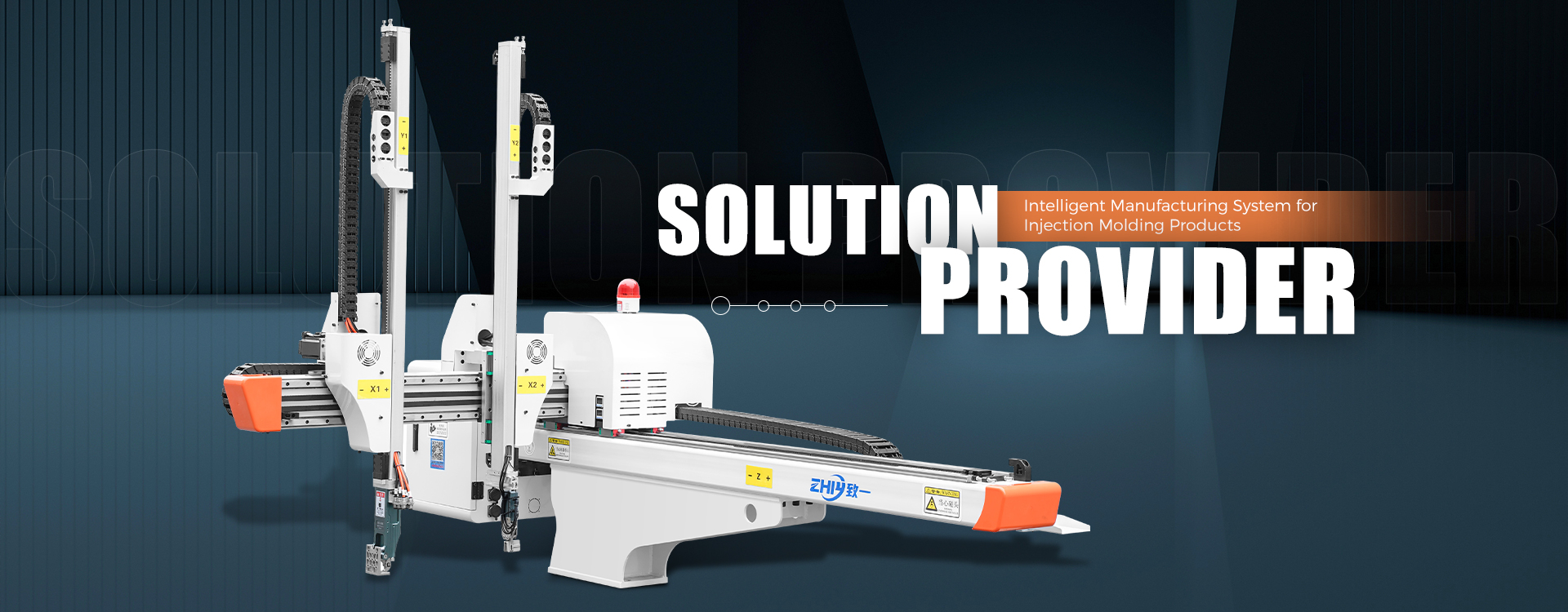
Optimizing Efficiency: Integrating the Three-Axis Servo Robot with 2000T-2300T Injection Molding Machines
In the landscape of manufacturing, particularly for industries relying on injection molding, the integration of automation technology has become a vital strategy for optimizing efficiency. Three-axis servo robots play a crucial role in this evolution, specifically designed to work in tandem with 2000T-2300T injection molding machines. Research indicates that automating the material handling process can enhance production speeds by up to 30%, as highlighted in various industry reports. These systems not only accelerate production cycles but also minimize manual labor requirements, leading to substantial cost reductions.
The capabilities of our three-axis servo manipulators extend to impressive load capacities, flexible travel ranges, and high-precision control. This range of motion allows manufacturers to adapt the robot for diverse applications, whether they are producing automotive components, home appliance housings, or industrial products. By incorporating these advanced systems, manufacturers can increase their operational flexibility and response time, crucial in today's ever-competitive market. The precision control offered by these servo systems also ensures a reduction in waste and a higher quality of final products, which is essential for maintaining competitive advantage.
Furthermore, according to the latest data from industry analysts, the adoption of automation in injection molding is projected to see a steady growth rate of over 15% annually. This trend not only reflects the rising demand for high-volume production but also showcases the transformative impact that three-axis servo manipulators can have on efficiency and productivity. As businesses continue to embrace these technological advancements, the integration of servo robots will remain a central focus in optimizing manufacturing processes.
FAQS
: Assess your goals and potential challenges. Create a clear plan. Identify necessary resources.
Break tasks into smaller steps. Celebrate small wins. Remind yourself of the end goal.
Stay flexible and adapt your plan. Seek support from others if needed. Learn from the experience.
Prioritize tasks effectively. Use tools like calendars. Set specific time limits for each task.
Absolutely. Seeking help shows strength. It can provide new insights and reduce stress.
Set milestones and review them regularly. Take notes on what works and what doesn't. Adjust as needed.
Conclusion
A Single Axis Robot is a type of robotic system designed to perform tasks along a single linear path using a joint that allows motion in one direction. These robots consist of key components such as actuators, sensors, and control systems, which enable them to operate effectively in various environments. The mechanics of a Single Axis Robot usually involve precise movements that can be easily programmed for repetitive tasks, making them valuable in industrial applications ranging from assembly lines to packaging processes.
The advantages of using Single Axis Robots include their simplicity, cost-effectiveness, and ease of integration into existing production systems. However, they also face limitations, such as restricted range of motion and adaptability compared to multi-axis robots. Looking forward, advancements in technology are likely to enhance the capabilities of Single Axis Robots, increasing their efficiency and expanding their applications in various sectors. Overall, the future of Single Axis Robots holds promise for significant contributions to automation and manufacturing productivity.