In the world of manufacturing that's changing so fast, staying efficient is more important than ever. Companies are always on the lookout for ways to get better at their processes. One tech that's really making a difference is the Injection Machine Robot. It’s pretty cool how this kind of machinery can streamline stuff and make things more consistent. But honestly, figuring out which automation solution works best isn’t always straightforward. With a bit of guidance, though, businesses can make smarter choices.
Jumping into using an Injection Machine Robot can bring some serious perks. They boost precision and speed up production, all while cutting down on waste. That said, understanding what these robots can do isn’t always simple. Not every robot fits every line of production, so it’s super important to carefully think about what your specific needs are. Sure, setting these things up might be a little tricky at first—there’s often a bit of a learning curve and some integration hiccups—but trust me, the payoff really is worth it in the end.
When you get it right, a good Injection Machine Robot can save you quite a bit of cash. It’s not just about making stuff faster; it also helps cut down on human errors. That means you’ll get higher-quality products more consistently, which is huge in today’s competitive market. But, to really reap the benefits, you need to take a close look at your current operations. Every manufacturing setup is different, so your solutions should be tailored to fit your unique environment.
Benefits of Using Injection Machine Robots in Manufacturing
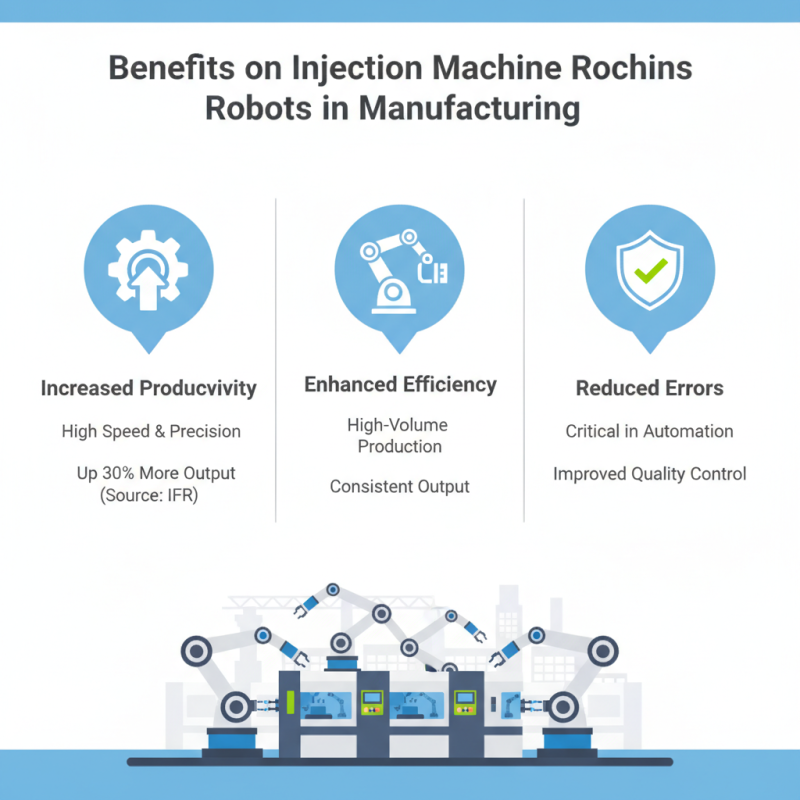
The use of injection machine robots in manufacturing offers numerous benefits that are hard to overlook. These robotic systems enhance productivity by operating at high speeds and with excellent precision. According to a report by the International Federation of Robotics, industries using automation have seen productivity increases of up to 30%. This efficiency is essential in high-volume production settings, where error reduction is critical.
Moreover, injection machine robots improve safety in the manufacturing environment. They take on repetitive and potentially hazardous tasks, minimizing employee injury rates. A study from the Occupational Safety and Health Administration indicated that automation could reduce workplace injuries by as much as 50%. However, the transition to automation requires careful planning. Not all companies are ready or equipped for this shift. There are challenges in training staff and integrating new technologies into existing workflows.
The initial investment in robotic systems may seem daunting. Nonetheless, the long-term savings in labor costs and the potential increase in output can justify this expense. Balancing the cost and benefits is critical for companies considering automation. Industry data clearly shows that when correctly implemented, injection machine robots significantly enhance productivity while ensuring a safer work environment.
Key Features of Injection Machine Robots for Efficiency
Injection machine robots have transformed manufacturing processes. Their key features enhance efficiency significantly. One important aspect is their precision. These robots deliver accurate injections, ensuring consistent quality in production. This reduces waste and improves overall product quality.
Another compelling feature is their speed. A Robot Injection Moulding Machine can operate continuously, minimizing downtime. Fast cycle times can double or even triple productivity. Manufacturers often notice a marked increase in output within a short timeframe.
**Tip:** Regular maintenance is crucial. A well-maintained robot operates more effectively, reducing unexpected breakdowns.
Flexibility is another advantage. These robots can handle various materials and designs. Adapting to new projects becomes easier. However, the programming of such machinery can take time to master. Ongoing training for staff is beneficial.
**Tip:** Invest time in staff training. Knowledgeable operators enhance performance significantly.
Not every process requires A Robot. For smaller tasks, manual labor might be more cost-effective. Evaluate your specific production needs carefully before investing. That's how you ensure the best return on your investment.
Cost Reduction and Profitability in Robotic Injection Molding
Investing in injection machine robots can significantly boost profitability in manufacturing. According to a recent industry report, automating the injection molding process can lead to a 30% reduction in operational costs. This figure highlights how robotic automation can streamline production, reduce labor expenses, and minimize material waste.
Robotic systems provide precision and consistency. They ensure high-quality output while reducing downtime. A study found that plants using robotic injection molds experienced a 25% increase in production efficiency. This efficiency is vital in meeting market demands swiftly and cost-effectively. However, some manufacturers may face challenges when integrating new technology. Resistance to change and initial setup costs can be barriers to entry.
Tips: Assess current production workflows. Identify areas with the greatest inefficiencies. This can guide decisions about automation implementation.
Another critical aspect is maintenance. Regular maintenance of robotic systems ensures longevity and optimal performance. Yet, reliance on automation can lead to skill gaps within the workforce. Companies must invest in training programs to bridge this gap. Emphasizing continuous improvement will help address these obstacles in adopting robotic solutions.
Enhanced Precision and Quality Control with Injection Robots
Injection robots significantly enhance precision and quality control in manufacturing processes. By integrating these advanced machines into your operations, you can achieve higher accuracy in production. The consistent placement of materials leads to fewer defects. This efficiency improves your yield rate and overall product quality, reflecting positively on your brand reputation.
When selecting an Injection Molding Machine, consider factors such as speed, accuracy, and flexibility. A reliable machine will adapt to various materials and designs, allowing you to respond to market changes quickly. Monitor your production metrics regularly. This helps identify areas for improvement and ensures that your injection robots meet your quality standards.
Furthermore, training your operators in proper maintenance protocols will enhance machine longevity. Small maintenance oversights can lead to significant downtimes. Invest time in understanding your machine's capabilities. Embrace continuous learning, as this will keep your operations at the forefront of technology.
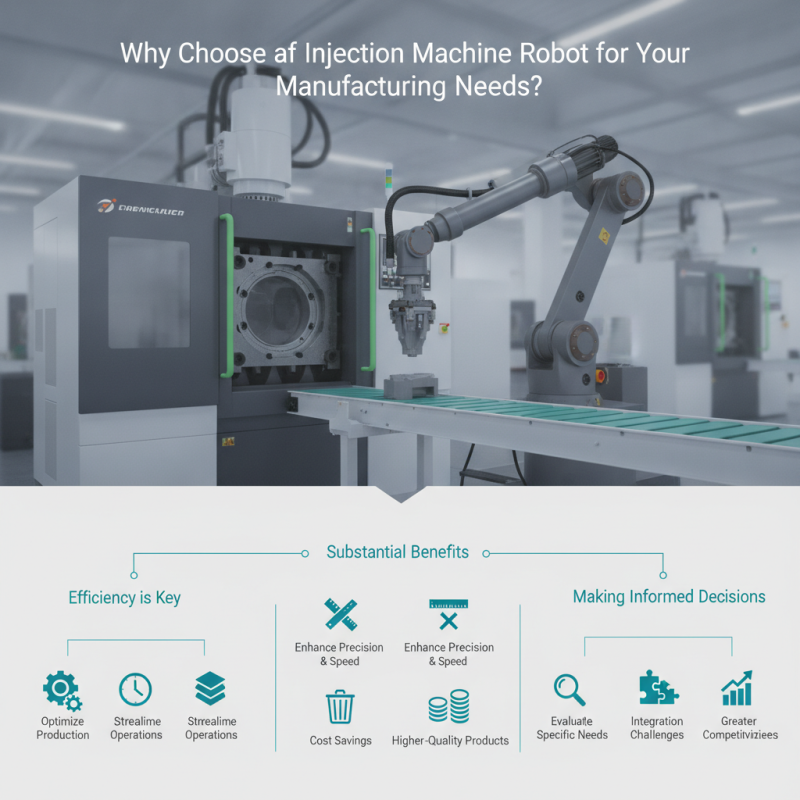
Why Choose an Injection Machine Robot for Your Manufacturing Needs? - Enhanced Precision and Quality Control with Injection Robots
| Feature | Description | Benefits |
| Precision Control | Injection robots provide superior accuracy in the molding process. | Minimizes defects and ensures consistency in products. |
| Flexibility | Can be programmed for various molding operations. | Adaptable to different product designs and changes in production. |
| Speed | Fast operation time allows for increased throughput. | Higher production rates can lead to reduced operational costs. |
| Quality Assurance | Integrates with inspection systems to monitor product quality. | Ensures high standards of quality control are maintained. |
| Cost-Efficiency | Reduces labor costs and minimizes material waste. | Improves profitability through efficient resource use. |
| Safety Features | Designed with advanced safety protocols and systems. | Protects operators and reduces workplace incidents. |
Integration of Injection Robots into Existing Manufacturing Systems
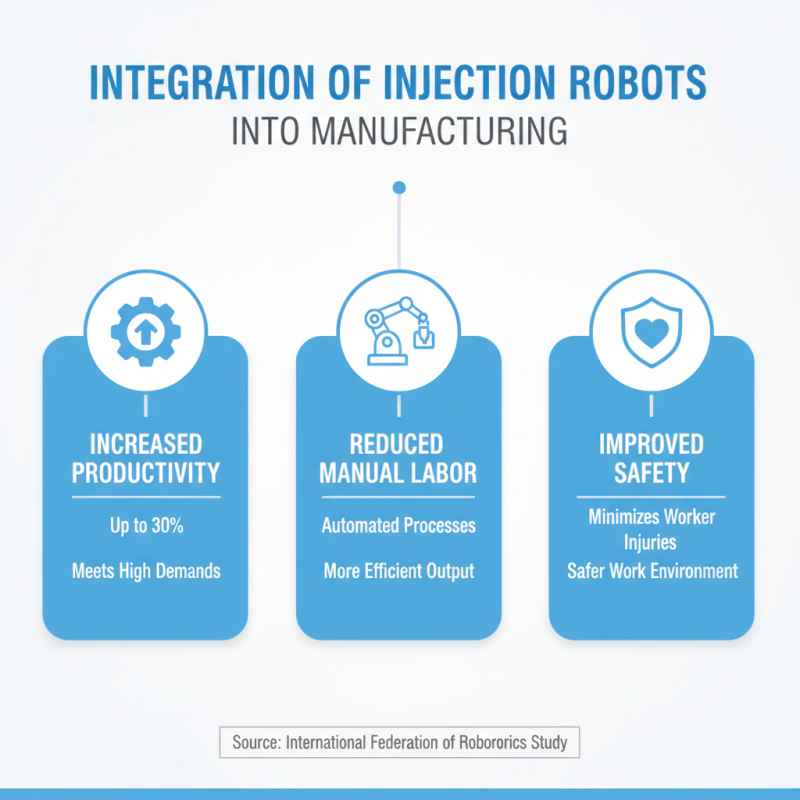
Integrating injection robots into existing manufacturing systems offers significant advantages. According to a study by the International Federation of Robotics, automation in injection molding can increase productivity by up to 30%. This improvement can help manufacturers meet high demands more effectively. Additionally, integrating robots reduces manual labor. It minimizes the risk of worker injuries, leading to a safer work environment.
However, the integration process can be complex. Many facilities struggle with the layout and compatibility of new robotic systems. An old production line may require significant modifications to accommodate new technology. A report from the Association for Advancing Automation highlights that 40% of factories face workflow disruptions during initial robot integration. Addressing these challenges is essential for a seamless transition.
Moreover, training staff to work with robots is critical. Without proper training, the potential of robotic automation may not be fully realized. A successful integration not only boosts efficiency but also enhances product quality. However, manufacturers should assess their readiness before making such investments. Balancing innovation with operational readiness is crucial for long-term success.
Future Trends in Injection Machine Robotics for Manufacturing
The landscape of manufacturing is rapidly evolving, particularly through the integration of robotics in injection molding. A recent report from the International Federation of Robotics highlights that by 2025, the global market for industrial robots could reach $70 billion. As manufacturers seek to enhance efficiency and precision, injection machine robots are becoming central to the production process. The advancement of models like the Five Axis Injection Molding Machine illustrates this trend by allowing for complex geometries and rapid cycle times.
Automation is not without its challenges. Manufacturers must consider the initial investment and potential downtime during integration. The rise in robotics also raises workforce concerns as traditional skilled labor markets shift. According to a 2022 McKinsey report, about 30% of manufacturing jobs could be automated over the next 10 years, highlighting an urgent need for reskilling programs. Balancing technology adoption with human expertise becomes crucial. As companies embark on this journey, they must reflect on how to blend automation and human skills harmoniously.
Emerging technologies like AI-enhanced robotics will likely redefine productivity benchmarks. Future injection machine robots could offer unprecedented adaptability to different materials and designs. With over 50% of manufacturers planning to invest in advanced robotics, the importance of innovation in sustaining competitive advantage cannot be overstated. Success in this evolving market will depend on strategic investments and continuous improvement in skill development.
Future Trends in Injection Machine Robotics for Manufacturing
Considerations for Choosing the Right Injection Robot Model
When selecting an injection robot for manufacturing, various aspects must be considered. Speed and accuracy are critical. According to a 2022 report by Global Industry Analysts, manufacturing efficiency can improve by up to 30% with advanced robots like the Servo-Driven Injection Molding Machine. This machine type offers precise movements, enhancing production quality.
The payload capacity is another essential factor. Different tasks require different strengths. Manufacturers must evaluate the weight and size of parts produced. An ideal robot should handle these without strain. A mismatch can lead to operational failures, increase maintenance costs, and hinder productivity.
Cost considerations cannot be ignored. While investing in high-quality robots might seem costly upfront, the long-term savings are significant. Reports suggest that businesses can reduce labor costs by 40% through automation. However, it's vital to assess whether the production volume justifies the expense. Hence, a thoughtful approach is required to find the right fit for your specific manufacturing needs.
Enhancing Injection Molding Efficiency with Three-Axis Servo Robots from Chinese Suppliers
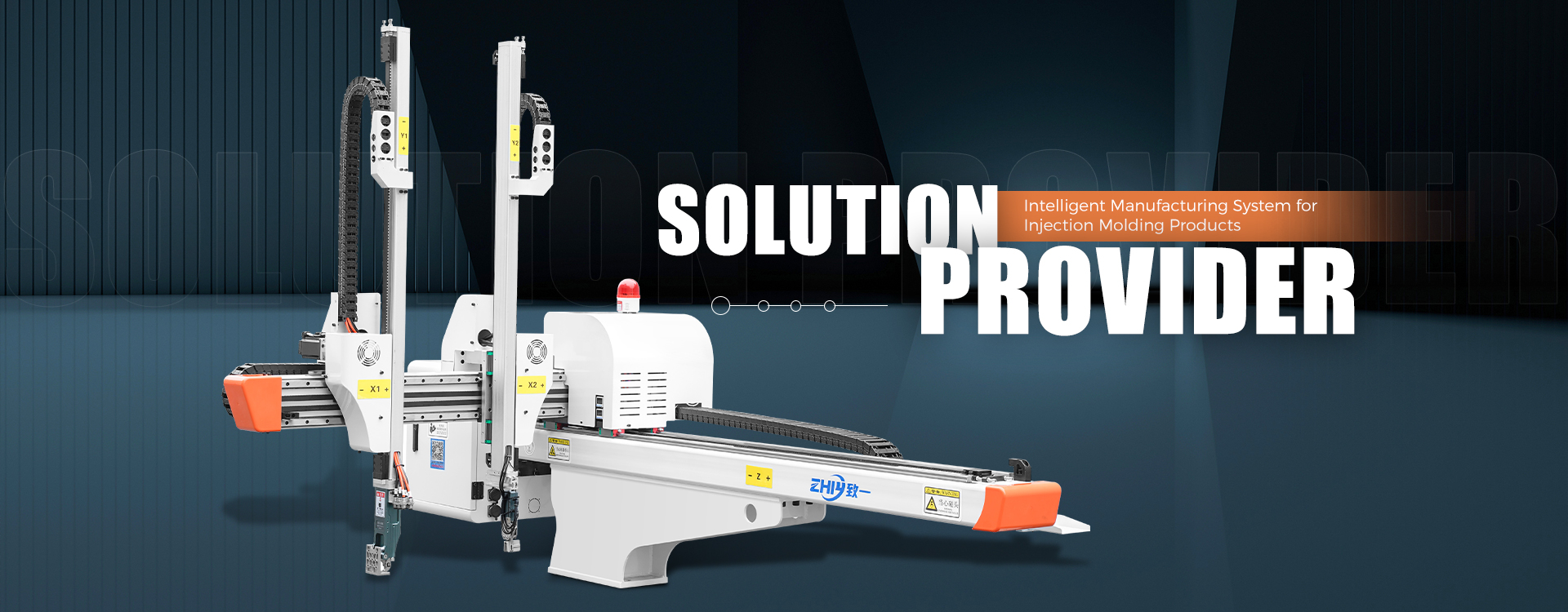
In today's competitive injection molding industry, the ability to streamline operations and enhance efficiency is paramount. Automation has emerged as a cornerstone of this evolution, with three-axis servo robots leading the way in transforming production capabilities. A notable example is the significant advancements achieved by suppliers in China, particularly in the development of high-precision three-axis servo robots tailored for injection molding applications. Such robots are designed to support machines with injection capacities ranging from 800T to 1200T, making them an ideal choice for various manufacturing needs.
According to industry data, the injection molding sector is projected to witness a compound annual growth rate of 3.5% through the next five years, largely driven by the demand for precision components and the push for cost-effective production solutions. Integrating a three-axis servo robot can greatly impact this landscape, substantially improving cycle times and reducing operational costs. These robots utilize advanced servo control systems, which not only enhance precision during operations but also provide robust load handling capabilities, facilitating the lifting and maneuvering of complex molds and materials.
The versatility of three-axis servo robots enables manufacturers to adapt quickly to changing production requirements, ensuring that they meet the evolving standards of efficiency and quality in the injection molding industry. As automation technology continues to advance, businesses that leverage these innovations are poised to gain a significant competitive edge, optimizing their production processes and ultimately enhancing their bottom line.
FAQS
: They enhance efficiency through precision, speed, and flexibility. This leads to reduced waste and improved product quality.
Fast cycle times can double or triple productivity. Continuous operation minimizes downtime, increasing overall output.
Knowledgeable operators can enhance robot performance. Ongoing training helps them master programming and operations effectively.
Not all tasks require robots. For small tasks, manual labor may be more cost-effective. Individual production needs should be evaluated.
Automating the process can lead to a 30% reduction in costs. This includes labor savings and minimized material waste.
Resistance to change and initial setup costs can hinder integration. Companies must prepare for these barriers to embrace automation.
Regular maintenance ensures optimal performance and longevity. Neglecting maintenance can lead to unexpected breakdowns.
The robot must handle the weight and size of produced parts. A mismatch may cause operational failures and higher costs.
Yes, businesses can potentially reduce labor costs by 40%. An upfront investment may yield significant long-term returns.
Evaluate speed, accuracy, payload capacity, and costs. A thoughtful approach ensures the right fit for specific manufacturing needs.
Conclusion
The adoption of Injection Machine Robots in manufacturing is transformative, offering numerous benefits that enhance operational efficiency. These robots are designed with key features that optimize production processes, significantly reducing costs and increasing profitability through streamlined operations. Their precision not only boosts product quality but also ensures greater control over manufacturing standards.
Integration of Injection Machine Robots into existing systems is seamless, paving the way for future innovations in manufacturing robotics. As industries evolve, staying abreast of trends in Injection Machine Robotics is crucial for maintaining competitiveness. When choosing the right model, manufacturers must consider various factors, including efficiency, compatibility, and specific operational needs, to maximize their investment in robotic technology.