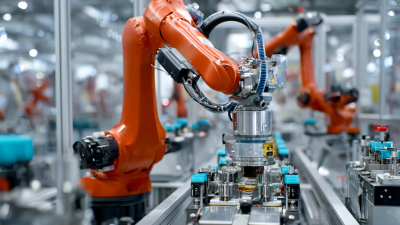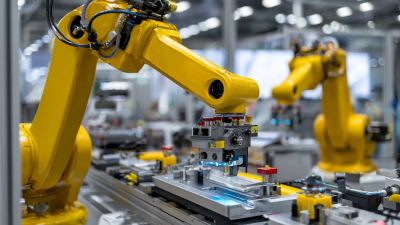
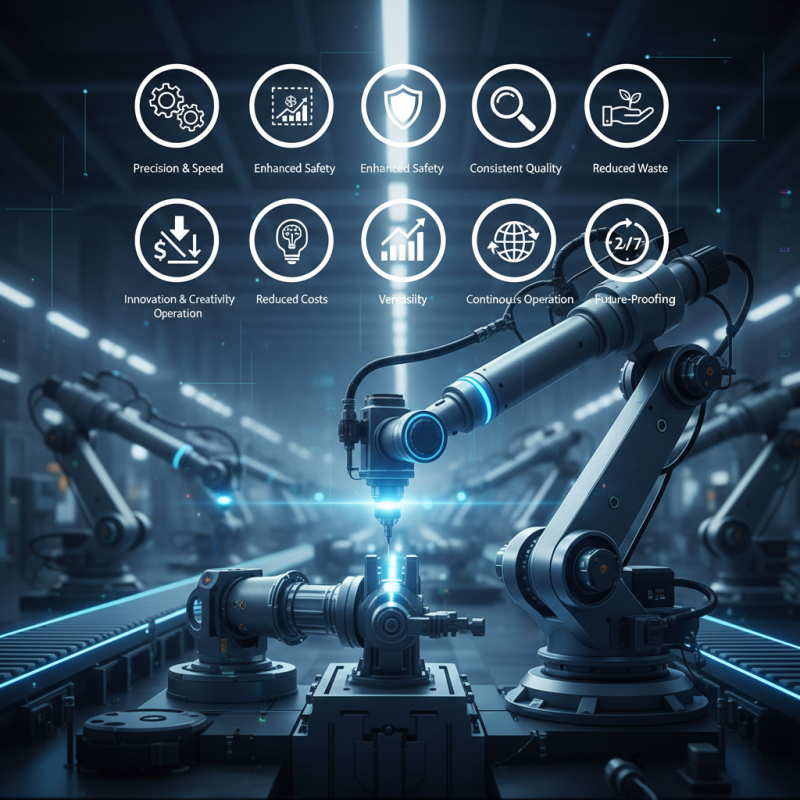
You know, in the fast-changing world of modern manufacturing, bringing in Cnc Robots has really shaken things up. They’re transforming the way things are done and boosting productivity all at once. I was chatting with Dr. Emily Roberts—she’s a real expert in robotics over at Tech Robotics—and she mentioned that, ‘The use of CNC robots isn’t just a passing fad; it’s pretty much the future of precision manufacturing.’ As companies look for ways to work smarter and cut costs, turning to CNC robots offers so many benefits that can totally change the whole production game.
These robots, with their knack for handling complex tasks quickly and accurately, are becoming absolute must-haves across different industries. They help cut down on human mistakes, boost safety on the shop floor, and keep quality consistent. It’s like we’re entering this new era of automation, which means businesses can finally focus more on innovation and coming up with new ideas—rather than getting bogged down with boring, repetitive tasks that used to define manufacturing for ages. So, in this article, I want to cover the top ten perks of using CNC robots in today’s manufacturing world, showing how these machines are not only making things better today but also opening doors for even cooler advancements down the line.
CNC robots have revolutionized precision engineering applications by providing unparalleled accuracy and efficiency in manufacturing processes. These robotic systems are specifically designed to execute complex machining tasks with remarkable consistency, reducing human error and ensuring that components meet stringent tolerances. The ability to program CNC robots allows for a high degree of customization, enabling engineers to refine designs without the need for extensive retooling, which can significantly cut down production time and costs.
Moreover, the integration of CNC robots enhances productivity in precision engineering by operating continuously with minimal downtime. Their capability to perform repetitive tasks with high speed not only accelerates the manufacturing cycle but also frees skilled labor for more critical and creative tasks. CNC robots can also handle intricate parts that require detailed attention, which further improves the overall quality of the finished products.
As a result, businesses can achieve higher output rates while maintaining superior standards in precision and finish, positioning themselves competitively in the modern manufacturing landscape.
In modern manufacturing, the integration of CNC robots significantly enhances efficiency and productivity within workflows. These advanced automated systems can operate continuously, seamlessly executing complex tasks that would otherwise require substantial human labor. This minimizes downtime and maximizes output, allowing manufacturers to meet rising market demands with greater speed. The precision of CNC robots also reduces errors and waste, ensuring that resources are utilized effectively throughout the production process.
Moreover, the flexibility of CNC robots allows manufacturers to adapt quickly to changes in product design or production volume. Unlike traditional methods that may require lengthy retooling or retraining of personnel, Cnc Machines can be easily reprogrammed for new tasks. This adaptability leads to shorter lead times and greater customer satisfaction. The overall impact of these technologies in manufacturing workflows not only streamlines operations but also contributes significantly to a competitive edge in the industry.
The integration of CNC robots into modern manufacturing processes has significantly reduced human error, a critical factor in maintaining product quality. According to a report by the International Federation of Robotics, CNC robots can enhance precision in machining operations by up to 50%. This increased accuracy leads to a notable decrease in defects and rework rates, which not only saves time but also reduces material wastage. A study by Deloitte found that manufacturers employing CNC automation reported a 30% drop in error rates, underscoring the technology's role in enhancing reliability in production environments.
Furthermore, CNC robots facilitate consistent quality control through their ability to work tirelessly and repetitively without fatigue. Research indicates that around 80% of manufacturers utilizing CNC technology in their quality assurance processes have observed marked improvements in standardization. This standardization is paramount, particularly in industries where tolerances are tight and product performance is critical. As CNC robots continually perform tasks with the same level of precision, the variability caused by human factors is minimized, ensuring that every product adheres to the required specifications. In essence, the use of CNC robots not only bolsters operational efficiency but also establishes a robust foundation for superior quality management in manufacturing.
The flexibility and adaptability of CNC robots have revolutionized modern manufacturing processes, enabling businesses to meet diverse production demands with ease. Unlike traditional manufacturing methods that often require dedicated tooling and setups for different tasks, CNC robots can be quickly reprogrammed or reconfigured to accommodate various products or processes. This capability allows manufacturers to switch between tasks rapidly, reducing downtime and increasing overall efficiency.
Moreover, the precision offered by CNC robotics ensures consistent quality across different manufacturing tasks. The ability to execute intricate designs and high-volume production without compromising accuracy is crucial for companies looking to maintain competitive advantages. This versatility not only streamlines operations but also enables manufacturers to respond swiftly to market changes, making it easier to introduce new products or modify existing ones. The integration of CNC robots into production lines is thus a strategic move, enhancing responsiveness and ensuring that manufacturers can adapt to evolving customer needs.
This chart illustrates the top benefits of using CNC robots in modern manufacturing processes, highlighting their flexibility and adaptability to various manufacturing tasks.
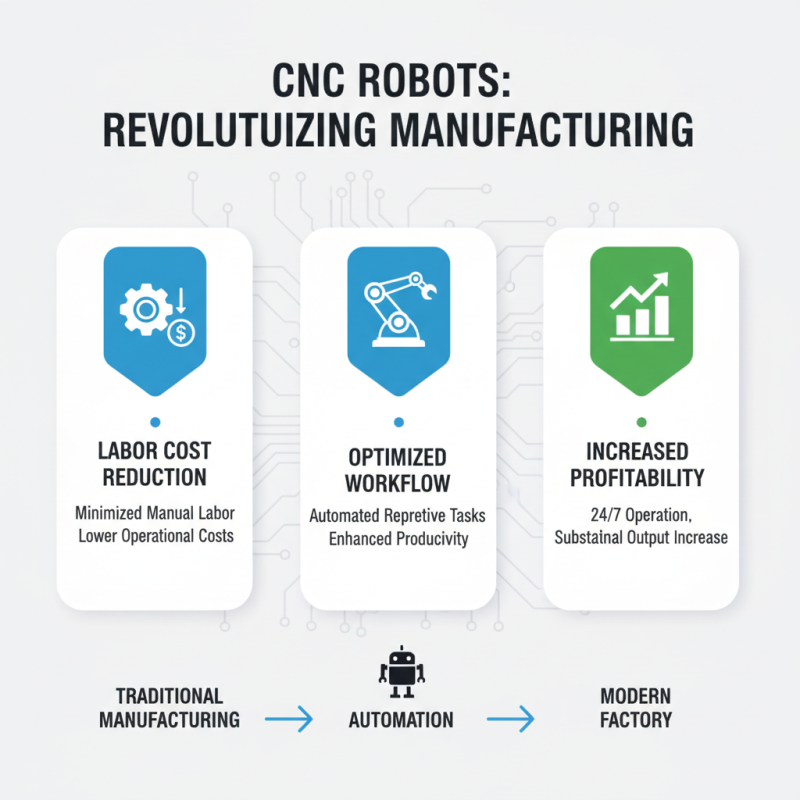
The incorporation of CNC robots in modern manufacturing processes has revolutionized the industry, particularly in terms of labor cost reduction and operational profitability. By automating repetitive and labor-intensive tasks, CNC robots minimize the dependence on manual labor, which significantly lowers overall labor costs. This shift allows manufacturers to allocate their workforce to more strategic roles, enhancing productivity and efficiency in operations. As robots can work around the clock without the limitations of human fatigue, the potential for increased output is substantial, leading to cost savings and optimized operational workflows.
Moreover, the integration of CNC robots translates directly into increased operational profitability. With precise and consistent performance, these machines reduce the rate of errors and defects commonly associated with manual processes, leading to higher quality products. This not only decreases the costs related to rework and waste but also enhances customer satisfaction and loyalty. As manufacturers embrace CNC technology, they are likely to see a significant boost in their bottom line, driven by both lower operational costs and enhanced production capabilities. The ability to produce more at a lower cost creates competitive advantages that are essential for thriving in today’s fast-paced manufacturing landscape.
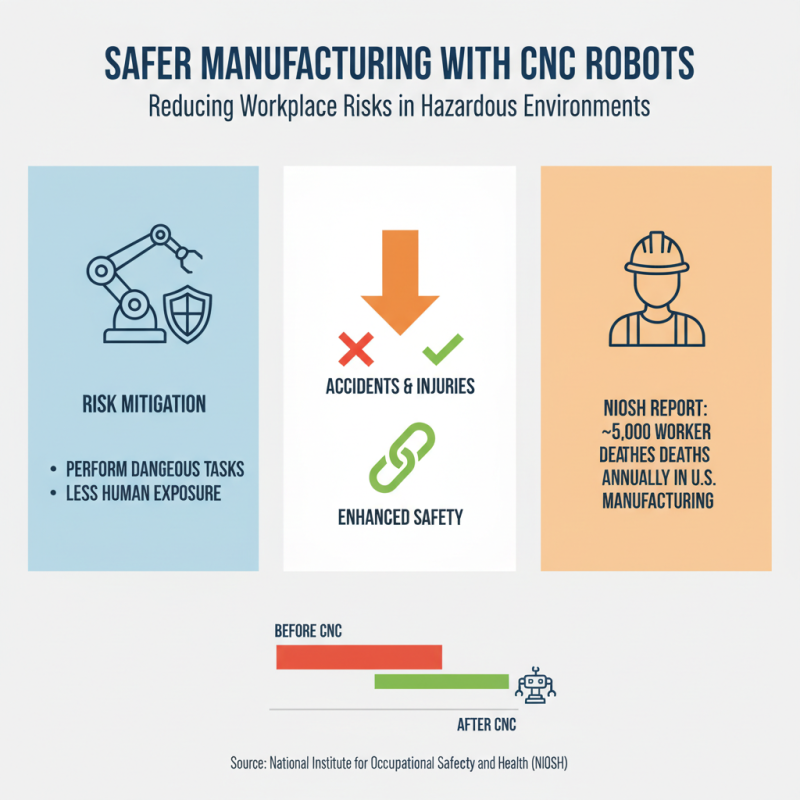
The use of CNC robots in modern manufacturing processes significantly enhances safety, especially in hazardous environments. According to a report by the National Institute for Occupational Safety and Health (NIOSH), nearly 5,000 workers die from workplace injuries each year in the United States, with many of these incidents occurring in manufacturing settings. CNC robots mitigate these risks by performing dangerous tasks such as welding, heavy lifting, and working with toxic materials, thereby reducing the likelihood of accidents and injuries among human workers.
Data from industry research indicates that robotic automation can decrease workplace accidents by as much as 50%, showcasing their effectiveness in improving overall safety. By integrating CNC robots into operations, businesses are not only protecting their workforce but also ensuring compliance with stringent safety regulations. A study published in the Journal of Safety Research highlights that companies implementing robotic systems reported significant reductions in lost-time injuries and medical claims. This shift towards automation allows human workers to focus on more strategic tasks while robots handle the high-risk aspects of manufacturing, creating a safer and more efficient work environment.
The integration of CNC robots with advanced manufacturing technologies is revolutionizing the production landscape, enhancing efficiency, precision, and overall productivity. According to a report by the International Federation of Robotics, the global market for Industrial Robots, which heavily features CNC technologies, is expected to grow at a compound annual growth rate (CAGR) of10.5% from 2020 to 2024. This growth is driven by the increasing demand for automation in various manufacturing sectors, allowing businesses to streamline processes and reduce operational costs.
One of the standout benefits of CNC robots is their compatibility with Industry 4.0 technologies, such as the Internet of Things (IoT) and artificial intelligence (AI). By utilizing real-time data from connected machines, manufacturers can optimize production schedules and predictive maintenance strategies, minimizing downtime and waste. The McKinsey Global Institute reports that such integration can boost equipment effectiveness by up to 30%, significantly enhancing the productivity of manufacturing operations. Moreover, the precision offered by CNC robots substantially reduces material waste, leading to a more sustainable production process that aligns with modern ecological standards.
: CNC robots significantly enhance precision in machining operations, reducing error rates by up to 30% and decreasing defects and rework, which saves time and reduces material wastage.
CNC robots facilitate consistent quality control by performing tasks repetitively without fatigue, leading to improved standardization and ensuring products adhere to required specifications.
Yes, CNC robots can be quickly reprogrammed or reconfigured for various products or processes, allowing manufacturers to switch tasks rapidly and increase overall efficiency.
CNC robots execute intricate designs and high-volume production with precision, which streamlines operations and allows manufacturers to respond swiftly to market changes.
The use of CNC robots reduces dependence on manual labor for repetitive tasks, lowering overall labor costs and allowing the workforce to focus on more strategic roles.
By increasing output, reducing error rates, and enhancing product quality, the integration of CNC robots leads to cost savings and improved customer satisfaction, boosting operational profitability.
CNC robots increase production capabilities by operating continuously without fatigue, which allows for higher output and efficient workflows.
Standardization is crucial in industries with tight tolerances, as it minimizes variability caused by human factors, ensuring that every product meets required specifications consistently.
CNC robots are revolutionizing modern manufacturing processes, offering a multitude of benefits that significantly enhance efficiency and productivity. These advanced machines excel in precision engineering applications, greatly reducing human error and improving quality control. By providing flexibility and adaptability, CNC robots can seamlessly handle various manufacturing tasks, ultimately lowering labor costs and increasing operational profitability.
Moreover, the integration of CNC robots with advanced manufacturing technologies promotes improved safety in potentially hazardous environments. As a result, manufacturers can achieve higher output and improved product quality while ensuring the well-being of their workforce. Embracing CNC robots not only streamlines workflows but also positions companies to stay competitive in an ever-evolving industrial landscape.